Welcome to Vbond
How Core Crumbling Affects Aluminum Composite Panel Edge Performance
How Core Crumbling Affects Aluminum Composite Panel Edge Performance
The edge of an aluminum composite panel (ACP) is its most vulnerable point. It is where the aluminum skins meet the core, where fabrication begins, where moisture can enter, and where the structural integrity of the entire facade is tested. When the core material at this critical junction begins to crumble—disintegrating into dust or losing its cohesive bond—the panel's performance is fundamentally compromised.
Core crumbling is not a cosmetic defect. It is a structural failure that indicates fundamental issues with the panel's manufacturing quality, material selection, or long-term durability. While a premium aluminum composite panel manufacturer engineers its cores for lasting integrity, low-grade panels often suffer from this hidden degradation that manifests first at the edges.
This guide explains what core crumbling is, why it occurs, how it devastates edge performance, and what procurement professionals can do to ensure they receive panels with durable, stable cores.
1. What Is Core Crumbling?
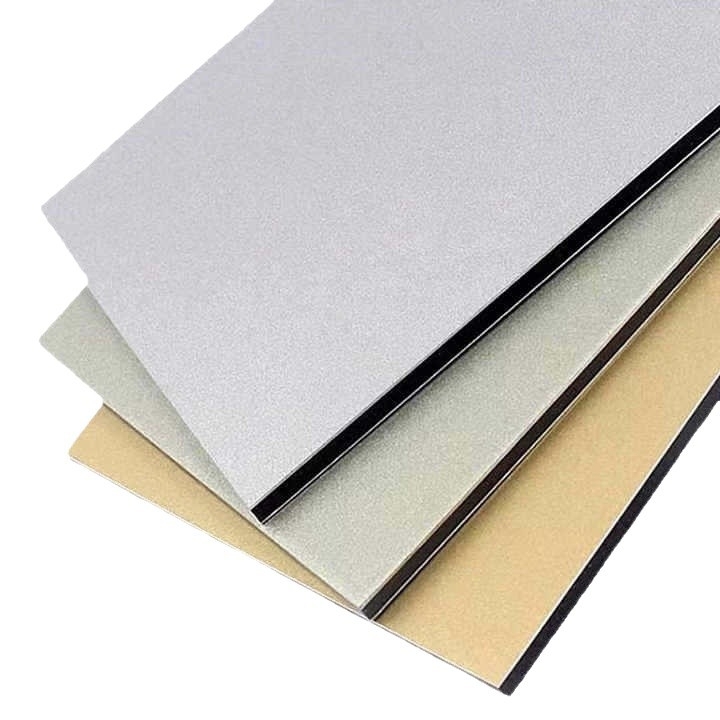
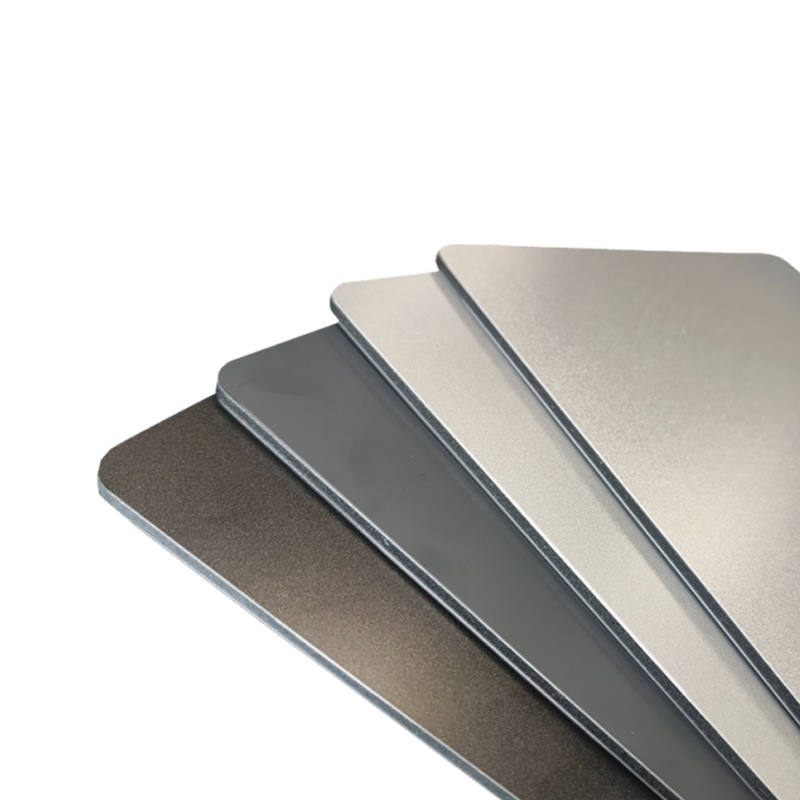
An aluminum composite panel is a sandwich structure: two aluminum skins bonded to a central core material. The core provides the panel's thickness, rigidity, and fire performance characteristics.
Core crumbling refers to the gradual or immediate disintegration of this core material, particularly at cut edges or routed grooves. Instead of maintaining a solid, cohesive structure, the core breaks down into loose particles, powder, or fragmented chunks.
Core Type | Normal Behavior | Crumbling Behavior |
PE (Polyethylene) | Flexible, cuts cleanly, remains intact | Soft, tears, melts rather than crumbles |
FR (Fire-Retardant) | Semi-rigid, mineral-filled, cuts cleanly | Powdery edges, loose filler particles |
A2 Mineral Core | Rigid, dense, cuts with a smooth surface | Dusty edges, cracks at cut lines, loose material |
In high-quality panels from an Alucobond factory or professional ALUCOBOND manufacturer, the core is engineered with precise filler content, uniform density, and strong adhesive bonding. The ALUCOBOND® core, for instance, utilizes a specialized mineral-filled formulation that maintains structural integrity even at the edges. In low-quality panels, the core may contain recycled materials, excessive filler, or inconsistent polymer content—all of which can lead to crumbling.
2. Why Cores Crumble: Root Causes
2.1 Poor Quality Control in Core Manufacturing
The core material—whether PE, FR, or A2 mineral—must be manufactured under strict conditions. Small factories without "prior production experience" often produce cores with "unstable composite quality" due to inconsistent temperature control, improper mixing, or inadequate curing.
As one manufacturer explains, "Some small factories without prior production experience... will make such low-level errors" when producing core materials. These errors directly manifest as edge crumbling during fabrication and installation.
2.2 Excessive or Incorrect Filler Content
Fire-retardant cores achieve their flame resistance through mineral fillers (typically aluminum trihydroxide or magnesium hydroxide). However, when filler content exceeds the optimal ratio—or when low-quality fillers are used—the core becomes brittle.
A standard FR core should maintain "excellent mechanical properties" alongside fire resistance. But cheap manufacturers maximize filler content to reduce polymer costs, resulting in a core that crumbles at the slightest stress.
The ALUCOMAT® FR product specification highlights the proper approach: a "fire-resistant mineral-filled core" that maintains structural integrity. This balance is what distinguishes quality FR cores from crumbling alternatives.
2.3 Recycled or Contaminated Raw Materials
Low-cost manufacturers often use "recycled aluminum scrap" and "recycled PE materials" to reduce costs. These recycled materials come with "varying PE types, aging levels, etc," that produce "unstable composite quality".
Contaminants in recycled material—such as plastic particles, dirt, or other polymers with different melting points—create weak points in the core. When these contaminants are present, "the air surrounding it cannot be fully compressed and squeezed out," leading to voids and eventual crumbling.
2.4 Inadequate Adhesive Bonding
The core's integrity depends not only on its own composition but also on its bond to the aluminum skins. If the polymer film or adhesive is compromised, the core can separate and fragment at the edges.
Some manufacturers use "self-dissolving inferior polymer membranes" that "can produce false composites if they are not fully melted". While "the strength is high in the beginning," weathering and stress cause the bond to fail—and the core to crumble.
2.5 Moisture Ingress and Freeze-Thaw Cycling
Once moisture penetrates the cut edge of an ACP—through improper sealing or simple wear—it attacks the core. In mineral-filled cores, water can dissolve binders or cause filler particles to separate. In freeze-thaw conditions, expanding ice crystals physically break apart the core structure.
The ALUCOBOND composite structure—"two aluminum cover sheets and a plastic or mineral core"—provides "excellent bending stiffness" that "keeps the panels stable and flat even under extreme temperature fluctuations". This stability extends to moisture resistance, protecting the core from environmental degradation.
2.6 Poor Pretreatment of Aluminum Skins
Before the core is bonded to the aluminum skins, the skins must be properly pretreated—cleaned of oils and contaminants, then coated with a chemical conversion layer. Some manufacturers "do not strictly control the temperature, concentration, treatment time, and renewal of the treatment liquid". Even worse, some use an aluminum plate "straight out of the package without any pretreatment". The result is "unstable composites with low 180° peel strength" where the core separates from the skins and crumbles at the edges.
3. How Core Crumbling Destroys Edge Performance
3.1 Fabrication Failures
When a router or saw blade cuts through a panel with a crumbling core, the results are immediate and damaging:
Failure Type | Description | Consequence |
Rough cut edges | Core material does not shear cleanly; it breaks into jagged chunks | Poor folding surface; visible imperfections |
Dust generation | Mineral-filled cores produce excessive dust when crumbling | Mineral-filled cores produce excessive dust when crumbling |
Edge delamination | Aluminum skins separate from crumbling core at cut line | The panel cannot be folded; edge sealing is impossible |
Inconsistent groove depth | Crumbling core prevents clean V-groove routing | Poor fold quality; risk of cracking |
ALPOLIC, a premium brand, specifically highlights "significantly more precise routing and cutting with clean cut edges" as a performance advantage of their panels. This precision is impossible when the core crumbles.
3.2 Structural Weakening
The edge of an ACP is where the panel connects to the substructure—through screws, rivets, or clips. If the core at the edge is crumbling:
- Fastener pull-through risk: Fasteners depend on core integrity for holding power. A crumbling core provides no resistance, allowing panels to detach under wind load.
- Edge crushing: During handling and installation, edges with crumbling cores deform permanently, creating gaps and misalignment.
- Load transfer failure: The core distributes loads between the two aluminum skins. Without core integrity at the edge, this load transfer is compromised.
ALUCORE honeycomb panels, designed for "facade cladding or roofing exposed to extremely high wind loads," rely on core integrity for their "unmatched strength-to-weight ratio". A crumbling core would negate these structural benefits entirely.
3.3 Moisture Pathways and Corrosion
Once the core at the edge crumbles, it creates direct pathways for moisture to reach the aluminum skins. Water wicks into the void spaces between the skin and the remaining core, initiating:
- Underfilm corrosion: White oxidation spreads beneath the coating
- Edge delamination: The bond between skin and core fails progressively
- Core saturation: A waterlogged core accelerates further degradation
This is why premium manufacturers like ALUCOBOND® specify "maritime quality as standard" and "corrosion resistant" properties. These features rely on an intact core structure at the edges to prevent moisture ingress.
3.4 Fire Safety Compromise
For fire-rated panels (A2 or FR), the core's fire performance depends on its intact structure. If the core is crumbling:
- Mineral filler distribution: Fire-retardant filler particles must be uniformly distributed. Crumbling indicates poor distribution or excessive filler.
- Integrity under heat: When exposed to fire, a crumbling core cannot maintain its barrier function, potentially allowing flame penetration.
The non-combustible ALUCOBOND A2 with "90 percent mineral-filled core" is designed to "meet stringent fire regulations" . A crumbling core cannot deliver this performance—the mineral filler needs a cohesive binder to remain in place during a fire.
3.5 Aesthetic Failure
The edge of an ACP is visible in:
- Open joints between panels
- Reveals and shadow gaps
- Corner conditions
- Cut-out details for windows and doors
A crumbling core leaves rough, uneven edges that are impossible to finish cleanly. The resulting facade looks unprofessional, with visible imperfections that cannot be concealed.
Premium panels like ALUCOMAT FR offer "elegant surface enhancement" and "outstanding weatherproofing". These qualities require clean, intact edges—not crumbling ones.
4. Detecting Core Crumbling Before Installation
Incoming Inspection Protocol
Inspection Method | What to Look For | Pass/Fail Criteria |
Edge visual inspection | Examine the cut edge under magnification (10x loupe) | Smooth, uniform core surface; no loose particles |
Finger rub test | Rub the edge vigorously with a fingertip | No powder or particles transferred |
Tap test | Tap the edge lightly with a small tool | Solid sound; no hollow or "dead" areas |
Cut test | Cut a small sample from the scrap panel | Clean cut; core remains intact at cut line |
If any of these tests reveal crumbling—powder transfer, visible gaps, or rough edges—the panel core is compromised.
The "Scrape Test"
Use a utility knife to scrape a small amount of core material from the cut edge. Observe:
Observation | Indication |
Continuous, plastic shavings | Good PE or FR core |
Fine, uniform powder with no chunks | Potential excessive filler; moderate risk |
Irregular chunks, some soft, some hard | Inconsistent mixing; recycled materials |
Gritty, sandy particles are separating from the binder | Severe crumbling risk |
A quality aluminum composite panel manufacturer will produce a core that scrapes cleanly without excessive dust or fragmentation.
5. How to Specify Crumbling-Resistant Panels
5.1 Require Core Composition Documentation
Do not accept generic "FR Core" claims. Demand:
- Core density specification (should be ≥1.6 g/cm³ for A2; documented for FR)
- Filler type and percentage (ATH, MDH, or other mineral fillers; ≥70% for genuine FR)
- Manufacturing process documentation** (continuous lamination; temperature-controlled curing)
- Third-party test reports confirming peel strength and bond integrity
The ALUCOBOND core, for instance, is engineered with a "special composition" that provides "unsurpassed stability" and is "up to 40% more stable than comparable products". This documentation is available to procurement professionals who ask.
5.2 Select Manufacturers with Proven Quality Systems
Certification | What It Ensures |
ISO 9001:2015 | Documented quality management system |
ISO 14001:2015 | Environmental management often correlates with quality control |
Third-party audits | SGS, TÜV, or Bureau Veritas verification of manufacturing processes |
3A Composites India, for example, is certified for "ISO 9001:2015 - Quality Management System, ISO 14001:2015 - Environment Management System, and OHSAS 18001:2007 – Health & Safety Management System," plus international certifications such as "Class 1A Product Certification from TUV Singapore".
5.3 Specify Batch Traceability
The batch number printed on the protective film must link to:
- Mill certificates for aluminum coil
- Core production records, including material sources
- Quality control test results for that batch
- Third-party inspection reports
5.4 Test Pre-Production Samples
Before authorizing mass production:
1. Request pre-production samples from your actual production run
2. Perform cut tests on multiple samples
3. Examine edges under magnification
4. Conduct scrape tests
5. Verify core density meets specifications
6. If any sample shows a crumbling tendency, reject the batch
6. The Alucobond Factory Advantage
A professional Alucobond factory or ALUCOBOND manufacturer produces cores engineered for long-term edge integrity.
Core Engineering Excellence
Feature | Benefit for Edge Performance |
Uniform filler distribution | Consistent cut quality across the panel |
Optimized polymer-to-filler ratio | Maintains cohesion while providing fire resistance |
Controlled curing process | Complete polymerization; no weak spots |
Strong adhesive system | Core remains bonded to skins at cut edges |
ALUCOBOND panels are designed to offer "very high stability and flexural rigidity" and "impact and break resistance". These properties extend to the edges, ensuring clean cuts and durable performance.
Quality Assurance Framework
The ALUCOBOND manufacturing process includes:
- "Advanced technology that has transformed the way facades are designed and constructed worldwide."
- "High-speed, automated, and intelligent production line" that ensures consistency
- "Value Added Services (VAS)" including "made-to-measure (M2M) panels" that are "cut, routed, drilled, and notched at the factory level to ensure flawless fabrication.
This end-to-end quality control ensures that the core remains intact from manufacturing through to final installation.
Sustainability and Longevity
ALUCOBOND panels are "almost 100% recyclable" and have "a service life of up to 70 years". This longevity is only possible if the core maintains its integrity over decades—something a crumbling core cannot achieve.
7. Conclusion
Core crumbling is not a minor defect—it is a fundamental material failure that destroys aluminum composite panel edge performance. From fabrication difficulties and structural weakening to moisture damage and aesthetic failure, the consequences cascade through every stage of a project.
For procurement professionals, the message is clear:
1. Specify core composition requirements in every purchase order—density, filler type, performance standards
2. Select manufacturers with proven quality systems—ISO certification and third-party audits
3. Inspect incoming panels using edge visual inspection, rub tests, and scrape tests
4. Test pre-production samples before approving mass production
5. Reject shipments where any crumbling is detected
A reputable aluminum composite panel manufacturer, like an Alucobond factory or ALUCOBOND manufacturer, engineers its cores to maintain integrity at the edges. Their processing guidelines and quality certifications assure that crumbling will not occur.
Low-quality panels from unverified sources may seem cheaper upfront. But when the core crumbles at the edges—during fabrication, during installation, or years later—the costs of rework, replacement, and liability far exceed any initial savings.
An intact core is not negotiable. Specify it. Verify it. Reject crumbling. Your facade's performance depends on the edge—and the edge depends on the core.