Welcome to Vbond
Fire-proof Aluminum Composite Panel A2/B1
- fire-proof composite panels
- A2 fire classification
- B1 fire rating, aluminum composite panel manufacturer
- alucobond factory
- ALUCOBOND manufacturer
- Fire-Proof Composite Panels
- Understanding A2 vs B1 Classifications
- Learn the critical differences between A2 and B1 fire classifications for composite panels
- Expert guide for buyers sourcing from an aluminum composite panel manufacturer
- alucobond factory
- ALUCOBOND manufacturer
- fire-proof-composite-panels-a2-b1
- A2 mineral core vs B1 FR-PE core cross section"
- "EN 13501-1 A2-s1 d0 test certificate example"
- "Production line inside an alucobond factory
- How to Verify ACP Test Reports
- PVDF vs Polyester Coating for Exterior Panels
- EN 13501-1 standard summary (from CEN or BRE)
- Grenfell inquiry findings on cladding classifications
Specification | |
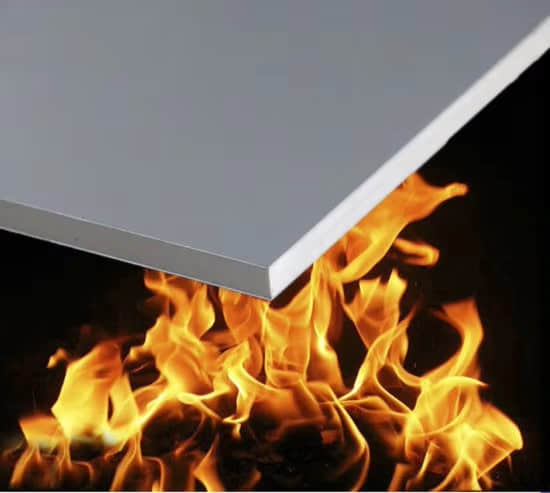
Product Name | Fire-proof Aluminum Composite Panel A2/B1 |
Width | 1220mm, 1250mm, 1500mm |
Length | Any size, recommended 2440mm,3050mm, 4050mm |
Standard Size | 1220*2440mm (4’*8’), 1500mm*3050mm(5’*10’) |
Panel Thickness | 2mm-6mm, recommended 3mm, 4mm |
Alu Skin Thickness | 0.1mm-0.5mm, recommended 0.15mm, 0.21mm,0.30mm |
Aluminum Alloy | AA1100 |
Core Material | FR A2, FR B1 |
Coating | PE/PVDF |
Warranty | 10-20 years |
Color | RAL, PANTONE color chart, or customers’requirement |
Deliver Time | 20-30 days after receiving the deposit |
Packing | FCL, in bulk, LCL, wooden package, or according to the customers’ request |
Product Advantage | 1. Lightweight and durable 2. Superior weather resistance 3. Excellent fireproof property 4. Excellent surface flatness 5. Easy to process 6. Easy to maintain 7. Superior peeling strength |
Fire-Proof Aluminum Composite Panels: Understanding A2 and B1 Fire Classifications
When specifying cladding for modern buildings, fire safety is the single most critical factor. For procurement managers, façade engineers, and general contractors, understanding A2 and B1 fire classifications is not just about compliance—it directly impacts building insurance, legal liability, and human lives.
While standard polyethylene (PE) core panels are economical, they are highly flammable. This has led regulators worldwide to mandate stricter fire ratings for exterior façades, especially on high-rise structures. In this guide, we break down the technical differences between A2 and B1, and explain what you should demand from any aluminum composite panel manufacturer before placing a bulk order.
What Do A2 and B1 Fire Ratings Mean?
Both A2 and B1 are international fire performance grades, but they represent very different levels of safety.
B1 – Difficult to Ignite (Low Flammability)
B1 is a German standard defined in DIN 4102-1. It translates to "hardly flammable" or difficult to ignite.
- Core material: Modified flame-retardant polyethylene (FR-PE) or a special polyolefin blend.
- Behavior under fire: The panel self-extinguishes when the flame source is removed. However, it can still melt and release burning droplets under intense heat.
- Smoke production: Moderate smoke density (typically class s2 or s3).
- Typical applications: Interior wall cladding, partition walls, low-rise buildings (under 20 meters), and areas with limited evacuation risk.
A2 – Limited Combustibility (Nearly Non-Combustible)
A2 is the highest practical rating for composite panels, defined under EN 13501-1 (European standard). Materials rated A2 are classified as limited combustibility.
- Core material: A mineral-filled, non-combustible core containing 85–90% inert minerals (e.g., magnesium hydroxide or aluminium trihydrate).
- Behavior under fire: Contributes almost no heat to a fire. Total heat release (THR) must be below 3 MJ/kg. No flaming droplets.
- Smoke production: Low to zero smoke – the best A2 grade is **A2-s1, d0** (s1 = minimal smoke, d0 = no flaming droplets).
- Typical applications: High-rise building façades (>20 meters), hospitals, airports, schools, and any public assembly building.
Key takeaway: If you are sourcing for an external façade on a building over 18-20 meters, A2 is mandatory in most developed markets (EU, UK, UAE, Australia, and many US jurisdictions adopting IBC/NFPA standards).
A2 vs B1: Side-by-Side Comparison for Buyers
Feature | B1 (FR Core) | A2 (Mineral Core) |
Combustibility | Self-extinguishing, but can burn | Limited combustibility |
Melting | Yes – plastic core melts | No melting |
Flaming droplets | Possible | None (d0 rating) |
Smoke toxicity | Moderate | Very low |
Suitable for >20m height | No (most codes prohibit) | Yes |
Cost | Medium | Higher (due to mineral core) |
Weight | Light (similar to standard ACP) | Slightly heavier |
Why Professional Buyers Prefer A2 Mineral Core Panels
After major fire tragedies like Grenfell (London, 2017), regulatory bodies have drastically tightened requirements. Many countries now require A2 or higher for any building with a habitable floor above 18 meters.
Using B1 panels on high-rise exteriors may pass a quick visual inspection, but if a real fire occurs, the results can be catastrophic. As a procurement professional, specifying A2 protects your company from liability, retrofit costs, and reputational damage.
What to Look for When Sourcing Fire-Proof Composite Panels
Not all "fire-rated" panels are equal. Demand the following documentation from any aluminum composite panel manufacturer:
1. EN 13501-1 test certificate from an accredited third-party lab (e.g., TÜV, BMT, or Warringtonfire). Look specifically for "A2-s1, d0".
2. DIN 4102-1 certificate for B1 (only accept if your project explicitly allows B1).
3. Raw material traceability – The mineral core should be consistently blended, and the aluminium skins should use 3000 series alloy for corrosion resistance.
4. Coating quality – For exterior use, insist on PVDF (Kynar 500®) coating, not polyester. PVDF provides 20+ years of weather resistance and colour retention.
The Advantage of Working Directly with a Factory
Many distributors rebrand generic panels, making quality control difficult. To ensure consistent fire performance, you should source directly from a dedicated production facility. A professional Alucobond factory maintains strict process control over core mixing, aluminium degreasing, and hot-pressing lamination.
While the name "Alucobond" is a registered trademark of 3A Composites, the original patent has expired. Today, several high-end factories produce panels that meet or exceed original A2 specifications. When evaluating suppliers, consider a certified ALUCOBOND manufacturer – these manufacturers either license the technology or adhere to equivalent rigorous standards, delivering the same non-combustible safety at a competitive B2B price point.
Pro tip: Ask for videos or live reports of the single burning item (SBI) test. A genuine aluminum composite panel manufacturer will share unedited test footage upon request.
Cost Considerations: Short-Term Savings vs Long-Term Safety
A2 panels cost roughly 30–50% more than B1 panels, and B1 panels cost more than standard PE. At first glance, this makes B1 seem like a compromise. However, consider the following:
- Retrofit costs: Replacing non-compliant cladding on a completed building can run into millions of dollars.
- Insurance premiums: Buildings with A2-rated façades often qualify for lower fire insurance rates.
- Legal compliance: In many regions, using B1 on a high-rise can void your building permit and lead to stop-work orders.
A reputable Alucobond factory will provide full transparency on pricing, core composition, and test results. For large-scale projects (50,000m² or more), direct factory pricing makes A2 far more affordable than buying through intermediaries.
How to Verify A2 Certification – Avoid Fake Labels
Some suppliers claim "A2 equivalent" or "fire-resistant" without true certification. Protect your procurement process by:
- Checking the report number on the lab’s official website.
- Confirming the test date – older reports (over 5 years) may be invalid if production processes have changed.
- Requesting a sample panel and cutting it open to examine the core colour and texture (mineral cores are typically grey or off-white, while FR-PE cores are translucent or black).
A serious ALUCOBOND manufacturer will have no hesitation in providing sample panels and test reports before you sign a contract.
Conclusion
Understanding A2 and B1 fire classifications is essential for any cladding purchase. For interior or low-rise exterior applications, B1 panels offer decent self-extinguishing properties. But for high-rise façades, public buildings, or any project where human safety is paramount, A2 mineral-core panels are the only responsible choice.
Work with a trusted aluminum composite panel manufacturer who operates their own Alucobond factory and can demonstrate verified A2-s1, d0 performance. Whether you choose an original brand or a certified ALUCOBOND manufacturer, prioritize test documentation, coating quality, and core composition. Your building’s safety – and your professional reputation – depends on it.