Welcome to Vbond
How Urbanization is Driving Aluminum Composite Panel Consumption
The world is witnessing the most profound demographic shift in human history. According to the United Nations' World Urbanization Prospects 2025 summary, cities now house 45 percent of the global population of 8.2 billion, up from just 20 percent in 1950. When including towns and semi-dense areas, the share of people living in urban settings rises to an astonishing **81 percent** of humanity. By 2050, global city populations are expected to absorb two-thirds of all future population growth.
As megacities swell and new urban centers emerge, the demand for efficient, durable, and visually appealing building materials has surged. Among these, Aluminum Composite Panels (ACPs) have become a material of choice for architects, developers, and contractors. The Global Aluminium Composite Panels Market is projected to grow from USD 6.78 billion in 2025 to USD 10.38 billion by 2031, registering a compound annual growth rate of 7.36%. But why are these two trends—urbanization and ACP consumption—so closely linked?
This article explores how the rapid expansion of cities worldwide is driving the adoption of ACPs, from the soaring skylines of Asia to the mega-projects of the Middle East, and explains the technical advantages that make ACPs indispensable in modern urban construction.
1. The Global Urbanization Engine
Urbanization is not a uniform phenomenon. While megacities (populations exceeding 10 million) often dominate headlines, the United Nations report notes that about 96 percent of the world‘s cities have fewer than one million people. This means growth is occurring across the entire urban spectrum—from small regional centers to sprawling global hubs.
Asia dominates this landscape: Nine of the world‘s 10 most populous cities in 2025 are in Asia, and nearly 60 percent of all megacities are located in the region. As more people move into urban areas, the demand for new housing, commercial spaces, transport hubs, and public infrastructure has created a construction boom that shows no signs of slowing.
Key Urbanization Drivers
- Population Migration: Rural-to-urban migration, particularly in developing economies, is creating millions of new city dwellers each year. The United Nations projects that global city populations will continue to absorb the majority of future population growth.
- Economic Growth: Cities are engines of economic activity, generating over 80 percent of global GDP. As economies expand, so does investment in commercial real estate, corporate headquarters, retail spaces, and mixed-use developments.
- Government Initiatives: National infrastructure programs—from India’s Smart Cities Mission to Saudi Arabia’s Vision 2030—are accelerating urban construction at an unprecedented scale.
2. How Urbanization Creates Demand for ACPs
Urban environments place unique demands on building materials. High-density construction, space constraints, tight project timelines, and stringent safety regulations all influence material selection. ACPs address these challenges in several ways.
2.1 High-Rise Construction and Vertical Urbanization
As cities grow outward, land becomes scarce and expensive. The natural response is to build upward. High-rise residential towers, office skyscrapers, and mixed-use developments have become the signature of modern urban centers. These structures require cladding materials that are lightweight, easy to install, and capable of achieving a premium aesthetic.
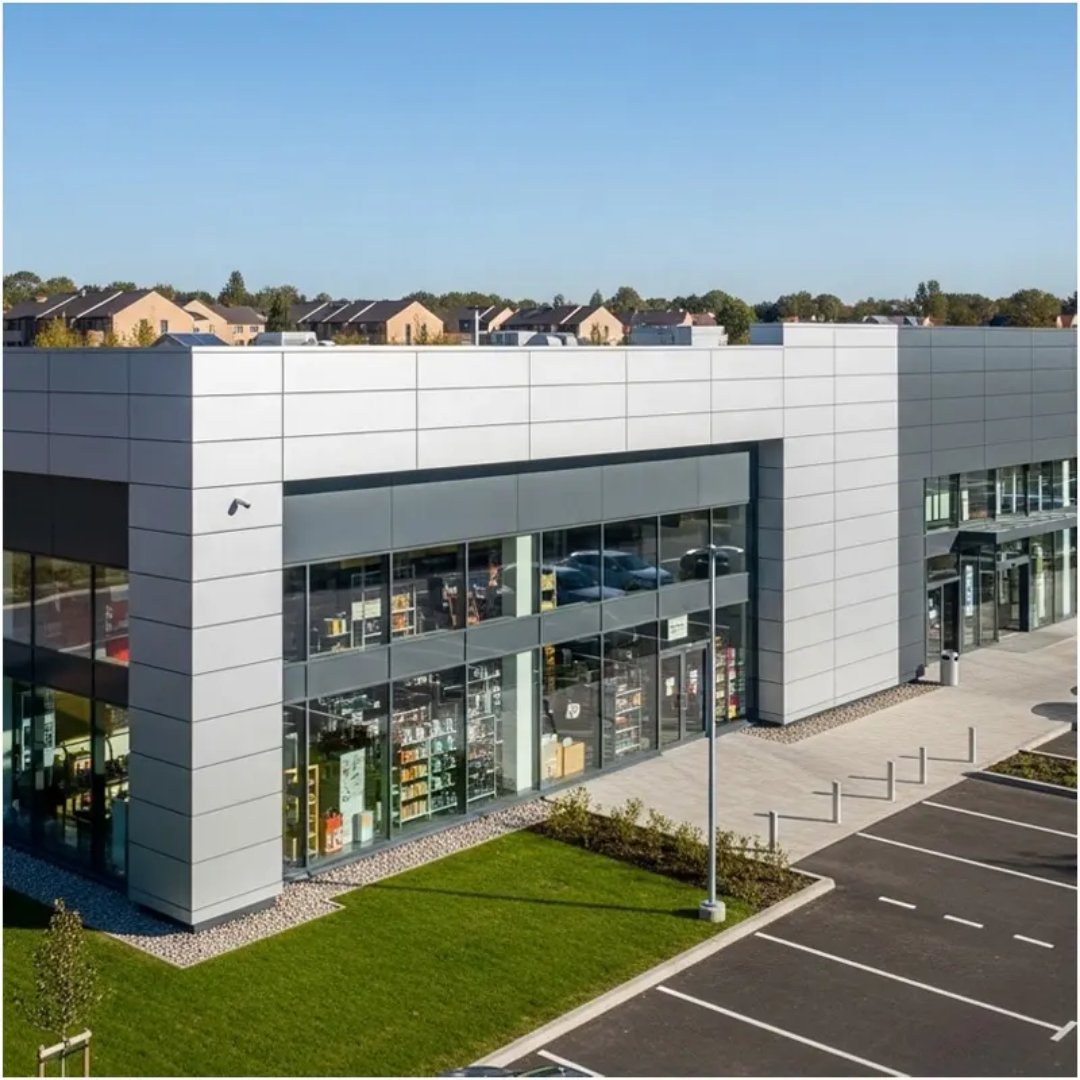
Large-scale urban projects, including smart cities, transportation hubs, airports, and high-rise buildings, rely heavily on ACPs for cladding and aesthetics. Their light weight, ease of installation, and design versatility make them ideal for cost-effective yet modern construction.
From a structural engineering perspective, the weight savings are significant. Aluminum composite panels can reduce structural dead load by up to 65 percent compared to traditional steel or concrete cladding solutions, directly reducing foundation and framing costs.
2.2 Infrastructure Development
Urbanization demands more than just housing. It requires airports, railway stations, metro systems, bus terminals, and public buildings—all of which utilize ACPs for their combination of durability and design flexibility.
In India, for example, “large-scale metro rail expansions, airport modernizations, and railway station overhauls are gaining momentum,” with demand for high-quality ACP solutions expected to surge. Across the Middle East, approximately $2 trillion of construction projects are planned through 2035, driven by mega-projects such as NEOM, Etihad Rail, and Egypt‘s New Administrative Capital.
2.3 Commercial Real Estate and Mixed-Use Developments
As urban populations grow, so does the need for commercial space. Corporate offices, IT parks, retail spaces, and hotels are investing heavily in premium façade solutions to enhance aesthetic appeal and brand identity. In India, for instance, the commercial real estate sector is witnessing a strong revival, with developers seeking cladding that conveys quality, innovation, and sustainability.
2.4 Renovation and Retrofit of Aging Urban Stock
Not all urbanization involves new construction. Many cities have aging building stock that requires modernization to meet contemporary standards of energy efficiency, safety, and aesthetics. ACPs are increasingly used in renovation and retrofit projects because they can be installed over existing facades with minimal structural modification, allowing buildings to remain occupied during construction.
As one industry analysis notes, the market’s trajectory to 2035 will be fundamentally determined by the pace of infrastructure development, commercial real estate investment, and the adoption of ACPs in renovation and retrofit projects across key economies.
3. Regional Hotspots Driving ACP Demand
Urbanization is occurring at different speeds across the globe. Understanding regional dynamics is essential for procurement professionals seeking to optimize supply chains and anticipate demand.
3.1 Asia-Pacific: The Growth Engine
The Asia-Pacific region dominates both urban population growth and ACP consumption. It is the world‘s fastest-growing construction market, and its demand for ACPs is surging accordingly.
China remains the world’s largest producer and consumer of ACPs, driven by sustained infrastructure investment. The National Bureau of Statistics of China reported in January 2025 that infrastructure investment in China grew by 4.4 percent in 2024, underlining sustained demand in this crucial regional market. China‘s urbanization rate reached 67.89 percent in 2025, with a target of 71 percent by 2030.
India represents perhaps the most dynamic growth story. The country has five megacities, with New Delhi ranking among the world’s four largest cities at over 30 million residents. India‘s construction market experienced robust growth during 2021-2025, achieving a CAGR of 14.2 percent. The ACP market in 2025 is poised for remarkable growth, fueled by India’s rapid urbanization and the government‘s ambitious infrastructure push.
Southeast Asia is also accelerating. The ASEAN construction sector, powered by a combined population of over 680 million, shows resilient growth. Indonesia hosts the region’s largest construction sector, Vietnam benefits from strong FDI inflows supporting industrial construction, and the Philippines‘ “Build, Build, Build” initiative continues to drive significant sector expansion.
3.2 Middle East and Africa: Mega-Projects and New Cities
The Middle East is urbanizing at an unprecedented scale. Across the GCC and Egypt, about $2 trillion of construction projects are planned through 2035, driven by mega-projects such as NEOM, the Red Sea resorts, Etihad Rail, and Egypt‘s New Administrative Capital. Saudi Arabia alone plans to invest over USD 175 billion annually in industrial and mega-projects between 2025 and 2028.
In Africa, as urbanization accelerates, demand for durable, cost-effective, and aesthetically versatile building materials is surging. Aluminum composite panels have become central to modern architectural design, used in commercial facades, public infrastructure, and residential developments.
3.3 Latin America: Steady Growth in Urban Centers
South American countries are seeing a steady rise in ACP demand as the construction industry focuses on cost-effective and durable materials. Brazil, Argentina, and Colombia are leading this growth, with rapid urbanization across Brazil, Colombia, and Peru acting as a significant market driver. Brazil’s booming construction sector, with large-scale infrastructure projects underway in São Paulo, Rio de Janeiro, and Brasília, is a particularly significant contributor.
3.4 North America and Europe: Moderate but Steady Growth
While growth rates are more moderate in mature markets, urbanization and infrastructure renewal continue to drive ACP consumption. The total value of construction in the United States reached $2,154.4 billion in 2024, a 6.5 percent increase over 2023. In Europe, the focus on sustainable materials, green buildings, and renovation of older infrastructure using advanced cladding systems supports steady demand.
4. Key ACP Properties that Meet Urban Construction Needs
Urban environments impose specific performance requirements on building materials. ACPs excel across several critical dimensions.
4.1 Lightweight Construction for Vertical Cities
As cities build upward, structural load becomes a critical constraint. ACPs are remarkably lightweight—typically 5.5 to 7.5 kg per square meter for a 4mm panel—which is approximately 80 percent lighter than solid aluminum of equivalent thickness.
This lightweight nature reduces structural load without compromising on strength, making ACPs ideal for both new construction and retrofit projects. They allow architects and engineers to achieve ambitious designs without proportionally increasing foundation and framing costs.
4.2 Speed of Installation for Fast-Paced Urban Projects
Urban construction projects operate on tight timelines. Delays mean increased financing costs and delayed revenue. ACPs arrive on-site as prefabricated, modular panels that can be easily cut, routed, and installed using standard metalworking tools.
This ease of handling and installation translates directly into faster project completion, reduced labor costs, and improved cash flow for developers—critical advantages in competitive urban real estate markets.
4.3 Durability and Low Maintenance
Urban environments expose building facades to pollution, acid rain, UV radiation, and temperature extremes. ACPs are engineered to withstand these challenges. Coatings such as polyvinylidene fluoride (PVDF) offer superior resistance to UV rays, acid rain, industrial emissions, and moisture conditions that typically lead to degradation in conventional cladding materials.
ACP‘s non-porous, smooth finish is also less likely to attract and retain dust or grime, significantly reducing the need for frequent cleaning. This low-maintenance characteristic is particularly valuable for high-rise buildings where facade cleaning is expensive and logistically challenging.
4.4 Fire Safety for High-Rise Urban Dwellings
Following several high-profile façade-related fire incidents, building codes in major urban centers have tightened dramatically. For high-rise buildings—the signature of modern urbanization—A2 fire-rated panels are now mandatory in many jurisdictions.
A2 core ACP uses more than 90 percent mineral content, offering the highest fire performance available in ACP. The UK requires A2-s1,d0 for façades above 18 metres and many public buildings, and many EU countries follow similar policies. This regulatory framework has made fire-rated ACPs the preferred choice for responsible developers, particularly in dense urban environments where fire spread poses heightened risks.
4.5 Energy Efficiency and Thermal Performance
Urban buildings are significant consumers of energy. As cities pursue carbon reduction targets, the energy efficiency of building envelopes has become a priority. Buildings cladded with ACP can see up to a 22 percent decrease in HVAC energy consumption** over common cement plaster facades. ACPs prevent thermal bridging and stabilize indoor temperatures, reducing reliance on mechanical heating and cooling systems.
4.6 Design Versatility for Brand Identity
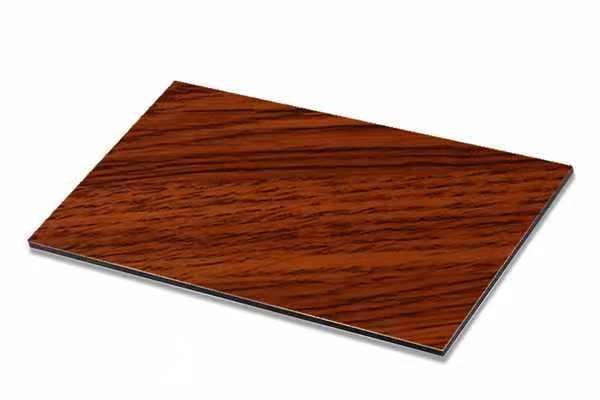
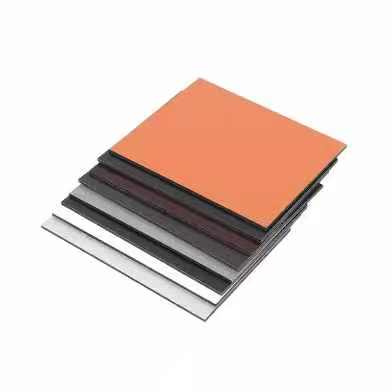
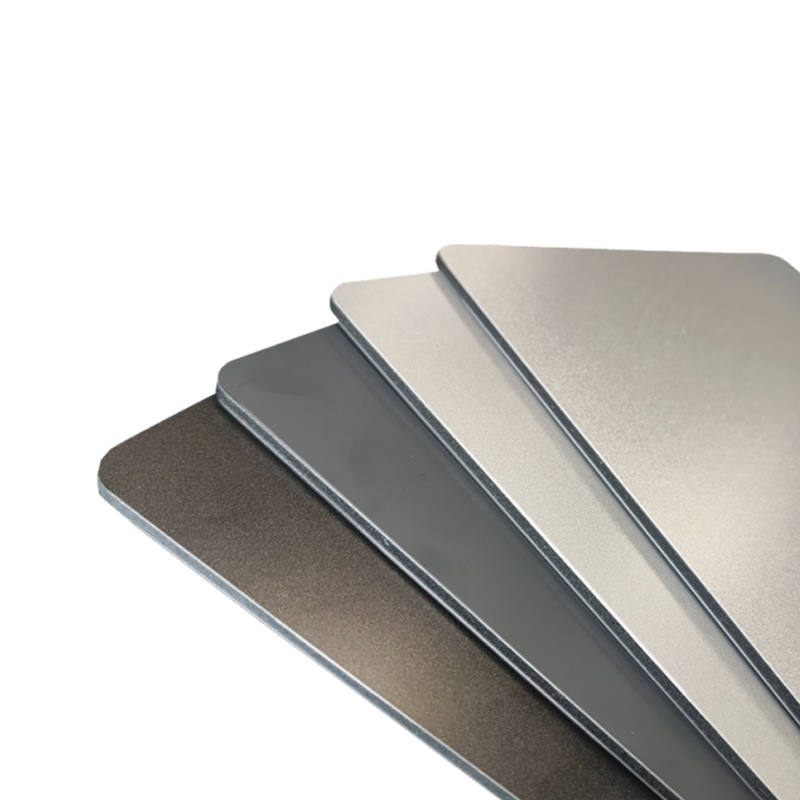
In competitive urban real estate markets, a building‘s facade is its most visible brand statement. ACPs are available in an extensive range of colors, textures, and finishes—including metallic, matte, glossy, wood grain, and stone effects. They can be easily curved, bent, folded, and cut to achieve virtually any architectural shape. This design flexibility allows developers to create distinctive, memorable buildings that command premium lease rates and property values.
5. Sustainability: Aligning ACPs with Green Urban Development
Urbanization and environmental sustainability are often portrayed as conflicting forces. However, ACPs offer a pathway to reconcile urban growth with environmental responsibility.
Aluminum is 100 percent recyclable without loss of quality. Recycling aluminum uses 95 percent less energy and produces 95 percent fewer emissions compared to primary aluminum production. When an ACP reaches the end of its life, the aluminum can be recycled repeatedly, contributing to a circular economy.
The rising demand for energy-efficient and green building solutions is influencing material selection, favoring aluminum composite panels due to their recyclability and thermal efficiency. Modern projects that comply with sustainability standards are driving architects to specify materials that reduce carbon footprints.
By choosing EPD-certified ACPs, architects and developers can earn up to two LEED points for green building projects, supporting their sustainability goals while meeting the demands of urban development.
6. The Future: Where Urbanization and ACP Innovation Converge
The relationship between urbanization and ACP consumption is not static—it is evolving. Several emerging trends will shape the next phase of this growth.
6.1 Smart Cities and Digital Integration
The smart cities of the future will require building materials that can integrate with digital infrastructure. ACPs are increasingly being specified for projects that incorporate Building Information Modeling (BIM), IoT-enabled building systems, and responsive building envelopes. The integration of ACPs with smart building technologies, such as solar-integrated panels and IoT-enabled facade monitoring, is gaining momentum.
6.2 Sustainable and Circular Construction
As cities pursue net-zero emissions targets, demand for low-carbon building materials will intensify. By 2026, the EU‘s “Carbon Neutral Building Products Act” (CPND) will mandate that building materials disclose their full-cycle carbon footprint. Industry leaders have already achieved green hydrogen for aluminum smelting, reducing carbon emissions by 85 percent compared to traditional processes, and blockchain traceability systems enabling each square meter of panel to have its carbon footprint data accessible via a digital passport.
The zero-carbon ACP price has already approached that of traditional materials, and it is expected to reach parity by 2027. This convergence will accelerate ACP adoption in urban construction.
6.3 Fire Safety Innovation
As building codes continue to tighten, the demand for A2 fire-rated panels will only increase. Manufacturers are continuously improving the performance of these panels, particularly by enhancing fire resistance, which has become a crucial aspect in light of stricter building codes and regulations.
7. Procurement Implications: What to Consider
For procurement professionals sourcing ACPs for urban construction projects, several key considerations emerge from these trends.
- Geographic Diversification: With growth concentrated in Asia-Pacific, the Middle East, and Latin America, relying on a single source or region increases risk. Consider suppliers with manufacturing presence in multiple growth markets.
- Fire Rating Compliance: For high-rise urban projects, A2-rated mineral-core panels are non-negotiable. Request EN 13501-1 classification reports and verify test documentation.
- Sustainability Documentation: For projects pursuing LEED, BREEAM, or other green certifications, require Environmental Product Declarations (EPDs) and recycled content statements.
- Lead Time Planning: With infrastructure projects accelerating globally, ACP demand may outpace supply in certain regions. Maintain strategic inventory and build a buffer into project schedules.
- Supplier Digital Maturity: As smart cities and digital integration advance, prioritize suppliers with BIM compatibility, digital tracking capabilities, and documented quality control systems.
8. Conclusion
Urbanization is not merely a demographic trend—it is a fundamental restructuring of human society that is reshaping the construction industry. As cities grow upward and outward, the demand for building materials that combine lightweight construction, design versatility, fire safety, energy efficiency, and sustainability has never been greater.
Aluminum composite panels meet these demands across every dimension. From the megacities of Asia to the mega-projects of the Middle East, from the commercial towers of North America to the urban renewal projects of Europe, ACPs are becoming the cladding material of choice for modern urban construction.
The numbers tell the story: cities now house 45 percent of the global population, up from just 20 percent in 1950. The ACP market is growing at a CAGR of 7.36%, projected to reach USD 10.38 billion by 2031. These two trends are inextricably linked. As the world urbanizes, the world builds with ACPs.
For procurement professionals, the message is clear: the era of urban expansion is the era of aluminum composite panels. By understanding the drivers, regional dynamics, and performance characteristics outlined here, you can make informed sourcing decisions that deliver lasting value for the cities of tomorrow.