Welcome to Vbond
Substrate + Coating: Why PVDF on Low-Grade ACM Fails in Coastal ACP Projects
Introduction
A high-performance coating does not guarantee a high-performance aluminum composite panel (ACP). This becomes clear in coastal projects, where panels face salt spray, strong sunlight, high humidity, and wind-driven rain.
Many buyers choose PVDF because of its strong weather resistance. However, even a premium PVDF finish can fail when the aluminum skins, pretreatment, bonding layers, or core materials fall below the required quality level.
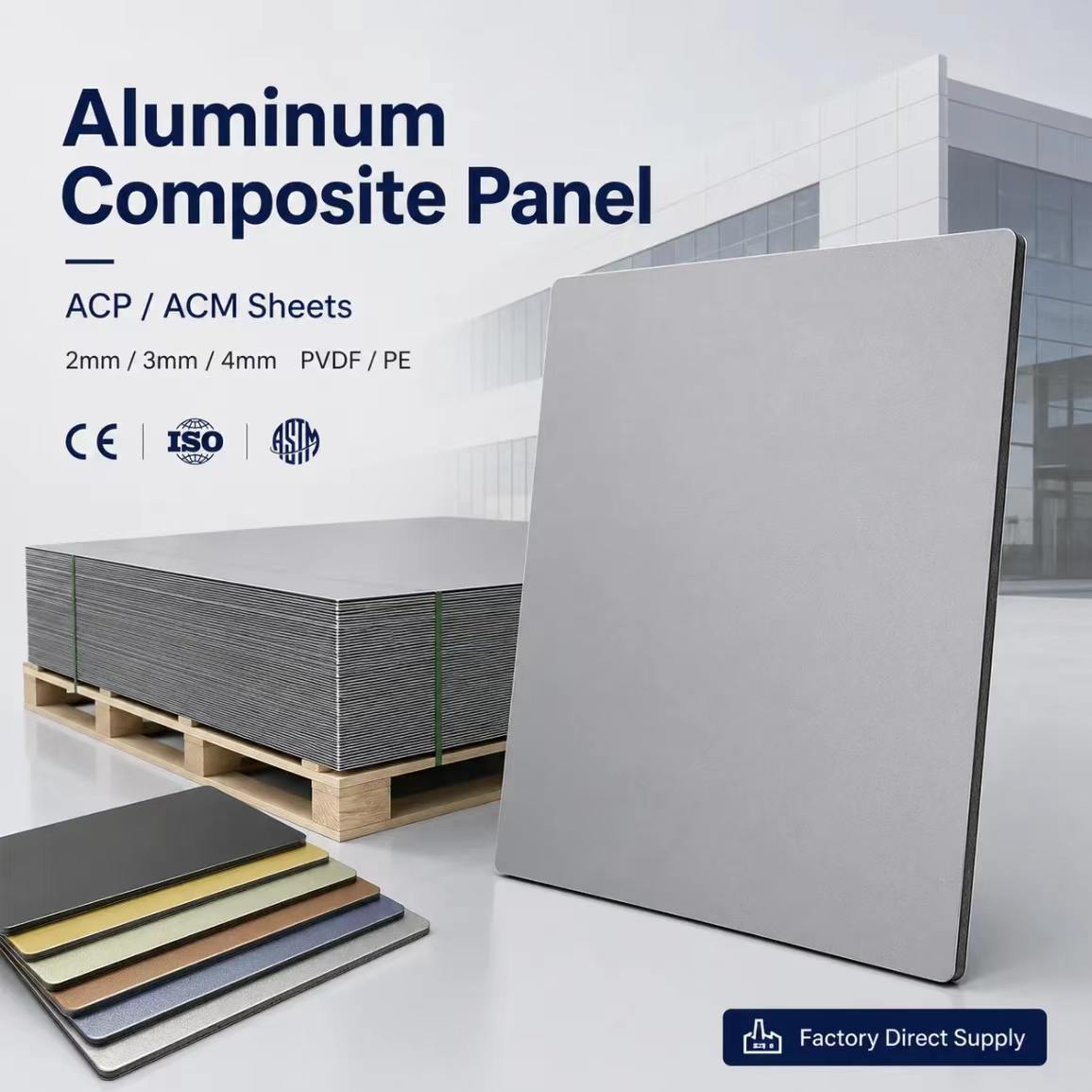
This is why professional buyers should evaluate the substrate and coating as one system. When sourcing Fluorocarbon coated Alucobond or comparable aluminum composite materials, do not judge quality by the coating name alone.
A durable coastal ACP panel needs two things: a suitable coating system and a reliable panel structure. Both must work together throughout the building's service life.
1. Why PVDF Cannot Fix a Poor ACP Substrate
PVDF is a fluoropolymer coating used on architectural aluminum surfaces. It offers strong resistance to UV exposure, weathering, and many environmental pollutants.
However, PVDF protects only the surfaces that receive the coating. It cannot improve the aluminum alloy, increase the aluminum skin thickness, strengthen the bonding layer, or correct a weak panel core.
Think of an ACP panel as a layered system. The coating protects the exposed aluminum surface, while the aluminum skins, adhesive layers, and core provide the panel's structure.
If one layer fails, the whole panel can lose performance.
The Main Layers of an ACP Panel
Component | Main Function | Common Risk in Low-Grade Panels |
PVDF topcoat | Protects the visible surface and provides color | Poor formulation, incorrect curing, or uneven application |
Primer | Supports coating adhesion and corrosion protection | Weak pretreatment or poor primer compatibility |
Aluminum skin | Provides surface strength and supports the coating | Low thickness, inconsistent alloy, or poor surface quality |
Bonding layer | Connects the aluminum skin to the core | Weak adhesion or poor process control |
Core material | Provides the panel's internal structure | Unsuitable material or inconsistent quality |
Back coating | Protects the rear aluminum surface | Inadequate protection for the intended environment |
A reliable ACP manufacturer controls every layer. A supplier who focuses only on the PVDF finish may overlook problems that appear after fabrication or installation.
2. Coastal Conditions Put More Stress on ACP Panels
Coastal buildings face a combination of environmental stresses. Salt particles can settle on facade surfaces, while humidity and rain can keep the panel system wet for long periods.
Strong sunlight also accelerates the aging of exposed materials. Wind can carry salt and moisture into panel joints, openings, and poorly sealed details.
These conditions create several risks:
· Salt deposits can increase the corrosion risk on exposed or damaged aluminum.
· Persistent moisture can enter panel joints and reach vulnerable edges.
· UV exposure can age coatings, sealants, and other exterior materials.
· Wind-driven rain can push water into poorly designed connections.
· Temperature changes can place stress on panel joints and attachment systems.
The risk does not come from salt alone. Corrosion often develops when moisture, salt deposits, damaged protective layers, and poor detailing combine.
This is why a coastal ACP specification should address the complete panel system, not just its front coating.
3. Problem One: Aluminum Skin Thickness Is Too Low
Aluminum skin thickness is one of the first details buyers should check. The aluminum skins provide the panel's outer surfaces and contribute to its stiffness, impact resistance, and fabrication performance.
Some low-cost suppliers reduce aluminum thickness to lower material costs. The finished panel may still look smooth and attractive, but its mechanical performance may not match the project specification.
Why Thin Aluminum Skins Create Problems
Thin skins can reduce the panel's resistance to local impact and handling damage. They may also increase the risk of dents, surface distortion, and damage around fixing points.
A thin aluminum skin does not automatically cause corrosion. However, reduced material thickness can leave less room for damage, fabrication errors, and later repairs.
For coastal projects, damaged areas deserve special attention. Once the coating or protective surface treatment is broken, moisture and salt can reach the aluminum beneath.
What Buyers Should Check
Inspection Item | What to Verify | Why It Matters |
Aluminum skin thickness | Actual thickness of each aluminum skin | Confirms compliance with the panel specification |
Thickness tolerance | Supplier's stated production tolerance | Identifies variation between panels |
Aluminum alloy | Exact alloy designation | Supports material traceability |
Temper | Specified temper and supporting documents | Affects forming and mechanical behavior |
Measurement method | Calibrated instrument and test procedure | Improves inspection reliability |
Inspection points | Multiple locations across the panel | Reduces the risk of relying on one reading |
Do not confuse total panel thickness with aluminum skin thickness. A panel may have a 4 mm total thickness while using much thinner aluminum skins.
Ask the supplier to state the front and back skin thickness separately. For important projects, include a clear measurement method and acceptance tolerance in the purchase specification.
4. Problem Two: Poor Aluminum Surface Preparation Weakens the Coating System
PVDF coating needs a properly prepared aluminum surface. Before coating, manufacturers must remove contaminants and create a suitable surface for the coating system.
This process often includes cleaning, chemical pretreatment, rinsing, drying, and controlled coating application. The exact process depends on the coating manufacturer's requirements and the production line.
If the manufacturer skips steps or controls them poorly, the coating may not bond well to the aluminum.
What Happens When Pretreatment Fails?
A poorly prepared surface can lead to weak adhesion. Moisture may then move through damaged or poorly bonded areas and create conditions that support underfilm corrosion.
This type of failure can appear as:
· Blistering or bubbles under the coating
· Peeling around damaged areas
· Local coating separation
· Corrosion spreading from scratches or exposed edges
· Uneven surface appearance after weather exposure
The coating may pass a simple visual inspection when it leaves the factory. Problems can appear later after repeated exposure to moisture, heat, and salt.
How Buyers Can Verify Surface Preparation
Ask the manufacturer to explain its aluminum pretreatment process. The supplier should identify the pretreatment system, process controls, and inspection records.
For a large coastal project, buyers can request relevant adhesion and corrosion test results. The test report should identify the tested coating system and substrate instead of showing only a general laboratory result.
A good PVDF formula cannot compensate for a poorly prepared aluminum surface.
5. Problem Three: Low-Quality Aluminum Can Increase Corrosion Risk
Aluminum naturally forms a thin oxide layer when exposed to air. This layer provides some protection, but it does not make aluminum immune to corrosion.
Salt deposits can increase the conductivity of moisture on the surface. When water remains in contact with aluminum, chloride ions can damage the protective oxide layer and promote localized corrosion.
Pitting Corrosion
Pitting corrosion creates small, localized holes in the aluminum surface. These pits may develop in areas where salt and moisture remain for long periods.
The damage can be difficult to detect at an early stage. It may become more visible after the coating is scratched, damaged, or separated from the substrate.
Crevice Corrosion
Crevice corrosion can develop in narrow spaces where moisture and salt become trapped. Panel joints, folded edges, fastener areas, and poorly drained details may create these conditions.
The coating on the visible face cannot protect every hidden surface. Good panel design must also address edges, joints, drainage, and the compatibility of connected materials.
Galvanic Corrosion
Galvanic corrosion can occur when aluminum contacts a different metal in the presence of an electrolyte, such as salt water.
For example, an unsuitable connection between aluminum panels and certain metal fasteners can increase corrosion risk. Proper material selection, isolation, and detailing can reduce this risk.
Buyer tip: Ask the facade contractor to review fasteners, brackets, washers, and other connected metals for compatibility with the aluminum panel system.
6. Problem Four: Weak Bonding Between Aluminum and the Core
ACP is a bonded sandwich panel. The aluminum skins connect to the core through bonding layers that must maintain their strength during handling, fabrication, and service.
Low-grade ACM may use an unsuitable bonding system or an inconsistent lamination process. Poor bonding can cause the aluminum skin to separate from the core.
This problem is known as delamination.
Why Delamination Matters in Coastal Projects
Water can enter through damaged joints, cut edges, or installation defects. If moisture reaches a weak bonding area, it may contribute to further damage.
Temperature changes can also create repeated expansion and contraction. The panel's layers must remain bonded as they respond to these changes.
Possible warning signs include:
· Local bulging
· Uneven panel surfaces
· Separation near edges
· Reduced flatness
· Visible changes after fabrication or installation
PVDF does not strengthen the bonding layer. A premium coating on a poorly bonded panel still leaves the buyer with a structural quality problem.
How to Evaluate Bonding Quality
Ask for bonding strength data that matches the panel type and project specification. Confirm the test method, sample preparation, test conditions, and acceptance criteria.
Also check whether the report covers the same core and aluminum skin construction as the panels in the order. A test result from a different panel structure may not represent the supplied product.
7. Problem Five: Poor Core Selection Affects the Complete Panel
The core material influences panel stiffness, weight, bonding, and fire performance. Different projects require different core types and fire classifications.
A low-grade supplier may offer a panel that looks similar to a specified product but uses a different core material. This can change the panel's performance and may affect compliance with project requirements.
Core Quality Is Not a Coating Issue
AAMA coating performance specifications evaluate coating properties. They do not certify every property of the complete ACP panel.
For example, a PVDF coating test report does not prove that the panel meets a required fire classification. Buyers must request separate evidence for fire performance, bonding strength, and other relevant panel properties.
Core or Panel Requirement | What Buyers Should Verify |
Core type | Exact material description |
Fire classification | Required classification and applicable test report |
Core consistency | Production quality and material records |
Bonding strength | Test results for the complete panel structure |
Panel thickness | Total thickness and tolerance |
Intended application | Suitability for the building's use and local code |
For coastal high-rise projects, the project team should review fire requirements, facade design, and panel construction as separate but connected decisions.
8. Why Cut Edges and Panel Joints Often Become Weak Points
The front surface receives most of the attention during product selection. However, many coastal durability problems begin at areas that buyers do not see during a showroom inspection.
Cut edges, drilled holes, folded corners, and panel joints can expose aluminum or create paths for moisture. If the manufacturer or installer handles these areas poorly, the panel may face a higher risk of localized damage.
Common Weak Points
Area | Potential Problem | Recommended Control |
Cut edges | Exposed aluminum and moisture contact | Follow the approved edge treatment and fabrication method |
Folded corners | Cracking or coating damage during fabrication | Use suitable routing and folding procedures |
Drilled holes | Damaged coating or exposed metal | Control drilling and protect vulnerable areas |
Panel joints | Water entry and salt deposits | Use suitable joint design and sealant |
Fastener points | Water entry or galvanic corrosion | Check material compatibility and sealing |
Rear surface | Moisture exposure in concealed areas | Specify a suitable back coating and protection level |
The correct edge treatment depends on the panel design and installation system. Do not assume that every cut edge needs the same paint or sealant treatment.
The manufacturer and facade contractor should agree on the fabrication details before mass production begins.
9. A Coastal ACP Failure Example: Premium PVDF, Poor Panel Construction
Consider a commercial building located near the coast. The project team selects a PVDF-coated ACP panel because the facade needs strong weather resistance and long-term color stability.
The supplier offers an attractive price and provides a product brochure that highlights the PVDF finish. However, the quotation gives limited information about aluminum skin thickness, pretreatment, bonding strength, and core material.
After installation, the building faces repeated salt exposure and wind-driven rain. Several years later, the maintenance team finds coating damage near panel edges, localized corrosion, and areas with uneven panel surfaces.
What May Have Gone Wrong?
The coating itself may not be the only cause. The project team should investigate the complete failure path.
Observed Issue | Possible Cause to Investigate |
Peeling near damaged areas | Weak adhesion, surface contamination, or mechanical damage |
Corrosion at cut edges | Exposed aluminum, trapped moisture, or poor edge detailing |
Bulging or surface separation | Bonding failure or moisture-related damage |
Dents and local distortion | Insufficient skin thickness or impact damage |
Corrosion near fasteners | Material incompatibility or poor water protection |
These are possible causes, not automatic diagnoses. A proper investigation should inspect the coating, aluminum substrate, core, bonding layer, panel edges, and installation details.
The Main Lesson
The project team paid for a premium coating but did not verify the panel structure. As a result, the PVDF finish could not deliver the expected system-level performance.
A better procurement process would have checked the complete panel before approving the order.
10. How to Inspect PVDF-Coated ACP Before Shipment
A professional buyer should use more than a visual check. Factory inspection should combine document review, material verification, dimensional checks, and selected performance tests.
The inspection plan should match the project specification and the risks of the installation environment.
Recommended Factory Inspection Plan
Inspection Stage | Main Check | Suggested Evidence |
Raw material | Aluminum alloy and skin thickness | Material records and measurements |
Surface preparation | Cleaning and pretreatment control | Process records |
Coating | Coating product, application, and curing | Coating records and test data |
Panel lamination | Bonding process and core construction | Production records and bonding tests |
Finished panel | Thickness, width, length, and flatness | Inspection report |
Surface appearance | Color, gloss, scratches, and visible defects | Approved sample comparison |
Packaging | Protection against scratches and moisture | Packing inspection |
Traceability | Link between production batch and inspection data | Batch records |
Useful Test Methods
The following methods may support ACP quality control when they match the project specification:
· ASTM D3359: Evaluates coating adhesion using a tape test.
· ASTM D2244: Calculates color differences from measured color data.
· ASTM D523: Measures specular gloss.
· ASTM D4214: Evaluates chalking of exterior coatings.
· ASTM B117: Provides a salt spray corrosion test method.
· ASTM D7091: Covers nondestructive measurement of dry film thickness on metal substrates using suitable instruments.
· ASTM D4541: Measures pull-off strength of coatings, where applicable to the specified test setup.
These methods do not all test the same property. Some evaluate the coating, while others support panel or process inspection.
A salt spray result alone does not prove that a complete ACP panel will perform well on a coastal facade. Buyers should review test scope, sample construction, exposure conditions, and acceptance criteria.
11. A Better Procurement Strategy: Specify the Substrate and Coating Together
A coastal ACP specification should define the panel construction before it defines the finish. This prevents suppliers from using a premium coating name to distract from differences in the underlying panel.
The purchase specification should identify measurable requirements for each critical component.
Suggested Procurement Requirements
Specification Area | Information to Include |
Coating system | PVDF coating manufacturer, product series, and required performance |
Coating evidence | Applicable test reports and coating system identification |
Aluminum skins | Front and back thickness, alloy, and temper |
Surface treatment | Pretreatment system and process requirements |
Core | Exact core type and required fire performance |
Bonding | Required bonding strength and test method |
Panel dimensions | Total thickness, width, length, and tolerances |
Fabrication | Approved routing, folding, drilling, and edge treatment |
Color | Approved color sample and gloss range |
Quality control | Inspection frequency and acceptance criteria |
Traceability | Batch identification and production records |
Packaging | Protection from impact, moisture, and surface damage |
Avoid vague descriptions such as "premium PVDF ACP" or "marine-grade aluminum composite panel." These phrases do not define measurable product requirements.
Instead, request specific material data, test evidence, and inspection records. This gives the buyer a clear basis for comparing suppliers.
12. How to Compare Two PVDF ACP Suppliers
Two suppliers may both advertise PVDF-coated panels, but their products may differ in several important ways.
One supplier may use thicker aluminum skins, a controlled pretreatment process, and verified bonding strength. Another may offer a similar surface finish but provide limited information about its substrate and production controls.
A fair comparison should include the following items:
Comparison Point | Supplier A | Supplier B |
PVDF coating manufacturer | Confirmed product | Confirmed product |
Coating performance evidence | Report available | Report available |
Front aluminum skin | Measured value | Measured value |
Back aluminum skin | Measured value | Measured value |
Aluminum alloy and temper | Documented | Documented |
Pretreatment process | Defined | Defined |
Core material | Confirmed | Confirmed |
Bonding strength | Verified result | Verified result |
Fire performance | Relevant report | Relevant report |
Edge treatment | Defined method | Defined method |
Production traceability | Available | Available |
Total project price | Quoted value | Quoted value |
Do not select a supplier based on the PVDF label or unit price alone. Compare products with the same panel dimensions, skin thickness, core requirements, finish, and performance criteria.
This approach reduces the risk of comparing a properly specified panel with a lower-grade product that only looks similar.
13. Common Questions About PVDF Coating and Low-Grade ACM
Can PVDF coating prevent aluminum corrosion?
PVDF provides a protective coating on the surfaces where it is correctly applied. It can reduce exposure of the aluminum to weather and environmental pollutants.
However, it cannot protect damaged, uncoated, or poorly treated areas. Cut edges, drilled holes, scratches, and hidden surfaces need suitable design and protection.
Why does PVDF coating peel from aluminum?
Peeling can result from poor surface preparation, incompatible coating layers, incorrect curing, mechanical damage, or other production problems.
A proper investigation should check the coating system and the aluminum surface. Do not assume that the PVDF resin itself caused the failure.
Is thicker aluminum always better for coastal ACP?
Not in every situation. The correct skin thickness depends on panel size, support spacing, wind load, fabrication method, and project design.
Buyers should follow the engineer's specification rather than choose the thickest option without considering the complete facade system.
Does a PVDF certificate prove that an ACP panel is high quality?
No. A coating certificate only supports the coating claims within its stated scope.
It does not automatically verify aluminum thickness, bonding strength, core quality, fire performance, or finished panel dimensions.
Should coastal projects always use AAMA 2605 PVDF?
AAMA 2605 is often considered for demanding exterior applications. However, the required coating performance should follow the project's exposure conditions and specification.
Even an AAMA 2605-compliant coating cannot correct poor aluminum skins, weak bonding, or unsuitable installation details.
What is the difference between ACM and ACP?
ACM stands for aluminum composite material, while ACP stands for aluminum composite panel. In many markets, the terms describe the same general type of bonded aluminum sandwich panel.
The important purchasing details are the actual panel construction, material specifications, and verified performance.
Conclusion: Durable Coastal ACP Starts Beneath the Coating
PVDF offers strong weathering performance, but coating quality alone cannot guarantee a durable coastal facade. Aluminum skin thickness, alloy quality, surface pretreatment, bonding strength, core selection, and edge protection all affect the final result.
Ask for measurable substrate specifications. Review coating and bonding test reports. Confirm core requirements and inspect the areas where salt and moisture can enter.
A reliable coastal ACP panel does not depend on a premium coating alone. It depends on a suitable substrate, a controlled manufacturing process, and correct facade detailing working together.