Welcome to Vbond
The Hidden Risk of Oil Canning on Large Aluminum Composite Panel Installations
The Hidden Risk of Oil Canning on Large Aluminum Composite Panel Installations
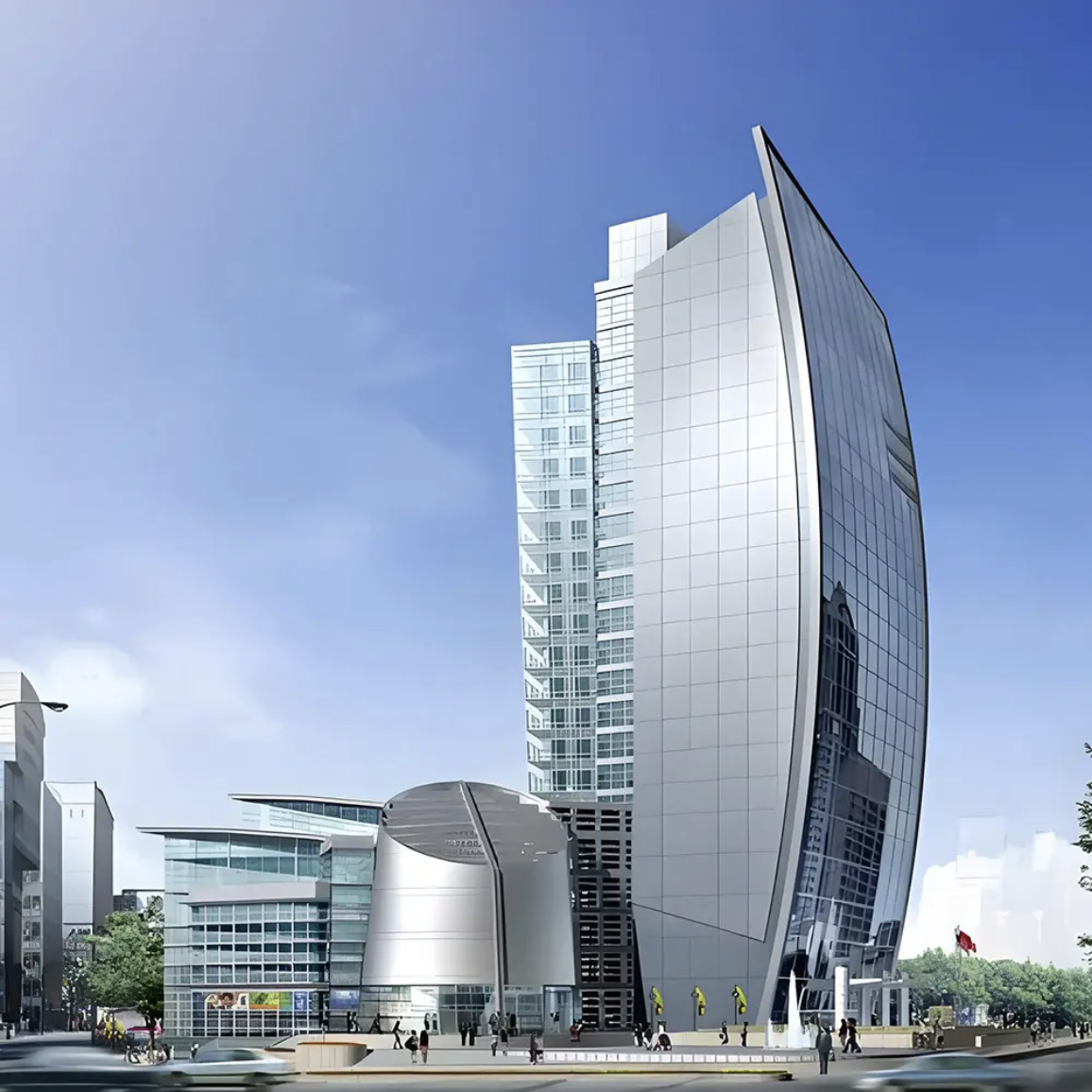
You have invested in a premium facade. The design is striking. The color is perfect. The installation is complete. Then the sun hits the building at a certain angle—and you see them. Waves. Ripples. Distortions. The flawless flat surface you expected looks uneven and wavy.
This phenomenon is called oil canning, and it is one of the most frustrating—and misunderstood—risks in large aluminum composite panel (ACP) installations.
Oil canning does not compromise structural integrity, but it destroys visual perfection. On large, flat facades where aesthetics are paramount, visible ripples can turn a landmark building into an eyesore. While a premium aluminum composite panel manufacturer like an Alucobond factory engineers its products for superior flatness, the risk of oil canning is influenced by a combination of material selection, design, fabrication, and installation factors.
This guide explains what oil canning is, why it happens, how it can be prevented, and why choosing a high-quality ALUCOBOND manufacturer provides the best defense against this hidden risk.
1. What Is Oil Canning? Defining the Visual Defect
Oil canning, also known as elastic buckling or stress wrinkling, refers to the visible waviness or rippling that can occur on the surface of flat metal panels. The term originates from the visual similarity to the bottom of an old-fashioned oil can, which pops in and out.
Characteristic | Description |
Appearance | Subtle waves, shadows, or ripples across flat panel surfaces |
Visibility | More noticeable at certain viewing angles and under specific lighting conditions |
Structural Impact | Cosmetic only; does not compromise panel strength or weather resistance |
Reversibility | Generally not reversible after installation |
As the official ALUCOBOND specification states, the cladding surface "shall not have any irregularities such as oil canning, waves, buckles, and other imperfections when viewed at any position but not less than at an angle of 15 degrees to the true plane of the panel". This standard establishes that some degree of visual imperfection is inevitable in metal cladding—but that acceptable limits can be defined and enforced.
2. The Hidden Causes: Why Oil Canning Occurs
Oil canning is rarely caused by a single factor. It typically results from a combination of material, design, fabrication, and installation issues. Understanding these causes is the first step toward prevention.
2.1 Material-Related Causes
Inconsistent Flatness from Manufacturing
Not all aluminum composite panels are manufactured with the same precision. A professional aluminum composite panel manufacturer, like an Alucobond factory, controls cooling rates, lamination pressure, and material tension to produce panels with exceptional flatness. Lower-quality manufacturers may produce panels with residual stresses that manifest as waves after installation.
Low Rigidity and Core Integrity
The core material's stiffness directly affects the panel's resistance to oil canning. Panels lacking sufficient rigidity are more susceptible to elastic buckling. Premium panels like ALUCOBOND® utilize a mineral-filled core that provides enhanced stability and flexural rigidity. ALUCODUAL® solid aluminium sheets are described as "pre-coated engineered solid sheet comprising 2/3 layers of laminated aluminium sheet" that "ensures perfect flatness, which is often challenging to achieve with standard post-coated solid sheets".
The Rigidity Advantage of Premium Panels
A study comparing a bonded aluminum panel (Vitracore G2) against a 3mm solid aluminum panel demonstrated that the engineered composite panel was more than 4 times more resistant to buckling forces that cause oil canning. The rigid core structure distributes stress evenly, preventing localized deformation.
2.2 Design-Related Causes
Excessive Panel Width
Wider, flatter panels are more susceptible to oil canning because they lack the structural rigidity provided by ribs, striations, or other stiffening features. Large, uninterrupted flat expanses of metal—while visually striking—are inherently vulnerable to visible distortion.
Inadequate Allowance for Thermal Movement
Metal expands and contracts with temperature changes. ALUCOBOND® specifications explicitly require that "the cladding shall be so fabricated and erected as to provide for all expansion and contraction of the components". When panels are fastened too tightly or without allowance for thermal movement, this natural expansion creates internal stress that leads to oil canning.
2.3 Fabrication-Related Causes
Stresses Introduced During Cutting and Forming
The processes of cutting, routing, and folding panels can introduce internal stresses. As one analysis explains, "all metals have a 'memory'" and will try to revert to their original form if improperly handled. Inaccurate routing or folding creates tension that appears as rippling after installation.
Improper Storage and Handling
Metal panels can be damaged before they even reach the jobsite. Mishandling during transportation, over-stacking, or dragging panels can create stresses that appear as oil canning once installed.
2.4 Installation-Related Causes
Uneven Substructure
If the supporting framework is not perfectly flat and square, panels will conform to these irregularities, creating visible waves. Even small values of "out of square" can lead to problems, with longer spans amplifying the impact. The ALUCOBOND specification requires that the subframe be inspected before panels are installed.
Incorrect Fastening Techniques
Over-tightening screws or rivets creates stress points that pull the panel surface inward, causing rippling. The technical literature warns of "over-driving fasteners" and "angling fasteners" as specific causes of distortion.
Inconsistent Joint Gaps
Uneven gaps between panels create stress as panels attempt to align with each other during installation.
3. The Cost of Oil Canning: Aesthetic and Financial Impact
While oil canning does not compromise structural integrity, its impact on large installations can be severe.
Aesthetic Failure
On large, flat facades—particularly those with high-gloss or light-colored finishes—oil canning is highly visible. The very conditions that make a building visually striking (broad, uninterrupted metal surfaces) also make it most vulnerable to visible distortion.
The official ALUCOBOND specification acknowledges this reality by setting an inspection standard: panels viewed from a 15-degree angle under natural lighting should not show irregularities. This means that while absolute perfect flatness is impossible, acceptable visual performance is defined and measurable.
Financial Consequences
Consequence | Consequence |
Failed inspection | Panels may be rejected by architects or building owners |
Costly remediation | Oil canning cannot be "fixed" after installation; affected panels may need replacement |
Reputational damage | Visible waves suggest poor quality, regardless of actual structural performance |
4. How to Prevent Oil Canning: A Procurement and Installation Protocol
Prevention requires attention at every stage of the project—from material selection through final installation.
4.1 Material Selection: Start with Quality
Selection Criteria | Why It Matters |
Premium manufacturer | ALUCOBOND® specifies alloy EN AW-5005A (marine-grade) with 0.5mm skin thickness and a mineral-filled core providing "outstanding product attributes such as precise flatness." |
Sufficient panel thickness | Thicker panels (4mm or 6mm) provide greater rigidity and resistance to buckling than thinner options |
Certified flatness tolerance | ALUCODUAL® maintains a thickness tolerance of ±0.15 mm, ensuring dimensional consistency |
The ALUCOBOND product description emphasizes "precise flatness, variety of surfaces and colours as well as excellent formability" as distinguishing features. This is what procurement professionals should look for when specifying panels.
4.2 Design Considerations
- Limit panel width: For large, flat areas, consider breaking the facade into smaller panel modules or incorporating reveals that interrupt the visual expanse
- Allow for thermal movement: Design attachment systems that permit expansion and contraction without constraint. ALUCOBOND® specifications require providing for "all expansion and contraction of the components."
- Specify adequate substructure: Ensure the supporting frame is designed to be flat, square, and rigid
4.3 Fabrication Best Practices
Use precision CNC equipment | Accurate cutting and routing prevent stress introduction |
Use precision CNC equipment | Accurate cutting and routing prevent stress introduction |
Avoid introducing tension | Ensure folding and forming operations do not create residual stress |
Handle with care | Prevent bending, twisting, or over-stacking that creates "metal memory" issues |
4.4 Installation Standards
- Verify substructure flatness: Before panel installation, inspect and correct any irregularities in the supporting frame
- Use correct fastening techniques: Do not over-torque fasteners; allow panels to "float" and expand
- Follow manufacturer guidelines: ALUCOBOND® provides detailed fixing center specifications
- Maintain consistent joint gaps: Ensure uniform spacing between panels to prevent stress
5. The Alucobond Factory Advantage: Engineered for Flatness
When you source from a professional Alucobond factory or ALUCOBOND manufacturer, you are not just buying panels—you are buying engineered flatness.
Precision Manufacturing
ALUCOBOND panels feature "two aluminium cover sheets of corrosion-resistant alloy AMg1 (A5005A)" with 0.5mm thickness and "a core containing a minimum 70% non-combustible mineral filling". This composite structure is engineered for "very high stability and flexural rigidity".
Defined Performance Standards
The official ALUCOBOND specification provides measurable acceptance criteria for flatness, stating that panels must be free from "irregularities such as oil canning, waves, buckles and other imperfections when viewed at any position but not less than at an angle of 15 degrees". This provides procurement professionals with an objective standard to enforce.
Superior Core Technology
ALUCOBOND A2 features a "mineral (building material class B, s1, d0 and A2, s1, d0)" core that provides enhanced rigidity compared to standard PE cores. This rigidity directly translates to reduced oil canning risk.
Solid Aluminum Alternative
For applications requiring maximum flatness, ALUCODUAL® solid aluminium sheets are "engineered with 2–3 layers of laminated aluminium skins" ensuring "perfect flatness, enhanced rigidity, and long-lasting durability". The multi-bake coil coating process with PVDF/FEVE paint systems meeting AAMA 2605 provides superior performance for exterior use.
6. Specification Language for Procurement Professionals
To protect your project from oil canning risk, include this language in your ACP purchase order:
"Aluminum composite panels shall be supplied by a manufacturer meeting ISO 9001 certification with documented flatness control procedures. Panels shall have aluminum alloy EN AW-5005A (or equivalent marine-grade) with a minimum 0.5mm skin thickness and a mineral-filled core providing enhanced rigidity. Installed panels shall not exhibit oil canning, waves, buckles, or other visible irregularities when viewed from a 15-degree angle under natural lighting, per ALUCOBOND specification standards. Subframe shall be inspected for flatness before panel installation. Fasteners shall not be over-torqued, and thermal expansion joints shall be provided as specified."
7. Conclusion
Oil canning is the hidden risk of large aluminum composite panel installations. It does not threaten structural integrity, but it can destroy the visual perfection that architects and building owners demand.
For procurement professionals, the message is clear:
1. Select a premium manufacturer with documented flatness control and rigid core technology
2. Specify measurable standards referencing ALUCOBOND® flatness requirements
3. Design for prevention—limit panel widths, allow thermal movement, and ensure substructure flatness
4. Inspect before installation—verify substructure condition and panel flatness
5. Train installation crews on correct fastening techniques that avoid stress introduction
A reputable aluminum composite panel manufacturer, like an Alucobond factory or ALUCOBOND manufacturer, engineers its products for exceptional flatness and provides clear specification standards. However, even the best panels will show oil canning if the substructure is uneven, fasteners are over-tightened, or thermal movement is constrained.
The best defense against oil canning is a combination of quality materials, thoughtful design, and meticulous installation. Do not let hidden waves ruin your facade's first impression.n