Welcome to Vbond
The Role of Gaskets and Sealants in Aluminum Composite Panel Longevity
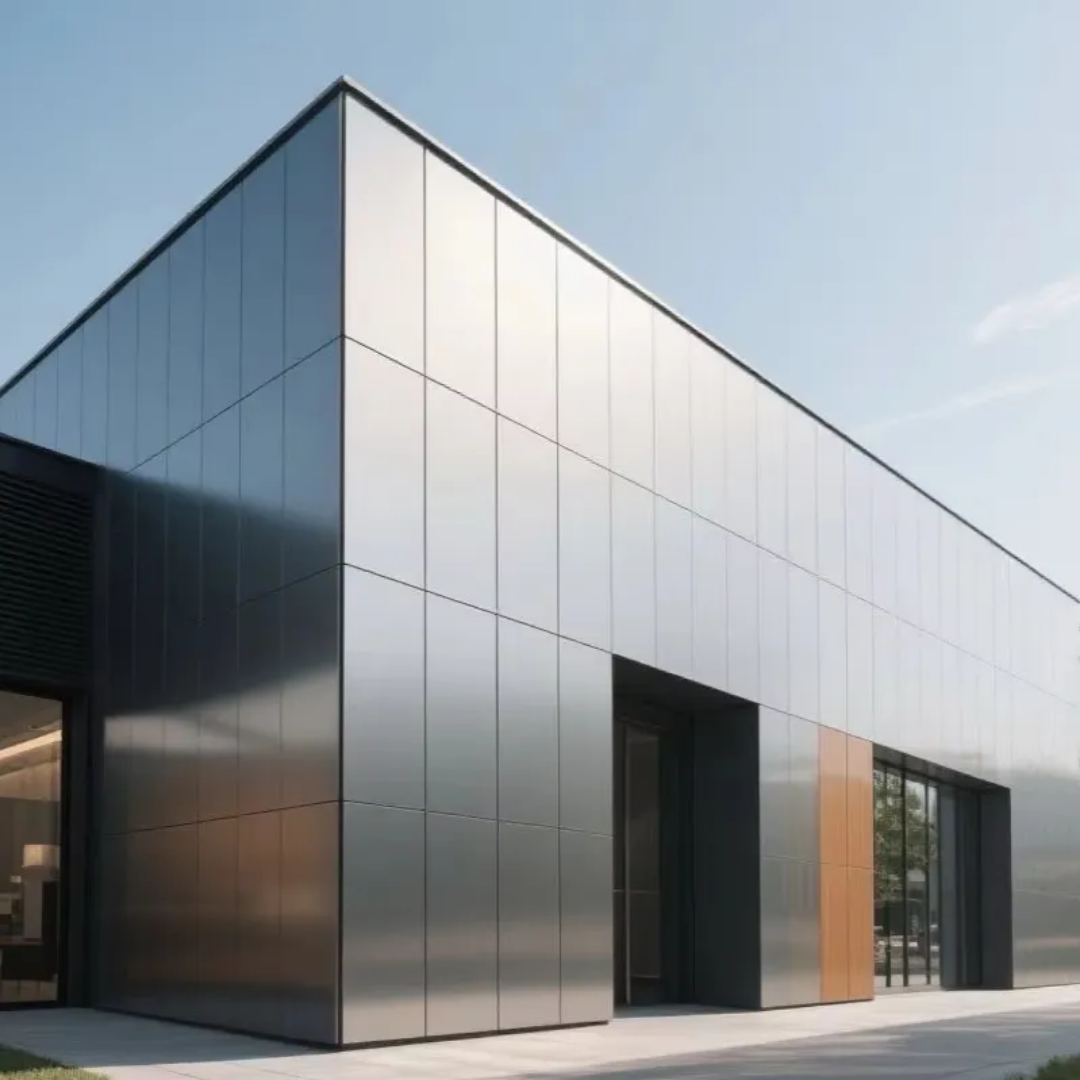
For procurement professionals, the longevity of an aluminum composite panel (ACP) facade depends on more than just the panel's core material or coating quality. While much attention is given to selecting A2 fire-rated panels or premium PVDF finishes, the unsung heroes of facade durability are the gaskets and sealants that seal every joint, edge, and penetration
These seemingly minor components are the building envelope's first line of defense against moisture ingress, air leakage, thermal inefficiency, and structural degradation. When properly selected and installed, they can ensure decades of maintenance-free service. When overlooked or under-specified, they become the weakest link in the facade system, leading to water damage, core delamination, corrosion, and premature failure.
This article explains the critical functions of gaskets and sealants in ACP systems, compares material options, outlines maintenance requirements, and provides procurement professionals with actionable specifications for long-term facade performance.
Part One: Why Gaskets and Sealants Matter
The Unseen Protectors
While small in quantity and nearly invisible once applied, sealants play a significant role in determining how a metal building system functions over its decades of use. They protect against moisture ingress, preserve thermal integrity, and ensure panels perform as designed across changing temperatures and environments. Without the right sealant, even the most advanced metal system can lose its efficiency and resilience.
For aluminum composite panels specifically, the vulnerabilities are concentrated at the joints. ACPs are installed in large sheets with seams between them. These seams are natural entry points for water, air, and contaminants. Gaskets and sealants bridge these gaps, creating a continuous protective barrier that preserves the building envelope's integrity.
How They Protect ACP Systems
Protection Mechanism | Function |
Moisture barrier | Prevents water from reaching the panel core and substructure |
Air sealing | Stops uncontrolled airflow that degrades insulation performance |
Thermal movement accommodation | Allows panels to expand and contract without cracking seals |
Corrosion prevention | Protects aluminum skins and steel substructure from moisture exposure |
Structural load transfer | In some systems, it provides limited load distribution across joints |
The Consequences of Failure
When sealants or gaskets fail, the consequences cascade. Water infiltrates behind the panels, saturating insulation and accelerating corrosion of fasteners and substructure. In cold climates, freeze-thaw cycles expand trapped water, exerting pressure on panel edges and causing delamination. For ACPs with polyethylene cores, prolonged moisture exposure can degrade the adhesive bond between skins and core, leading to panel failure.
Field experience indicates that joint movement is the predominant factor in sealant failure. Weathering alone without simultaneous mechanical cycling reproduces surface degradation effects, but joint movement—the daily expansion and contraction of panels—is what ultimately causes sealants to crack and separate[reference:1]. This is why specifying flexible, movement-capable sealants is essential for any facade exposed to temperature swings.
Part Two: Gaskets vs. Sealants – Two Approaches, One Goal
ACP systems employ two fundamentally different methods for sealing joints: dry gasket joints and wet sealant joints. Each has distinct advantages and trade-offs.
Dry Gasket Joints (Compression Seals)
In dry gasket joints, pre-formed EPDM (ethylene propylene diene monomer) rubber gaskets are inserted between the panel and the substructure or between adjacent panels. The gasket is compressed during installation, creating a watertight seal without the use of liquid sealants.
Advantages:
- Cleaner appearance: Gaskets reduce dirt and stain accumulation on panel surfaces, as there is no exposed sealant to attract grime.
- No curing time: Installation proceeds immediately without waiting for the sealant to cure.
- Easier replacement: Damaged gaskets can be removed and replaced without cutting or scraping.
- Comparable durability: The durability of EPDM gaskets is comparable to that of high-quality sealants.
Limitations:
- Requires precise fabrication: Gasket grooves must be accurately machined into panel edges or framing.
- Limited gap tolerance: Gaskets cannot accommodate wide variations in joint width.
- Compression set risk: Over time, rubber gaskets can lose elasticity if permanently compressed.
Wet Sealant Joints (Liquid-Applied Seals)
Wet sealant joints involve applying a liquid sealant—typically silicone, polyurethane, or MS polymer—into the gap between panels after they are fixed to the substructure. The sealant cures in place, forming a flexible, adhesive bond to both panel edges.
Advantages:
- Accommodates irregular gaps: Sealants can fill joints of varying widths, compensating for minor fabrication tolerances.
- Superior adhesion: Chemically bonds to panel surfaces, creating a continuous waterproof membrane.
- High movement capacity: Quality silicone sealants offer displacement capacities of ±25% to ±50%, allowing panels to expand and contract without breaking the seal.
- Wide temperature tolerance: Silicone sealants remain flexible from -50°C to +200°C, maintaining performance across extreme climate conditions.
Limitations:
- Surface preparation critical: Sealants require clean, dry, oil-free surfaces for proper adhesion.
- Curing time required: Sealants need time to cure before exposure to water or extreme temperatures.
- Aesthetic concerns: Exposed sealant lines can attract dirt and may yellow over time if low-quality materials are used.
When to Use Each Method
Application | Recommended Method |
High-rise facades with frequent wind-driven rain | Wet sealant (silicone) |
Stone or timber-patterned panels where narrow joints are aesthetic features | Dry gasket or narrow open joint |
Renovation projects where substrates may be uneven | Wet sealant (gap-filling) |
High-traffic areas where sealant staining is a concern | Dry gasket |
Roofing and overhead applications | Wet sealant (self-leveling grade) |
Some ACP installations use a hybrid approach: dry gaskets for primary compression sealing and a secondary bead of sealant for redundant weatherproofing in critical areas such as corners and window penetrations.
Part Three: Material Selection – Choosing the Right Sealant
Not all sealants perform equally on aluminum composite panels. Selecting the wrong chemistry can result in poor adhesion, premature cracking, or even corrosion of the aluminum surface.
Silicone Sealants
Silicone is the industry standard for exterior ACP curtain wall sealing. High-quality silicone sealants formulated specifically for aluminum composite panels offer excellent adhesion to ACP surfaces and aluminum frames, resisting detachment and providing stable, long-lasting bonding even under temperature fluctuations and vibration.
Silicone sealants provide unmatched UV resistance, thermal stability, and flexibility, with movement capacities up to ±50%, ensuring seamless protection for ACM joints against extreme temperatures, rain, and humidity.
Key distinction: Neutral-cure silicone is the correct choice for aluminum applications. It cures without releasing corrosive byproducts, making it safe for contact with aluminum skins and coated surfaces. Acetoxy-cure silicone releases acetic acid during curing and should never be used on aluminum, as it can corrode the metal and damage PVDF coatings.
MS Polymer Sealants
Modified Silane (MS) polymer sealants offer an alternative to traditional silicones. They provide excellent adhesion to ACM panels, metals, and coated surfaces, with low VOC emissions and paintable properties for seamless integration into architectural designs.
MS sealants are particularly suitable for interior ACM installations where low odor and paintability are valued. For exterior applications, silicone remains the preferred choice due to superior UV resistance and long-term elasticity.
Polyurethane Sealants
Polyurethane sealants offer excellent abrasion resistance and high tensile strength. They are commonly used in structural glazing and high-traffic applications. However, they have lower UV resistance than silicones and may require a topcoat for exterior exposure.
Butyl Sealants
Butyl tape sealants are pre-formed rolls of pliable material used primarily in concealed joints, rib joints, and end laps. They maintain flexibility and adhesion across temperatures ranging from -5°F to +120°F, but have a shorter service life (approximately 10–15 years) compared to silicones (20+ years).
EPDM Gaskets
For dry gasket systems, EPDM is the material of choice. EPDM gaskets offer exceptional weather resistance, maintaining integrity under extreme temperatures (-50°C to +150°C), UV radiation, and ozone exposure. They are durable in outdoor environments with good flexibility and compression set resistance[reference:14]. Their primary limitation is poor resistance to oils and solvents, but for standard facade applications, this is rarely a concern.
Material Selection Matrix
Material | Best For | Service Life | Movement Capacity | UV Resistance | Compatibility with Aluminum |
Neutral-cure silicone | Exterior facades, high-rise | 20+ years | ±25–50% | Excellent | Safe (non-corrosive) |
MS Polymer | Interior, paintable applications | 15–20 years | Moderate | Good | Safe |
Polyurethane | Structural, high-abrasion areas | 15–20 years | Moderate | Moderate | Safe with primer |
Butyl tape | Concealed joints, laps | 10–15 years | Low | Poor | Safe |
EPDM gasket | Dry joint systems | 20 years | N/A (compression seal) | Excellent | Safe |
Part Four: The Critical Role of Gaskets in ACP Systems
While sealants receive more attention, gaskets are equally important—particularly in dry joint systems and at panel-to-substructure connections.
Types of Gaskets for ACP Applications
EPDM Gaskets: As noted above, EPDM gaskets are the most widely used for aluminum profiles due to their exceptional weather resistance. They maintain integrity under extreme temperatures, UV radiation, and ozone exposure, performing well from -50°C to +150°C.
Silicone Gaskets: Silicone gaskets provide unmatched thermal stability across an extremely wide temperature range (-60°C to +250°C) and are non-toxic, making them suitable for sensitive environments. However, they have lower mechanical strength than EPDM and higher material cost.
Nitrile Rubber (NBR) Gaskets: NBR gaskets offer strong resistance to oils, greases, and fuels, but they degrade in prolonged outdoor exposure due to poor UV and ozone resistance. They are generally not recommended for exposed facade applications.
PVC Gaskets: PVC gaskets are cost-effective but have a limited temperature range (-10°C to +60°C) and become brittle in cold weather. They are suitable only for interior or mild-climate applications.
Where Gaskets Are Used in ACP Systems
Location | Function | Typical Material |
Panel-to-frame connections | Seals between the panel edge and the substructure | EPDM or silicone |
Inter-panel joints (dry system) | A compression seal between adjacent panels | EPDM |
Corner joints | Seals at building corners where panels meet | EPDM pre-formed corners |
Window and door penetrations | Seals between ACP panels and fenestration frames | EPDM or silicone |
Expansion joints | Accommodates thermal movement at building expansion points | Silicone or EPDM with backer rod |
Gasket Installation Best Practices
Proper gasket installation is critical for long-term performance. Key requirements include:
- Clean surfaces: Remove all foreign impurities and debris from the gasket pressing surface, fasteners, and gasket itself before installation.
- Centering: Carefully insert the sealing gasket between the two flanges, ensuring it is in the center position between the mating surfaces.
- No unauthorized adhesives: Unless the gasket installation instructions require the use of adhesive or anti-adhesion agent, these should not be used.
- Flange alignment: Align the flange surface and bolt holes carefully, ensuring the gasket is not punctured or scratched.
- Uniform compression: Tighten bolts to compress the gasket uniformly. Use a torque wrench with well-lubricated fasteners and hardened flat washers to ensure correct initial loading.
For gaskets embedded in clips (common in rainscreen systems), they should be checked annually for compression set—the permanent deformation that occurs when rubber is compressed for extended periods—and replaced if deformed.
Part Five: Installation Best Practices for Sealants
Even the highest-quality sealant will fail if improperly applied. Procurement professionals should ensure that installation contractors adhere to these industry best practices.
Surface Preparation
Clean surfaces before sealing. Use mild soap or detergent with warm water and soft brushes. Do not use harsh chemicals or rough cleaners, and avoid scouring pads that can harm the protective coating. High-pressure washers should also be avoided as they can push water into joints. After cleaning, wipe the area with dry, clean gauze and ensure the sealing surface is dry before sealant application.
Application Conditions
Sealant should be applied only under appropriate weather conditions:
- Temperature: Application temperature should be within the manufacturer's specified range (typically 5°C to 40°C).
- Dry conditions: Do not apply in rain, snow, or heavy fog.
- Substrate temperature: Ensure surfaces are above the dew point to prevent condensation.
Joint Design and Tooling
For wet sealant joints, proper joint dimensions are essential. The joint width should accommodate expected thermal movement, typically with a width-to-depth ratio of 2:1. Backer rods (closed-cell polyethylene foam) should be used in deep joints to control sealant depth and promote proper tooling.
Sealant should be tooled immediately after application to ensure full contact with joint walls and to create a concave profile that accommodates movement.
Quality Control Checks
After installation, conduct quality control checks, including:
- Visual inspection for gaps, bubbles, or incomplete filling
- Adhesion testing on sample joints
- Documentation of sealant type, batch number, and application date
For critical applications, the ACPA (Aluminum Composite Panel Association) recommends step-by-step sealant installation procedures, including reservoir cutting and preparation, sealant installation, and quality control checks.
Part Six: Maintenance and Replacement Cycles
Gaskets and sealants are not permanent—they have finite service lives and require periodic inspection and replacement.
Inspection Frequency
Component | Inspection Frequency | What to Look For |
Sealants (exterior joints) | Every 12 months | Cracks, detachment, shrinkage, hardening |
Gaskets in clips | Annually | Compression set, deformation, loss of elasticity |
Sealants around penetrations | Every 3–5 years | Hardening, cracking, and water intrusion signs |
Full facade sealant audit | Every 5 years | Comprehensive condition assessment |
Expected Service Life
Material | Expected Service Life | Notes |
Neutral-cure silicone (exterior) | 20+ years | With proper installation and maintenance |
MS Polymer | 15–20 years | Shorter UV resistance than silicone |
Polyurethane | 15–20 years | May require a topcoat for UV protection |
Butyl tape | 10–15 years | Degrades faster under UV exposure |
EPDM gaskets | 20+ years | UV and weather resistant |
When to Replace
Sealants should be replaced when:
- Cohesive failure: The sealant tears or splits because it cannot stretch enough to accommodate joint movement.
- Adhesive failure: The sealant pulls away from the panel surface, indicating loss of bond.
- Hardening: The sealant has lost elasticity and no longer flexes with panel movement.
- Cracking: Visible cracks compromise the waterproof barrier.
Prompt replacement of deteriorated seals is essential. When replacing, remove old sealant completely, clean the joint thoroughly, and apply new sealant of the same or compatible chemistry.
Part Seven: Procurement Specifications
To ensure long-term gasket and sealant performance, procurement professionals should incorporate these specifications into purchase orders and installation contracts.
Sealant Specifications
- Specify neutral-cure silicone for all exterior aluminum-to-aluminum joints
- Require movement capacity of ±25% minimum** (±50% preferred for high-rise or high-wind applications)
- Specify temperature resistance range appropriate for project climate (minimum -30°C to +90°C)
- Require UV resistance with documented accelerated weathering test results
- Specify compatibility with PVDF-coated aluminum (verify with manufacturer)
- For custom color facades, specify color-matched sealant to blend with panel finish
Gasket Specifications
- Specify EPDM material for all exterior exposed gaskets
- For high-temperature applications (roofing, dark-colored facades), specify silicone gaskets
- Require compression set resistance test data (ASTM D395)
- Specify hardness (Shore A) appropriate for application (typically 50–70 Shore A for EPDM)
- For gaskets in wet-seal joints, specify closed-cell foam backer rods (not open-cell, which absorb water)
Installation Specifications
- Require written installation procedures from the sealant manufacturer
- Specify temperature and weather restrictions for the application
- Require surface preparation, including cleaning and priming (if required)
- Specify tooling requirements for wet sealants
- Require quality control documentation, including batch numbers and inspection records
Maintenance and Warranty Specifications
- Require manufacturer warranty covering sealant adhesion and durability (minimum 10 years)
- Specify inspection intervals and require documentation of periodic inspections
- Include replacement procedures for deteriorated seals in long-term maintenance plans
Part Eight: Common Failure Modes and Prevention
Failure Mode | Cause | Prevention |
Adhesive failure | Contaminated surface, wrong primer, incompatible substrate | Proper surface cleaning; test adhesion before full application |
Cohesive failure | Sealant movement capacity exceeded by joint movement | Select high-movement sealant (±50%); design joints for expected thermal movement |
Corrosion at the sealant line | Acetoxy-cure silicone used on aluminum | Specify neutral-cure silicone only |
Gasket compression set | Low-quality EPDM; over-compression | Specify high-quality EPDM; use a torque wrench for uniform compression |
Premature hardening | UV degradation of low-quality sealant | Specify UV-resistant silicone for all exterior applications |
Water staining on panels | Sealant outgassing or plasticizer migration | Use non-staining, low-VOC sealant formulations |
Conclusion
Gaskets and sealants are the silent guardians of aluminum composite panel longevity. While they represent a small fraction of total facade cost, their impact on building envelope performance is disproportionate. A facade with properly selected, correctly installed, and regularly maintained seals will outlast one with premium panels but compromised joints.
For procurement professionals, the key takeaways are clear:
- Specify neutral-cure silicone for exterior ACP joints
- Use EPDM gaskets for dry joint systems and panel-to-frame connections
- Require movement capacity of ±25–50% to accommodate thermal expansion
- Insist on proper surface preparation and installation conditions
- Plan for periodic inspection every 12 months and replacement at 15–20 year intervals
By elevating gaskets and sealants from afterthoughts to essential specifications, you protect not only the panels themselves but the entire building envelope—ensuring decades of weathertight, energy-efficient, and aesthetically pristine performance.