Welcome to Vbond
The Science of Bending and Curving Aluminum Composite Panels Without Cracking

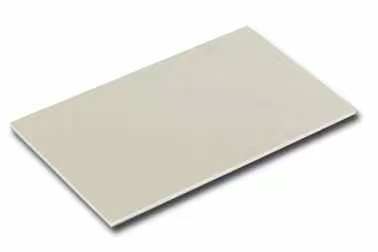
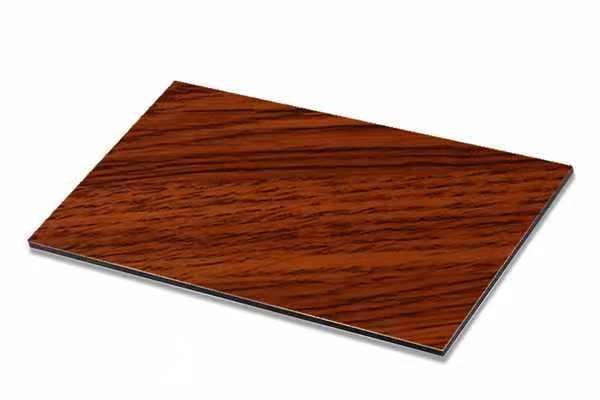
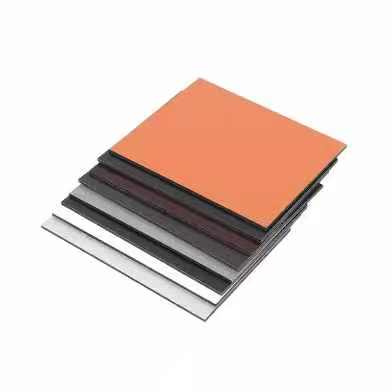
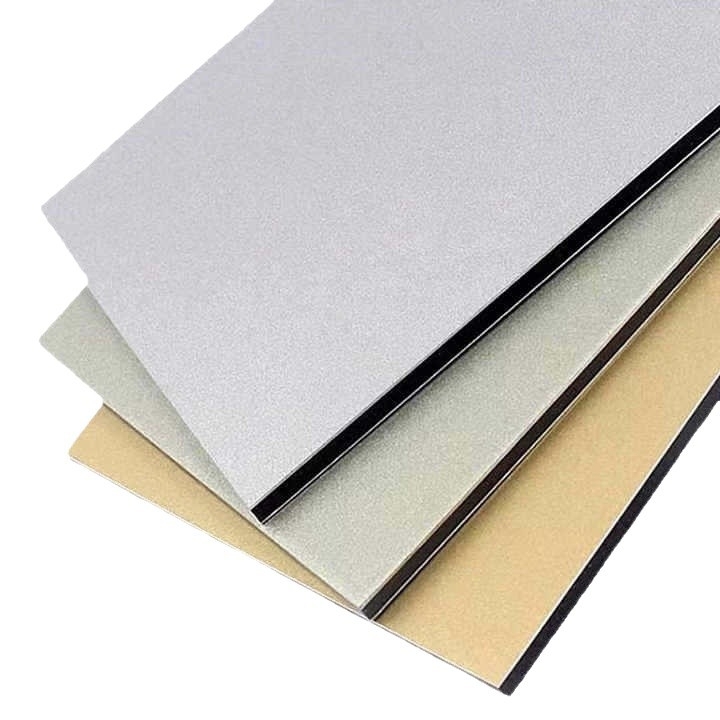
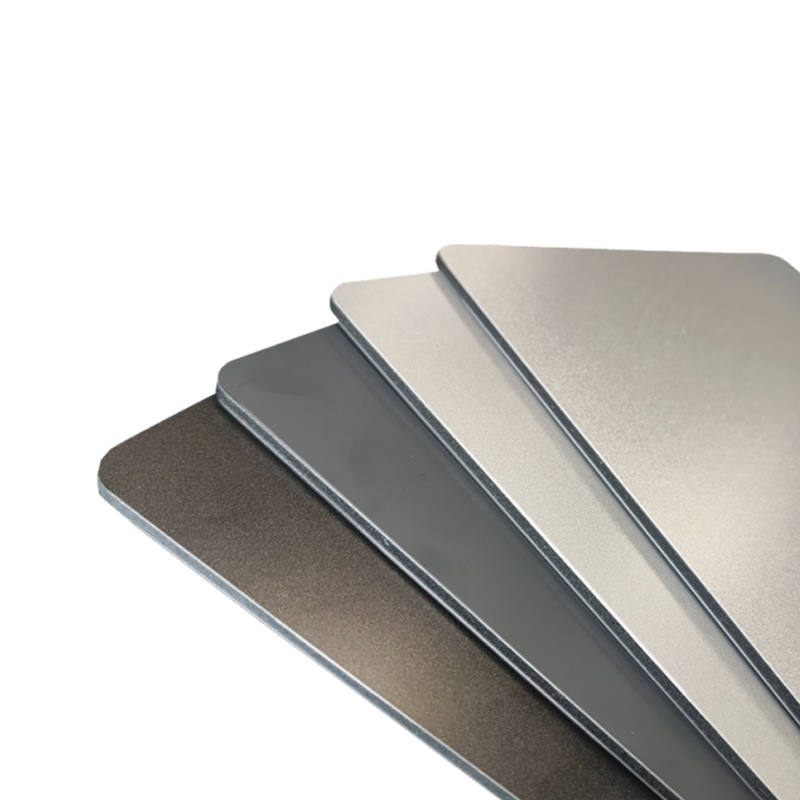
For procurement professionals and fabricators, bending aluminum composite panels (ACPs) presents a unique engineering challenge. Unlike solid aluminum, which can be bent using conventional sheet metal techniques, ACPs are a sandwich composite—two thin aluminum skins bonded to a non-aluminum core, typically polyethylene (PE) or mineral-filled material. This layered structure delivers exceptional flatness and rigidity at low weight, but it also means that improper bending can lead to three specific failure modes:
1. Cracking of the outer aluminum skin (tensile failure on the outside of the bend)
2. Delamination (separation of the aluminum skin from the core)
3. Buckling or wrinkling (compressive failure on the inside of the bend)
Understanding the physics behind these failures is the first step toward mastering ACP fabrication.
Why ACPs Crack During Bending
The core failure mechanism is straightforward: the outer aluminum skin is stretched beyond its ductile limit. Aluminum has excellent ductility, but the composite structure restricts how much the skin can elongate before the core either compresses unevenly or the adhesive bond fails.
Several factors determine whether a bend succeeds or fails:
- Panel thickness: Thicker panels have a larger minimum bending radius because the outer skin must stretch over a greater arc distance. A thinner 3 mm panel might achieve a 100 mm cold bend radius, while a thicker 6 mm panel may require 150–200 mm or more.
- Core material: PE cores are relatively flexible and forgiving. Mineral-filled (A2) cores are stiffer and require larger radii or heat-assisted bending.
- Aluminum skin thickness (temper): Thicker skins (e.g., 0.5 mm vs. 0.21 mm) offer greater resistance to cracking but also increase the force needed to bend.
- Bending direction relative to rolling direction: Bending across the rolling direction (transverse) allows a smaller radius than bending along it.
- Temperature: Cold panels are more brittle and prone to cracking. Room temperature (≈20 °C / 68 °F) is the minimum recommended starting point; pre-warming the panel reduces the risk dramatically.
Method 1: V-Grooving (Rout-and-Return) for Sharp, Precise Folds
The most common and reliable technique for creating sharp, 90° folds in ACPs is V-grooving, also known as the rout-and-return method. This approach removes material from the back side of the panel so that only a thin, flexible layer remains to form the bend.
How It Works
A V‑shaped groove is cut into the reverse side of the panel, leaving a controlled thickness of core material and the outer aluminum skin intact. The panel is then folded along the groove line. The groove acts as a hinge, dramatically reducing the bending force required and preventing the outer skin from over-stretching.
Critical Parameters for Success
Parameter | Recommended Specification | Why It Matters |
Groove angle | 90° to 105° (typically 90° for standard folds, 105° for tighter radii) | Controls how tightly the panel folds without pinching the outer skin. |
Remaining core thickness | 0.2 mm to 0.3 mm | If too thick, the bend will be stiff and may spring back; if too thin, the outer skin cracks. |
Groove depth consistency | ±0.05 mm across the entire bend length | Inconsistent depth causes uneven folding and localized stress points. |
Tooling | Carbide-tipped V-groove bit (CNC router or handheld router) | Produces clean, burr-free grooves without overheating the core. |
Step-by-Step V-Grooving Process
1. Mark the bending line on the back of the panel.
2. Set up a CNC router (recommended for precision and repeatability) or a handheld router with a V‑groove bit.
3. Cut the V‑groove to a consistent depth, leaving approximately 0.2–0.3 mm of core material.
4. Fold the panel along the groove line using a folding jig, plate punch, or press brake. Apply even, steady pressure—do not bend repeatedly.
5. For 90° bends, the groove depth formula is straightforward: use a 90° V-bit and adjust the depth until the outer skin remains intact. Some fabricators use a 110° bit for 90° bends, which slightly changes the geometry but can improve fold quality.
Method 2: Roll Bending for Gentle Curves
For large-radius curves, such as column cladding or curved facade panels, roll bending is the preferred method. This technique uses a three‑roller machine to progressively form the panel into a smooth arc.
Process Overview
1. Set the roller gap and curvature according to the desired radius.
2. Feed the ACP through the rollers, making multiple passes.
3. Gradually increase the bend with each pass until the target radius is achieved.
Key Considerations
- Roller condition: Polished, smooth rollers are essential to avoid marking the panel surface.
- Protective film: Keep the film on the visible surface during bending to prevent scratches.
- Slow, incremental passes: Attempting to achieve the final radius in a single pass will almost certainly cause delamination or cracking.
Minimum Bending Radius: The 10× Thickness Rule
A widely accepted industry guideline for cold-bending ACPs (without V‑grooving) is:
Minimum bending radius (r) = 10 × panel thickness (t)
For example, a 4 mm panel has a minimum cold bend radius of 40 mm; a 6 mm panel requires 60 mm. When hot bending, the radius can be reduced significantly—a 3 mm panel that requires a 100 mm radius cold can achieve a 50 mm radius when heated.
Practical Radius Guidelines
Panel Thickness | Cold Bend Radius (min) | Hot Bend Radius (approx.) |
3 mm | 30 mm (or 100 mm for PE‑core) | 15–50 mm |
4 mm | 40 mm | 20–40 mm |
6 mm | 60 mm | 30–60 mm |
Note: These are general guidelines. Always refer to the manufacturer's specific recommendations, as core material and skin thickness significantly affect actual performance.
Press Brake Bending: When and How to Use It
Press brake bending is suitable for creating straight, sharp bends in ACPs, but it requires careful setup to avoid damage.
Setup Guidelines
- Die selection: Use dies with rounded, smooth edges to prevent marking the panel.
- Die width: A recommended formula is: `2 × t + 2 × protective film thickness + punch diameter + 15 mm.
- Surface protection: Keep the protective film on the panel. For extra protection, place 1–2 mm thick plastic pads over the visible surface.
- Spring-back allowance: ACPs exhibit greater spring-back than solid aluminum sheets. Over-bend slightly to compensate.
Testing Protocol
Before mass production, conduct trial bends on sample panels to verify the setup. Adjust pressure and die position until the bend is clean, consistent, and free of cracks.
Common Mistakes That Cause Cracking
Mistake | Consequence | Prevention |
Bending radius too small | The outer skin cracks due to over‑stretching | Adhere to minimum radius guidelines; test on scrap first. |
V‑groove too deep | The outer skin weakens and cracks during folding | Leave 0.2–0.3 mm of core material. |
V‑groove too shallow | Panel resists bending; spring-back occurs | Adjust depth until the groove depth is correct. |
Bending cold panels | Material is brittle; cracks form | Allow panels to reach room temperature (≈20 °C). |
Repeated bending | Work‑hardening leads to fracture | Apply a steady, single‑pass force. |
Using dull or incorrect tooling | Rough grooves, burrs, and localized stress | Use sharp carbide‑tipped V‑bits designed for ACPs. |
Procurement Considerations
When sourcing ACPs for projects that require bending or curving, procurement professionals should:
1. Request manufacturer bending guidelines for the specific panel thickness, core material, and finish.
2. Confirm minimum bending radius for both cold and hot bending.
3. Specify groove depth tolerance if V‑grooving will be performed in‑house.
4. Test on sample panels before committing to full production.
5. Verify tooling compatibility if using CNC routers or press brakes.
Summary
Bending aluminum composite panels without cracking is entirely achievable when you respect the material's composite nature. The two primary methods—V‑grooving for sharp folds and roll bending for gentle curves—each have distinct parameters that must be precisely controlled. The 10× thickness rule for minimum bending radius provides a reliable starting point, but always validate with manufacturer data and test bends.
For procurement professionals, the key takeaway is clear: bending ACPs is not a “one‑size‑fits‑all” operation. Specifying the correct bending parameters upfront—including groove depth, bending radius, and temperature conditions—prevents costly material waste, rework, and project delays.