Welcome to Vbond
Why Developers are Switching from Traditional Materials to Aluminum Composite Panels
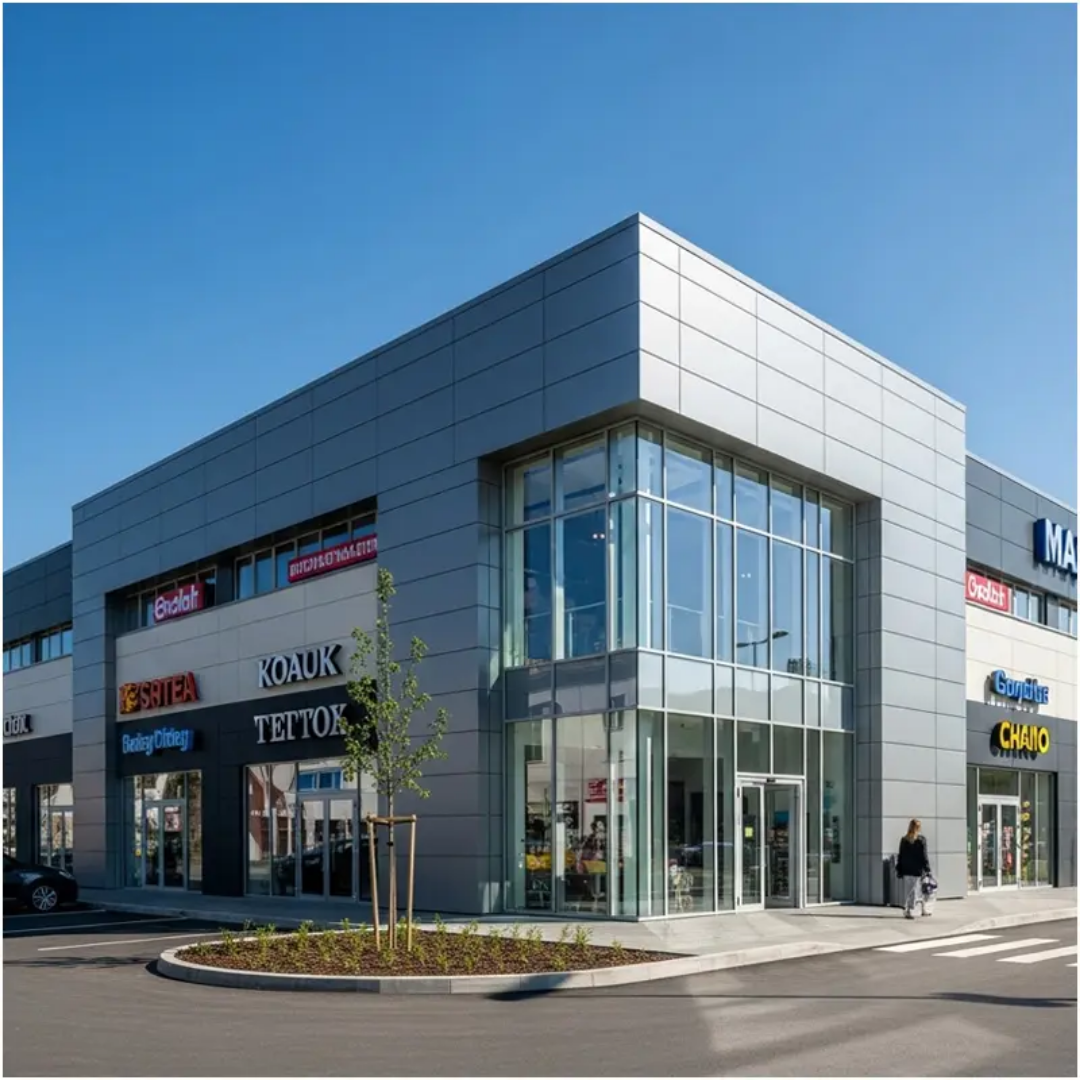
For decades, developers have balanced three competing priorities: aesthetic ambition, structural performance, and budget discipline. Traditional materials—brick, stone, timber, solid metal panels—each offered strengths in one or two of these areas but rarely delivered across all three simultaneously.
That calculus is changing. Across residential, commercial, and infrastructure projects worldwide, developers are increasingly specifying aluminum composite panels (ACPs) in place of conventional cladding materials. The shift is not driven by fashion or novelty but by a clear-eyed assessment of total cost of ownership, regulatory compliance, design flexibility, and long-term asset value.
The market data confirms the trend. The global aluminum composite panels market grew from USD 10.00 billion in 2025 to USD 10.78 billion in 2026 and is expected to reach USD 17.63 billion by 2032, representing a compound annual growth rate (CAGR) of 8.42%. The global aluminium composite panels market is projected to grow from USD 6.78 billion in 2025 to USD 10.38 billion by 2031 at a CAGR of 7.36%. Fire-resistant ACPs now account for nearly 49% of new installations as building codes tighten globally, and fire-rated ACPs (A2 and B1 classifications) are becoming a dominant segment.
This article examines the key factors driving developers away from traditional materials and toward aluminum composite panels, supported by market data, technical comparisons, and procurement insights.
1. Lightweight Construction: Reducing Structural Costs
Traditional cladding materials impose significant dead loads on building structures. Brick, stone, and solid metal panels require reinforced foundations, heavier steel frames, and more robust supporting systems—all of which add cost and complexity to construction.
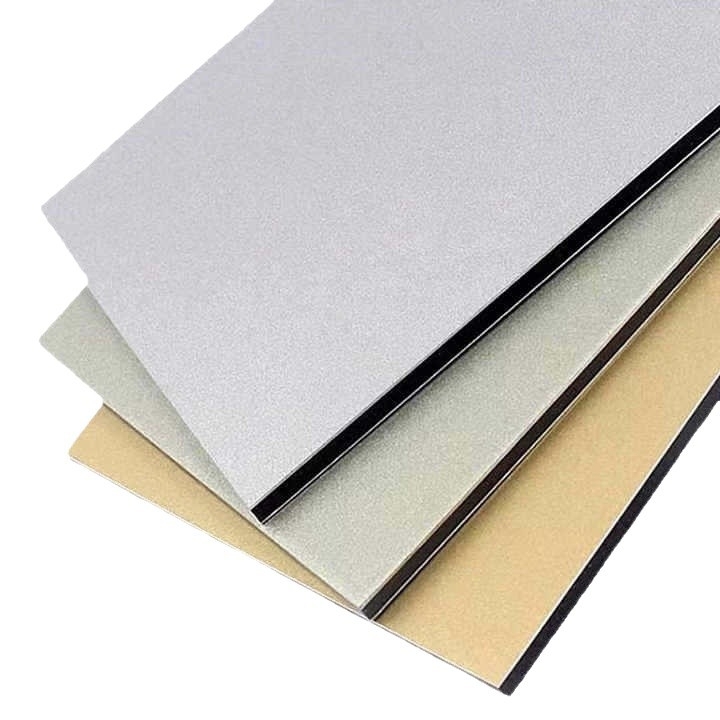
ACP Advantage: ACPs are remarkably lightweight due to their sandwich construction of two thin aluminum skins bonded to a non-aluminum core (polyethylene or mineral-filled material). A 4mm ACP weighs approximately 5.6 kg per square meter—roughly 80% lighter than solid aluminum of equivalent thickness.
This weight reduction translates directly into cost savings. Reduced dead load allows for lighter sub-frame designs, lower steel or concrete support requirements, and savings on foundations and structural beams. In seismic regions, lightweight ACP modules ease handling and reduce logistical costs.
From a procurement perspective, the structural efficiency of ACPs means developers can achieve ambitious facade designs without proportionally increasing structural budgets—a critical advantage in high-rise construction where every kilogram of structural load compounds across multiple stories.
2. Speed of Installation: Accelerating Project Timelines
Construction delays are among the most significant financial risks developers face. Extended timelines mean extended financing costs, delayed revenue from occupancy, and potential liquidated damages. Traditional cladding materials contribute to slow construction through labor-intensive installation processes.
ACP Advantage: ACPs arrive on-site as prefabricated, modular panels. They can be easily cut, routed, and installed using standard metalworking tools. Installation is significantly faster than brick or stone masonry, which requires skilled labor for each unit, or timber cladding, which demands careful joinery.
Construction projects can save upwards of 30% in labor costs when using lightweight materials like ACP. Easy handling leads to faster completion times, allowing for earlier project delivery. In infrastructure projects—metro stations, airports, bus terminals, and public buildings—using ACP has proven to save both time and cost due to its lightweight nature, pre-finished surfaces, and adaptable design.
For developers, faster installation translates directly into improved cash flow and reduced carrying costs on construction financing.
3. Design Flexibility: Meeting Modern Architectural Demands
Traditional materials impose severe design constraints. Stone and brick are rigid and cannot be curved. Timber has limited formability and is prone to warping. Solid metal panels require heavy fabrication equipment and are difficult to shape into complex geometries.
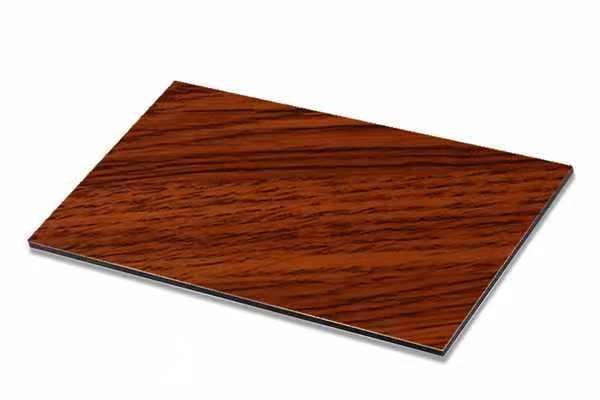
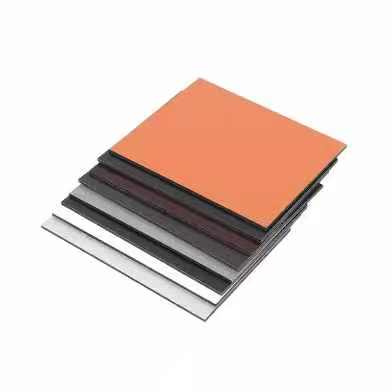
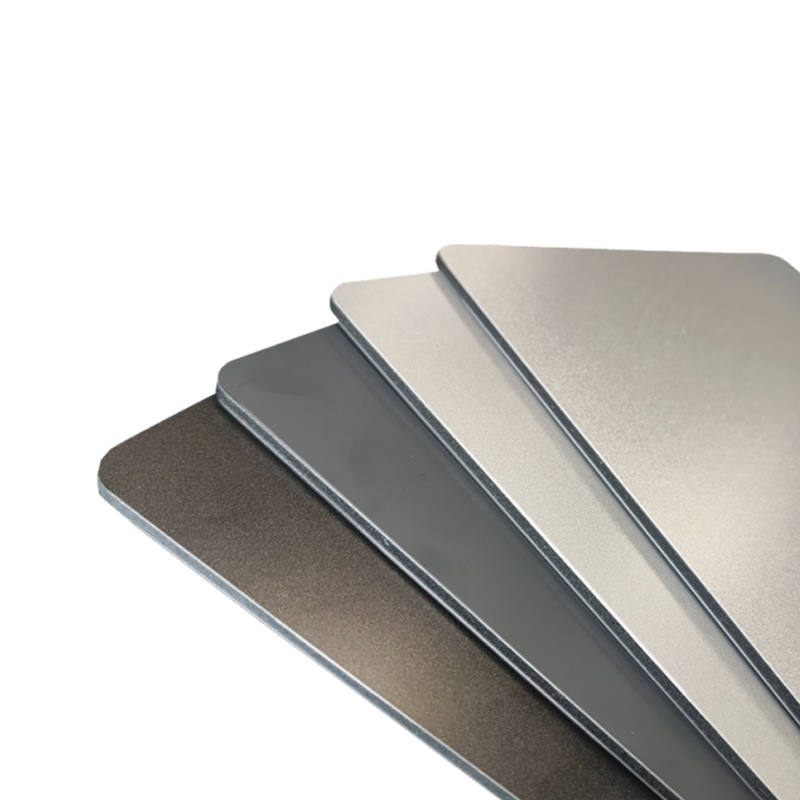
ACP Advantage: ACPs are highly formable. They can be easily curved, bent, folded, and cut to achieve virtually any architectural shape. They are available in an extensive range of colors, textures, and finishes—including metallic, matte, glossy, wood grain, and stone effects. This versatility allows architects to create visually striking facades that differentiate buildings in competitive markets.
For developers, design flexibility translates into market differentiation. Buildings clad in ACPs achieve distinctive identities that attract premium tenants, command higher lease rates, and enhance property values. With ACP, developers are not limited by material constraints—they can realize ambitious design visions without compromising structural integrity.
4. Durability and Low Maintenance: Lowering Lifecycle Costs
Traditional materials require ongoing maintenance that accumulates high costs over a building's lifecycle. Timber needs repainting and sealing, masonry requires repointing, and metal sheets may require periodic corrosion treatment.
ACP Advantage: ACPs demonstrate excellent resistance to weather, corrosion, UV radiation, and pollutants. They do not rust, rot, fade, crack, or support termite infestation. Maintenance requires little more than periodic cleaning with mild detergents.
ACP can last well over ten years after installation, both indoors and outdoors. Once installed, developers can go for years without incurring additional costs beyond routine cleaning. ACPs have a lifespan of up to 30 years with minimal upkeep. ArchDaily data shows that buildings using ACP have significantly lower maintenance costs, as the surface is resistant to weather and pollutants, making them ideal for long-term projects.
For developers, low maintenance translates into lower operating expenses, reduced reserve fund requirements, and higher net operating income—all of which directly impact property valuation.
5. Fire Safety Compliance: Meeting Stringent Regulations
Post-Grenfell, fire safety regulations have tightened dramatically across major markets. The UAE Civil Defence now mandates A2 non-combustible panels on all new buildings over 15 meters tall. In the UK, Regulation 7(2) bans combustible materials in external walls of certain high-rise buildings. Similar requirements exist in Australia under AS1530.1 testing and across Europe under EN 13501-1 classifications.
ACP Advantage: Modern ACPs are available with fire-retardant (B1) and non-combustible (A2) cores. A2-s1,d0 denotes limited combustibility, minimal smoke production, and no flaming droplets—the gold standard for fire-safe cladding. Mineral-filled A2 cores withstand temperatures exceeding 1,000°C for over two hours without structural failure.
For developers, specifying A2-rated ACPs is not optional for high-rise projects—it is mandatory. Choosing A2 fire-rated ACPs ensures regulatory compliance, avoids costly retrofits, and protects building occupants and liability exposure.
6. Energy Efficiency and Insulation: Reducing Operational Costs
Energy efficiency is increasingly a regulatory requirement and a tenant expectation. Traditional solid cladding materials offer limited insulation, requiring additional insulation layers that add cost and complexity.
ACP Advantage: The core of an ACP provides inherent thermal insulation, reducing heat transfer through the building envelope. Data indicates that buildings clad in ACP can reduce energy costs by up to 15-20%. This improved energy efficiency leads to significant cost savings in heating and cooling over the building's operational life.
For developers, energy efficiency translates into lower operating costs for owners, which in turn increases property value and attracts environmentally conscious tenants.
7. Sustainability and Green Building Certification
Regulatory pressure for sustainable construction is accelerating. LEED v5, the latest version of the world's most widely used green building rating system, dedicates 50% of its total points to decarbonization and introduces new prerequisites for calculating embodied carbon—the emissions generated by manufacturing, transporting, and installing materials. This explicitly includes aluminum and cladding.
ACP Advantage: Aluminum is 100% recyclable without loss of quality, and recycling aluminum uses 95% less energy and produces 95% fewer emissions compared to primary production. ACPs are increasingly available with Environmental Product Declarations (EPDs) that document lifecycle environmental performance. The EPD for one manufacturer's ACPs reveals that up to 95% of the aluminum and 90% of the polyethylene core used in panels are recyclable, supporting a circular economy approach. By choosing EPD-certified ACPs, architects and developers can earn up to two LEED points for green building projects.
For developers, specifying sustainable ACPs supports green building certification, meets corporate sustainability commitments, and appeals to environmentally conscious tenants and investors.
8. Aesthetic Versatility: Enhancing Property Value
Property value is fundamentally influenced by curb appeal. In competitive real estate markets, buildings that stand out command premium prices.
ACP Advantage: ACPs are available in an array of colors, patterns, textures, and finishes—metallic, matte, glossy, wood grain, stone effect, and custom designs. The panels can be fabricated to achieve seamless, uniform surfaces or dramatic contrasts. This aesthetic flexibility allows developers to create distinctive building identities that attract premium tenants and buyers.
Buildings clad in ACP can achieve a modern, high-end appearance that enhances property values. The sleek, contemporary look of ACP facades signals quality and sophistication to potential buyers and tenants.
Side-by-Side Comparison: ACP vs. Traditional Materials
Criterion | ACP / ACM Composite Panels | Brick / Stone / Masonry | Timber / Wood | Solid Metal Sheets | Solid Metal Sheets | Fibre Cement |
Weight & Structural Load | Very light; low added load | Heavy, significant structural demand | Moderate | Heavy; requires robust support | Moderate-heavy |
Design Flexibility | Easily curved, bent, folded, and cut | Rigid; very limited | Limited curvature; warping risk | More rigid, complex fabrication | Limited formability; brittle |
Durability & Weather Resistance | Excellent corrosion, UV, rain, and pollution resistance | Durable but heavy | Vulnerable to moisture, termites, and warping | Strong but may corrode | Better than wood; stable |
Maintenance | Low; easy to clean | Periodic repointing required | Requires repaint/varnish/sealing | Periodic coating maintenance | Low to moderate |
Fire Performance | A2 non-combustible or B1 FR core available | Highly fire-resistant | Combustible | Non-combustible | Moderate |
Installation Speed & Cost | Prefabricated; modular; fast installation | Labor-intensive; slow | Skilled joinery required; moderate speed | Heavy support required; slower | Moderate speed |
Thermal / Acoustic Performance | Good insulation properties | Good thermal mass; moderate acoustic | Moderate insulation | Poor insulation without additional layers | Moderate |
Sustainability | Highly recyclable; EPD-certified options | Non-renewable; energy-intensive quarrying | Renewable but slow growth | Recyclable; energy-intensive primary production | Moderate |
Source: Adapted from industry comparisons
Cost-Benefit Analysis for Developers
When evaluating material choices, developers must consider not just upfront material costs but the total cost of ownership over the building's lifecycle. ACPs may have higher upfront costs than some traditional materials, but the long-term savings are compelling.
Cost Category | Traditional Materials | ACPs | Differential |
Structural foundations | Higher due to dead load | Lower due to lightweight | ACP advantage |
Installation labor | High (brick/stone requires skilled labor) | Lower (prefabricated, faster) | ACP advantage |
Maintenance (20-year horizon) | Significant (repainting, repointing, sealing) | Minimal (periodic cleaning) | ACP advantage |
Energy costs | Moderate to high | Reduced by 15–20% | ACP advantage |
Fire compliance | Variable; may require additional measures | A2-rated options available | Comparable |
Upfront material cost | Variable; lower for some materials | Moderate to premium | May favor traditional |
Total cost of ownership | Higher | Lower | ACP advantage |
Over a 20–30 year building lifecycle, the cumulative savings from reduced maintenance, lower energy consumption, and faster construction often exceed the initial material cost differential, making ACPs the more economical choice for developers focused on long-term asset performance.
Procurement Implications
For procurement professionals advising developers, several key considerations emerge:
1. Specify A2 fire-rated panels for high-rise projects. Regulatory compliance is non-negotiable. For buildings over 18 meters, A2-s1,d0 panels are typically required. Verify third-party test documentation (BS8414, NFPA 285, or EN 13501-1).
2. Prioritize PVDF coatings for exterior applications. PVDF (polyvinylidene fluoride) coatings offer superior UV resistance, color retention, and durability compared to polyester coatings, particularly in harsh climates.
3. Require EPD certification for sustainability claims. For projects pursuing LEED, BREEAM, or other green building certifications, EPD-certified ACPs provide documented environmental performance and contribute to certification points.
4. Evaluate total cost of ownership, not just upfront price. ACPs may have higher initial costs than some traditional materials, but lifecycle savings in maintenance, energy, and installation labor typically offset the differential.
5. Verify flatness and thickness specifications. For large-format facades, specify panel flatness tolerances (typically <2mm per meter) and aluminum skin thickness (0.30–0.50mm for high-rise applications) to ensure structural performance and aesthetic quality.
Conclusion
Developers are switching from traditional materials to aluminum composite panels not because of a passing trend but because ACPs deliver measurable advantages across every dimension that matters to project success: structural efficiency, installation speed, design flexibility, durability, fire safety, energy performance, sustainability, and aesthetic impact.
The market data confirms the shift: the global ACP market is growing at 8.42% CAGR, with fire-resistant panels now accounting for nearly half of new installations. As building codes tighten, energy standards rise, and tenant expectations for modern, sustainable buildings increase, the case for ACPs only strengthens.
For developers, the choice is no longer between tradition and innovation. It is between materials that constrain and materials that enable. Aluminum composite panels enable faster construction, lower operating costs, greater design freedom, and enhanced property values. That is why developers are switching—and why ACPs are becoming the new standard in modern building envelopes.