Welcome to Vbond
Why Sealant Curing Creates Alucobond Blisters: The Temperature-Humidity Connection
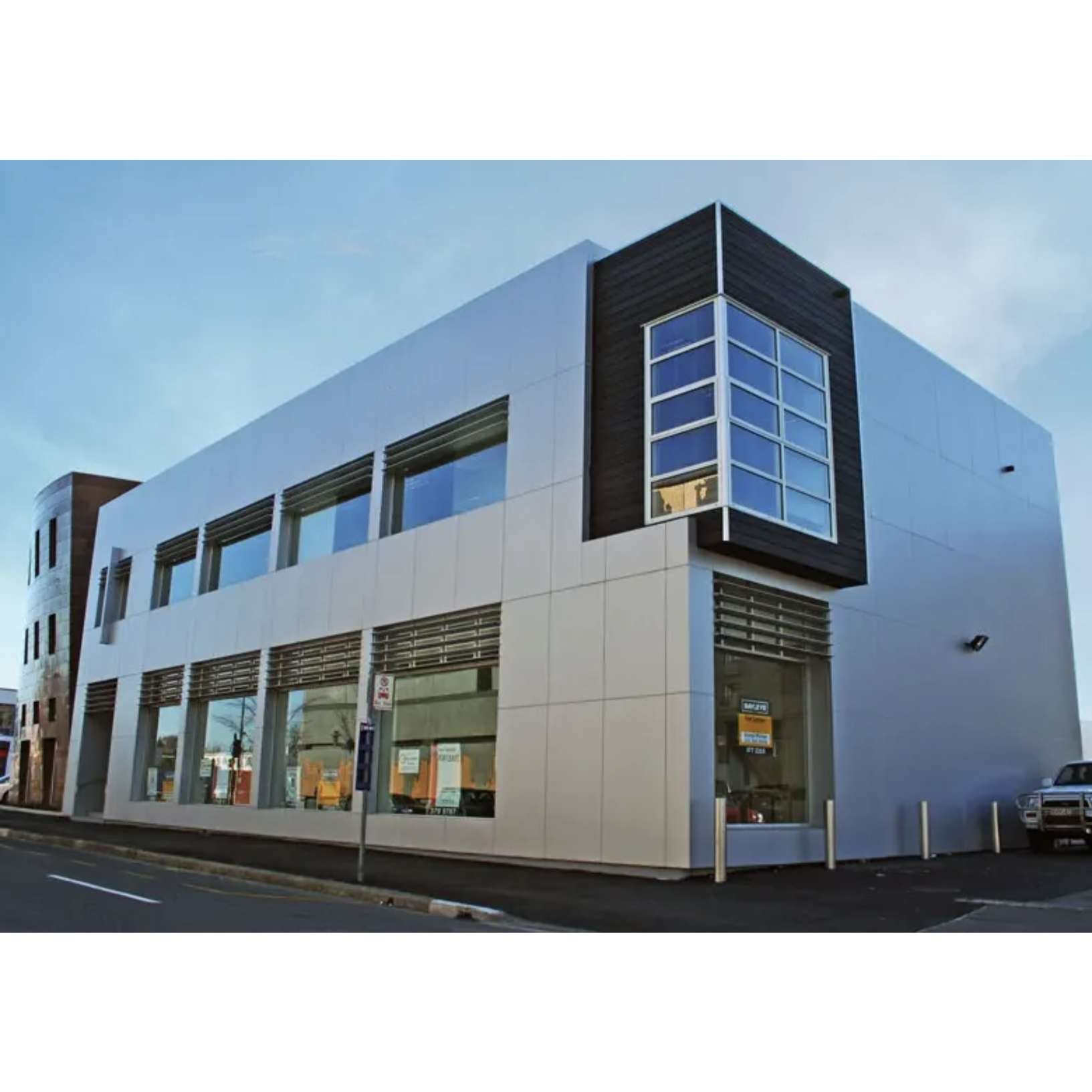
You finish the facade installation. The sealant joints look clean and uniform. The client approves the work.
A few weeks later, you see them. Bubbles and blisters along the sealant joints. The smooth, professional finish now looks uneven and damaged. The client demands answers.
The problem is not the sealant. The problem is how and when you applied it.
This guide explains why sealant curing creates blisters on Alucobond facades. You will learn the temperature-humidity connection. You will understand the curing chemistry. And you will know exactly how to prevent sealant joint failures.
How Sealants Cure: The Moisture Reaction
Most architectural sealants are single-component products. They cure by reacting with atmospheric moisture. The sealant absorbs water vapor from the air. A chemical reaction transforms the liquid sealant into a solid, elastic rubber.
The cure process:
1. The sealant is applied to the joint
2. Moisture from the air penetrates the sealant surface
3. The chemical reaction starts at the surface and moves inward
4. The sealant cures from the outside in
5. Full cure can take days or weeks depending on conditions
MS polymer sealants cure through reaction with atmospheric moisture. Typical cure times at 73°F (23°C) and 55% relative humidity: skin formation in 15-20 minutes, handling strength in 4 hours, and full cure in 48-72 hours.
Higher humidity accelerates curing. Lower humidity slows it down.
The Temperature Problem: The 50°C Threshold
Here is the critical number: sealant manufacturers agree that substrate temperature should not exceed 50°C (122°F) during application.
When you apply sealant to a substrate above 50°C, blisters form. The mechanism is simple.
What happens above 50°C:
The sealant cures by releasing small molecules—methanol in the case of alcohol-based sealants, or other volatile compounds. At temperatures above 50°C, these molecules volatilize rapidly. The high substrate temperature causes the sealant surface to cure and skin over quickly. The gases being released from the deeper layers become trapped beneath this cured skin. Pressure builds. The trapped gases push up against the partially cured sealant. Blisters form.
The summer problem:
In summer, direct sunlight on aluminum panels drives surface temperatures dramatically higher. On a hot day, an aluminum panel surface can reach 70–80°C (158–176°F). Applying sealant at these temperatures is a guaranteed recipe for blistering.
A reputable Alucobond cladding supplier will warn you about this in their installation guidelines. A manufacturer of Alucobond provides technical documentation that includes temperature recommendations for sealant application.
The Humidity Problem: Too Much and Too Little
Humidity affects sealant curing in two opposite ways. Both cause problems.
Problem 1: High humidity and moisture in the joint
Sealant joints must be completely dry before application. When you apply sealant over a damp surface, disaster follows.
What happens:
Water trapped in the joint vaporizes when the sun hits the panel. The expanding vapor pushes against the curing sealant. The sealant blisters and bulges.
The timeline:
This can happen within hours. Morning dew, recent rain, or condensation inside the joint all create moisture problems. In coastal climates with high humidity, the risk is even greater. Coastal installers use enhanced sealing due to humidity.
Problem 2: Low humidity and slow curing
Single-component sealants need moisture to cure. When humidity drops below 40–50% RH, the sealant cures slowly.
What happens:
The sealant surface cures to a shallow depth. The deeper layers remain uncured and soft. During this vulnerable period, thermal expansion of the aluminum panels puts stress on the uncured sealant. The sealant deforms. Blisters or wrinkles appear.
In dry climates, this happens frequently. In northern regions during spring, low humidity combined with large diurnal temperature swings creates ideal conditions for sealant blistering.
The Thermal Movement Factor
Aluminum expands and contracts significantly with temperature changes. Alucobond panels have a linear thermal expansion rate of 2.4 mm per meter for every 100°C temperature difference.
What happens:
A large aluminum panel on a sunny facade expands during the day. At night, it contracts. The sealant joint must accommodate this movement. If the sealant has not fully cured before the panel moves, the uncured sealant stretches or compresses. Blisters form.
The spring and fall problem:
In regions with large day-night temperature differences, this is a serious issue. The panel surface can reach 60–70°C in direct sun and drop to 10°C at night. The repeated expansion and contraction during the curing period stresses the sealant. Blisters appear.
The Blister Formation Flowchart
Start
│
▼
Sealant applied to Alucobond joint
│
▼
┌─────────────────────────────────────────────────┐
│ Three Failure Pathways │
├─────────────────────────────────────────────────┤
│ 1. Substrate >50°C: Gases trapped under cured │
│ surface → blisters │
│ 2. Joint moisture: Water vaporizes → expands │
│ → pushes sealant up → blisters │
│ 3. Low humidity: Slow cure → panel moves → │
│ uncured sealant deforms → blisters │
└─────────────────────────────────────────────────┘
│
▼
Gases or vapor trapped beneath sealant surface
│
▼
Pressure builds
│
▼
Sealant surface bulges upward
│
▼
Visible blisters along sealant joint
│
▼
Facade appearance compromised
How to Prevent Sealant Blisters
1. Check substrate temperature
Before applying sealant, check the panel surface temperature. Use an infrared thermometer. If the temperature exceeds 50°C (122°F), stop.
Best practice: Apply sealant in the late afternoon, on cloudy days, or in shaded areas. On large facades, consider a split schedule: apply sealant to west and north faces in the morning, east and south faces in the afternoon.
2. Ensure joints are completely dry
Do not apply sealant after rain until the joint is fully dry. Wait at least half a day after rainfall. Wipe joints with a clean cloth. Use a heat gun on low setting if needed.
3. Protect fresh sealant from direct sun
Freshly applied sealant needs time to develop a cured skin. Direct sunlight accelerates surface curing while the deeper layers remain uncured. The result: trapped gases and blisters.
Best practice: Protect sealant joints from direct sun for 2-3 hours after application. If shading is not possible, apply sealant in sections that will be shaded during the initial cure period.
4. Monitor humidity conditions
The ideal environment for sealant application is 40–80% relative humidity and temperatures between 4°C and 40°C. In dry conditions (below 40-50% RH), allow extra cure time before exposing the sealant to stress.
5. Use the right sealant for the application
Not all sealants work on Alucobond. Choose sealants specifically formulated for aluminum composite panels. MS polymer sealants offer excellent adhesion to aluminum without the drawbacks of traditional sealants. They are paintable and UV-resistant.
A wholesale supplier of Alucobond can recommend compatible sealant products. A distributor of Alucobond panels will have technical documentation on sealant compatibility.
The Prevention Flowchart
Start
│
▼
Check panel surface temperature
│
├─── >50°C? ─── Yes ───► Wait for cooler conditions
│
No
│
▼
Check that the joint is completely dry
│
├─── Wet? ─── Yes ───► Dry thoroughly before proceeding
│
No
│
▼
Apply sealant at recommended temperature (4-40°C)
│
▼
Protect from direct sun for 2-3 hours
│
▼
Allow full cure before exposing to thermal stress
│
▼
Inspect joints after cure
│
▼
Done
Common Mistakes to Avoid
Mistake 1: Applying sealant on hot panels
The most common mistake. The panel feels warm. The installer applies sealant anyway. Blisters appear within hours.
Fix: Always check surface temperature with an infrared thermometer. Never apply above 50°C.
Mistake 2: Applying sealant after rain
The joint looks dry on the surface. Moisture remains in the joint or behind the foam backing rod. The sun comes out. Moisture vaporizes. Blisters form.
Fix: Wait until joints are completely dry. If in doubt, use a moisture meter.
Mistake 3: Using wet or damaged foam backing rod
Wet foam backing rods introduce moisture into the joint. Damaged foam rods release trapped air into the uncured sealant.
Fix: Store backing rods in a dry location. Inspect before installation. Use closed-cell foam rods that do not absorb moisture.
Mistake 4: Not allowing adequate cure time
The sealant may feel dry on the surface. The deeper layers remain uncured. Panel movement stresses the sealant. Blisters form.
Fix: Follow the manufacturer's cure time recommendations. In low humidity, allow extra time.
What to Ask Your Alucobond Cladding Supplier
When you work with an Alucobond cladding supplier, ask these questions:
1. What sealants are compatible with your panels? A knowledgeable manufacturer of Alucobond will provide a list of approved products.
2. What are your recommended application conditions? A reliable wholesale supplier of Alucobond will specify temperature and humidity ranges.
3. Do you provide sealant application guidelines? A distributor of Alucobond panels should have technical documentation.
4. What is the thermal expansion rate of your panels? This determines joint movement and sealant requirements.
An OEM manufacturer of Alucobond provides detailed installation manuals. Choose an Alucobond cladding supplier who provides technical support and stands behind their recommendations.
The Bottom Line
Sealant blistering is not a sealant failure. It is a process failure. The sealant chemistry is predictable. The temperature and humidity conditions determine success or failure.
Three things cause sealant blisters on Alucobond:
1. Substrate temperature above 50°C — gases trap under the cured surface
2. Moisture in the joint — water vapor expands and pushes up the sealant
3. Low humidity — slow cure leaves sealant vulnerable to thermal movement
Prevention is straightforward:
- Check panel temperature before application
- Ensure joints are completely dry
- Protect fresh sealant from direct sun
- Allow adequate cure time
- Use compatible sealant products
A Alucobond cladding supplier provides the panels. Your installation process determines the quality. Get the temperature and humidity right, and your sealant joints will stay flat and professional.