Welcome to Vbond
Why Some Aluminum Composite Panels Crack During Bending and Folding
Why Some Aluminum Composite Panels Crack During Bending and Folding
You have specified premium aluminum composite panels for a landmark project. The material arrives. Your fabrication team begins bending and folding to create the complex facade geometry. Then it happens: a sharp crack appears along the bend line. The aluminum skin has fractured. The panel is scrap.
Cracking during bending and folding is one of the most frustrating—and costly—fabrication problems in aluminum composite panel processing. It wastes material, delays installation, and can derail an entire project timeline.
The good news is that cracking is preventable. Understanding why it happens—and working with a professional aluminum composite panel manufacturer like an ALUCOBOND manufacturer or Alucobond factory that provides clear processing guidelines—is the key to success.
This guide explains the science behind ACP cracking, the critical parameters that prevent it, and how procurement professionals can ensure their fabrication teams have the right information before cutting a single panel.
1. The Sandwich Structure: Why ACPs Behave Differently from Solid Metal
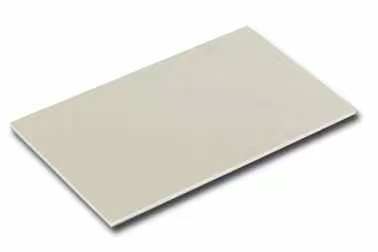
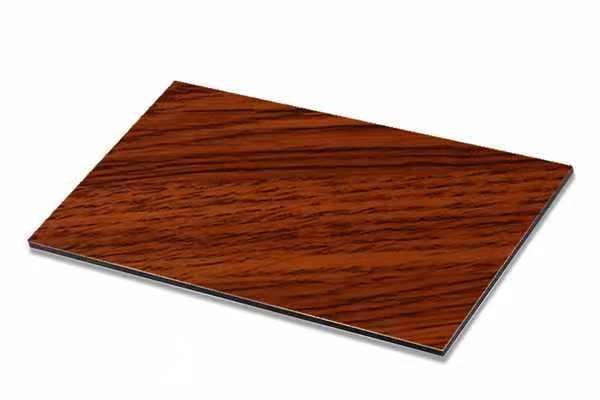
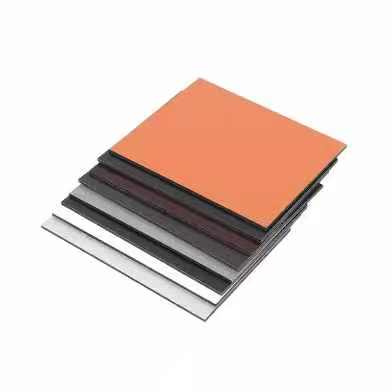
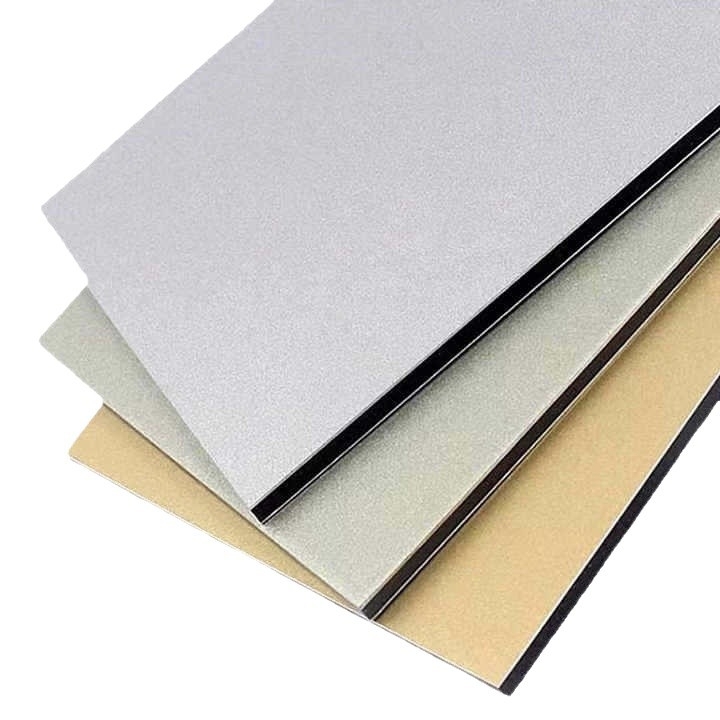
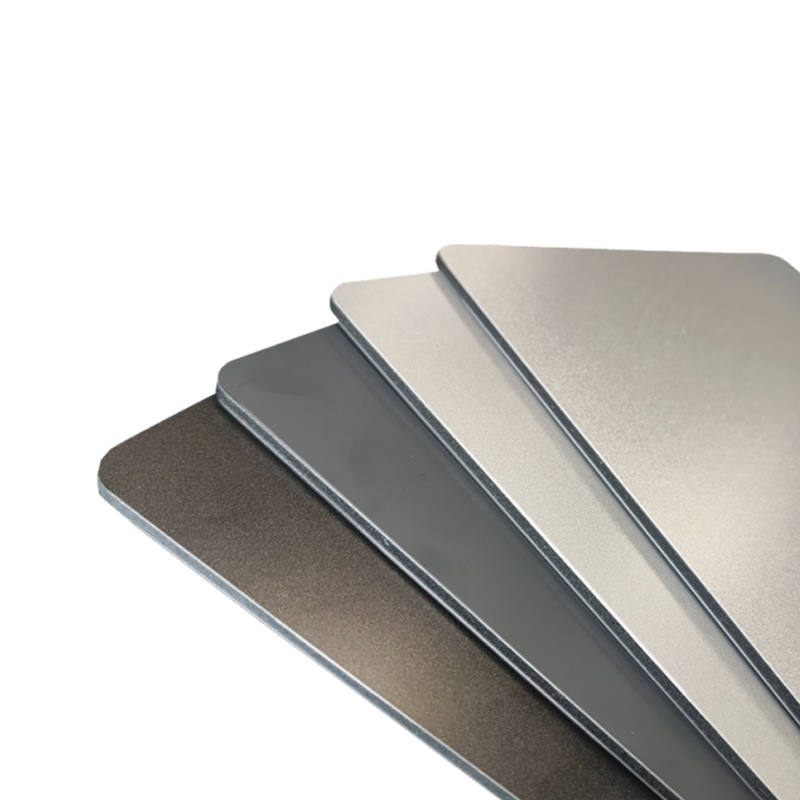
An aluminum composite panel is not solid aluminum. It is a sandwich structure: two thin aluminum skins bonded to a core material, typically polyethylene (PE), fire-retardant (FR), or A2 mineral.
This layered construction creates unique mechanical behavior during bending. While a solid aluminum sheet can be bent tightly without cracking, the core in an ACP constrains the inner skin differently. During bending, the outer aluminum skin stretches while the inner skin compresses. The core must accommodate these differential strains. When parameters are incorrect, the stretched outer skin exceeds its elongation limit and cracks.
The patent literature on aluminum sandwich panels explains that "bending operations in the forming of corrugated sheets or ribbons will produce microstructural inhomogeneities leading to sites of stress concentration due to local changes in material properties". These stress concentrations are where cracks initiate.
2. The Critical Parameters: Why ACPs Crack
2.1 Minimum Bend Radius Exceeded
The single most common cause of cracking is bending the panel too tightly. Aluminum composite panels have a minimum bend radius that must be respected.
Industry guidelines specify:
Panel Thickness | Minimum Bend Radius (R) | Source |
3mm | ≥60mm | Industry standard |
4mm | ≥80mm | Industry standard |
FR core (roll bending) | ≥300mm | PREFABOND technical guide |
A2 core (roll bending) | ≥600mm | PREFABOND technical guide |
When the bend radius falls below these values, the aluminum skin is stretched beyond its elastic limit, causing fracture. As one manufacturer explains, the "bending radius < minimum allowable value" directly causes "cold bending cracking/wrinkling".
2.2 Insufficient V-Groove Depth Control
For folded edges (such as box corners), a V-groove must be cut on the back side of the panel to create a hinge. If this groove is too shallow, folding is difficult. If too deep, the front aluminum skin is weakened and will crack.
The PREFABOND processing guide specifies precise remaining material thicknesses:
Core Type | Minimum Remaining Material (after grooving) |
FR core | 0.2 to 0.4 mm |
A2 core | 0.15 to 0.25 mm |
The guide warns: "If the V-groove is too deep, partially or over the entire length, it will not be possible to create an attractive fold with a constant radius. This could also cause the aluminium cover plate to crack on the visible side".
A professional aluminum composite panel manufacturer, like an Alucobond factory, provides these specifications. A low-quality supplier may not even know they exist.
2.3 Low Temperature Embrittlement
Temperature dramatically affects ACP formability. The core material becomes more brittle in cold conditions.
Core Type | Minimum Processing Temperature | Consequence Below Minimum |
FR core | ≥5°C | Cracking risk increases |
A2 core | ≥20°C | Significant cracking risk |
As the PREFABOND guide states: "To prevent cracks from appearing on the coated visible side, when bending PREFABOND composite panels, the minimum material and ambient temperature must be 5 °C for panels with an FR core, and 20 °C for panels with an A2 core".
A2 mineral cores are particularly sensitive. They require warmer conditions for successful bending because the mineral-filled composition has less flexibility than polymer-based cores.
2.4 Wrong Bending Direction Relative to Core Fiber Orientation
Aluminum composite panels are not isotropic. The core has a fiber orientation from the manufacturing process. Bending parallel to this fiber direction risks cracking, while bending perpendicular produces clean results.
The correct method is to "bend perpendicular to the core fiber direction".
2.5 Improper Tooling and Technique
Using standard press brake tooling designed for solid metal will damage ACPs. The tooling radius must match the panel thickness, and pressure must be applied evenly.
Processing guides recommend:
- Using a lower tonnage setting to reduce material damage
- Applying uniform pressure across the entire bend length
- Performing test bends on scrap material before production
- Using protective film or tape on tooling contact surfaces to prevent marking and cracking
3. Core-Specific Behavior: FR vs. A2
Not all cores behave the same way. Understanding core-specific limitations is essential for procurement professionals.
FR Core (Fire-Retardant)
- Flexibility: Moderate
- Minimum bend radius (press brake): 10 × panel thickness
- Minimum processing temperature: 5°C
- V-groove remaining material: 0.2-0.4mm
- Perforation permitted: Yes, on FR core only
A2 Mineral Core (Non-Combustible)
- Flexibility: Limited (more brittle)
- Minimum bend radius (roll bending): 600mm
- Minimum processing temperature: 20°C
- V-groove remaining material: 0.15-0.25mm
- CNC recommended for grooving: Yes
- Perforation permitted: No (mineral core structure prevents punching)
The PREFABOND guide explicitly warns: "V-groove cutting is only carried out with the aid of a CNC machine to ensure the correct milling depth" for A2 core panels.
If your ALUCOBOND manufacturer specifies A2 core for fire safety, your fabricator must adjust their techniques accordingly. The same bending parameters that work for the FR core will crack A2.
4. The "Layered Gradual Bending" Method
For complex curved surfaces, manufacturers recommend a **layered gradual bending approach rather than attempting the full bend in one operation:
Step | Pressure | Bending Angle | Notes |
1 | 0.5 MPa | ≤15° | Initial pass |
2 | 0.8 MPa | ≤15° | Second pass |
3 | 1.2 MPa | Final angle | Completion pass |
"Each bending angle is ≤15°, and the stress is released every 2 hours". This gradual approach allows the material to relax between passes, reducing internal stresses that cause cracking.
For sharp bends with a radius below 50mm, the solution is to "use 3mm thin plate + backing aluminum plate for reinforcement" rather than attempting to bend thicker panels.
5. How to Prevent Cracking: A Procurement Checklist
Before Ordering: Supplier Selection
A professional aluminum composite panel manufacturer or Alucobond factory will provide:
- Processing guidelines with minimum bend radii and temperature requirements
- Core-specific specifications distinguishing FR from A2 processing parameters
- Material certifications confirming consistent mechanical properties
Before Fabrication: Preparation
- Review processing guidelines from the manufacturer—do not assume standard metal-bending techniques apply
- Warm A2 core panels to at least 20°C before bending
- Perform test bends on scrap material to verify parameters
- Check V-groove depth settings on CNC equipment before production
During Fabrication: Quality Control
- Use a three-roll plate-bending machine rather than a mechanical press brake when possible
- Apply gradual pressure in multiple passes, not one aggressive bend
- Remove burrs and chips from cut edges before bending—debris creates stress points
- Clean bending rollers to prevent pressure marks and contamination
6. The Manufacturer's Role in Crack Prevention
A quality aluminum composite panel manufacturer provides more than just panels. They provide the technical documentation that enables successful fabrication.
What a Professional Manufacturer Provides
An Alucobond factory or ALUCOBOND manufacturer supplies:
- Detailed processing manuals with core-specific parameters
- V-groove depth specifications for different panel thicknesses
- Temperature requirements for A2 vs. FR cores
- Technical support for fabricators encountering issues
As the PREFABOND guide emphasizes, "When determining how to correctly process the panel, make sure that you take the thickness of the adhesive system... into account". This level of detail is what distinguishes premium manufacturers from commodity suppliers.
The Consequence of No Guidance
Suppliers who cannot provide processing documentation are likely selling commodity-grade panels with inconsistent mechanical properties. Without specifications, fabricators must guess—and guessing leads to cracked panels, wasted material, and project delays.
7. The Cost of Cracking
Failure Type | Immediate Cost | Long-Term Cost |
Scrapped panels | Material replacement + shipping | Project delay |
Fabrication rework | Labor + lost time | Extended installation timeline |
Delayed installation | Idle crew time (up to $5,000+/day) | Liquidated damages |
Inconsistent finished product | Rework or acceptance of substandard appearance | Reputational damage |
A single cracked panel may seem minor. But when 10-20% of a large order cracks during fabrication—a common rate when parameters are wrong—the costs cascade.
Conclusion
Aluminum composite panels crack during bending and folding for predictable reasons: minimum bend radius exceeded, V-groove too deep, temperature too low, or bending direction wrong relative to core fiber orientation.
For procurement professionals, the message is clear:
1. Select a professional manufacturer that provides core-specific processing guidelines
2. Specify core type (FR vs. A2) and ensure fabricators understand the differences
3. Demand processing documentation before fabrication begins
4. Require test bends on scrap material before production
5. Monitor temperature—A2 cores require 20°C+ environments
A reputable aluminum composite panel manufacturer, like an Alucobond factory or ALUCOBOND manufacturer, will provide the technical documentation needed for successful fabrication. Suppliers who cannot provide processing guidelines are likely selling commodity panels with unpredictable mechanical properties.
Do not let your panels crack because someone bent them too tightly. Get the specifications. Follow the guidelines. And test before you produce.