Welcome to Vbond
Why Suppliers Offering “Free Samples” May Send Better Aluminum Composite Panels Than They Deliver

Why Suppliers Offering “Free Samples” May Send Better Aluminum Composite Panels Than They Deliver
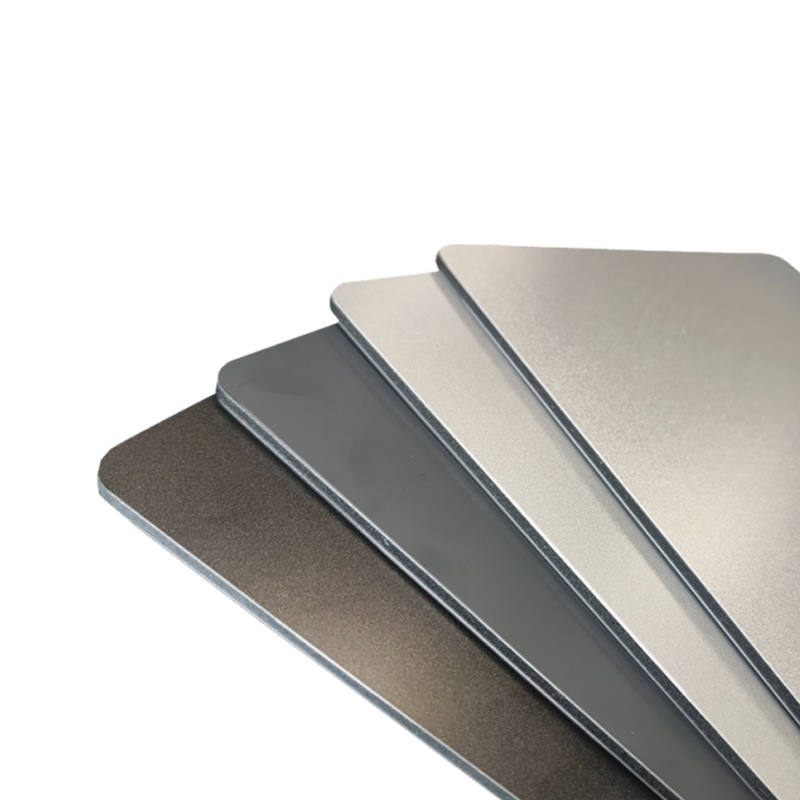
You have received a beautiful free sample. The color is perfect. The surface is flawless. The core looks dense and mineral-filled. You approve the sample and place a large order.
Then the container arrives. The panels are different. The color is off. The surface has micro-scratches. The core looks suspiciously plastic. You have been a victim of the oldest trick in the aluminum composite panel trade: the sample switch.
Free samples are a standard marketing tool in the ACP industry. However, when a supplier offers free samples but refuses to provide pre-production samples from your actual production run, they may be setting you up for a bait-and-switch. A reputable aluminum composite panel manufacturer or an Alucobond factory uses samples to build trust—not to deceive. This guide explains how to distinguish legitimate sampling from deceptive practices and protect your order from the sample switch.
1. The Critical Distinction: Marketing Samples vs. Pre-Production Samples
Not all samples are equal. Understanding the sample hierarchy is the first step toward protecting your order.
Reference Sample (Marketing Sample) – High Risk
The reference sample is what a supplier sends to win your business. It may be:
- Produced in a laboratory, not on the actual production line
- Made from different raw materials than bulk production
- Hand-selected from the best output of the factory
- Sourced from a different manufacturer entirely
As trade experts note, reference samples are used for initial talks to showcase craftsmanship, materials, or design style. They are not legally binding. Suppliers may label them "for reference only" to avoid later liability.
Pre-Production Sample – Low Risk
A pre-production sample is produced on the same production line, using the same raw materials, coating batch, and core material as your bulk order.
Legal status: Once you provide written approval of a pre-production sample, it becomes the binding quality standard ("golden sample") for the entire order. Any deviation from this approved sample constitutes a breach of contract.
A supplier who refuses to provide a pre-production sample—or sends only a marketing sample—is likely planning to switch materials for the bulk order. The industry standard is clear: "If the manufacturer's sample has quality problems, mass production quality will be even less guaranteed".
2. How the Sample Switch Works
The sample switch follows a predictable pattern that procurement professionals must recognize.
Step 1: The Beautiful Free Sample
You request a sample. The supplier sends a high-quality panel—often with genuine PVDF coating and A2 mineral core—at no cost. The sample meets or exceeds your expectations.
Step 2: The Quote
The supplier provides a competitive quote. The price is attractive—perhaps 20-30% below market average. You assume the price reflects the sample quality.
Step 3: The Bulk Order Switch
Your large order is produced using cheaper materials:
- Polyester coating instead of PVDF (chalking and fading within 3-5 years)
- PE core instead of A2 mineral (combustible, dangerous in fire)
- Thinner aluminum skins (reduced impact resistance)
- Recycled or unknown alloy instead of AA5005/3105 (corrosion risk)
Step 4: The Excuse
When you complain, the supplier claims, "The sample was just for reference. Mass production varies." Or they blame "different batches" or "normal variation."
This is why the pre-production sample from your actual production run is essential—not a marketing sample produced in a lab.
3. Why Free Samples Are Offered: The Economics
Understanding supplier economics helps you assess risk.
Legitimate Reasons for Free Samples
- Low marginal cost: The material cost of a small sample (less than 1 square meter) is minimal for an established aluminum composite panel manufacturer.
- Customer acquisition: Samples are a cost-effective marketing tool to demonstrate quality.
- Trust building: A confident manufacturer uses samples to showcase their capabilities.
Red Flags in Sample Offers
Red Flag | Why It Is Dangerous |
Free sample, but high shipping charge | Shipping cost padding; the supplier may be a trading company |
The sample takes weeks to arrive | Indicates supplier may not have inventory; may be sourcing from elsewhere |
The sample has no batch number or labeling | No traceability; cannot verify sample origin |
Supplier refuses to provide a pre-production sample | Planning to switch materials for bulk order |
Sample quality is noticeably higher than the price suggests | The price does not reflect the sample; the bulk order will be downgraded |
As one industry source notes, if the manufacturer's sample has quality problems, mass production quality will be even less guaranteed. The inverse is also true: a beautiful sample does not guarantee beautiful bulk production.
4. The Procurement Protocol: Securing What You Approved
To ensure your delivered panels match your approved sample, follow this established sampling protocol.
Step 1: Request Pre-Production Samples, Not Marketing Samples
Do not approve a sample that comes from a different source than your production run. Specify in your purchase order:
"Supplier shall provide pre-production samples produced on the same production line, using the same raw materials, coating batch, and core material as the bulk order. Marketing samples or reference samples are not acceptable for approval."
Step 2: Test the Sample Thoroughly
A single free sample is not enough to assess quality. Test it :
Test | Method | Acceptance Criteria |
Core composition | Burn test on the sample edge | A2: does not ignite; FR: self-extinguishes |
Coating thickness | Eddy current gauge | ≥25μm (two-coat); ≥40μm (three-coat) |
Adhesion | Cross-hatch tape test | Rating 4B or 5B |
Color consistency | Spectrophotometer (ΔE) | ≤1.5 vs. specification |
Flatness | Straightedge | ≤1mm/m |
Protective film | Peel test | Leaves no residue |
Step 3: Retain a Sealed Reference Sample
Once you approve the pre-production sample, retain a sealed, dated sample. This becomes the binding quality standard.
The industry standard for sale by sample requires that the delivered goods must match the approved sample exactly. If the supplier retains a matching duplicate, neither party can later dispute the standard.
Step 4: Require Batch Traceability
The sample's batch number should match the batch numbers on your delivered panels. A quality aluminum composite panel manufacturer prints batch numbers on the protective film.
Step 5: Third-Party Pre-Shipment Inspection
Engage an independent inspector (SGS, Intertek, TÜV) to:
- Compare random production panels to your retained sample
- Verify core composition (burn test)
- Measure coating thickness and adhesion
- Confirm batch numbers
Never pay the balance before the inspection passes.
5. How a Reputable Aluminum Composite Panel Manufacturer Handles Samples
A legitimate aluminum composite panel manufacturer or Alucobond factory will not use free samples as a deceptive tool. Their sampling process will be transparent and documented.
Quality Control Documentation
Reputable manufacturers maintain detailed quality control records, including :
- Mill finish aluminum inspection (appearance, size, straightness)
- Core material testing (moisture content, specific gravity)
- Coating performance testing (T-bend, pencil hardness, adhesive force, color difference, thickness, gloss, MEK, acid/alkali resistance)
- Protective film inspection (thickness, width, peel strength, ductility)
- Final composite material testing per GB/T 17748-2016
Sample Policy Transparency
A professional supplier clearly states their sample policy :
- "Small samples available are free, just freight collect."
- "We can prepare samples within 3 days."
- "Samples will be sent in one day."
If the sample policy is vague, the supplier may be hiding their lack of production capability.
Third-Party Verification
Quality suppliers welcome third-party verification. They "run thorough tests for color matching, wearability, acid and alkali resistance, oil and solvent resistance, hardness, and other comprehensive testing" before approving materials for production.
6. The True Cost of the Sample Switch
When suppliers switch materials after sample approval, the costs are severe:
Cost Category | Impact |
Material substitution | PE core instead of A2 (fire safety risk); polyester instead of PVDF (premature failure) |
Failed building inspection | Stop-work orders; mandatory facade replacement |
Legal liability | Insurance voided; lawsuits for non-compliant cladding |
Removal and replacement | 3-5× original panel cost plus scaffolding and labor |
Reputational damage | Loss of client trust; negative references |
The sample switch is not a minor quality variation—it can be a life-safety issue when fire-rated cores are substituted with combustible PE.
7. Conclusion
Free samples are a legitimate marketing tool in the aluminum composite panel industry. However, they become dangerous when suppliers use them as bait for a switch—sending premium samples to win orders but delivering downgraded materials for bulk production.
For procurement professionals, the defense against sample switching is systematic verification:
1. Distinguish between reference samples and pre-production samples – Only approve pre-production samples from your actual production run
2. Test samples thoroughly – Burn test, coating thickness, adhesion, dimensions
3. Retain a sealed reference sample – This becomes the binding quality standard
4. Require batch traceability – Sample batch numbers must match production batch numbers
5. Demand third-party pre-shipment inspection – Independent verification before balance payment
6. Never approve based on free samples alone – A free sample is marketing, not a guarantee
A reputable aluminum composite panel manufacturer or Alucobond factory will welcome these precautions. They have nothing to hide. Suppliers who resist—refusing pre-production samples, batch traceability, or third-party inspection—are likely planning to switch materials.
The best sample is the one you can trace to your delivered panels. Do not let a free sample cost you your building's safety.