Welcome to Vbond
Why the Cheapest Aluminum Composite Panel Quote Often Becomes the Most Expensive
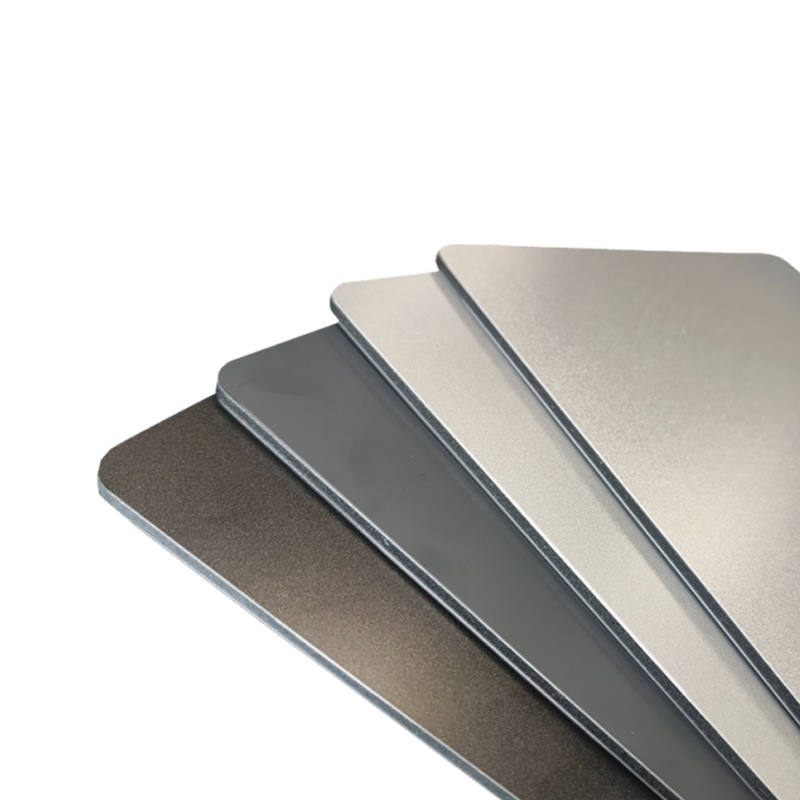
Why the Cheapest Aluminum Composite Panel Quote Often Becomes the Most Expensive
In procurement, the allure of the lowest upfront price is undeniable. When comparing quotes for aluminum composite panels (ACPs), a bid that is 30-40% lower than the competition can seem like a major victory for your budget.
However, in the world of building facades, the initial purchase price is often the smallest number on the final invoice. The "cheapest" quote frequently carries the highest long-term cost due to premature failures, safety hazards, and operational disruptions.
This guide explains why ultra-low prices are a red flag, the hidden costs lurking beneath "bargain" ACPs, and how a reputable aluminum composite panel manufacturer or Alucobond factory delivers value that far exceeds the unit price.
1. The "Bait" of the Bare Quotation
The most common trap in ACP procurement is the "bare quote." A supplier offers an incredibly low price per square meter, but that price excludes everything required to actually get the panels onto your building.
The "Unassembled" Price
Many low-cost suppliers quote only for the raw panel. They leave out:
- Transportation and Logistics: Shipping heavy ACP panels is expensive. Cheaper quotes often quote Ex-Works (EXW) prices, forcing the buyer to pay exorbitant freight charges that were "hidden" until the contract was signed.
- Accessories and Sealants: Those specific corner caps, structural adhesives, and fire-rated sealants? They are often billed separately at a premium.
- Custom Fabrication: If your design requires specific routing, V-grooves, or folding (drilling, cutting, bending), be prepared for "surprise" processing fees that were not included in the standard panel price.
The "Cheap Panel, Expensive Accessories" Switch
A classic tactic is the "Lowest Price" headline that lacks detail. For instance, a quote might list "2.5mm thick" material, but a physical inspection reveals it is actually 2.3mm. While this seems small, the supplier saves money on raw materials, and you lose structural rigidity.
2. The Physical Downgrade: What Gets Cheaper
If a price is too good to be true, it is because the material quality has been compromised. A legitimate aluminum composite panel manufacturer invests in quality raw materials; a cut-rate supplier replaces them with fillers.
The 3 Hidden Downgrades
Component | Quality Standard | The "Cheap" Switch | The Long-Term Cost |
Aluminum Skin | 0.50mm Marine-grade Alloy (e.g., AA5005) | 0.30mm or Recycled/Unknown alloy | Structural Failure:** Panels warp, "oil can," or blow out under wind load. |
Core Material | A2 Mineral (Non-combustible) or FR (Fire Retardant) | Calcium Carbonate-heavy filler or 100% Polyethylene (PE) | Fire Hazard: The facade becomes fuel. PE cores melt and drip flaming plastic. |
Coating | 70% PVDF (Kynar 500®) – 20+ year lifespan | Polyester (PE) or Acrylic – 3-5 year lifespan | Aesthetic Disaster: The building will fade, chalk, and look dilapidated within 2-3 years. |
The Aluminum Alloy Illusion
While every salesperson claims "high-strength aluminum," the reality is often hidden in the fine print. High-quality panels use specific alloys like AA5005 or AA3105 (Marine grade), which resist corrosion. Cheap panels use recycled scrap or low-grade 1100 series alloy. In coastal environments, cheap alloys will pit, corrode, and fail in months rather than decades. To confirm quality, always request Mill Certificates (MTRs) that specify the exact alloy grade and temper.
3. The Coating Catastrophe: The 3-Year vs. 20-Year Debate
The coating is the facade's shield. Low-quality panels use Polyester (PE) paint, which looks decent for the first 18 months. However, once the UV radiation hits, the chemistry breaks down .
The Failure Timeline
- Year 1-2: The surface begins to lose its gloss.
- Year 3: Chalking begins. You wipe your hand on the wall, and it comes away white.
- Year 4-5: Severe fading occurs, especially on dark or bright colors. The building looks dirty and old.
- Year 6: The coating erodes, exposing the aluminum to corrosion.
The "Alucobond Factory" Standard
An Alucobond factory or premium supplier uses 70% PVDF (Polyvinylidene fluoride) resin. The carbon-fluorine bond is one of the strongest in nature, ensuring the panel resists UV rays, acid rain, and pollution for 20+ years. While the initial cost is higher, you avoid the 5-year repaint or full replacement cycle.
4. The Long-Term Cost Analysis (Lifecycle Cost)
To truly understand the expense, you must look at the Total Cost of Ownership (TCO).
A simple comparison over a 20-year building lifespan:
Cost Factor | Premium ACP (PVDF/A2) | Cheapest ACP (Polyester/PE) |
Initial Unit Price | High | Low |
Installation | Efficient (flat, true panels) | High: Warped panels require extra labor to force alignment. |
Maintenance | Low. Occasional washing. | High: Need repainting or intensive cleaning every 2-3 years. |
Service Life | 15-25 Years | 3-7 Years (before chalking/fading makes it look terrible) |
Replacement Cost | None (within lifespan) | Catastrophic: Removal + Scaffolding + New panels + Labor (5-10x the original panel cost). |
Real-World Result
The "cheap" panel ends up costing you the initial price + the replacement price + the disruption price. The premium panel costs you once.
5. Metrics for a Reliable Manufacturer
When evaluating a supplier, look beyond the spreadsheet. Use these data points to gauge the real risk.
- On-Time Delivery Rate: Aim for suppliers with ≥ 95% fulfillment accuracy. Delays cost money.
- Reorder Rate: A rate above 30% indicates that other buyers returned to this supplier because they didn't have quality issues. Low reorder rates are a major red flag.
- Response Time: Suppliers who respond to inquiries within 2 hours are typically more organized and professional.
- The Sample Test: Order physical samples. Test the sample with a lighter (Burn Test) to check the core and feel the coating thickness.
Sample Supplier Comparison Data :
Supplier | Price Level | On-Time Delivery | Reorder Rate | Reorder Rate |
Premium / High-Volume Supplier | Mid-High | 96-100% | 22-45% | Low Risk |
Low-Price Supplier | Low-Price Supplier | 85% | 15-20% | High Risk (Lead Time) |
Conclusion: Cheap is Expensive
The cheapest aluminum composite panel quote becomes the most expensive the moment the coating starts chalking, the core is exposed to fire, or the warped panels shut down your job site.
Procurement professionals must look for Certified Quality (ISO, AAMA 2605, EN 13501-1), Traceability (batch numbers, mill certificates), and Proven Metrics (on-time delivery, reorder rates).
Paying a fair price for a verified product from a legitimate aluminum composite panel manufacturer is not an expense; it is an investment in the safety, longevity, and reputation of your building. Do not let a low quote cost you your building's future.