Welcome to Vbond
Why You Should Always Request Pre-Production Samples of Aluminum Composite Panels
Why You Should Always Request Pre-Production Samples of Aluminum Composite Panels
You have negotiated the price. You have received what looks like a beautiful brochure and a convincing technical data sheet. The aluminum composite panel manufacturer promises premium quality. You place the order.
Then the panels arrive. The color is slightly off. The gloss is inconsistent. The protective film leaves residue. And suddenly, you are in a dispute about what "acceptable quality" actually means—while your project schedule burns.
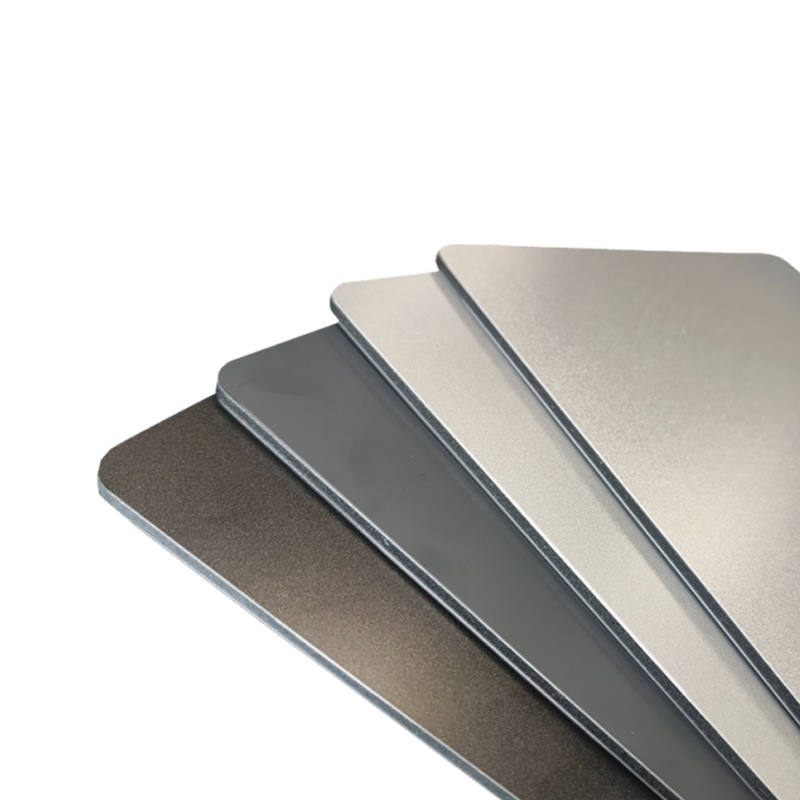
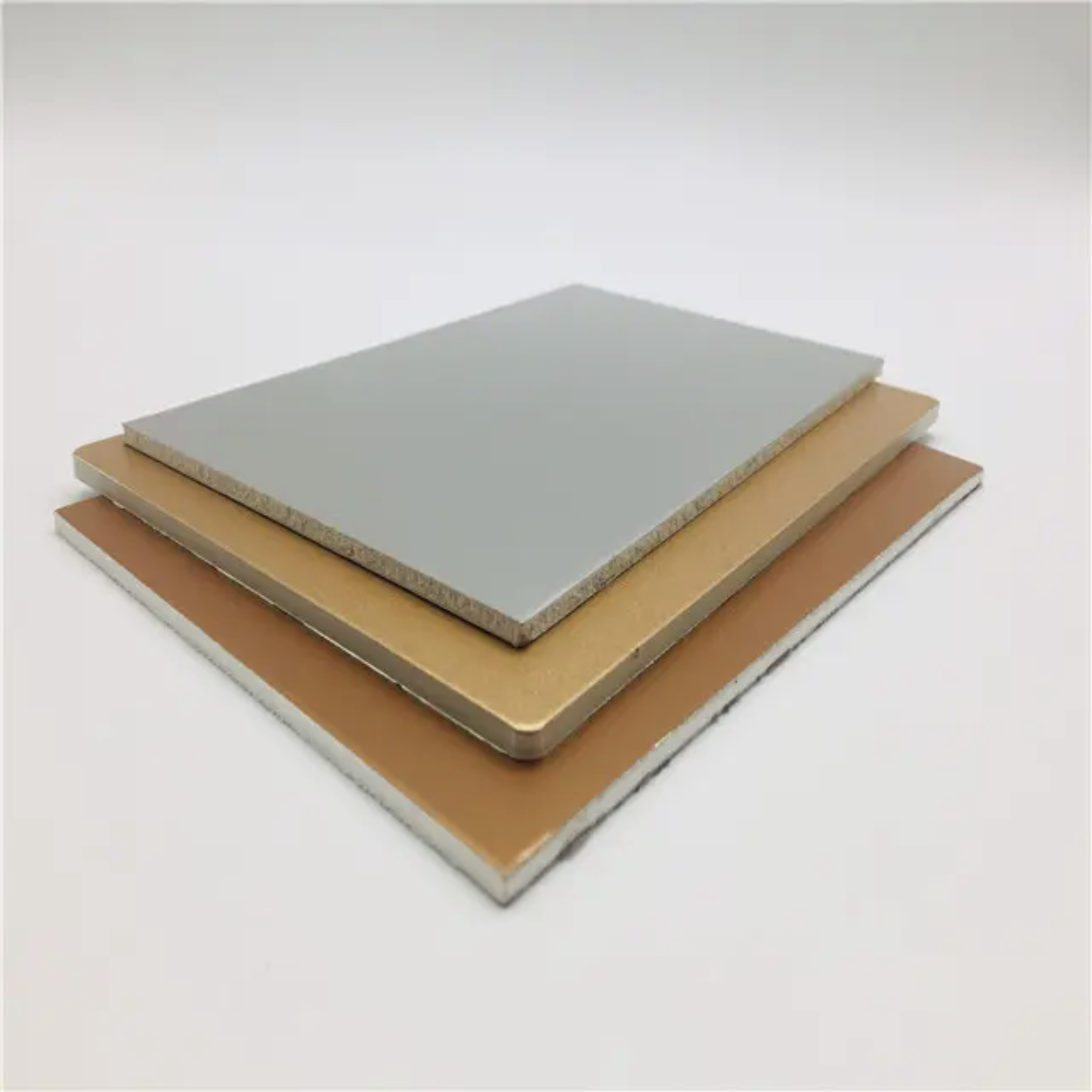
This scenario is entirely avoidable. The single most effective quality control tool in aluminum composite panel procurement is the pre-production sample. A physical sample, approved before mass production begins, is not just a reference—it is a binding quality benchmark that protects both buyer and supplier.
This guide explains why pre-production samples are essential, what to test, and how to use them as legal and technical protection for your project.
1. The Critical Distinction: Pre-Production Sample vs. Marketing Sample
Not all samples are equal. Understanding the difference is essential for procurement professionals.
Marketing Sample (Low Value)
The marketing sample is what a supplier sends to win your business. It may be:
- Produced in a laboratory, not on the production line
- Made from different raw materials than bulk production
- Hand-selected from the best output of the factory
- Sourced from a different manufacturer entirely
A marketing sample tells you what the supplier wants you to see—not what they will deliver. One industry expert notes that "the sample is not a prototype. It is the binding quality reference for all production panels". However, this is only true when the sample comes from the actual production line that will manufacture your order.
Pre-Production Sample (High Value)
A pre-production sample is produced on the same production line, using the same raw materials, coating batch, and core material as your bulk order.
The difference is fundamental. A marketing sample is a sales tool. A pre-production sample is a quality control tool.
2. What Pre-Production Samples Reveal
A physical sample exposes quality attributes that no data sheet or certificate can fully capture.
Attribute | How to Evaluate | Why It Matters |
Color accuracy | Compared to the specification under standardized lighting (D65 daylight) | PVDF coatings can vary between batches; color difference (ΔE) should be ≤1.5 |
Gloss consistency | Measure with gloss meter at 60° | Variation >±5 units creates a patchy appearance |
Coating finish | Inspect for orange peel, pinholes, or scratches | Indicates coating application quality |
Core composition | Burn test on sample edge (after approval) | Verifies PE vs. FR vs. A2 mineral core |
Aluminum skin thickness | Measure with a caliper at the cut edge | Confirms specified gauge (0.30mm, 0.40mm, or 0.50mm) |
Edge quality | Examine the cut edge for delamination or rough finish | Impacts fabrication and installation |
Flatness | Place on a level surface; check for bow or warp | Warped panels cannot be installed properly |
A supplier that refuses to provide a pre-production sample—or sends a sample that shows obvious defects—is signaling that mass production will be worse. As one guide notes, if the manufacturer's sample has quality problems, then mass production quality will be even less guaranteed.
3. The Risks of Skipping Pre-Production Samples
Risk 1: Color Mismatch Between Sample and Bulk
The most common complaint in ACP procurement is color variation between the approved sample and delivered panels. Without a pre-production sample from the actual production batch, you have no reference to enforce against.
Risk 2: Hidden Coating Defects
Coating problems—blistering, peeling, scratches, uneven color—are often not visible until panels are installed. A pre-production sample allows you to inspect the coating under controlled conditions before mass production begins.
Risk 3: Core Substitution
One of the most dangerous risks is receiving a PE core when you specified FR or A2 mineral. A burn test on a pre-production sample confirms core composition before production scales.
Risk 4: Dimensional Inconsistency
Panels that vary in thickness, width, or flatness cause installation failures. Professional standards specify tolerances: thickness ±0.2mm, length/width ±1mm, flatness ≤3mm/m. A pre-production sample allows you to verify these dimensions before committing to full production.
4. The "Sample is the Contract" Principle
In professional procurement, the approved physical sample becomes the binding quality standard for the entire order. As one industry standard states: "The sample is the contract, not a suggestion".
How to Establish the Sample as a Legal Reference
Step | Action |
1. Request pre-production sample | Produced on the same line as your bulk order |
2. Inspect thoroughly | Use measurement tools (calipers, gloss meter, spectrophotometer) |
3. Document findings | Record measurements, photograph the sample |
4. Approve in writing | Written approval (email or signed form) before production begins |
5. Retain duplicate | Keep a sealed reference sample; the supplier retains a matching duplicate |
6. Reference in contract | State that all production panels must match the approved sample |
Critically, verbal approval is insufficient. The leading industry practice requires "written approval before proceeding" and states that "production does not begin until written sample approval is received. A verbal 'looks good' is not an approval".
5. Mock-Ups: The Next Level Beyond Samples
For complex facade systems, a single panel sample is insufficient. Full-scale mock-ups provide validation of the complete wall assembly—including how panels interface with windows, insulation, attachments, and sealants.
Benefits of pre-construction mock-ups include:
- Validates installation sequencing before work begins on the building
- Tests water penetration resistance under simulated wind pressure
- Reveals coordination issues between trades (e.g., window installers vs. cladding installers)
- Provides training opportunity for installation crews
One case study documented a building where a critical water seal was included in the performance mock-up but omitted during actual installation due to sequencing changes. Because the project required field testing, the omission was discovered early and corrected without major cost or delay. Without the mock-up and subsequent testing, the building would have experienced widespread water leakage.
6. How Pre-Production Samples Protect Against Legal Disputes
When quality disputes arise, the party with documented evidence wins. A pre-production sample, approved in writing and retained at both buyer and supplier facilities, provides:
Evidence of Agreed Quality
The approved sample establishes the objective standard. Any panel that deviates from the sample is non-conforming.
Traceability Link
The sample's batch number should match production records, mill certificates, and coating certificates. This creates an unbroken chain of evidence from the sample to the delivered panels.
Third-Party Validation
For certified products, certification bodies require "initial factory inspection + product sampling inspection + post-certification supervision". The approved sample is part of this quality assurance framework.
Protection Against "Sample Switching"
When the supplier retains a duplicate sample, they cannot later claim that the approved sample was different from what was produced. Both parties hold the same reference.
7. What to Test on Your Pre-Production Sample
Use this checklist when evaluating a pre-production sample:
Test | Method | Acceptance Criteria |
Coating thickness | Eddy current gauge | ≥25μm (two-coat); ≥40μm (three-coat) |
Color consistency | Spectrophotometer (ΔE) | ≤1.5 vs. specification |
Gloss | Gloss meter (60°) | Within ±5 units of specification |
Adhesion | Cross-hatch tape test (ASTM D3359) | Rating 4B or 5B |
Core identification | Burn test (sample edge) | A2: does not ignite; FR: self-extinguishes; PE: ignites and melts |
Dimensional accuracy | Calipers, straightedge | Thickness ±0.2mm; flatness ≤3mm/m |
Surface quality | Visual inspection under good lighting | No scratches, pinholes, blistering, or orange peel |
8. Red Flags in Sample Requests
Red Flag | What It Means | Action |
Supplier sends only a marketing sample, not a pre-production one | Sample not representative of bulk production | Insist on a sample from the actual production line |
No written sample approval process | Lacks quality documentation systems | Require written approval with retained duplicate |
The sample shows obvious defects | Mass production will be worse | Reject; find another manufacturer |
The supplier cannot provide batch traceability for the sample | No production records linking the sample to the raw materials | Unacceptable for certified projects |
Sample coating thickness below specification | Production will likely be thinner | Reject; coating thickness is non-negotiable for exterior durability |
9. The Cost of Skipping Samples vs. The Cost of Samples
Scenario | Cost |
Pre-production sample (including shipping) | $100-500 |
Full-scale mock-up** (varies by complexity) | $5,000-25,000 |
Rejecting a container of mismatched panels | $30,000-100,000+ |
Removing and replacing installed non-conforming panels | $150,000-500,000+ |
Legal dispute over quality standards | $50,000-200,000+ |
Failed building inspection due to non-compliant material | Project delay costs + replacement |
The sample costs pennies compared to the cost of failure.
10. Conclusion
Pre-production samples are not optional—they are the foundation of quality assurance in aluminum composite panel procurement. A physical sample, approved in writing before mass production begins, establishes an objective quality standard that protects both buyer and supplier.
For procurement professionals, the requirements are clear:
1. Request pre-production samples produced on the actual production line
2. Test thoroughly—coating thickness, adhesion, core composition, dimensions
3. Approve in writing—documented approval, not verbal
4. Retain a duplicate—sealed reference sample for the project duration
5. Reference in contract—all production panels must match the approved sample
A reputable aluminum composite panel manufacturer or Alucobond factory will welcome this process. They understand that the sample protects them as much as it protects you—by preventing disputes, clarifying expectations, and building trust.
As one industry professional states: "The sample is the contract, not a suggestion". Order samples. Test them. Approve them in writing. Then, and only then, start production.
Your building—and your reputation—depend on it.