Welcome to Vbond
Beyond the Brochure: How to Physically Test an Aluminum Composite Panel Sample
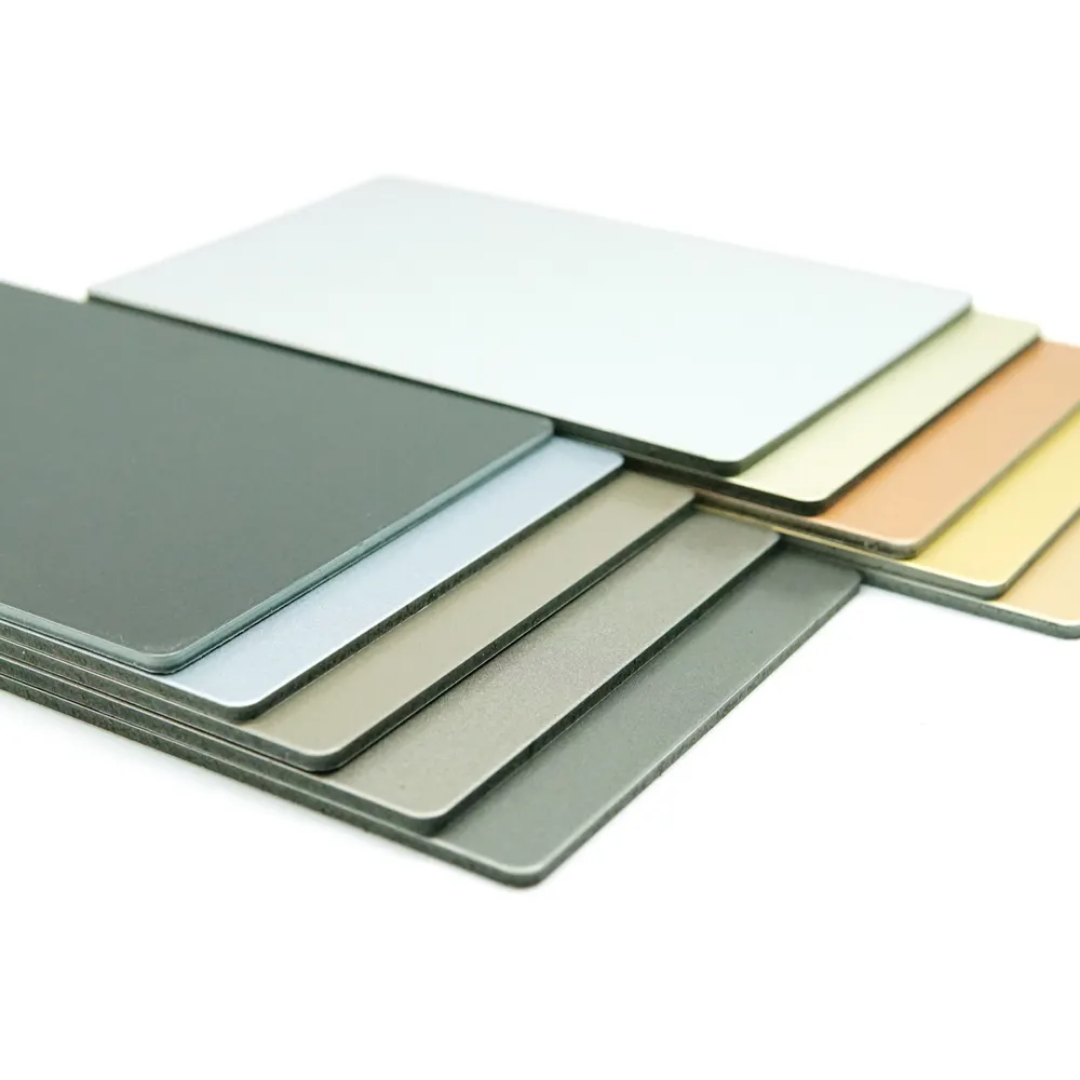
In the world of architectural cladding, the glossy brochure is a promise. But for professional buyers, facility managers, and specifiers, a beautiful image is not a substitute for structural integrity. When it comes to Aluminum Composite Panels (ACP), also known as sandwich panels, the difference between a landmark building and a liability often comes down to what happens before the scaffold goes up.
To mitigate risk, ensure compliance, and secure longevity, you must move beyond marketing materials and conduct rigorous physical testing on ACP samples. Here is your technical guide to verifying if a panel truly meets the standards of safety, durability, and flatness.
1. The “Core” Examination: Polyethylene vs. Mineral Core
The first physical test begins with the panel’s core. ACP typically consists of two aluminum skins sandwiching a core material—either Polyethylene (PE) or Fire-Retardant (FR) mineral filler.
The Test:
Request a sample cut (minimum 10x10 cm). Use a lighter or small torch to apply flame to the exposed core edge for 10 seconds.
What to Look For:
- PE Core: Will ignite quickly, drip burning plastic, and sustain combustion. This is acceptable for low-rise applications but is a fire risk in high-rises.
- FR Core (A2 or B1 rated): Will self-extinguish the moment the flame is removed. There should be no burning droplets, and the smoke should be minimal.
2. The Peel Strength Test: Grip Matters
A common failure point in low-quality ACP is delamination—where the aluminum skin separates from the core. This leads to bubbling, warping, and eventual panel failure.
The Test:
Attempt to manually peel the aluminum skin from the core at the cut edge. For a more quantitative approach, use a digital force gauge to measure the adhesion. Industry standards (like ASTM D3359 or EN 13523) suggest that high-quality FR panels should exhibit a peel strength of 4.0 to 6.0 N/mm.
What to Look For:
If the skin peels off with minimal resistance using only hand pressure, the adhesive bonding is insufficient. High-quality panels will require significant force to separate, and the core material will often fracture before the adhesive bond breaks.
3. Visual Integrity: The Surface Flatness Test
“Oil-canning” is the bane of any architectural facade. Even if the core is solid, residual stresses in the aluminum coil can cause wavy reflections.
The Test:
Place the sample on a perfectly flat surface (like a granite countertop or a certified surface plate). Alternatively, hold the panel at an angle to reflect a straight line (like a fluorescent light tube or a grid pattern).
What to Look For:
Look for distortion in the reflection. For high-end architectural projects, the panel should meet AAMA 2605 standards for flatness. Check the coating for orange peel (textured dimpling) and ensure the PVDF (Polyvinylidene Fluoride) or Polyester coating is uniform without pinholes.
4. The Haze and Gloss Consistency
A building’s aesthetic relies on uniformity. If the gloss level varies from panel to panel, the building will look patchy in sunlight.
The Test:
If you have a gloss meter, measure the gloss units (GU). For standard architectural finishes, consistency should be within +/- 5 GU. If you don’t have a meter, place two samples side by side under a single light source, overlapping the edges. Rotate them 90 degrees.
What to Look For:
Observe the color shift. Low-quality coils often have inconsistent batch processing. Look for metamerism—where colors match under one light source (e.g., indoor LED) but mismatch under natural sunlight.
5. The Bending and Creasing Test: Workability
On-site fabrication requires the panel to be routed, folded, and bent without fracturing the aluminum skin or cracking the paint.
The Test:
Perform a 0T bend test. Fold the panel 180 degrees flat against itself (zero thickness of material used as the radius).
What to Look For:
- Premium Panels: The aluminum skin will stretch but not crack. The paint will remain intact with no "whitening" (micro-cracking) along the bend line.
- Low-Quality Panels: The paint will crack, or worse, the aluminum skin will rupture, indicating that the temper of the aluminum (typically H16 or H18) is too hard or the paint lacks flexibility.
6. The Chemical Resistance Check
Construction sites expose panels to mortar, concrete wash, and solvents. If the coating is under-cured, it will stain permanently.
The Test:
Apply a small amount of MEK (Methyl Ethyl Ketone) or a standard mortar solution to the painted surface. Rub it with a cloth (MEK Rub Test) and let the mortar sit for 24 hours.
What to Look For:
If the paint softens, dissolves, or the color bleeds onto the cloth, the coating is under-cured. A high-quality PVDF coating will withstand harsh solvents without degradation.
Conclusion: Specifying with Confidence
A brochure can be printed with any certification logo, but physical testing reveals the truth about manufacturing consistency, core integrity, and long-term weathering performance.
For professional buyers, the time spent physically validating a sample is an investment in risk management. By performing these simple yet effective tests—peel strength, fire rating, flatness, and bendability—you ensure that the material delivered to the job site is not just a pretty face, but a structural asset that will withstand the elements and time.
Ready to verify your supply chain? Always request large, uncut samples (minimum 300mm x 300mm) and insist on mill certificates that confirm ASTM, EN, or AAMA compliance before signing the purchase order.