Welcome to Vbond
How to Distinguish Between FR, A2, and PE Aluminum Composite Panels on Site
How to Distinguish Between FR, A2, and PE Aluminum Composite Panels on Site
You have a shipment of aluminum composite panels (ACPs) at your job site. The documentation claims A2-s1,d0 fire rating. The price suggests something else. The building inspector is arriving next week.
How do you know what is actually inside those panels?
Distinguishing between PE (polyethylene), FR (fire-retardant), and A2 mineral core aluminum composite panels on site is not difficult once you know what to look for. This guide provides procurement professionals and site supervisors with simple, practical tests that can be performed immediately upon delivery—before a single panel is installed.
Why On-Site Verification Matters
The differences between these core types are not merely academic. They determine whether a building facade will remain safe in a fire or become a death trap.
Core Type | Composition | Fire Behavior | Regulatory Status for High-Rise |
PE (Polyethylene) | 100% polyethylene | Ignites readily; melts; produces flaming droplets | Banned in most jurisdictions |
FR (Fire-Retardant) | ~30-70% polyethylene + mineral filler | Self-extinguishing; limited flame spread | Restricted; requires verification |
A2 Mineral Core | <10% polyethylene; >90% mineral filler | Does not ignite; produces no flaming droplets | Compliant with non-combustible requirements |
Documentation can be falsified. Certificates can be borrowed, copied, or counterfeited. Packaging can be misleading. But the core material itself cannot lie.
Test 1: The Burn Test (Most Definitive Field Method)
The burn test is the simplest, most reliable field method for identifying core type. It takes 30 seconds and requires only a small sample and a flame source.
What You Need
- Small cutting tool (utility knife)
- Lighter or small propane torch
- Sacrificial panel or cut-off piece
Procedure
1. Cut a small sample, approximately 10mm x 50mm, from a sacrificial panel or fabrication cut-off
2. Hold the sample with pliers or tongs
3. Apply flame to the exposed core edge for 5–10 seconds
4. Remove the flame and observe carefully
How to Interpret Results
Observation | Observation | Interpretation |
Does not ignite; no sustained flame; minimal discoloration | A2 Mineral | Panel is likely compliant for high-rise applications |
Ignites with difficulty; flame may self-extinguish within 2-5 seconds; core foams or chars | FR (Fire-Retardant) | The panel has some fire resistance, but is not non-combustible |
Ignites quickly; melts and drips burning plastic; continues burning after flame is removed | PE (Polyethylene) | REJECT IMMEDIATELY – Not suitable for high-rise applications |
What to Document
- Photograph the sample before testing
- Video the test procedure showing the ignition and burning behavior
- Photograph the sample after testing
- Record the batch number from the panel
Important Note: The burn test is a screening tool, not a substitute for laboratory analysis. However, it is highly sensitive to combustible material. Any panel that sustains flame after the ignition source is removed contains significant polymer content and cannot be classified as an A2 mineral core.
Test 2: Density Check (Simple Weighing)
A2 mineral cores are significantly denser than PE or FR cores due to their high mineral filler content (typically >90%). This difference is measurable with basic tools.
What You Need
- Precision scale (0.1g accuracy recommended)
- Cutting tool
- Ruler or calipers
- Calculator
Procedure
1. Cut a precisely sized square sample (e.g., 100mm x 100mm)
2. Measure the sample thickness with calipers
3. Calculate volume: length × width × thickness (in cm³)
4. Weigh the sample (in grams)
5. Calculate density: mass ÷ volume (g/cm³)
How to Interpret Results
Density Range | Core Type | Indication |
>1.6 g/cm³ | A2 Mineral | High mineral content; likely compliant |
1.2–1.6 g/cm³ | FR (Fire-Retardant) | Moderate mineral content; combustible per AS 1530.1 |
0.91–0.94 g/cm³ | PE (Polyethylene) | No mineral filler; highly combustible |
Reference values from a legitimate A2 panel: The ALUCLAD A2 panel, certified by Intertek, has a 3.1mm mineral core (for 4mm total panel thickness) with over 90% inorganic content. The density reflects this high mineral loading.
Simple Floating Test (Alternative)
PE core samples float in water. A2 mineral core samples sink. This quick check can be performed on a small cut piece in a cup of water.
Test 3: Visual Edge Inspection
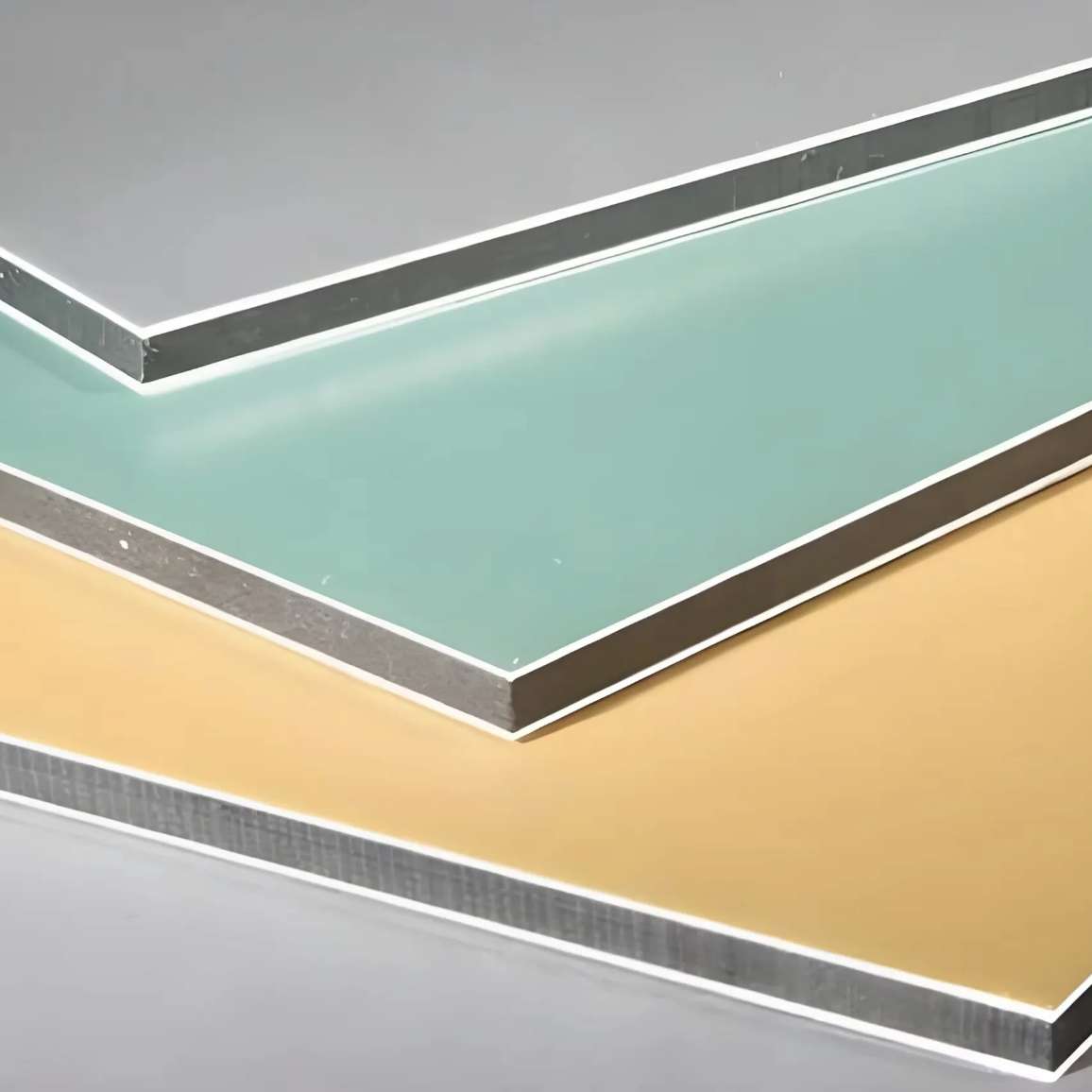
Even without testing, the cut edge of a panel provides visual clues.
What to Look For
Visual Indicator | Likely Core Type | Reliability |
Even, consistent appearance; core appears dense and mineral-like | A2 Mineral | Moderate – requires burn test confirmation |
Small bubbles or voids are visible in the core cross-section | Low-quality FR or PE | High – indicates poor manufacturing |
Core appears waxy or plastic-like | PE or low-quality FR | Moderate |
Discoloration or powdering at the edge | Possible moisture damage or core degradation | High – reject regardless of type |
Limitation: Core color alone is not reliable. White cores can be A2, FR, or even PE with titanium dioxide pigment. Black cores typically contain carbon black and are often PE, but can also be found in some FR products. Do not rely on visual inspection alone.
Test 4: Scrape Test (Core Texture)
The texture of the core material when scraped provides clues about composition.
Procedure
1. Use a utility knife or scraper to remove a small amount of core material from the edge
2. Observe the texture and behavior of the scrapings
How to Interpret Results
Scraping Texture | Core Type | Indication |
Fine powder; does not melt when heated | A2 Mineral | High mineral content |
Powdery but with small plastic shavings | FR | Mixed mineral and polymer |
Soft plastic shavings; melts when heated | PE | Predominantly polymer |
Test 5: Ignition Temperature Awareness (Laboratory Reference)
For definitive verification, laboratory testing measures flash ignition temperature (FIT) and self-ignition temperature (SIT). These values provide clear differentiation.
Reference values from a legitimate A2 panel (ALUCLAD A2, Intertek-certified):
Component | Flash Ignition Temperature (FIT) | Self-Ignition Temperature (SIT) |
A2 Panel | 509°C | 512°C |
A2 Core | 541°C | 536°C |
Reference values from legitimate FR panels: Typical FR cores have ignition temperatures in the 300-400°C range, significantly lower than A2.
Interpretation: Higher ignition temperatures indicate lower polymer content and better fire performance. A2 mineral cores consistently demonstrate FIT >500°C.
Comparison Table: Quick Reference for Site Use
Test Method | PE Core | FR Core | A2 Mineral Core |
Burn Test (flame applied 5-10 sec) | Ignites quickly; melts; drips burning plastic; continues burning | Ignites with difficulty; self-extinguishes within seconds; foams/ chars | Does not ignite; no sustained flame; minimal discoloration |
Density (g/cm³) | 0.91–0.94 (floats) | 1.2–1.6 | >1.6 (sinks) |
Scrape Test | Soft plastic shavings; melts when heated | Powdery with plastic shavings | Fine powder; does not melt |
Ignition Temperature(FIT) | <300°C | 300-400°C | >500°C |
Regulatory Status | Banned for high-rise | Restricted; requires verification | Compliant with non-combustible requirements |
The Consequences of Misidentification
If You Mistake PE for A2
- Fire safety catastrophe: PE core ignites readily and produces flaming droplets that spread fire upward
- Building code violation: PE core does not meet non-combustible requirements under any major building code
- Legal liability: Specifiers of PE core for high-rise applications face lawsuits, regulatory action, and potential criminal charges
- Financial loss: Full facade replacement costing 3-5× original panel price
If You Mistake FR for A2
FR core is not non-combustible under AS 1530.1. The NCC 2019 Specification C1.9(e)(vii) deems any ACP containing polyethylene—including FR cores—as combustible. FR panels may be acceptable in some low-rise applications, but do NOT satisfy non-combustible requirements for high-rise buildings.
The Alucobond Class Action (2026) Finding
On 27 March 2026, the Federal Court of Australia ruled that the manufacturer was not liable for damages because any non-compliance was due to misuse by qualified professionals. The Court stated: "Manufacturers are entitled to assume that the market into which they supply goods is a law-abiding one. Consequences of non-compliance must fall on those who do not comply with the law rather than the manufacturer."
Critical implication: Architects, engineers, builders, and procurement professionals—not manufacturers—bear responsibility for verifying that delivered panels match specifications. You cannot rely on manufacturer labels or certificates alone.
Documentation Verification (Complementary to Physical Testing)
While physical testing is essential, documentation provides additional verification:
What to Request
Document | What to Verify |
Full test report | Laboratory accreditation (CNAS, CMA, UKAS, NABL, Intertek, UL); report number traceable in database |
Product certification | EN 13501-1: A2-s1,d0 for non-combustible applications; ASTM E84 Class A for North America |
Ignition temperature data | ASTM D1929 results showing FIT >500°C for A2 |
Batch traceability | Numbers linking documentation to a specific shipment |
How to Verify
1. Enter report numbers into the issuing laboratory's verification database
2. For Intertek certifications, search the Intertek Directory of Building Products
3. For CNAS-accredited reports, verify through the CNAS database
4. Scan any QR codes on certificates to confirm they link to verified reports
Procurement Best Practices
Stage | Action |
Specification | Require A2-s1,d0 certification for high-rise applications; specify PE core is not acceptable |
Contract | Include the right to test, the right to reject, and supplier liability for misrepresentation |
Pre-shipment | Engage a third-party inspector to witness burn testing on random samples at the factory |
Upon delivery | Perform a burn test on the sacrificial panel from each batch before unloading |
Documentation | Photograph and video all tests; retain samples for the life of the building |
Disputes | Engage an accredited laboratory for definitive FTIR and ashing analysis |
Conclusion
Distinguishing between PE, FR, and A2 aluminum composite panels on site does not require expensive equipment or specialized training. The burn test—applying a flame to a small sample for 5–10 seconds—provides immediate, reliable differentiation:
- A2 mineral core: Does not ignite
- FR core: Ignites with difficulty; self-extinguishes
- PE core: Ignites quickly; melts; continues burning
For procurement professionals responsible for high-rise buildings, the message is clear: perform burn tests on every shipment. Reject any panel that sustains flame. Document everything. Retain samples.
The cost of verification is negligible. The cost of failure—a facade fire, a building-wide replacement, or a lawsuit—is catastrophic.
Never trust a certificate alone. Verify every shipment before installation.