Welcome to Vbond
The MOQ Dilemma: Balancing Inventory and Custom Orders for Aluminum Composite Panels
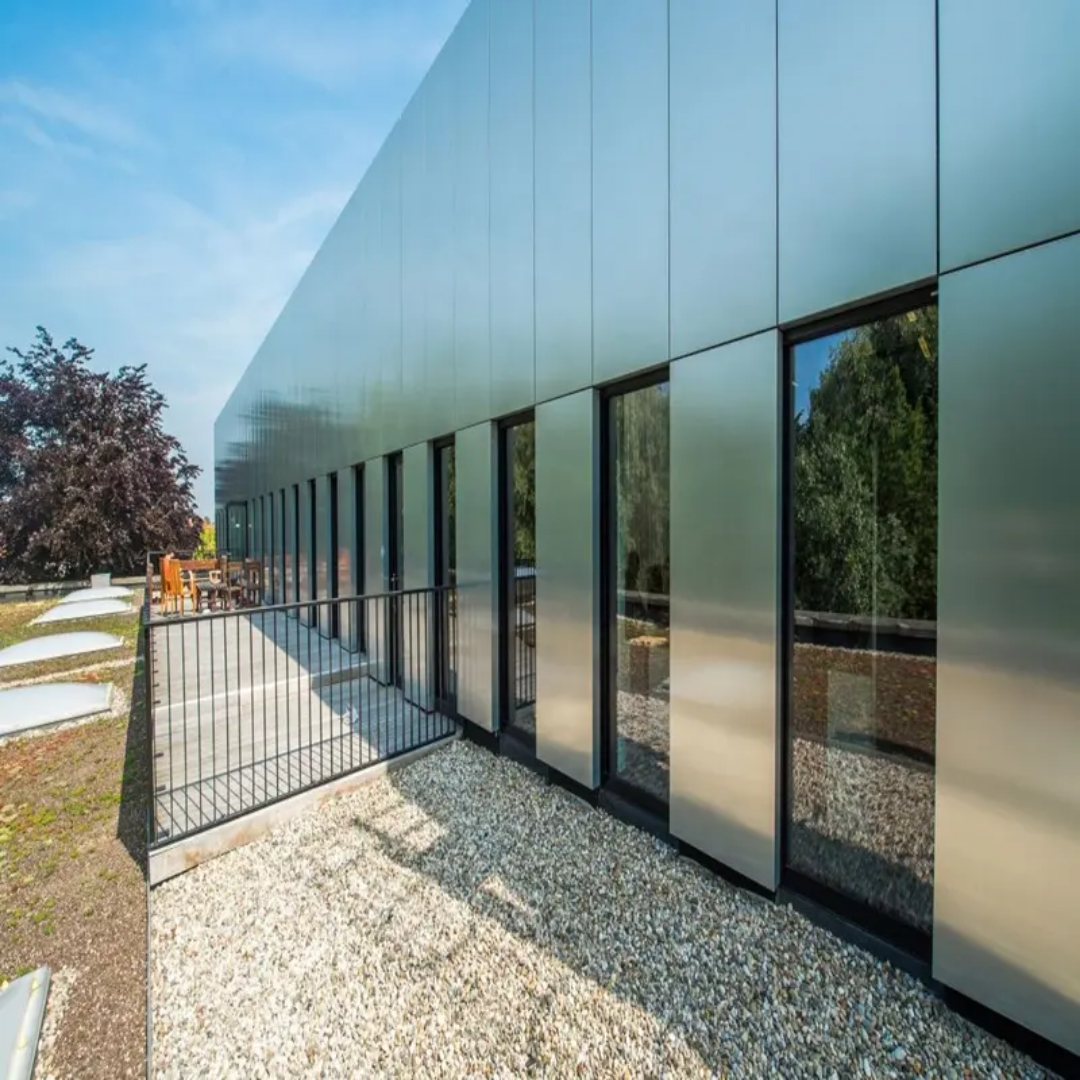
For procurement professionals in the construction and cladding industry, few challenges are as persistent—or as consequential—as the Minimum Order Quantity (MOQ). Whether you are sourcing standard white panels for a large-scale residential tower or a custom-matched metallic finish for a boutique retail project, the MOQ set by manufacturers directly impacts cash flow, inventory carrying costs, project timelines, and overall procurement strategy.
The MOQ dilemma is particularly acute for aluminum composite panels (ACPs). Manufacturers balance their own production efficiencies, raw material procurement, and setup costs against the diverse needs of projects ranging from massive commercial developments to small renovations. Understanding the economics behind MOQs—and developing strategies to navigate them—is essential for optimizing supply chain performance and project profitability.
This article explores why MOQs exist, how they vary by product type, and how procurement professionals can strike the right balance between inventory commitments and custom order flexibility.
1. What Is MOQ and Why Does It Matter?
Minimum Order Quantity (MOQ) is the smallest number of units (or total order value) that a manufacturer is willing to produce or sell in a single transaction. For ACPs, MOQs are typically expressed in:
- Square meters (m²): e.g., 500 m² minimum
- Number of panels: e.g., 100 sheets minimum
- Container quantity: e.g., one 20ft or 40ft container load
- Order value: e.g., $10,000 minimum purchase
MOQs exist to protect manufacturers from uneconomical production runs. Setting up a coil coating line, mixing pigments, scheduling labor, and managing quality control all incur fixed costs. If a manufacturer accepted unlimited small orders, those fixed costs would render each order unprofitable.
For buyers, MOQs create a fundamental tension:
- High MOQs: Lower per-unit cost but higher inventory investment and storage requirements
- Low MOQs: Greater flexibility but higher per-unit cost and potential supply chain fragmentation
2. Why ACP Manufacturers Impose MOQs
Understanding the cost structure behind MOQs helps procurement professionals negotiate more effectively.
A. Coating Setup and Changeover Costs
Producing ACPs involves coating aluminum coils with PVDF, polyester, or other finishes. Each time the production line changes color or finish type, the line must be stopped, cleaned, and reconfigured. This changeover process
- Takes 2–4 hours
- Consumes labor and materials
- Generates waste (coating residue, test panels)
- Ties up production capacity
For standard colors (e.g., RAL 9016 white, RAL 9005 black), manufacturers produce in high volume, spreading setup costs across thousands of square meters. For custom colors, the setup cost must be recovered over a smaller production run, resulting in higher MOQs or higher per-unit pricing.
B. Raw Material Procurement
Pigments, resins, solvents, and aluminum coil are purchased in bulk. A manufacturer cannot economically order 10 kg of a specialty red pigment for a small custom run; suppliers have their own MOQs. These raw material commitments flow downstream to the buyer.
C. Quality Assurance and Testing
Every production batch requires quality control testing:
- Spectrophotometric color measurement
- Adhesion tests
- Gloss verification
- Weathering validation for exterior grades
These tests have fixed costs that are more efficiently absorbed over larger quantities.
D. Logistics and Transportation
Export shipments are typically containerized. A 20ft container holds approximately 600–800 m² of ACPs (depending on thickness and palletization). Shipping less than a full container (LCL) increases freight costs per unit and introduces handling risks. Many manufacturers set MOQs at or near full container loads to optimize logistics.
3. MOQ Variations by Product Type
Not all ACPs carry the same MOQ. The following tiers reflect typical industry practices:
Tier 1: Standard Colors, Standard Sizes
Parameter | Typical MOQ |
Square meters | 500–1,000 m² |
Panels | 100–200 sheets |
Container | 20ft container (approx. 600–800 m²) |
Lead time | 15–25 days |
Examples: RAL 9010 white, RAL 9005 black, RAL 7042 gray, standard 1220×2440 mm size, 3 mm or 4 mm thickness, polyester or PVDF coating.
These products are manufactured continuously, allowing lower MOQs because the production line is already set up.
Tier 2: Non-Standard Colors, Standard Sizes
Parameter | Typical MOQ |
Square meters | 1,000–2,000 m² |
Panels | 200–400 sheets |
Containe | 1–2 containers |
Lead time | 25–35 days |
Examples: RAL colors outside the top 20 most common shades, custom color matching to a brand standard, PVDF coating with enhanced durability requirements.
Tier 3: Custom Sizes, Metallic or Effect Finishes
Parameter | Typical MOQ |
Square meters | 2,000–3,000 m² |
Panels | 400–600 sheets |
Container | 2–3 containers |
Lead time | 5–50 days |
Examples: Non-standard panel dimensions (e.g., 1500×3000 mm), metallic finishes (RAL 9006, RAL 9007), pearlescent or color-shift effects, A2 fire-rated mineral-core panels with custom finishes.
Tier 4: Fully Custom Projects
Parameter | Typical MOQ |
Square meters | 3,000–5,000+ m² |
Panels | 600–1,000+ sheets |
Container | 3–5+ containers |
Lead time | 50–75 days |
Examples: Digital printed graphics, embossed textures, unique substrate specifications, specialized fire ratings combined with custom aesthetics.
4. The Inventory vs. Custom Order Trade-Off
Procurement professionals must constantly balance two opposing forces:
The Case for Inventory (Stocking Standard Products)
Advantages:
- Lower per-unit cost: Economies of scale reduce material and freight costs
- Immediate availability: No production lead time; can respond to urgent project needs
- Simplified procurement: Standard products can be sourced from multiple suppliers
- Lower risk: Standard colors are easily replaced if damaged
Disadvantages:
- Carrying costs: Storage space, insurance, and capital tied up in inventory
- Obsolescence risk: Unused inventory may become outdated or damaged
- Cash flow impact: Upfront investment in materials not yet sold
- Inflexibility: Standard inventory may not meet specific project requirement
The Case for Custom Orders (Made-to-Order)
Advantages:
- Perfect fit: Color, size, finish, and fire rating exactly match project specifications
- No carrying costs: Materials arrive just in time for installation
- Brand alignment: Custom colors reinforce corporate identity
- Differentiation: Unique finishes distinguish the building in the market
Disadvantages:
- Higher per-unit cost: Setup costs spread over smaller runs
- Longer lead times: 4–10 weeks from order to delivery
- MOQ pressure: May need to order more than immediately required
- Supply chain risk: Single-source dependency; delays impact project schedules
5. Strategies to Balance MOQ and Inventory
Experienced procurement professionals use several strategies to navigate the MOQ dilemma:
A. Pool Orders Across Projects
If your organization manages multiple projects simultaneously, consolidate ACP requirements across sites. A single custom color order of 2,000 m² may serve three different buildings, meeting MOQ requirements while reducing per-unit cost.
Implementation:
- Maintain a centralized procurement function with visibility into all active projects
- Align project timelines to allow combined ordering
- Negotiate with suppliers for split shipments from a single production batch
B. Establish Strategic Stock of Standard Products
For frequently specified colors and sizes, maintain a safety stock that allows you to meet small orders without triggering MOQs. This is particularly effective for:
- White, light gray, and black panels (most common)
- Standard 1220×2440 mm size
- 3 mm and 4 mm thicknesses
Calculation:
- Analyze historical consumption patterns
- Set reorder points based on lead time and usage rate
- Stock 3–6 months of typical demand
C. Negotiate Flexible MOQs
MOQs are not immutable. Suppliers may adjust MOQs based on:
- Long-term relationship: Consistent buyers often secure better terms
- Payment terms: Upfront payment or letters of credit may reduce MOQ requirements
- Seasonal capacity: During slow seasons, manufacturers may accept smaller orders
- Sample orders: Request a "sample run" at reduced MOQ for project validation
Approach: Frame negotiations around total annual volume rather than per-order quantity. A commitment to 10,000 m² annually may allow individual orders of 500 m².
D. Use Buffer Stock for Custom Colors
When custom colors are unavoidable, order spare panels (5–10% over requirement) at the same time. This serves two purposes:
- Immediate replacement: If panels are damaged during installation, spares are available without reordering
- Future expansion: If the building is expanded or renovated, matching panels exist
Spare panels represent a modest upfront cost that prevents much larger expenses later.
E. Leverage LCL Shipping for Small Quantities
While full container loads (FCL) offer the lowest freight cost per unit, less-than-container (LCL) shipments allow smaller quantities. Consolidate ACPs with other materials from the same origin to share container space and freight costs.
F. Explore Alternative Suppliers
Not all manufacturers have the same MOQ structure:
- Large multinationals: Often have higher MOQs but broader product ranges
- Mid-sized regional manufacturers: May offer lower MOQs and more flexibility
- Trading companies: Can aggregate small orders from multiple buyers to meet manufacturer MOQs
6. Calculating the True Cost of MOQ
When evaluating whether to accept a higher MOQ, procurement professionals must calculate total landed cost, not just unit price.
Cost Components to Include:
Cost Element | Description |
Product cost | Base price per m² × quantity |
Freight | Ocean or air freight, often lower per unit at higher volumes |
Duties and taxes | Import tariffs, VAT (typically % of CIF value) |
Financing | Cost of capital tied up in inventory |
Storage | Warehouse space, insurance, handling |
Obsolescence risk | Potential write-off if inventory not used |
Simplified Calculation:
Compare two scenarios for a project requiring 1,000 m²:
Scenario | MOQ | Unit Price | Total Product | Freight per m² | Landed per m² | Total Landed |
Custom order | 1,000 m² | $18/m² | $18,000 | $2/m² | $20/m² | $20,000 |
Standard stock | 2,000 m² | $15/m² | $30,000 | $1.50/m² | $16.50/m² | $33,000 |
In this example, the standard stock option appears cheaper per unit ($16.50 vs. $20.00) but requires $13,000 more upfront investment and leaves 1,000 m² unused.
The correct comparison:** Custom order cost ($20,000) vs. standard stock cost for actual need ($16,500 for 1,000 m²) plus carrying cost and risk for the extra 1,000 m². If the extra material can be used on future projects, the standard stock option may be superior.
7. Negotiation Tactics for Better MOQ Terms
When MOQs are higher than your project requires, consider these negotiation approaches:
A. Offer a Deposit
Agree to pay a non-refundable deposit (30–50%) to offset the manufacturer's setup risk. This demonstrates commitment and may reduce MOQ requirements.
B. Accept Longer Lead Times
If you can accept a longer production window, the manufacturer can schedule your order during downtime, reducing the opportunity cost of the production line.
C. Take Non-Prime Positions
For standard colors, ask if you can take material from the next production run without holding a specific batch for your order. This allows the manufacturer to include your quantity in a larger run without dedicated setup.
D. Combine Standard and Custom
If ordering a custom color, add standard color panels to the same container to meet MOQ thresholds while building useful inventory.
E. Sign a Frame Agreement
Commit to purchasing a total volume over 6–12 months in exchange for lower MOQ per order. This provides the manufacturer with predictable demand while giving you flexibility.
8. The Role of Technology in MOQ Management
Digital tools are transforming how procurement professionals manage MOQ challenges:
- ERP integration: Centralized systems track inventory across projects, enabling consolidation
- Demand forecasting: AI-powered tools predict usage patterns to optimize stock levels
- Supplier portals: Real-time visibility into manufacturer production schedules and available capacity
- Collaborative platforms: Share order requirements with other buyers to aggregate volume
9. Decision Framework: When to Accept Higher MOQ
Use this framework to evaluate whether accepting a higher MOQ makes sense:
Factor | Favor Accepting Higher MOQ | Favor Lower MOQ |
Future demand | Certain; material will be used | Uncertain; risk of obsolescence |
Storage capacity | Available at reasonable cost | Limited or expensive |
Cash position | Strong; capital not constrained | Tight; prefer pay-as-you-go |
Project timeline | Flexible; can stock ahead | Urgent; need material now |
Supplier relationship | Strategic partner; long-term view | Transactional; spot purchase |
Color type | Standard, easily used elsewhere | Custom, project-specific |
10. Conclusion
The MOQ dilemma for aluminum composite panels is a classic procurement challenge: balancing the efficiency of larger orders against the flexibility of smaller, customized purchases. There is no universal solution—the right approach depends on project requirements, organizational capacity, and market conditions.
Successful procurement professionals navigate this dilemma by:
- Understanding manufacturer economics: MOQs reflect real costs; negotiate with this knowledge
- Consolidating demand: Pool requirements across projects to meet volume thresholds
- Building strategic inventory: Stock standard products that have predictable, ongoing demand
- Planning for custom orders: Anticipate lead times, budget for MOQs, and order spares
- Calculating total landed cost: Look beyond unit price to inventory carrying costs and obsolescence risk
By applying these strategies, you can turn the MOQ dilemma from a constraint into a competitive advantage—optimizing supply chain efficiency while delivering the exact materials your projects demand.