Welcome to Vbond
ACP Bending "Pop" Sound: What It Means & When to Reject
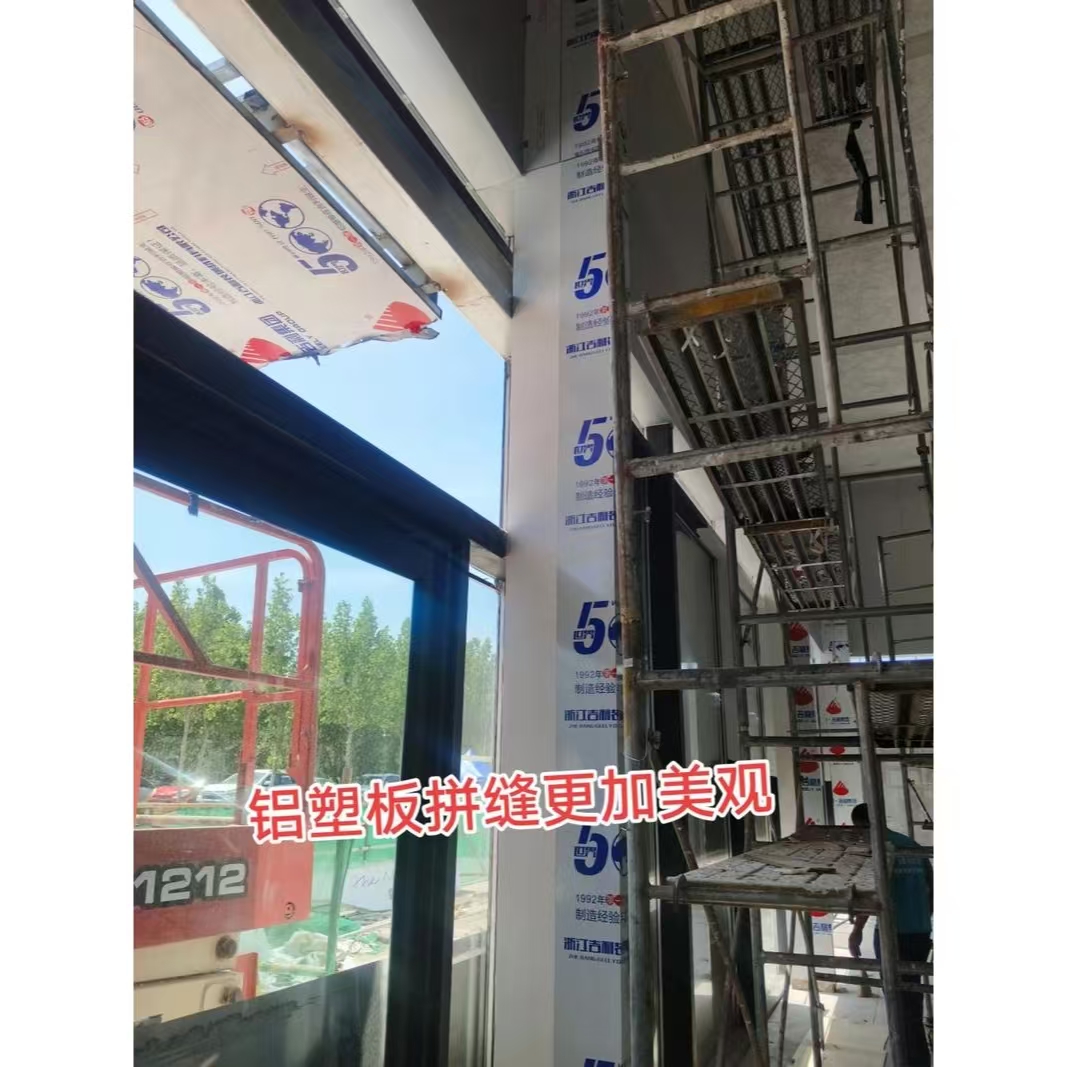
You're on the fabrication floor, watching your team fold a batch of aluminum composite panels for a critical facade project. The CNC router has cut precise V-grooves. The press brake is calibrated. As the first panel folds, you hear it: a distinct "pop" —like a small firecracker going off inside the panel.
The installer shrugs. "Probably just the protective film stretching," they say.
Do not believe them.
That pop sound is an acoustic emission—a warning signal from inside the composite structure. It tells you that something is failing. And depending on when it happens and how it sounds, it may be your only warning before a batch of expensive panels becomes unusable scrap.
This guide decodes the "pop" sound during ACP bending, explains the four distinct failure mechanisms it can represent, and provides a clear decision matrix for when to stop fabrication and reject the batch.
1. The Science of Acoustic Emissions in Composite Bending
When a composite material—two aluminum skins bonded to a polyethylene or mineral-filled core—is stressed, it releases energy. Some of that energy travels through the material as an elastic wave. When it reaches the surface, it creates an audible sound.
This is called acoustic emission (AE). In materials science, AE monitoring is a standard non-destructive testing method used to detect real-time damage during mechanical loading.
Research on similar layered composites (such as GLARE laminates) has established clear frequency signatures for different failure modes:
Failure Mode | Frequency Range | Sound Characteristic |
Aluminum deformation/yielding | 0–50 kHz | Low-frequency pop or click |
Matrix cracking (core failure) | 80–210 kHz | Sharp, mid-range crack |
Interface delamination | 210–320 kHz | High-frequency snap |
Fiber/core fracture | 210–320 kHz | Very high-frequency pop |
The human ear can detect frequencies up to approximately 20 kHz. What you hear as a "pop" or "crack" is the low-frequency component of a broader acoustic emission event. But just because you can hear it doesn't mean you can ignore it. In composite materials, acoustic emissions precede visible failure by milliseconds to seconds. The pop is the warning. The crack or delamination is the consequence.
2. The Four "Pop" Scenarios and What They Mean
Scenario 1: Pop During V-Grooving (Before Folding)
What You Hear: A sharp crack or pop as the router bit passes through the panel.
What Is Happening: The router bit has either:
- Hit a void or unmelted plastic particle in the core
- Experienced uneven resistance due to inconsistent core density
- Chipped the aluminum skin on the bottom side
Meaning: This is a material defect. The core is not homogeneous. Panels from this batch are likely to have inconsistent bending behavior.
Action: Stop growing. Inspect the groove under magnification. If you see chipping, voids, or uneven groove walls, quarantine the batch and request peel strength test reports from the manufacturer.
Scenario 2: Single Pop at the Start of Folding
What You Hear: One distinct pop as the press brake begins to apply pressure.
What Is Happening: The initial stress has caused either:
- The remaining core material to fracture at the base of the groove
- The aluminum skin is to yield at the bend line
Meaning: This is a design or setup issue. The remaining core thickness is likely too thick (above 0.5mm for standard 4mm panels), requiring excessive force to initiate the fold.
Action: Measure the remaining core thickness in the groove. Target for 4mm ACP is 0.2–0.3mm. If you measure >0.5mm, adjust the grooving depth and test again. A single pop at initiation followed by a smooth fold may be acceptable—but document it.
Scenario 3: Multiple Pops or Cracking Throughout the Fold
What You Hear: A series of pops, clicks, or cracking sounds as the panel reaches 90 degrees.
What Is Happening: The core is failing progressively. As the fold progresses, the remaining core material is cracking in multiple locations. The aluminum skin may be delaminating from the core.
Meaning: This is a bonding failure. The peel strength between the aluminum skin and the core is below specification. The manufacturer either used incompatible adhesives, inadequate pressure during lamination, or the wrong core material for bending applications.
Action: Reject the batch. Multiple pops during folding indicate that the panel's structural integrity is compromised. Even if the panel looks intact after folding, the bond has been damaged. Under thermal cycling or wind load, these panels will delaminate prematurely.
Scenario 4: Pop After Folding (Panel at Rest)
What You Hear: A pop sound seconds or minutes after the panel has been removed from the press brake.
What Is Happening: Residual stress in the bent panel is relieving itself. The aluminum skin or core is slowly cracking or delaminating due to spring-back forces.
Meaning: This is a material incompatibility or aging issue. The aluminum alloy may be too hard (e.g., 6061 instead of 3003/5005 series) for the bend radius. Or the core material has become brittle due to age or improper storage.
Action: Reject the batch. A panel that continues to make noise after folding is unstable. It will continue to move and potentially crack during transport, installation, or service.
3. The "Silent" Bend: What You Should Hear
A properly fabricated ACP bending operation should produce no audible pop or crack. The sound of a clean fold is the hydraulic whine of the press brake and the soft rustle of the protective film.
If your panels are properly grooved (0.2–0.3mm remaining core), using the correct aluminum alloy (3003 or 5005 series), and have adequate bond strength (peel strength ≥4 N/mm per ASTM D903), the fold will be silent.
Silence is a quality.
4. The Rejection Decision Matrix
Observation | Likely Cause | Accept? | Required Action |
Pop during grooving | Core void or inclusion | NO | Quarantine batch; request core density and MFI test reports |
Single pop at fold initiation | The remaining core is too thick | YES (if isolated) | Adjust grooving depth; test next panel |
Multiple pops during fold | Bond failure / low peel strength | NO | Stop fabrication; reject batch; request ASTM D903 test results |
Pop after fold (delayed) | Material incompatibility | NO | Reject batch; request aluminum alloy certification |
Pop but no visible crack | Micro-delamination | NO | Reject batch; panels will fail under thermal stress |
Complete silence | Correct process | YES | Continue production; document settings |
5. How to Verify Before You Fold: The Pre-Production Test
Before committing to a full batch fabrication run, perform this simple test:
1. Groove two test panels from the batch using your production settings
2. Measure remaining core thickness at three points along the groove (target 0.2–0.3mm)
3. Fold both panels to 90 degrees
4. Listen carefully. One pop at initiation is borderline; multiple pops or cracking is rejection.
5. Inspect the bend line under bright light. Look for:
- White stress marks (indicate excessive remaining core)
- Hairline cracks in the aluminum (indicates groove too deep or wrong alloy)
- Raised blisters at the bend (indicates delamination)
6. If both panels pass, run the batch. If either fails, stop and investigate.
6. Procurement Specifications to Prevent "Pop" Failures
To ensure you never have to make this decision, enforce these specifications in your purchase orders:
Specification | Requirement |
Aluminum alloy | 3003 or 5005 series (H12, H14, H16, H18, or H24 temper) |
Peel strength | ≥4 N/mm tested per ASTM D903 after oven conditioning and boiling water exposure |
Core material | Homogeneous; MFI (melt flow index) documented |
Bonding verification | The manufacturer must provide batch test reports, including peel strength |
Grooving recommendation | Manufacturer-supplied grooving depth chart for specific panel thickness |
Warranty | Coverage explicitly includes bending and fabrication defects |
7. Conclusion
The "pop" sound during aluminum composite panel bending is never normal. It is an acoustic emission warning that the composite structure is failing. Whether it indicates a core void, a bonding defect, or material incompatibility, the pop is your signal to stop, inspect, and—if necessary—reject.
Silence is the only acceptable sound from a proper ACP fold. If you hear a pop, you have a problem. If you hear multiple pops, you have a defective batch.
Your building's facade will last for decades. Do not start its life with a hidden crack.






