Welcome to Vbond
ACP for Curves and Organic Shapes: Breaking the Box in Architecture
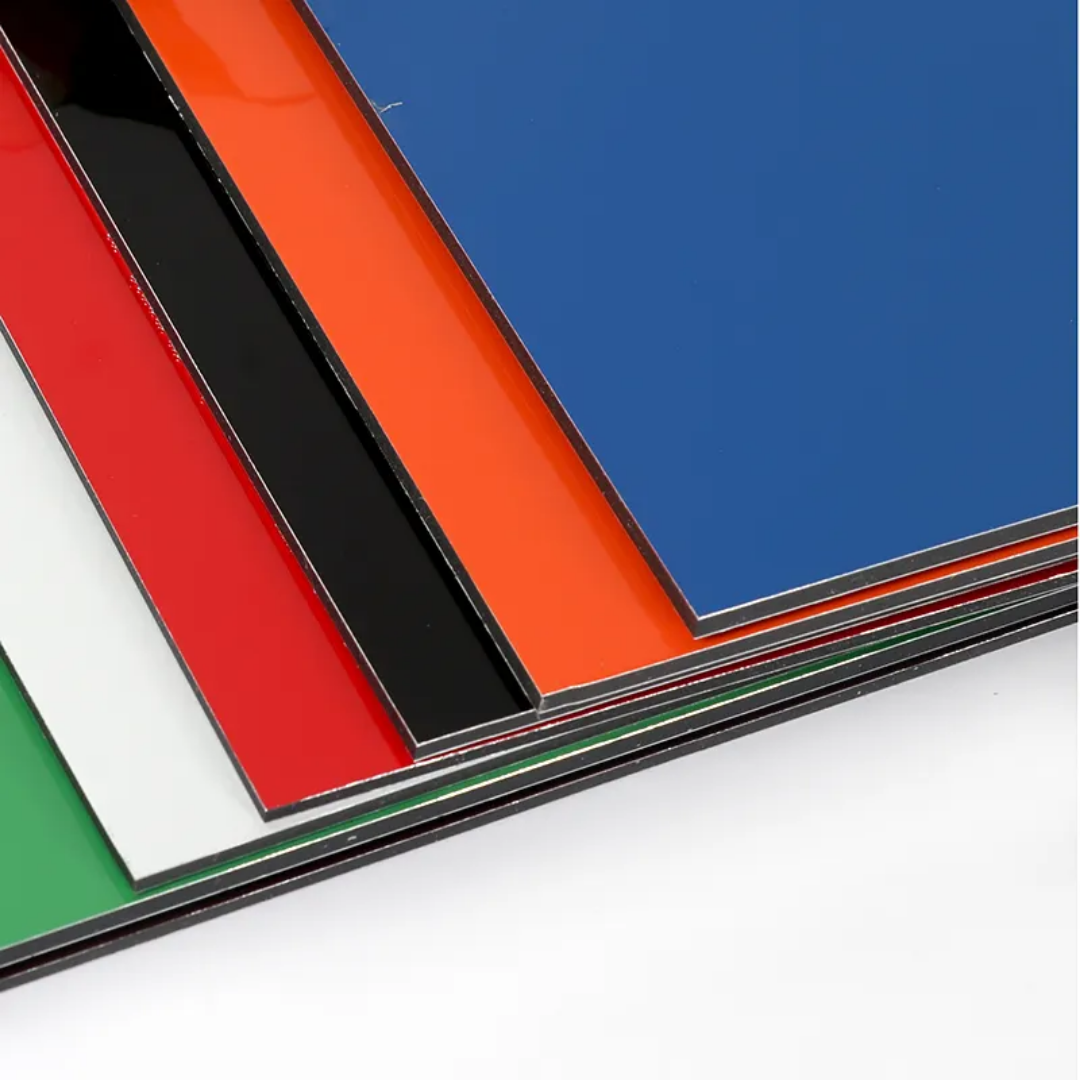
The era of the monolithic rectilinear box in architecture is giving way to a new language of fluidity, movement, and biomimicry. This shift towards curvilinear and organic architectural forms presents a significant material challenge: finding a cladding solution that is both malleable enough to realize complex geometries and robust enough for long-term performance. Aluminum Composite Panel (ACP), traditionally associated with flat planes, has emerged as a preeminent material for this very purpose, enabling architects to "break the box" with efficiency and precision. This article explores the advanced fabrication techniques and design potential of using ACP for dynamic, curved facades.
The Design Imperative for Organic Form
Organic and curvilinear shapes in architecture do more than create visual interest. They:
Enhance Aerodynamics: Reduce wind load and improve environmental performance.
Create Landmark Identity: Establish iconic, memorable structures.
Foster Biophilic Connection: Reference natural forms, promoting occupant well-being.
Optimize Spatial Experience: Guide movement and perception through fluid transitions.
The Core Challenge: Malleability vs. Integrity
The fundamental challenge in cladding curves is balancing formability with structural and aesthetic integrity. Materials like concrete are formable but lack a refined finish; stone is rigid and heavy; solid metal can be formed but at high cost and weight. ACP's composite structure—a plastic core bonded between two aluminum sheets—provides an ideal solution, offering a "sweet spot" of flexibility, lightness, and durability.
Mastering the Curve: Advanced ACP Fabrication Techniques
Realizing complex shapes with ACP requires specialized fabrication methods beyond simple panel cutting.
1. Cold Forming / Bending
This is the most common technique for creating simple, large-radius curves.
Process: A flat ACP sheet is passed through a series of rollers (a panel roller ) or bent on a brake press to achieve a consistent curvature.
Application: Ideal for creating sweeping facade waves, curved canopies, and cylindrical column covers. The minimum bend radius is critical and depends on the panel thickness and core material.
2. Relief Cutting / Kerfing
This technique allows for tighter radii and complex double-curvature (compound curves).
Process: A series of precise, parallel cuts is made into the backside aluminum layer and core material of the ACP, leaving the front face intact. This creates a "flexible spine" that allows the panel to bend smoothly.
Application: Essential for spherical forms, intricate geometric sculptures, and cladding irregular organic shapes. The kerf pattern must be engineered by specialists to maintain structural integrity.
3. Hot Forming
For the most demanding compound curves, heat is applied to make the thermoplastic core more pliable.
Process: The ACP is carefully heated in an oven and then formed over a custom mold or jig. This allows for precise, repeatable three-dimensional shapes.
Application: Used for pre-fabricated complex architectural elements like winged roof forms, avant-garde signage, and custom interior pods.
The ACP Advantage for Curved Applications
Choosing ACP for organic shapes offers distinct benefits over alternative materials:
Lightweight Construction: ACP curves are significantly lighter than formed metal or GRP (glass-reinforced plastic), reducing structural support costs and enabling overcladding on existing structures.
Seamless, Monolithic Aesthetics: Large, factory-formed curved panels minimize on-site joints, creating smoother, cleaner lines. Seamless curved cladding is achievable with expert fabrication and installation.
Material and Finish Consistency: The finished surface—whether a metallic lacquer, wood grain, or pure color—is applied before forming, ensuring perfect, unblemished continuity over the complex shape.
Cost-Effective Prefabrication: Complex shapes can be engineered and fabricated off-site under controlled conditions, leading to higher quality, faster installation, and reduced on-site risk.
Design and Specification Considerations
To successfully implement curved ACP, collaboration and precision are paramount:
1. Early Engagement with Fabricators: Involve specialist ACP fabricators during the design development phase. Their expertise on bend radii, kerfing patterns, and jointing details is invaluable.
2. Digital Modeling and Prototyping: Utilize 3D BIM (Building Information Modeling) to define the geometry. Physical mock-ups of curved sections are crucial to verify aesthetics, tolerances, and installation sequencing.
3. Panelization Strategy: The curved surface must be intelligently divided into manufacturable and transportable panels. Joint locations should be designed to follow natural shadow lines or architectural rhythms.
4. Substructure Engineering: The supporting framework must be engineered to the exact 3D geometry of the finished facade. Tolerances are much tighter than for flat wall systems.
Conclusion: Unlocking a New Formal Vocabulary
ACP has transcended its origins as a flat panel material to become a key enabler of architectural fluidity. Its unique combination of flexibility, light weight, and finish durability empowers architects to envision and execute buildings that are dynamic, responsive, and organically integrated with their environment. By mastering the techniques of cold forming, kerfing, and hot forming, ACP is breaking the conventional box, ushering in an era where buildings can flow, curve, and inspire with newfound freedom. It is the material that turns complex, breathtaking geometry into a buildable, enduring reality.






