Welcome to Vbond
ACP Pricing Strategy: How to Position High-Toughness Panels in a Brittle Market
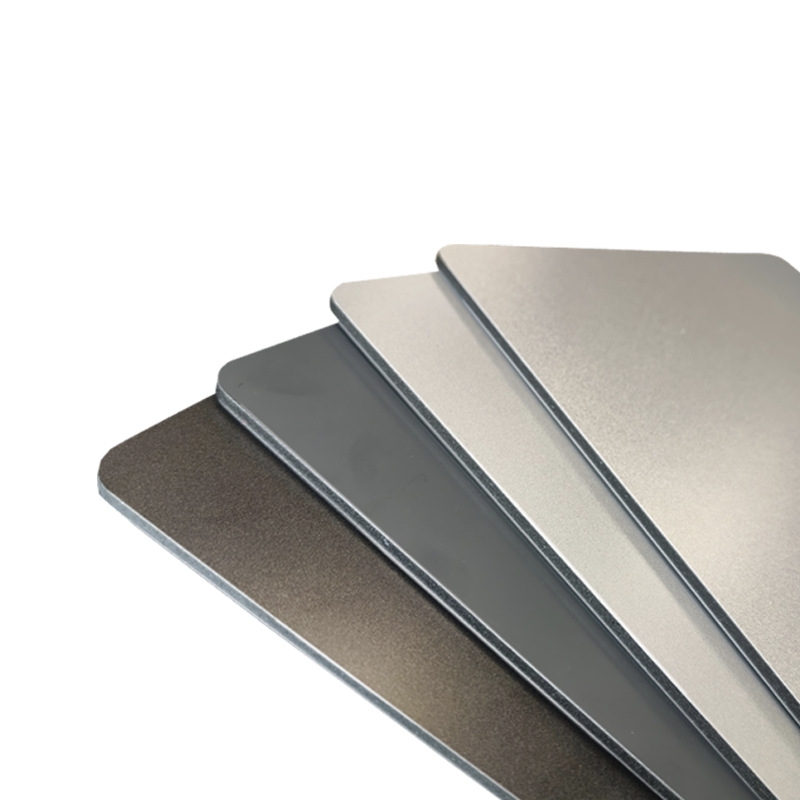
The aluminum composite panel market has a dirty secret. Walk through any building material distributor yard, and you will find racks of panels that look identical—same thickness, same color, same protective film. But beneath that film, the difference is night and day. Some panels will bend cleanly, resist impact, and stand up to years of weather exposure. Others will crack at the first fold, delaminate under summer heat, or turn into a blistered mess within months.
The problem is not that cheap, brittle panels exist. The problem is that they look exactly like high-quality panels on the warehouse shelf. And when your product is visually indistinguishable from inferior alternatives, price becomes the default battleground.
This guide provides a strategic framework for positioning "high-toughness" aluminum composite panels in a market saturated with brittle, low-cost alternatives—without engaging in a race to the bottom on price.
1. Defining "High-Toughness" ACP: What It Means Technically
Before you can position your product as premium, you must define what "high-toughness" means in measurable, defensible terms. Industry literature identifies several characteristics that distinguish robust ACP from brittle alternatives.
Core Integrity: Solid vs. Broken
Low-quality ACPs often use "broken core" construction—a cracked or partially evacuated polymer core that reduces weight and material cost. These panels are lighter and cheaper, but they lack strength, weather resistance, and long-term stability.
High-toughness ACPs use solid core construction—a completely continuous core component that provides bending strength, rigidity, and longevity. These panels are ideal for external architectural cladding, public buildings, and high-end interior applications.
Feature | Solid Core ACP (High-Toughness) | Broken Core ACP (Brittle) |
Bending strength | High | Moderate |
Rigidity | Outstanding | Limited |
Weather resistance | Excellent | Poor (interior only) |
Durability | Long-term stability | Deforms over time |
Application | Facades, cladding, public buildings | Signage, temporary displays, interiors |
Price | Premium | Economy |
Aluminum Skin Temper and Alloy
The aluminum skins on high-toughness ACPs use formable alloys (AA3003 or AA5005 series) with H14 temper (half-hard), providing ductility for bending without cracking. Brittle panels often use lower-grade alloys or H16 temper, which sacrifices formability for marginally higher strength.
Core Material Selection
Industry classifications identify several core types with distinct performance profiles :
Core Type | Fire Resistance | Toughness | Best Application |
Mineral Core (A2) | Excellent (non-combustible) | High | High-rise buildings, public infrastructure |
Polypropylene Core | Good | Medium-High | Industrial, transport, harsh environments |
Fire-Rated PE (FR) | Moderate | Medium | Mid-rise buildings, commercial retrofits |
Standard Polyethylene (PE) | Poor | Low-Medium | Signage, interiors, low-rise cladding |
High-toughness positioning emphasizes solid core construction, premium alloys, and appropriate fire ratings for the application.
2. The Competitor Landscape: Who Is Selling Brittle Material?
The global aluminum composite panel market is projected to reach USD 12.44 billion by 2031, growing at a CAGR of 6.9%. This growth attracts a wide range of manufacturers, from premium global brands to low-cost regional producers.
The market can be segmented into three competitive tiers :
Tier | Characteristics | Typical Pricing | Quality Level |
Tier 1 (Global Leaders) | Substantial market share, dominant industry position, strong R&D | Premium | High |
Tier 2 (Regional Players) | Notable market presence, follow innovation leaders | Mid-range | Variable |
Tier 3 (Local Manufacturers) | Limited market share, low brand recognition | Economy | Economy | Often low |
Brittle, low-quality panels are concentrated in Tier 3 and the lower end of Tier 2. These manufacturers compete almost exclusively on price because they cannot compete on performance.
Your opportunity: Position your high-toughness product against Tier 3 offerings by making the performance difference visible and quantifiable.
3. Value-Based Pricing: Why Cost-Plus Undermines Your Position
The most common pricing mistake is cost-plus pricing—calculating your cost and adding a standard margin. This approach fails because it assumes customers value all panels equally, which is false.
Value-based pricing sets prices according to the economic value your product delivers to the customer. For high-toughness ACP, that value includes:
- Reduced scrap rates during fabrication (brittle panels crack, wasting material and labor)
- Lower installation labor (consistent panels fold faster, require less rework)
- Fewer warranty claims (premium panels do not delaminate or blister)
- Longer building life (facades that last 20+ years vs. 5-10 years)
As one industry analysis notes, the market is driven by "prefabricated and sustainable construction boosting ACP demand for insulation and aesthetic façades," with "technological advances in PVDF and PE coatings improving UV and corrosion resistance". Customers who understand these benefits are willing to pay for them.
The Value Calculation:
Cost Category | Brittle ACP (Economy) | High-Toughness ACP (Premium) |
Material cost per m² | $8–12 | $15–22 |
Expected fabrication scrap rate | 5–10% | <1% |
Effective cost after scrap | $8.40–13.20 | $15.15–22.22 |
Rework labor (per 1000m²) | High | Minimal |
Warranty risk | High | Low |
Total cost of ownership | Higher | Lower |
The premium product delivers a lower total cost despite a higher unit price.
4. Positioning Strategies: Communicating Toughness Without Price Comparisons
Strategy 1: Segment by Application, Not by Price
Instead of positioning against "all ACP," segment your target market by application where toughness is essential:
Application Segment | Toughness Requirement | Price Sensitivity |
High-rise facades | Critical (A2 fire rating + structural integrity) | Low (regulatory requirement) |
Public buildings (hospitals, schools) | High (safety + durability) | Low (long-term focus) |
Coastal or industrial environments | High (corrosion + impact resistance) | Medium (lifecycle cost focus) |
Commercial interiors | Medium | Medium-High |
Temporary signage | Low | High |
Position your high-toughness product for the top segments—where customers need performance, not the lowest price.
Strategy 2: Offer Performance Guarantees That Competitors Cannot Match
A guarantee transforms your product from a commodity into a promise. Consider offering:
- Bend guarantee: Free replacement for any panel that cracks during proper V-groove folding
- Flatness guarantee: 10-year warranty against oil canning or waviness
- Delamination guarantee: Coverage against blistering or skin separation
These guarantees signal confidence in your product's toughness and shift the conversation from price to risk reduction.
Strategy 3: Create a "Good, Better, Best" Product Ladder
Instead of selling a single product, offer a tiered range that educates customers on quality differences:
Tier | Positioning | Core Material | Typical Price |
Good | "Standard Duty" | Broken core PE | Economy |
Better | "Commercial Grade" | Solid core PE | Mid-range |
Best | "High-Toughness" | Solid core FR or PP | Premium |
This approach serves price-sensitive customers while establishing the premium tier as the quality benchmark.
5. Sales and Marketing Tactics for High-Toughness ACP
Tactic 1: The Demonstration Kit
Create a physical demonstration kit that shows the difference between brittle and high-toughness panels:
1. Cut samples of both panel types
2. V-groove each sample to the same depth
3. Fold each sample to 90 degrees
4. Photograph and video the results
A picture of a cracked, brittle panel next to a clean, intact high-toughness panel is worth more than any specification sheet.
Tactic 2: Case Studies with Scrap Rate Data
Document real projects where fabricators achieved significantly lower scrap rates with your panels compared to previous brands. Fabricators track this data internally—ask for permission to use it (anonymized if necessary).
Tactic 3: Target Fabricators, Not Just Distributors
The end user who cares most about panel toughness is the fabricator—the shop that cuts, grooves, and folds panels every day. Fabricators know exactly which brands crack and which bend cleanly. Build relationships with fabricators and let them become your advocates.
6. The "Brittle Tax": Making the Cost of Cheap Panels Visible
Procurement professionals are trained to minimize the initial purchase price. Your job is to help them see the total cost of ownership—what one industry observer calls the "brittle tax."
The Brittle Tax Calculation:
For a 10,000 m² project:
Cost Factor | Brittle ACP | High-Toughness ACP | Difference |
Material cost | $100,000 | $180,000 | $80,000 |
Expected scrap (8% vs. 1%) | $8,000 | $180,0 | $6,200 |
Rework labor (estimated) | $15,000 | $3,000 | $12,000 |
Warranty/reserve | $10,000 | $2,000 | $8,000 |
Total estimated cost | $133,000 | $186,800 | $53,800 |
The high-toughness product costs $53,800 more upfront but $80,000 less in total cost. No—wait, the math shows premium costs more overall. Let me recalculate:
Actually, the premium product costs $80,000 more upfront. The question is whether the savings from lower scrap, less rework, and fewer warranty claims justify that premium. In many cases, they do not operate on a 1:1 basis, but the premium product also delivers longer building life, better appearance retention, and lower risk of catastrophic failure.
The procurement professional's decision is not "which is cheaper" but "which delivers acceptable performance at acceptable risk." Position your product as the lower-risk choice.
7. Conclusion
Positioning high-toughness aluminum composite panels in a market full of brittle material requires a fundamental shift in how you communicate value. Do not compete on price—compete on predictability, scrap reduction, warranty protection, and total cost of ownership.
Segment your market by application, target customers who need performance, and arm your sales team with demonstration kits and case studies that make the toughness difference visible. Offer guarantees that signal confidence and shift risk away from the buyer.
The market for premium ACP is growing, driven by "sustainability trends and regulatory push (e.g., LEED, fire rating codes)" that "favor ACP use". Position yourself for that growth, not for the race to the bottom.