Welcome to Vbond
ACP vs. Fiber Cement: Which is the Better Value Over 20 Years?
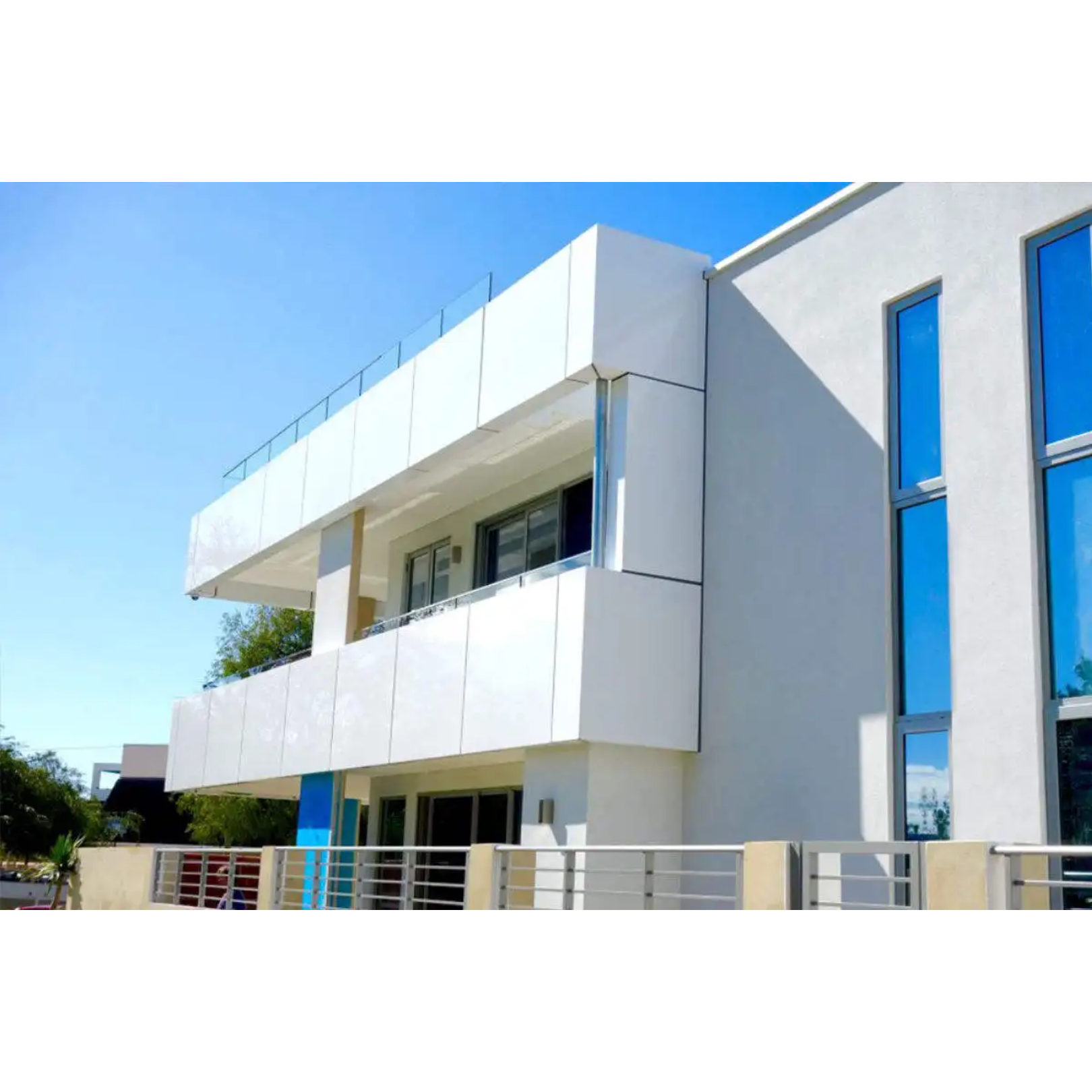
Choosing the right cladding for your building is a critical decision that impacts aesthetics, maintenance budgets, and long-term property value. Two heavyweight contenders in the modern market are Aluminum Composite Panels (ACP) and Fiber Cement Siding. While both offer distinct advantages, determining which provides the superior long-term value requires a deep dive into cost, durability, and performance over a 20-year life cycle.
This comprehensive analysis breaks down the total cost of ownership, helping architects, builders, and property owners make an informed, data-driven investment.
Understanding the Contenders
Aluminum Composite Panels (ACP) are engineered sandwiches: two thin aluminum sheets bonded to a non-aluminum core (often polyethylene). They are renowned for their modern, sleek appearance, lightweight nature, and design flexibility.
Fiber Cement Siding is a composite material made from cement, sand, and cellulose fibers. It mimics the look of wood, cedar shakes, or stucco, but with greater resistance to fire and pests.
Head-to-Head Comparison Over Two Decades
1. Initial Installed Cost
Fiber Cement: Generally has a lower material cost per square foot than premium ACP. However, its installation is labor-intensive, requiring specialized tools and skills for cutting and fastening, which can raise the total installed price.
ACP: Often carries a higher material cost. However, its installation process is typically faster and less laborious due to large, lightweight panels, which can partially offset the material premium.
Short-Term Verdict: Fiber Cement may have a slight edge in very budget-focused projects, but installed costs can be comparable depending on profiles and system complexity.
2. Durability & Maintenance: The Core of Long-Term Value
This is where the 20-year cost analysis diverges significantly.
ACP:
Maintenance: Requires periodic cleaning with mild detergents. Its color is typically PVDF coated, offering exceptional color retention, chalk resistance, and UV stability. It does not require painting.
Durability: The aluminum skin is impervious to rot, insects, and moisture absorption. It will not crack or warp under thermal expansion if properly engineered. The primary risk is denting from severe impact.
20-Year Outlook: Expect minimal maintenance costs—essentially just cleaning. The façade should retain its aesthetic integrity with no need for repainting or sealing.
Fiber Cement:
Maintenance: Requires significant periodic maintenance. Most products need repainting every 10-15 years, a costly and disruptive process. It is also prone to absorbing moisture, which can lead to paint failure, mold, or mildew if not meticulously maintained.
Durability: Highly resistant to fire, rot, and insects. However, it is brittle and susceptible to impact cracking from hail or debris. Moisture absorption in freeze-thaw cycles can also cause spalling or cracking over time.
20-Year Outlook: Budget for at least one, likely two, full repainting cycles within 20 years. Include costs for potential crack repairs and ongoing inspections for moisture issues.
3. Performance & Lifespan
Weatherability: ACP with a high-quality fluoropolymer coating excels in harsh coastal or industrial environments, resisting corrosion and color fade. Fiber cement performs well but is more vulnerable to long-term moisture exposure and paint degradation.
Energy Efficiency: Both can be integrated with insulation systems. ACP systems often use continuous insulation (ci) and thermal breaks, offering excellent opportunities for improved thermal performance and reduced energy bills.
Lifespan: A well-installed ACP system can last 40+ years with minimal upkeep. Fiber cement has a long lifespan (often 50 years) but is contingent on a rigorous, costly maintenance schedule to achieve it.
4. Aesthetics & Design Flexibility
ACP: Offers virtually unlimited color and finish options (metallic, stone, wood grain), and can be formed into dramatic curves and 3D shapes. It provides a consistently modern, panelized aesthetic.
Fiber Cement: Excels at achieving traditional architectural styles like lap siding, shingles, or board-and-batten. Color choices are limited to the paint system used, and it lacks the same capacity for seamless, large-scale panelization.
The 20-Year Total Cost of Ownership (TCO) Analysis
Let's move beyond sticker price to true investment value:
Cost Factor | Aluminum Composite Panels (ACP) | Fiber Cement Siding |
Initial Installed Cost | Moderate to High | Moderate |
Maintenance Cycle | Low; Cleaning only | High; Repaint every 10-15 yrs |
Repair Probability | Low (Impact dents) | Moderate (Cracking, Spalling) |
Energy Efficiency Potential | Very High (with thermal breaks) | Good (depends on substrate) |
Aesthetic Longevity | Excellent (Fade-resistant) | Good (Requires repainting) |
Projected 20-Year TCO | Lower (Costs are front-loaded | Higher (Significant recurring costs) |
The Key Insight: While ACP may have a higher initial investment, its minimal maintenance regimen and durability often result in a lower total cost of ownership over 20 years. The avoided costs of multiple repainting projects, coupled with its longevity, deliver superior financial value.
Conclusion: Which Offers the Better Long-Term Value?
The choice hinges on your priorities for the building's life cycle cost.
Choose Fiber Cement Siding if: The project has strict initial budget constraints (with future maintenance earmarked), and the classic aesthetic is non-negotiable. You must be prepared for the scheduled, recurring investment in maintenance.
Choose Aluminum Composite Panels (ACP) if: You seek optimal long-term value and lower lifetime costs. For commercial buildings, modern residential designs, or any project where aesthetic consistency, minimal downtime, and reduced operational expenditure are critical, ACP emerges as the financially and performance-wise superior choice over a 20-year horizon. Its durability, weather resistance, and near-zero maintenance translate directly into tangible savings and preserved asset value.
Final Verdict: For a true 20-year life cycle analysis focused on total cost of ownership, return on investment, and asset preservation, Aluminum Composite Panels consistently provide the better long-term value proposition.






