Welcome to Vbond
ACP vs. HPL Panels: A Detailed Comparison for Exterior Cladding
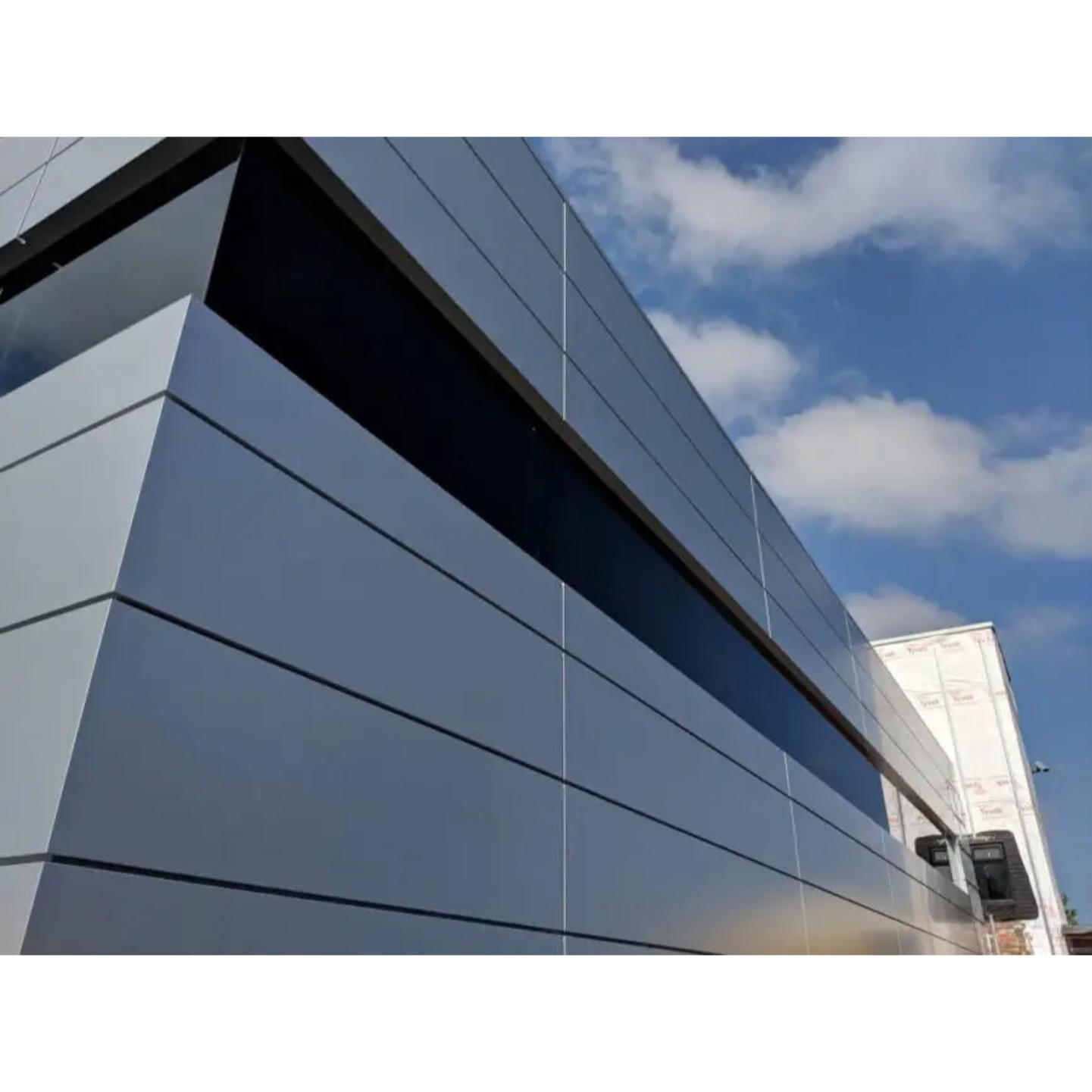
When selecting materials for a building’s exterior, the choice between Aluminium Composite Panels (ACP) and High-Pressure Laminate (HPL) panels is pivotal. Both are popular in modern construction, but they differ significantly in composition, performance, and application. Understanding these differences is essential for architects, builders, and developers to make cost-effective, safe, and durable decisions. This article provides a detailed, professional comparison to guide your cladding selection.
Core Composition and Manufacturing
The fundamental difference lies in the materials and how they are engineered.
Aluminium Composite Panels (ACP): ACPs feature a sandwich structure: two thin sheets of aluminium (typically 0.5mm thick) are bonded to a core material. This core is traditionally made of polyethylene (PE) plastic, though fire-retardant (FR) mineral cores are increasingly common. The panels are lightweight and range from 3mm to 6mm in total thickness.
- High-Pressure Laminate (HPL) Panels: HPL panels are manufactured by compressing multiple layers of cellulose fibers (often kraft paper) under high heat and pressure using thermosetting resins. This creates a dense, homogenous, and solid panel. For exterior use, they are available in thicker, more robust grades (typically 6mm to over 20mm thick), often mounted to a substrate.
Head-to-Head Comparison: Key Performance Factors
The following table summarizes the critical differences between ACP and HPL for exterior applications.
Feature | Aluminium Composite Panel (ACP) | High-Pressure Laminate (HPL) |
Weight & Handling | Very lightweight. Facilitates faster, easier installation and reduces structural load. | Heavier and more rigid. Requires more robust handling and support structures. |
Durability & Strength | Good rigidity, but can be prone to denting on impact. Excellent flatness. | Superior impact and abrasion resistance**. High flexural strength (≥80 MPa typical). |
Fire Performance | Core-dependent.PE cores are combustible; FR mineral cores offer improved fire resistance. | Inherently fire-resistant. Typically achieves Euroclass B-s1, d0 or better. |
Weather & UV Resistance | Excellent with quality PVDF coatings (e.g., KYNAR 500). Resistant to fading and pollution. | Wide color and finish range. Can feature real wood veneers for an authentic texture. Strong design consistency |
Aesthetic Flexibility | Extensive range of metallic colors, gloss finishes, and textures (wood, stone). Highly customizable. | Wide color and finish range. Can feature real wood veneers for an authentic texture. Strong design consistency. |
Cost Considerations | Generally, lower initial material and installation costs | Higher initial material cost. Long-term value due to extended lifespan and minimal maintenance |
Lifespan & Sustainability | 20-30 years with proper installation and coating. Recyclable, but core separation can be a challenge. | Often 25+ year warranties. Durable and can be produced with recycled content. |
Critical Safety Considerations for High-Rise Buildings
Fire safety is a non-negotiable priority, especially for tall buildings.
ACP Panels: The fire performance of ACP has been under intense scrutiny. Cladding systems with a polyethylene (PE) core have been shown to pose a significant fire hazard and are banned on tall buildings in many jurisdictions. For any project, specifying non-combustible (A2/A1) mineral cores** is essential for compliance and safety.
HPL Panels: Standard-grade HPL is also not recommended for high-rise applications due to fire risk. However, exterior-grade HPL panels, with their dense, resin-rich composition, achieve much better reaction-to-fire ratings (e.g., Euroclass B-s1,d0). They release significantly less heat than PE-cored ACM. Always verify the specific fire certification for the intended use and building height.
Where to Use Which Panel? Application Guide
Choose ACP Panels for:
Modern commercial facades seek a sleek, metallic, or highly customized appearance.
Projects with tight budgets or weight restrictions.
Signage, interior features, and soffits.
Critical Requirement: Must use certified fire-retardant (FR) or non-combustible mineral cores for any ventilated façade.
Choose HPL Panels for:
Durable, high-traffic exteriors for public, educational, or healthcare buildings.
Projects demanding a natural aesthetic with real wood veneers or deep textures.
Cladding where **superior impact resistance and long-term weathering are key.
Balcony balustrades, outdoor furniture, and heavy-use exterior elements.
The Verdict: Which is Better for Your Project?
There is no single "best" material; the optimal choice depends on the project's specific priorities.
- Prioritize ACP if your project values lightweight construction, lower initial cost, and maximum design flexibility for contemporary looks, and you commit to specifying a safety-compliant, non-combustible core.
- Prioritize HPL if your project demands maximum durability, impact resistance, and a long service life with low maintenance. It is also the preferred choice for authentic wood aesthetics and projects where long-term value outweighs initial cost.
Key Recommendations for Specifiers:
1. Never compromise on fire safety. Verify the full-system certification (panel, insulation, fixing) against local building codes for your building's height and use.
2. Consider life-cycle costs. HPL's longevity can offer better value over decades, despite a higher upfront cost.
3. Engage with reputable manufacturers who provide comprehensive test data, warranties, and technical support for their exterior-grade products.
By carefully weighing the factors of safety, budget, design, and performance outlined in this comparison, you can select the cladding material that ensures a successful, beautiful, and enduring building envelope.






