Welcome to Vbond
ACP vs. Solid Aluminum: A Cost-Benefit Analysis for Your Next Facade
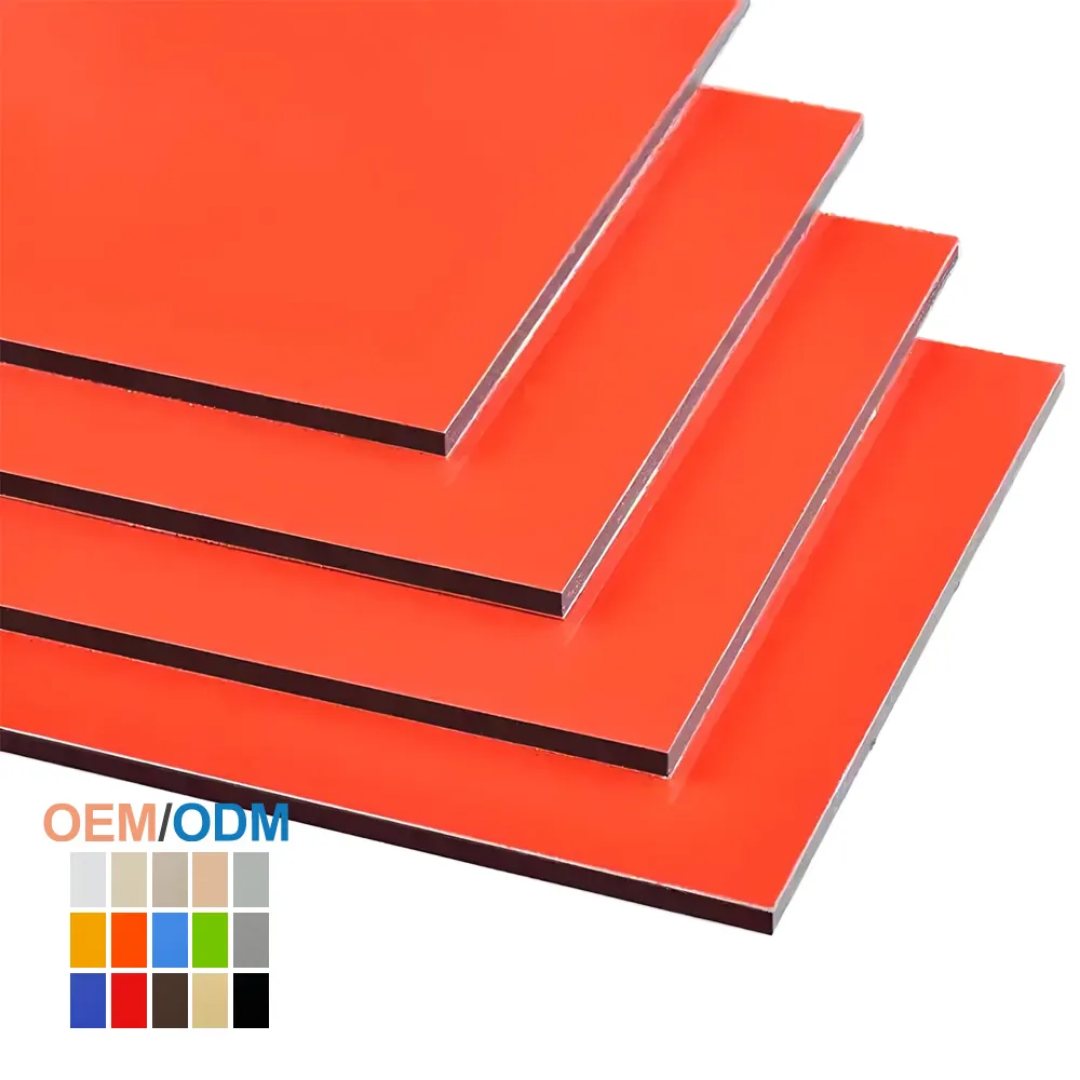
Introduction: The Fundamental Material Choice
Selecting the optimal cladding material is a pivotal decision that defines a building's aesthetics, performance, and budget. In the arena of metal facades, the choice often narrows to two primary contenders: **Aluminum Composite Panels (ACP) and Solid Aluminum Panels. This is not merely a surface-level selection but a strategic decision impacting structural design, installation logistics, and lifecycle costs. This professional analysis moves beyond simple price-per-square-meter comparisons to deliver a comprehensive cost-benefit framework, empowering architects, developers, and specifiers to make the most informed choice for their next project.
Head-to-Head: A Technical and Financial Breakdown
The following comparative matrix details the core distinctions across key decision-making parameters.
Analysis Parameter | Aluminum Composite Panels (ACP) | Solid Aluminum Panels |
Core Material & Structure | Composite "sandwich" panel: two thin aluminum skins bonded to a polyethylene (PE) or mineral core. | A single, homogeneous sheet of aluminum alloy, typically 2mm to 6mm thick. |
Primary Cost Driver | Material efficiency & lower installed cost. Lighter weight reduces structural support needs and enables faster installation. | Raw material volume & fabrication intensity. Cost is directly tied to aluminum commodity prices and the labor/energy required to form thicker metal. |
Weight & Structural Impact | Very Lightweight (3-8 kg/sqm). Minimal dead load on the building structure, often allowing for cost savings in the primary frame. | Heavy (12-30+ kg/sqm). Significant load requires a more robust (and expensive) support structure and substructure. |
Formability & Design Flexibility | Exceptional. Can be easily cold-formed on-site for simple curves. Allows for complex 3D shapes, sharp folds, and deep reveals with relative ease due to the soft core. | Limited. Requires specialized shop fabrication (brake pressing, rolling) for bends. Complex shapes are difficult and costly; deep folds can weaken the material. |
Surface Flatness & Aesthetics | Perfectly Flat.** The composite structure resists oil-canning (subtle surface rippling), providing a flawless, uniform appearance over large spans. | Prone to Oil-Canning. Thermal expansion and contraction of the solid sheet can cause visible rippling, especially on large, flat areas with low profiles. |
Thermal Performance & Insulation | Inherently Better. The plastic core acts as a thermal break, reducing heat transfer. Can be paired with integrated back insulation in cassette systems. | Thermal Bridge. Solid metal conducts heat/cold, potentially compromising thermal envelope efficiency unless a separate thermal break system is detailed. |
Lifecycle & Maintenance | Moderate to High Durability. High-quality PVDF coatings last 20-30 years. Panels are not typically repairable if dented; entire panel replacement may be needed. | Very High Durability. The solid material can withstand impact better. Anodized finishes are extremely durable; painted finishes can be field-repaired and repainted. |
Sustainability & Recyclability | Challenging. Composite nature makes recycling difficult; often downcycled or landfilled at end-of-life. Focus is on operational efficiency (lightweight, thermal break). | Straightforward. 100% recyclable at end-of-life with high scrap value. Focus is on material circularity. High embodied energy in primary production. |
The Verdict: Strategic Application Scenarios
The "best" material does not exist in a vacuum; it is determined by project-specific priorities.
Choose ACP When:
Budget is a Primary Constraint: You require the economies of scale and lower installed cost of a lightweight system.
Design Demands Complex Geometry: The project features curved facades, sharp 3D angles, folded forms, or intricate shadow lines.
A Flawless, Ripple-Free Finish is Non-Negotiable: For large, flat expanses typical in corporate or institutional buildings where visual uniformity** is critical.
Building Structure Has Weight Limitations: For retrofits, over-cladding, or high-rise applications where reducing dead load is structurally and economically advantageous.
Choose Solid Aluminum When:
Project Prioritizes Material Purity and Long-Term Value: The perception of solidity, premium feel, and straightforward recyclability aligns with brand or sustainability goals.
Rability and Repairability are Paramount: In high-traffic or high-impact environments (e.g., ground floors, transportation hubs), the panel's ability to be dented and repaired is valuable.
A Traditional or Craft-Oriented Aesthetic is Desired: For projects seeking the classic look of a bent metal plate or where the subtle texture of mill-finish aluminum is a design feature.
Fire Safety Concerns Dominate: While fire-rated (FR) ACP exists, solid aluminum, as a non-combustible material (A2-s1, d0), provides the highest level of inherent fire safety with no questions about core composition.
The Hidden Cost Factors: Beyond the Initial Quote
A professional analysis must account for total project impact:
Substructure Cost: ACP's lightweight often allows for a lighter-gauge, less expensive support grid. Solid aluminum's weight necessitates a heavier, more costly substructure.
Installation Speed: ACP's prefabricated cassette systems enable rapid enclosure, a critical factor in **reducing overall construction time and financing costs.
Lifecycle & End-of-Life: Factor in potential future costs: solid aluminum's residual scrap value versus ACP's potential disposal or decommissioning cost.
Conclusion: A Decision of Priority, Not Superiority
The debate between ACP and solid aluminum is not about finding a universally superior product, but about matching material properties to project DNA. ACP wins on practical efficiency, offering cost-effective versatility and flawless aesthetics for complex, budget-conscious designs. Solid aluminum wins on material integrity, offering unmatched durability, repairability, and end-of-life simplicity for projects where longevity and perceived value are paramount.
The most strategic approach is to reject generic assumptions. Model the total installed cost for both systems, including structural implications. Prototype details to evaluate formability and finish. By conducting this rigorous, multi-variable analysis, you ensure your facade is not just a skin, but a strategically optimized, value-engineered building system that delivers on aesthetics, performance, and financial rationale.






