Welcome to Vbond
ACP vs. Terracotta Rainscreens: Aesthetic and Performance Compared
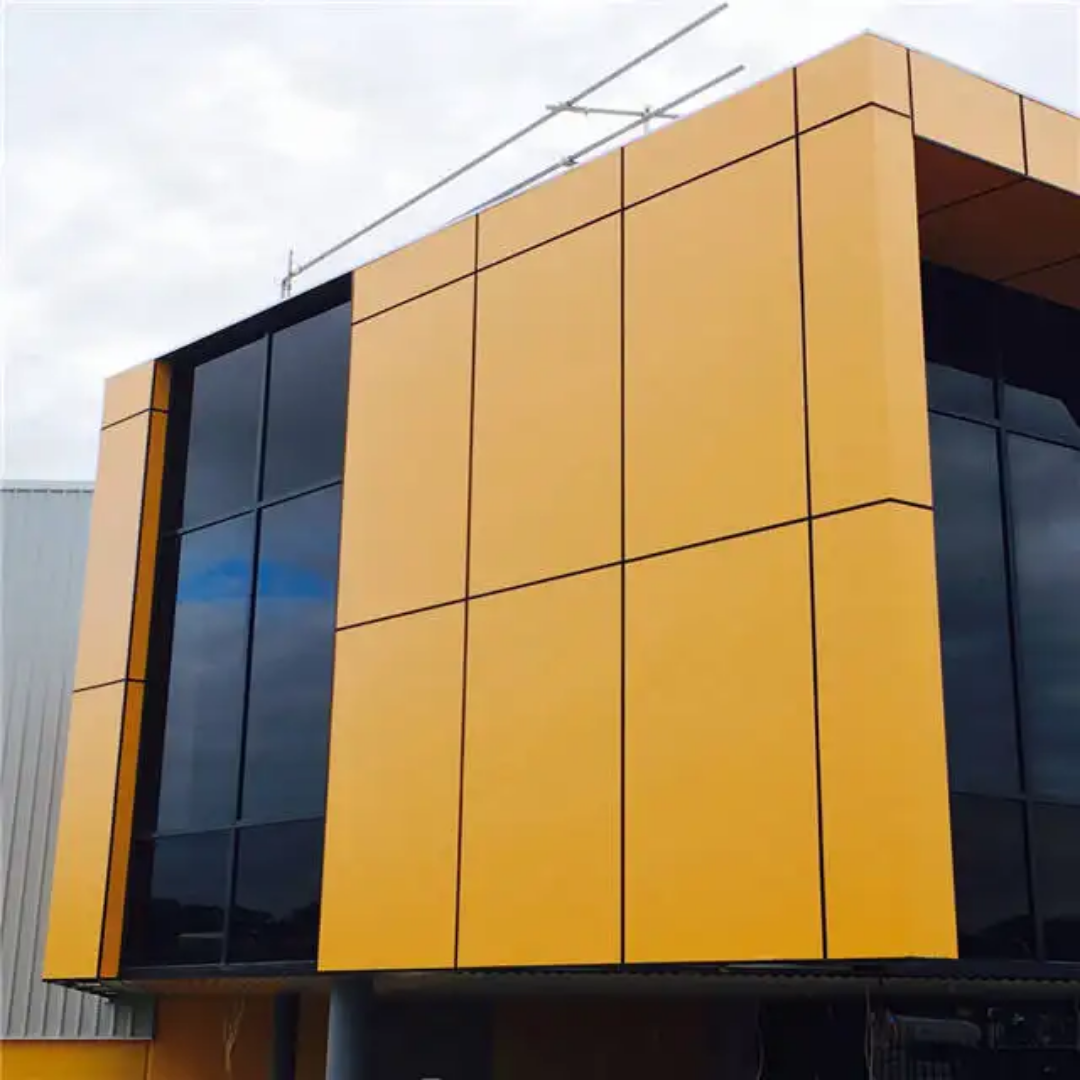
Selecting the right cladding is one of the most consequential decisions in modern architecture, impacting a building's visual identity, energy efficiency, and long-term durability. Among today's leading options, two stand apart for their distinct philosophies: Aluminum Composite Panels (ACP) and Terracotta Rainscreens. While ACPs, like those from the leading brand Alucobond, represent engineered modern performance, terracotta rainscreens offer a timeless, natural alternative.
This comprehensive guide compares these two powerful cladding solutions across aesthetics, technical performance, sustainability, and cost, providing architects, specifiers, and developers with the clarity needed to make an informed choice for their next project.
1. Core Material & Aesthetic Character
The fundamental difference begins with the material itself, which dictates each system's aesthetic potential.
ACP (Aluminum Composite Panels):
ACPs are engineered, manufactured products. They consist of two thin aluminum sheets bonded to a core, typically mineral-filled for fire resistance. This structure results in panels that are exceptionally lightweight, rigid, and perfectly flat. Aesthetically, ACPs offer near-unlimited design flexibility. They are available in an extensive spectrum of solid colors, vivid metallics, and sophisticated special effects like pearlescent or sparkling finishes. Advanced manufacturing allows ACPs to convincingly mimic other materials such as wood, stone, concrete, or even brushed metal, providing a specific look without the drawbacks of the natural material.
Terracotta Rainscreens:
Terracotta is one of humanity's oldest building materials: clay that is shaped, dried, and fired at extremely high temperatures (over 1,000°C). This process gives it an inherently natural and timeless aesthetic. The classic color palette revolves around rich, earthy tones—warm reds, browns, ochers, and grays—derived from the clay itself and natural pigments. The surface can be left natural, engobed (coated with a liquid clay slip), or glazed for color and added protection. The aesthetic is characterized by warmth, texture, and a subtle color variation that celebrates the material's natural origin.
2. Head-to-Head Performance Comparison
Beyond looks, performance in fire safety, durability, and installation are critical for specification. The table below summarizes the key differences.
Performance Factor | Aluminum Composite Panels (ACP) | Terracotta Rainscreens |
Fire Safety | High-performance ACP uses a mineral-filled core, achieving top-tier fire ratings like Euroclass A2/B-s1, d0, or Class A. | Inherently non-combustible due to its ceramic nature. Universally achieves the highest Euroclass A1 fire rating without additives. |
Durability & Weathering | Excellent corrosion resistance, UV rays (via PVDF coatings), and extreme temperatures. Highly impact-resistant. Requires minimal maintenance, typically just periodic cleaning. | Extremely durable and frost-resistant. The fired clay is vitrified, making it robust against weather, UV rays (colors are through-body), and pollution. Can be brittle and prone to cracking if impacted during handling or installation. |
Thermal & Acoustic Performance | The rear-ventilated cavity in rainscreen systems provides excellent thermal insulation and reduces heat transmission. The composite structure offers inherent vibration-damping properties. | Erracotta itself has good thermal mass and insulating properties. The ventilated rainscreen cavity enhances this, contributing to energy efficiency and potentially helping meet Passivhaus standards. |
Weight & Installation | Very lightweight (e.g., ~5.9 kg/m² for a 3mm panel), reducing structural load and simplifying handling. Panels are large-format, leading to fast installation and lower labor costs. | Significantly heavier than ACP. Requires a robust, engineered aluminum substructure. Installation is more labor-intensive, often requiring specialized contractors. |
3. Sustainability & Lifecycle Considerations
The environmental profile of each material reflects its origin.
ACP Sustainability: Modern ACP systems are designed with lifecycle impacts in mind. High-quality panels are fully recyclable, with both aluminum skins and mineral core able to re-enter the production cycle. The manufacturing process for premium brands like Alucobond is governed by strict environmental protocols that exceed regulations. Their lightweight nature also reduces transportation emissions and structural burden.
Terracotta Sustainability: Terracotta's primary strength is its composition of abundant, natural clay. It is a fully recyclable material and boasts a remarkably long service life, often exceeding 50 years, which amortizes its embodied carbon. Some manufacturers provide Environmental Product Declarations (EPDs), showing detailed data on embodied carbon (e.g., 43.4 kg CO₂ eq/m²).
4. Cost Analysis: Initial Outlay vs. Long-Term Value
The financial decision involves both upfront and ongoing costs.
Initial Installed Cost: ACP systems generally have a predictable and often lower initial cost. Savings come from lower material weight (cheaper substructures and transport), large panel sizes, and faster, less specialized installation. Terracotta systems typically command a higher initial investment due to material costs, the need for a heavy-duty support system, and specialized installation labor.
Long-Term Value & Maintenance: ACP offers very low lifecycle maintenance, primarily requiring occasional cleaning, with no need for repainting due to its durable coatings. Terracotta is also famously low-maintenance; its through-body color doesn't fade, and it resists dirt and biological growth. Damaged individual terracotta tiles can be replaced without disturbing the entire facade.
5. Making the Right Choice: Application Guidelines
The ideal choice depends on the project's core priorities.
Choose ACP (like Alucobond) when your project requires:
Maximum Design Versatility: Seeking bold colors, metallic finishes, or custom printed graphics.
Lightweight Construction: For high-rise buildings, retrofits, or structures with weight limitations.
Fast-Track Projects: Where speed of fabrication and installation is critical to the schedule.
Complex Geometries: Needing panels that can be easily curved, folded, and formed into 3D shapes.
Choose Terracotta Rainscreens when your project prioritizes:
Natural & Timeless Aesthetics: Desiring warm, earthy tones and a material with historical authenticity.
Maximum Fire Safety: Where the highest possible, inherent non-combustible (A1) rating is a non-negotiable requirement.
Long-Term Durability: For buildings where a century-long lifespan is expected, with minimal aesthetic change over time.
Sustainable & Biophilic Design: Aiming to use natural, low-processing materials and connect the building to its environment.
Conclusion
The choice between ACP and terracotta rainscreens is not about finding a universal "best" material, but about matching material philosophy to project vision. ACP is the chameleon of modern architecture—lightweight, versatile, and engineered for performance and creative freedom. Terracotta is the enduring classic—offering unparalleled natural beauty, inherent fire safety, and a timeless presence.
For contemporary statements, complex forms, and fast-paced commercial projects, ACP is often the most practical and expressive tool. For projects where material authenticity, supreme fire performance, and a warm, natural aesthetic are paramount, terracotta rainscreens provide an investment in enduring quality and character. By understanding these fundamental differences, you can select the cladding that not only protects the building but also defines its very essence.






