Welcome to Vbond
Alucobond PVDF Premium Payback: How Many Years Until It Beats PE?
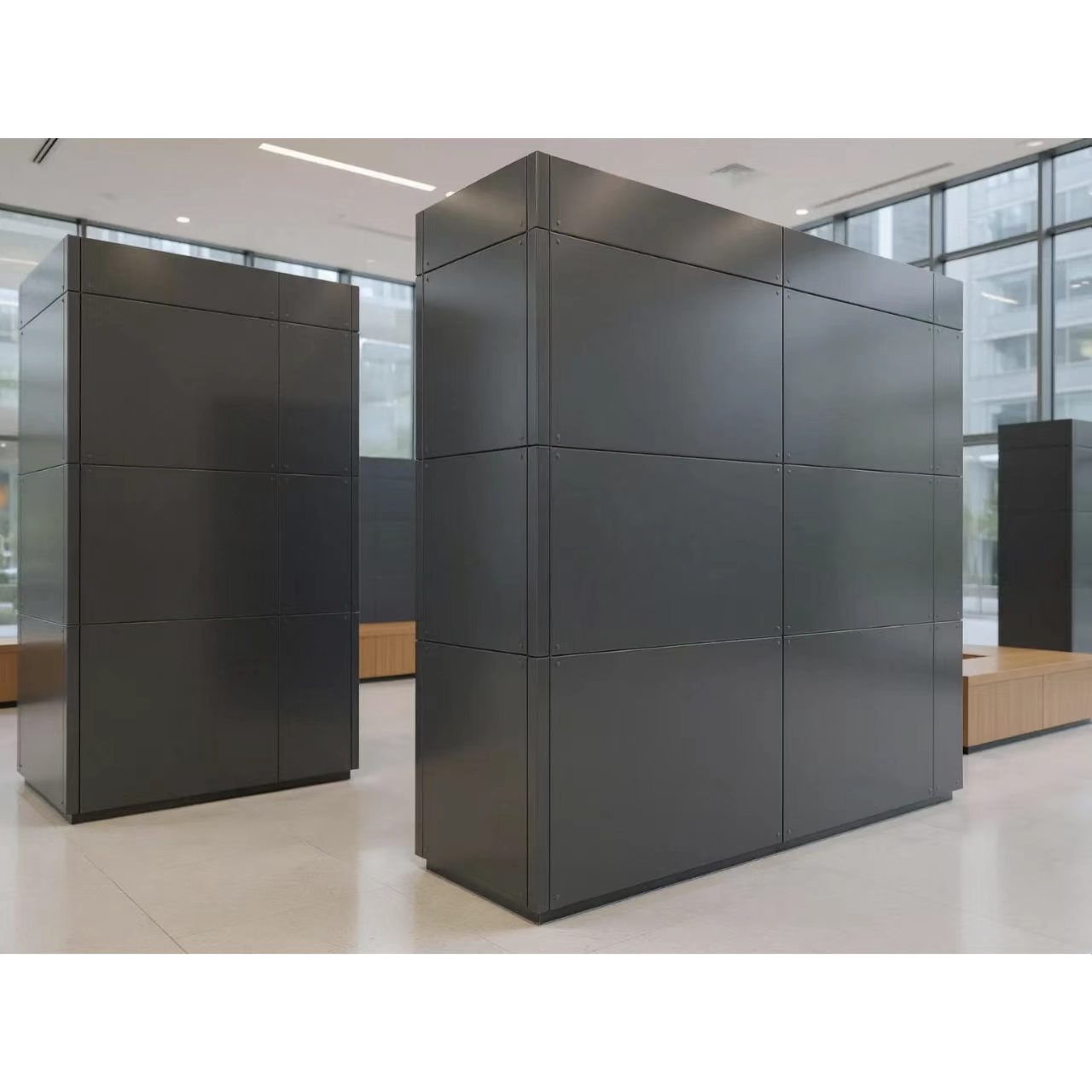
The PVDF question rarely comes down to performance. Most buyers accept that fluoropolymer outlasts polyester. The sticking point is the check they write today. A PE-coated Alucobond panel costs less at purchase, and the savings land on this quarter’s budget line. The PVDF premium lands on the same line, and the finance team asks a fair question: how long until that premium pays itself back?
The answer depends on three numbers—the premium, the PE replacement cycle, and the access cost to get back to the wall. On most exterior projects, the payback lands inside **seven years**. On harsh sites, it lands inside four.
This guide builds the payback model step by step so procurement teams can run the calculation for their own project.
The Premium Is Smaller Than the Sticker Shock Suggests
PVDF adds roughly 30% to 50% to the panel price. On a per-square-meter basis, a standard PE 4 mm panel runs about USD 6–9, while the same panel in PVDF runs USD 9–13. That gap translates to roughly $0.75 to $2.00 per square foot in material premium.
The sticker shock comes from comparing that premium to the panel price. The comparison that matters is against the installed cost.
A facade installation spreads the panel across labor, framing, sealant, and access. Panel material is the minority of the installed total. A 30–50% premium on the panel line becomes a 5–15% premium on the installed wall. The premium is real, but it is not the doubling that a panel-only comparison implies.
Line | PE 4mm Alucobond | PVDF 4mm Alucobond | Difference |
Panel material (per m²) | $6 – $9 | $9 – $13 | +$3 – $4 |
Panel material (per sq ft) | $0.56 – $0.84 | $0.84 – $1.21 | +$0.28 – $0.37 |
Material premium as % of panel | - | - | +30% to +50% |
Premium as share of installed wall | - | - | ~5% to ~15% |
Table 1. PVDF material premium relative to PE. Panel price ranges from coating supplier comparisons; installed-wall share reflects labor and access at the majority of facade cost.
The finance question changes once the premium sits at 5–15% of the wall rather than 30–50% of the panel. A 7% premium that avoids a replacement cycle is a different decision from a 50% premium that looks like an upgrade.
The PE Replacement Clock Starts at Year Three
The payback clock is not the warranty length. It is the year the PE wall forces a spending event.
PE coating begins chalking and fading within 3 to 7 years of exterior exposure, with sunny, coastal, and industrial sites landing at the early end of that range. Some testing data puts visible chalking on PE films as early as 12–18 months in accelerated Florida exposure, which equates to 3–5 years of real temperate service.
The spending event is not a repaint. A field-applied paint system carries no AAMA 2605 rating, and the original panel warranty does not transfer to a repaint. The practical remedy is panel replacement.
That distinction sets the PE payback clock at roughly year 5 to year 7 for a typical exterior facade. On a harsh site, it moves earlier. On a mild, sheltered site, it stretches toward year 8.
A PVDF system under AAMA 2605 carries a 20-year warranty on color, chalk, and film integrity for 70% Kynar 500 or Hylar 5000 coatings. Premium systems extend to 20–30 years. The PVDF wall does not trigger a replacement event inside the payback window.
The Access Cost Does the Heavy Lifting
The replacement event costs far more than new panels. A real project shows the split.
On a medium commercial facade, the cost breakdown ran:
- ACP material: $25,000
- Installation labor: $18,000
- Scaffolding and access: $8,000
- Total: $51,000
Material was just under half the total. Labor and access made up the rest. When the PE wall reaches replacement, the owner pays that labor and access share a second time.
The second trip also carries costs the first trip did not. Removal labor runs longer than installation labor because panels come off a finished wall. Disposal adds a line. Rework from handling damage adds another. In the same project model, replacing 15% of panels after installation cost $17,850—about 35% of the original project cost—for a small fraction of the wall.
Scale that logic to a full PE replacement. The replacement bill is not the panel price. It is the panel price plus labor plus access plus disposal, and the labor and access lines do not shrink on the second mobilization.
Building the Payback Calculation
Run the numbers for a 10,000-square-foot facade with a $1.50/sq ft PVDF premium. The premium totals $15,000.
PVDF premium paid at purchase: $15,000
PE replacement event (year 5–7):
New panels (full wall) | $25,000 |
Installation labor | $18,000 |
Scaffolding and access | $8,000 |
Removal, disposal, and rework | $10,000 |
PE replacement total | ~$61,000 |
Payback = premium recovered when replacement is avoided
= years 5 to 7, when the PE wall forces the $61k event
Figure 1. Payback logic for a 10,000 sq ft facade with a $1.50/sq ft PVDF premium. Replacement cost components from a published ACP project cost model; removal and rework estimated from rework data on the same project.
The premium is $15,000. The avoided event is $61,000. The premium pays back the moment the PE wall would have forced that event—year 5 to year 7 on a typical exterior site. After that year, every dollar the PVDF wall avoids is net savings.
The crossover does not require a 20-year model. It requires one avoided replacement.
Payback by Site Type
The payback year moves with the site. Harsher exposure shortens the PE life and brings the replacement event forward.
Site type | PE visible failure | PE replacement event | PVDF payback year |
Sheltered exterior, mild climate | Year 6–7 | Year 7–8 | Year 7–8 |
Typical exterior, mixed climate | Year 4–6 | Year 5–7 | Year 5–7 |
Sunny, high-UV site | Year 4–6 | Year 6–7 | Year 4–6 |
Coastal or industrial | Year 4–5 | Year 4–5 | Year 4–5 |
Harsh coastal | Year 2–4 | Year 3–5 | Year 3–5 |
Table 2. PVDF payback year by site exposure. PE failure timing from coating service-life data; replacement timing assumes the failure triggers a full wall event, not a spot repair.
The table carries one message. The premium pays back inside the first decade on every exterior site. On sites where PE fails fastest, the payback arrives fastest because the avoided event arrives sooner.
What Delays Payback
Two conditions push the payback year later.
A low premium. If the PVDF premium drops below $0.75/sq ft, the absolute payback dollar is smaller, but the payback year does not move—it still lands at the PE replacement event. The percentage return looks better, not worse.
A very low access cost. A single-story wall with ground-level access has a cheap replacement event. The avoided cost shrinks, and the premium takes longer to recover in dollars. Even then, the payback typically lands inside year 8 because labor and disposal still repeat.
Payback does not stretch past the first PE failure cycle. The moment PE fails, the comparison ends.
The One-Line Payback Test for Procurement
Before running a full model, apply this test.
Divide the PVDF premium by the annual wash-and-maintenance savings, then compare the result to the PE failure year.
PE walls wash more often because chalk holds dirt and stains. PVDF surfaces shed dirt, and rain rinses them clean. The maintenance delta is smaller than the replacement delta, but it adds up across the years before replacement.
If the premium divided by annual maintenance savings comes out below the PE failure year, the premium pays back on maintenance alone—before the replacement event is even counted. On most exterior projects, the replacement event does the heavy lifting and the maintenance delta only shortens the wait.
Bottom Line for Buyers
The PVDF premium pays back at the PE replacement event, and that event arrives within seven years on most exterior facades. The premium runs 30–50% of panel price but only 5–15% of installed wall cost. The avoided event runs several times the premium because it repeats labor, access, and disposal on a finished building.
A PE-coated Alucobond wall saves money once—at purchase. A PVDF-coated Alucobond wall built to AAMA 2605 with 70% Kynar or Hylar resin spends that money once and recovers it before the first PE failure cycle ends.
Run the payback year against the site exposure. On a harsh site, the answer comes back in three to five years. On a typical site, five to seven. Either way, the premium does not survive the first decade.