Welcome to Vbond
Aluminum Composite Panel Buying Guide 2026: Key Factors and Pitfalls to Avoid
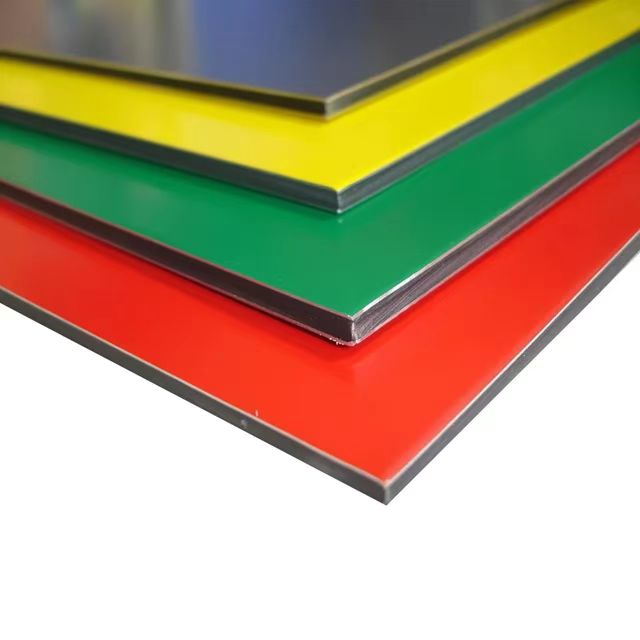
With the segmentation of the building decoration materials market, aluminum composite panels (ACP/ACM), due to their lightweight, high-strength, and excellent weather resistance, have become a core material choice for commercial real estate, home decoration, and industrial applications. However, product quality varies widely on the market, with prices ranging from low-quality panels at $4 per sheet to high-end panels at $30 per sheet. Many buyers fall into purchasing errors due to a lack of professional judgment. This article, based on engineering-level material selection logic, breaks down 8 professional evaluation dimensions and 3 key pitfalls to help buyers accurately match their needs and avoid quality risks.
I. Core Prerequisite: Clarify the Application Scenario and Performance Requirements
Before purchasing, it is important to first identify the application scenario. Different scenarios have significant differences in the mechanical properties, fire rating, and weather resistance requirements for aluminum-plastic panels. This forms the foundation for all subsequent evaluations.
Application Scenario Core Performance Requirements Recommended Product Specifications
High-Rise Building Curtain Walls (10+ Floors): Wind Pressure Resistance ≥ 3.0 kPa, Weathering Resistance ≥ 15 Years, Fire Rating Class A. Thickness 4mm-6mm, Aluminum Skin 0.5mm-0.8mm, Aluminum Honeycomb Core/Mineral Core
Commercial Complex Interior Partition Walls: Fire Rating Class B1, Sound Insulation ≥ 35 dB, Flatness ≤ 0.5 mm/m. Thickness 3mm-4mm, Aluminum Skin 0.2mm-0.3mm, FR Flame Retardant Core
Outdoor Advertising Signs (Exposed Environment): UV Aging Resistance ≥ 1000 hours, Coating Adhesion ≤ Class 1. Thickness 3mm-4mm, Aluminum Skin 0.3mm-0.5mm, PVDF Coating
Home Decoration Walls/Ceilings: Environmental Protection Class E0, Color Difference ΔE ≤ 1.5, Easy to Machine. Thickness 2.5mm-3mm, Aluminum Skin 0.15mm-0.2mm, Polyester Coating
II. Eight Key Dimensions of Professional Purchasing: A Comprehensive Evaluation from Material to Craftsmanship
1. Base Material: Aluminum Alloy Grade and Thickness Are Key to Mechanical Performance
- Aluminum Alloy Grade: Prefer 3003 series (aluminum-manganese alloy, excellent corrosion resistance) or 5052 series (aluminum-magnesium alloy, high strength), and avoid 1100 series (pure aluminum, prone to deformation). This can be verified using the manufacturer's "Material Certificate." Legitimate products must include indicators such as grade, yield strength (≥110 MPa), and elongation (≥12%).
- Aluminum Sheet Thickness: Measure the sheet's thickness using a digital vernier caliper at five points, including the four corners and center. The deviation must be ≤±0.05mm. Be careful to distinguish between "nominal thickness" and "actual thickness." For example, if labeled "0.5mm aluminum sheet," the actual thickness must be no less than 0.45mm (industry tolerance). Products thinner than 0.4mm are prone to bending and cracking.
2. Core Material: A Key Aspect of Fire Protection and Environmental Protection
- Fire Rating Determination: According to GB 8624-2022, "Classification of Combustion Performance of Building Materials and Products," public buildings must use Class A (non-combustible) or Class B1 (difficult-to-burn). Manufacturers can be requested to provide a "Type Inspection Report," focusing on the "Peak Heat Release Rate" (Class A ≤ 20kW/m², Class B1 ≤ 120kW/m²) and "Smoke Toxicity Level" (must meet Class ZA1, non-toxic).
- Core Material Options: PE core (for general indoor use, low cost), FR-PE core (Class B1 fire resistance, suitable for semi-open spaces), aluminum honeycomb core (Class A fire resistance + high rigidity, preferred for curtain walls), and mineral core (Class A fire resistance + low smoke, suitable for sensitive environments such as hospitals and airports). Low-quality PE cores are often recycled and emit black smoke and a pungent odor when burned. This can be initially determined using an open flame test (Class B1 core materials self-extinguish within 30 seconds after removal from the flame).
3. Coating System: Ensuring Weather Resistance and Durable Appearance
- Coating Type Matching: For outdoor applications, PVDF fluorocarbon coating (fluorine content ≥ 70%) is mandatory, with UV aging resistance ≥ 5000 hours and gloss retention ≥ 80% (10 years). For indoor applications, polyester coating (aging resistance ≥ 2000 hours) or epoxy coating (strong adhesion, suitable for humid environments) is optional. This can be verified using the "Solvent Wipe Test": Wipe the coating 20 times with ethyl acetate. A pass mark is obtained if there is no discoloration or exposure.
- Coating Thickness and Uniformity: Measured using a coating thickness gauge, the dry film thickness of PVDF coating must be ≥ 25μm (two-coat, two-bake process) or ≥ 35μm (three-coat, two-bake process), while the polyester coating must be ≥ 15μm. Uneven thickness will result in color variation. The color difference ΔE within the same batch of products must be ≤ 1.0 (tested with a professional colorimeter), and no noticeable difference should be visible to the naked eye.
4. Lamination Process: A Key Factor Affecting Panel Stability
- Bond Strength Testing: According to GB/T 17748-2021, the peel strength of aluminum-plastic panels should be ≥7N/mm. Samples can be taken on-site and the peel strength between the aluminum skin and the core material tested using a tensile testing machine. If delamination or debonding is observed, or the peel strength is less than 5N/mm, the product is considered unqualified (mostly due to insufficient adhesive dosage or inadequate curing).
- Flatness and Dimensional Accuracy: Place the panel flat on a horizontal surface and measure with a 2m ruler. The maximum gap should be ≤0.8mm/m (≤0.5mm/m for curtain wall panels). Length/width deviation must be ≤±2mm (1220mm×2440mm standard panel), and diagonal deviation must be ≤3mm. Failure to do so will result in uneven joints during installation.
5. Environmental Performance: An Essential Indicator for Indoor Use
- Hazardous Substance Limits: According to GB 18586-2021, "Limits of Hazardous Substances in Polyvinyl Chloride Coil Flooring for Interior Decoration and Renovation," aluminum-plastic panels must emit formaldehyde ≤ 0.124 mg/m³, and the total amount of heavy metals (lead, cadmium, chromium, etc.) ≤ 100 mg/kg. Manufacturers can be requested to provide an "Environmental Testing Report." This indicator is particularly important to review for home decoration or use in confined spaces.
- Volatile Organic Compounds (VOCs): Panels should have no pungent odor at room temperature. Professional testing indicates VOC emissions of ≤ 100 g/L (coating). Substandard products, due to the use of inferior adhesives or recycled core materials, can emit VOCs over time, impacting indoor air quality.
6. Weather Resistance and Durability: Core Assessments for Outdoor Applications
- Moisture and Heat Resistance Test: Test the panel for 1000 hours at (40±2)°C and (90±5)% relative humidity. After removal, inspect the coating for signs of blistering and peeling, and a peel strength retention rate of ≥80% to qualify. This metric directly determines the service life of the outdoor panel.
- Salt Spray Resistance Test: Coastal areas or high-humidity environments require particular attention. A neutral salt spray test (5% NaCl solution, 35°C) must be conducted for ≥1000 hours. The coating corrosion area must be ≤5%, and the aluminum sheet must be free of visible rust. Otherwise, issues such as whitening and bubbling may occur.
7. Processability: Adaptability to the complex installation requirements of aluminum composite panel
- Bending Performance: Bend a 100mm×200mm specimen 90° at room temperature using a press brake (inner radius = panel thickness). A satisfactory result is achieved if there are no cracks in the coating or breaks in the aluminum sheet at the bend. Poor-quality panels, due to the poor ductility of the aluminum sheet, are prone to edge cracking during bending. - Cutting Performance: After cutting with a panel cutter, the cross-section should be smooth and free of burrs, with no separation between the core and the aluminum sheet. If delamination occurs, it indicates insufficient bonding strength, making screws prone to loosening during subsequent installation.
8. Aluminum composite panel Brand and Qualifications: Key to Quality Assurance
- Prioritize brands with dual certifications: those certified to ISO 9001 for quality management systems (controllable production processes) and ISO 14001 for environmental management systems (environmental compliance). Mainstream brands such as Alucobond panel have comprehensive quality traceability systems.
- Request a complete test report: This must include a "Type Inspection Report" (issued annually, covering all performance indicators) and a "Factory Inspection Report" (one per batch, covering dimensions, appearance, peel strength, etc.). Products without reports or with expired reports should be avoided.
III. 3 Major Industry Purchasing Traps: Avoid the Trap 90% of Buyers Fall into
1. Trap 1: "Falsified Thickness" – Only the total thickness is listed, concealing the thickness of the aluminum cladding
- Common Trick: Merchants claim "4mm thick aluminum-plastic panel," but the actual thickness of the aluminum cladding is only 0.2mm (far below the outdoor requirement of 0.5mm). Using "total thickness" to mask the thinness of the aluminum cladding results in insufficient rigidity and easy deformation.
- Avoidance: When signing the contract, clearly indicate "aluminum cladding thickness (e.g., 0.5mm)" and "core material type (e.g., FR-PE)" rather than simply stating "total thickness 4mm." Require sampling and testing upon arrival; unconditional returns are accepted if the thickness does not match.
2. Trap 2: "Falsified Fire Rating" – Using B2 as B1
- Common Trick: Verbally promise "B1 fire rating," but provide a "commissioned inspection report" (for samples only, not for production quantities). The actual product sold is a B2 (flammable) product, posing a significant safety hazard. - How to avoid pitfalls: Require a type inspection report issued by the "National Fireproof Building Materials Quality Supervision and Inspection Center." The report must clearly state that the "combustion performance grade" is Class A or Class B1, and the report must be valid for no more than one year.
3. Trap 3: "Low Price Allure" - Using recycled materials to reduce costs
- Common tactics: 4mm aluminum-plastic panels priced below 7 yuan per sheet often use recycled PE cores (which contain many impurities and are prone to aging), low-grade aluminum sheets (1100 series), and inferior adhesives. After one to two years of use, delamination and coating peeling will occur.
- How to avoid pitfalls: Keep the "cost bottom line" in mind. Qualified products with a thickness of 4mm, a 0.5mm aluminum sheet, and a PVDF coating should be priced at no less than $40 per sheet (excluding shipping). Be cautious of products priced below this price to avoid "cheaper than cheap" and end up with a bigger loss.
IV. Purchasing Decision-Making Process: Quickly Locate the Right Product in 5 Steps
1. Determine the Scenario: Based on whether it's an outdoor curtain wall, interior partition, or advertising signage application, determine core requirements such as fire rating and coating type.
2. Check Qualifications: Select brands with ISO certification and fire test reports, eliminating products from unqualified, small manufacturers.
3. Test Key Indicators: Sampling and testing aluminum sheet thickness, peel strength, and coating thickness to ensure compliance.
4. Review Contract Terms: Clearly indicate the material, specifications, fire rating, warranty period (≥5 years), and return policy for non-conforming products.
5. Retain Aluminum Composite Panel(ACP) Samples for Reference: After delivery, retain one or two samples for comparison with the test report indicators. This will also serve as a basis for future quality assurance.
Conclusion
The essence of aluminum composite panel selection is to precisely match needs with performance, rather than simply pursuing "low price" or "renowned brand." For buyers, mastering the professional methods of "material identification, performance testing, and qualification verification" can help them avoid being misled by market volatility. It is recommended to ask the manufacturer for samples and test reports in advance before purchasing, and entrust a third-party testing agency to conduct sampling inspections when necessary to ensure the quality and safety of the project from the source.






