Welcome to Vbond
An Interview with a Master ACP Fabricator: Secrets of the Trade
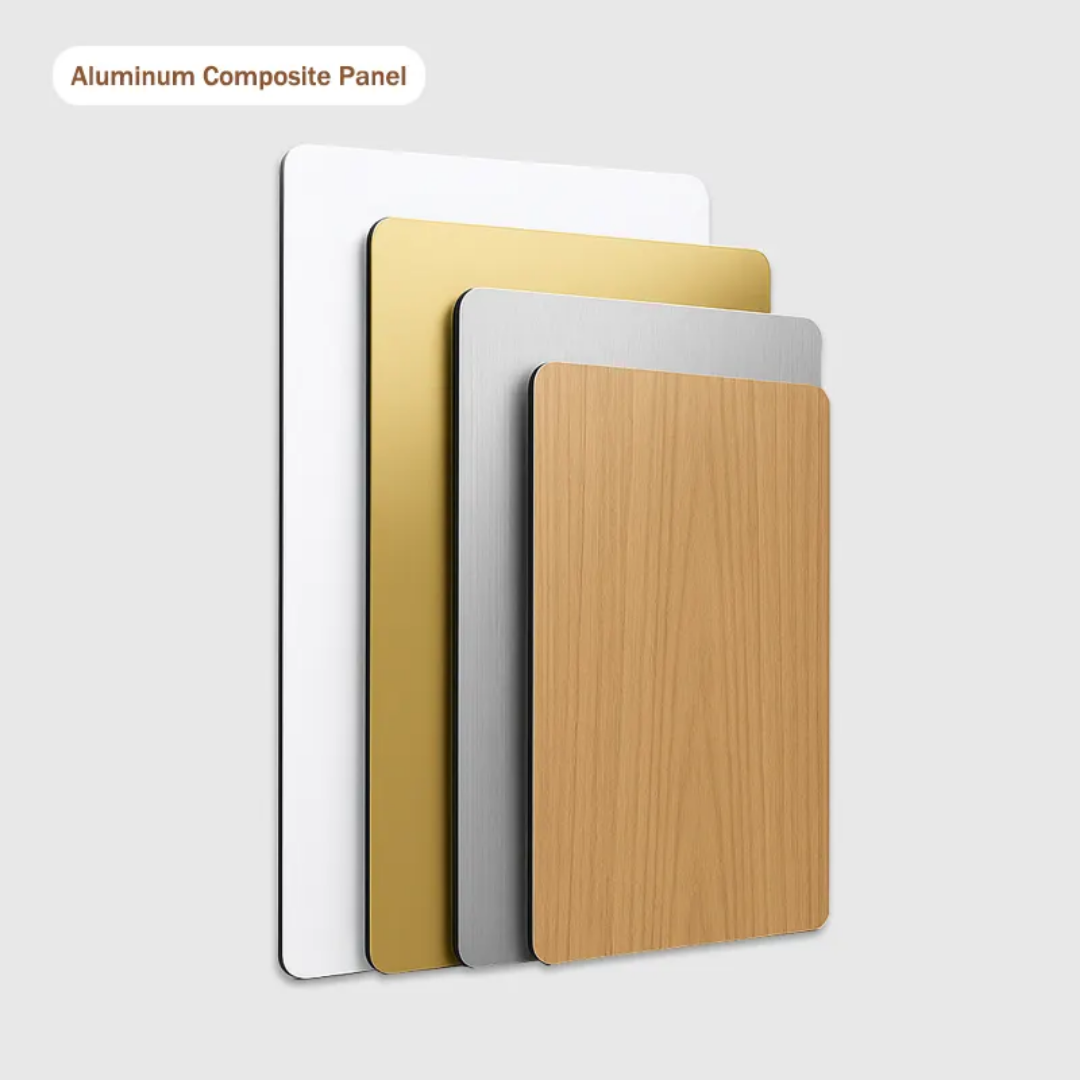
Introduction: The Man Behind the Metal
For over three decades, Antonio Vargas has been shaping metal. Starting as an apprentice in a small Madrid workshop, he has spent the last 20 years specializing exclusively in aluminium composite panel (ACP) fabrication. Today, his studio in southern Spain is a destination for architects seeking complex facade geometries that most fabricators won't touch.
"We don't just bend metal," Antonio says, running his hand over a pristine, mirror-finished cassette destined for a boutique hotel in Marbella. "We interpret what the architect dreamed—and we figure out how to make it real, within budget, and still standing in thirty years."
In this exclusive interview, Antonio pulls back the curtain on the art and science of ACP fabrication. From the nuances of tool selection to the "golden rule" of folding that separates masterwork from mistake, these are the secrets of the trade.
The Foundation: Understanding the Material
Interviewer: Let's start with the basics. What do young fabricators often misunderstand about ACP?
Antonio: They treat it like solid sheet metal. That is the first mistake. ACP is a sandwich—two thin aluminum skins bonded to a core, either polyethylene or mineral. You must respect that core. If you bend it like solid aluminum, you delaminate it. You crush the core, you stress the bond, and five years later, on a building facade, that panel fails.
The first thing I teach is to understand what you're holding. Is it a PE core for interior? An FR mineral core for high-rise exterior? They behave differently under the knife and the press brake. The mineral core is stiffer, less forgiving. You adjust your technique, or you crack it.
Tooling: The Sharpest Secret
Interviewer: What's the single most important tool in your shop?
Antonio: Without question, the blade. You cannot fabricate an ACP well with dull or wrong tools. For cutting, we use only carbide-tipped, fine-toothed blades—minimum 80 teeth, preferably 100 for a 4mm panel. Anything less, and you tear the aluminum skin. You get burrs. You introduce micro-fractures that lead to problems later.
And for routing? This is critical. When we do the "routing and folding" method for creating cassettes, we use a CNC router or even a careful hand router with a V-groove bit. But the secret is depth control. You must leave a thin layer of the core—maybe 0.2 to 0.3mm—intact at the base of the groove, right on the inside of the outer aluminum skin. That untouched layer becomes the hinge. If you cut through to the aluminum, you weaken the fold. If you leave too much core, you can't get a sharp, clean corner.
We also use urethane and rubber pads on our press brake tooling. This is a trick not everyone uses. ACP marks easily. Direct metal-on-metal contact during bending leaves impressions. The soft pads cushion the panel, protect the finish, and we don't have to reject parts for cosmetic scratches.
The Golden Rule of Folding
Interviewer: You mentioned the "routing and folding" method. Can you walk us through that?
Antonio: This is the heart of ACP fabrication, especially for building facades. We use cassettes—basically, a box made from a single sheet of ACP with folded edges.
The process is: design the flat pattern, route the V-grooves on the back side where the bends will be, then fold. The beauty is that you can do this by hand for small runs or prototypes. For production, we use a press brake to ensure consistency.
But here's the secret: Never try to bend an ACP panel without routing the groove first, unless you're doing a very large radius curve. For a sharp 90-degree corner, the routed groove is essential. It removes the core material so the two aluminum skins can come together without compressing and distorting the core.
When bending, we use a back gauge for precise positioning. And we always, always do test bends on scrap from the same batch. Panels can vary slightly between production runs. You calibrate on scrap, not on the final piece.
Avoiding the Nightmares: Delamination and Oil Canning
Interviewer: What are the most common fabrication failures you see?
Antonio: Delamination and oil canning. Delamination is when the aluminum skin separates from the core. This happens from heat damage during cutting—using a dull blade that creates friction—or from bending with too tight a radius. The adhesive bond fails. Once it starts, it spreads.
The other is oil canning—that wavy, distorted look in what should be a flat panel. This is often caused by internal stress from improper fabrication. If you force a bend, or if your routed groove isn't perfectly uniform, you create stress points. When the panel is on the building, under sun and temperature changes, that stress relaxes and you get waves. The secret is precision in every cut and relief in every corner.
The Art of Curves
Interviewer: How do you handle curved panels? That's where ACP really shines architecturally.
Antonio: Yes, ACP's ability to curve is one of its superpowers. For large-radius curves—like columns or undulating facades—we use a three-roller bending machine. It's like the machine that bends structural steel, but much more delicate. We pass the panel through gradually, increasing the curve in small increments until we hit the target radius.
For tighter curves, we might combine routing with bending. But you have to know the limits of your specific panel. A PE core will bend more easily than a stiff A2 mineral core. Pushing a mineral core too far will crack it.
We also do die stamping for complex 3D shapes and reliefs. This requires custom-made male and female dies that press the panel into shape. It's expensive, so only for special projects. But the result—like an embossed pattern across a whole facade—is stunning.
Quality Control: The Inspector's Eye
Interviewer: How do you ensure quality before panels leave your shop?
Antonio: We inspect everything. After cutting and routing, we check for burrs and smoothness. After folding, we measure every angle with digital protractors—must be exact to design tolerance. We lay panels flat on a calibrated table to check for twist or warp.
But the most important check is visual. We simulate how light will hit the panel on the building. We look for scratches, tiny dents, or any markings from tooling. On a mirror-finish panel, a scratch you can barely feel might be glaringly obvious from across the street. Our fabricators learn to see with the architect's eye.
We also verify that the protective film is intact. That film stays on until the panel is installed on site. It protects against scratches during transport and handling. If it's peeling at the edges, we replace it immediately.
Advice for the Next Generation
Interviewer: What advice would you give to someone starting in ACP fabrication today?
Antonio: Three things. First, respect the data sheet. The manufacturer's technical data sheet tells you the panel's limits—minimum bend radius, maximum temperature, peel strength. Read it. Believe it.
Second, invest in sharp tools and maintain them. Dull tools ruin panels and ruin reputations. A sharp blade costs less than one rejected panel.
Third, practice on scrap. Every new design, every new panel type, we cut and fold samples first. We adjust our machines, we test our approach. That's not wasted material—that's insurance.
And finally, remember that fabrication is a partnership. Talk to the architect early. If a design has impossible angles or requires bending a panel that's too thick, we tell them before they finalize the drawings. We offer solutions: adjust the angle, change the panel specification, or use a different joint detail. Good fabricators save projects. Great fabricators save them before they start.
Conclusion: The Unseen Artistry
As we conclude, Antonio gestures to a rack of finished cassettes ready for delivery. They are identical in dimension, flawless in finish, gleaming under the workshop lights.
"When you walk past a building clad in ACP," he says, "you're seeing the result of a thousand small decisions made right. The right blade, the right pressure, the right groove depth. Nobody sees those decisions. But if we do them wrong, everyone sees the failure."
In an era of digital design and automated manufacturing, Antonio Vargas represents the enduring value of human skill. The machines cut and bend, but the master fabricator guides the hand, interprets the intent, and ensures that what leaves the shop will stand proud for decades.
These are the secrets of the trade. Now go forth and fabricate with precision.






