Welcome to Vbond
Avoid Bending Complaints: Wholesaler's Coil Pre-Screening Checklist for Aluminum Panels
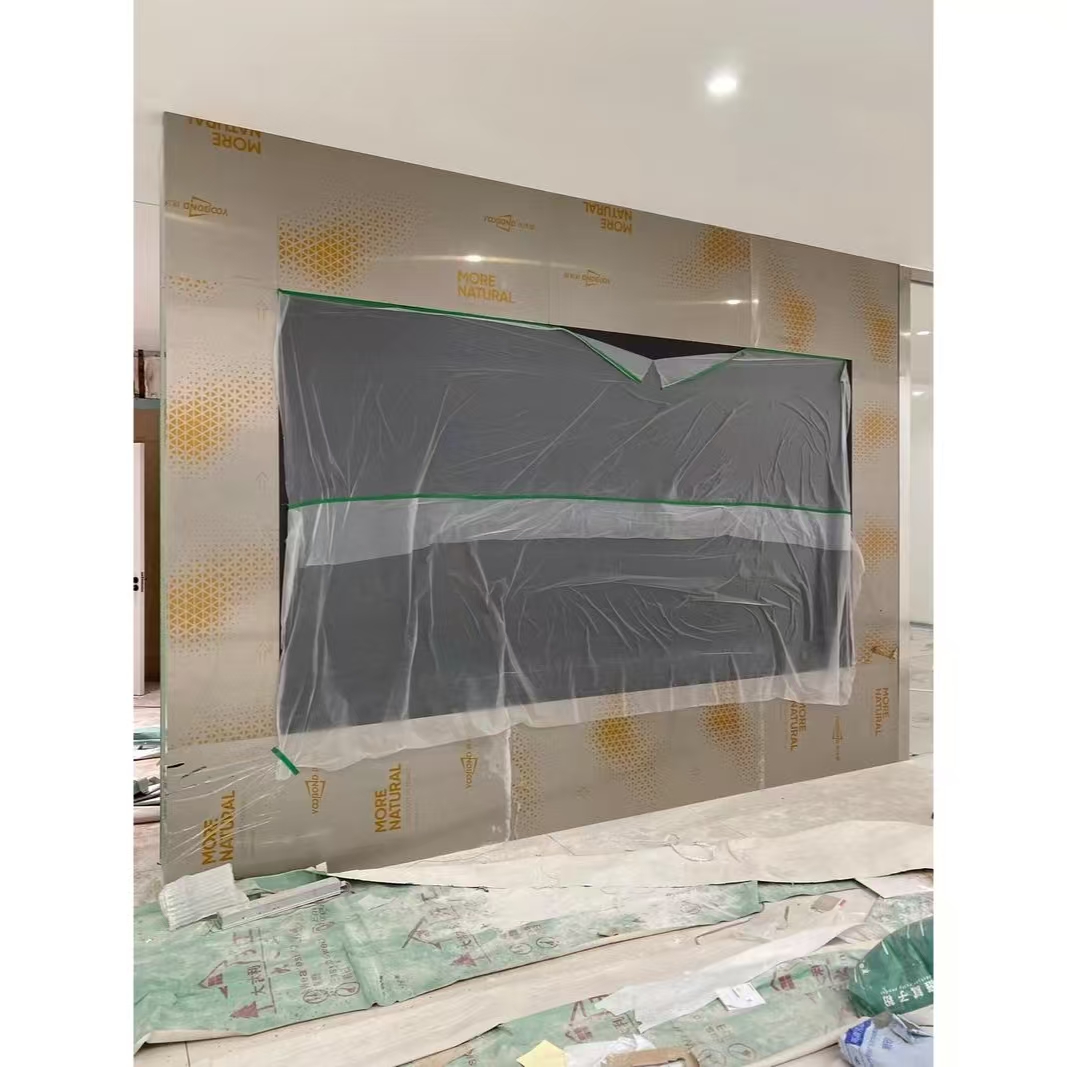
You have sourced a container of aluminum composite panels. The price is competitive. The color matches the sample. Your customer installs them on a curved facade or a folded corner. Then the complaint arrives:
"The panel cracked when we bent it."
Or worse: "The white line appeared on the bend."
Bending-related complaints are among the most common and costly issues for ACP wholesalers. The customer blames you. You blame the manufacturer. The manufacturer points to the specification sheet. Meanwhile, your margin evaporates in replacement costs and lost trust.
The good news is that most bending failures can be predicted—and prevented—before you ever place an order. This checklist shows you exactly how to pre-screen aluminum coils and finished panels to ensure they will bend without cracking, whitening, or delaminating.
Why Bending Failures Happen
Before we get to the checklist, understand the root causes. Bending an aluminum composite panel requires three layers to work together:
- Top aluminum skin (must stretch without tearing)
- Polyethylene or FR core (must compress without cracking)
- Bottom aluminum skin (must stretch uniformly)
When bending fails, one of these three things has gone wrong:
Failure Type | What You See | Root Cause |
Cracking | Visible fracture line on the outer radius | Aluminum alloy too hard (H18 instead of H14) |
Whitening | White stress marks along the bend line | The core material is too brittle or overfilled with minerals |
Delamination | Skins separate from the core at the bend | Poor adhesive bond or insufficient core elasticity |
Spring-back | The panel does not hold the bent shape | Aluminum skin too thin or core too rigid |
Oil-canning | Wavy surface after bending | Uneven skin thickness or residual coil stress |
Each of these failures can be caught before shipping—if you know what to look for.
The Wholesaler's Pre-Screening Checklist
Use this checklist before finalizing any purchase order for ACP that will be bent, folded, or curved.
Section 1: Coil Certification (Request from Manufacturer)
Before you even discuss price, request these four documents:
Document | What to Look For | Red Flag |
Mill certificate for aluminum coil | Alloy: 3003 H14 or 3105 H14 (not H18) | H18 alloy listed (too hard for bending) |
Coil thickness tolerance | ±0.02mm for skin thickness | No tolerance stated or tolerance > ±0.05mm |
Core material specification | LDPE (low-density polyethylene) or certified FR | Recycled/unidentified core material |
Adhesive type and temperature rating | Adhesive type and temperature rating | Cold adhesive or no temperature data |
The non-negotiable rule: If the manufacturer cannot or will not provide a mill certificate showing H14 temper aluminum, do not buy the panel for bending applications. H18 temper is for flat, non-formed applications only.
Section 2: Sample Testing (Before Bulk Order)
Never trust a specification sheet alone. Request 10–20 sample panels (full 4' x 8' sheets or smaller 300mm x 300mm pieces) and perform these tests:
Test 1: The 180° Fold Test
Step | Action |
1 | Cut a strip 50mm wide x 200mm long |
2 | Bend it 180° flat against itself (0T bend—zero thickness radius) |
3 | Inspect the bend line |
Pass: No cracking, no whitening, no skin separation.
Fail: Any visible white line, crack, or delamination.
Test 2: The V-Bend Test (90°)
Step | Action |
1 | Use a standard press brake with a 10mm V-die |
2 | Bend the panel to 90° |
3 | Inspect inside and outside of the bend |
Pass: Smooth radius, no white stress marks, skins remain bonded.
Fail: White line appears on the outside radius; skins separate at the bend apex.
Test 3: The Conical Mandrel Test (for curved applications)
Step | Action |
1 | Wrap the panel around a progressively smaller diameter |
2 | Note the smallest diameter achieved without failure |
Minimum acceptable: 20x panel thickness (e.g., 4mm panel = 80mm minimum bend radius)
If the panel fails at a larger radius than this, reject the material for curved applications.
Section 3: Aluminum Alloy Verification
This is the most overlooked but most critical factor. Aluminum alloy temper directly determines bendability.
Alloy & Temper | Bendability | Typical Use | Suitable for Your Customer? |
3003 H14 | Excellent | Signage, cladding, curved facades | YES |
3105 H14 | Excellent | Architectural panels, rain screens | YES |
3003 H16 | Fair | Flat panels only | NO (marginal) |
3003 H18 | Poor | Rigid flat applications only | NO |
1100 H14 | Good (but soft) | Deep drawing, soft curves | Only for non-structural |
How to verify: Ask for the coil manufacturer's name and heat number. Cross-reference with the mill certificate. If the supplier says "proprietary alloy" or cannot name the temper, walk away.
Section 4: Core Material Assessment
The core is not just filler—it is the hinge of the bend.
Core Type | Bending Performance | Risk Level |
Virgin LDPE (low-density polyethylene) | Excellent; compresses without cracking | Low |
50/50 Virgin/Recycled LDPE | Acceptable for standard bends | Medium |
100% Recycled LDPE | Poor; inconsistent; may crack | High |
Mineral-filled FR core (standard) | Fair; requires a larger bend radius | Medium |
A2 grade FR core (non-combustible) | Poor; brittle; avoid tight bends | High |
For bending applications: Specify "virgin LDPE core" in your purchase order. Accept no substitutes.
Section 5: Thickness Consistency Check
Inconsistent skin thickness causes uneven bending—one area stretches more than another, leading to oil-canning or cracking.
Measurement | Acceptable Range | How to Check |
Top skin thickness (nominal 0.21mm) | 0.19mm – 0.23mm | Micrometer at 5 points across the width |
Bottom skin thickness (nominal 0.21mm) | 0.19mm – 0.23mm | Micrometer at 5 points across the width |
Total panel thickness (4mm nominal) | 3.85mm – 4.15mm | Caliper at 5 points |
Skin thickness variation across the width | Less than 0.03mm | Compare left, center, right |
If variation exceeds these ranges, the coil has poor rolling consistency. The panel will bend unevenly.
Section 6: Coil Storage and Age Verification
Even a perfect coil can become unbendable if stored incorrectly.
Factor | Acceptable | Unacceptable |
Coil age (from lamination date) | Less than 6 months | Over 12 months |
Storage humidity | Below 60% RH | Above 80% RH |
Storage temperature | 15°C – 35°C | Below 5°C or above 50°C |
Stacking pressure | Flat stacks only | Coils stored on edge or crushed |
Why age matters: Over time, the polyethylene core can harden or absorb moisture. A panel that bent perfectly at 3 months may crack at 12 months. Always check the production date on each pallet.
The Wholesaler's Contract Language
Protect yourself with these clauses in every purchase order for bendable ACP:
"Supplier warrants that all aluminum composite panels supplied under this order shall be manufactured using 3003 H14 or 3105 H14 aluminum alloy temper, as verified by mill certificates. Panels shall pass a 180° zero-radius fold test without cracking, whitening, or delamination. Any panel failing to meet these bending performance criteria shall be replaced at the supplier's sole cost, including freight and handling."
Quick Reference: Pass/Fail Decision Matrix
Test or Requirement | Pass | Fail → Action |
The mill certificate shows H14 temper | ✅ | ❌ Reject order |
180° fold test: no white line | ✅ | ❌ Reject or downgrade to flat use |
Core specified as virgin LDPE | ✅ | ⚠️ Test thoroughly before acceptance |
Skin thickness variation <0.03mm | ✅ | ❌ Reject for curved work |
Coil age <6 months | ✅ | ⚠️ Increase sample size |
Conical mandrel: <20x thickness radius | ✅ | ❌ Reject for tight bends |
Conclusion: Pre-Screen or Pay Twice
Bending complaints are preventable. The manufacturer knows whether their coils will bend cleanly. The question is whether you ask the right questions before you pay.
A 10-minute pre-screening conversation—requesting mill certificates, H14 temper confirmation, and core material specifications—can save you months of claim disputes and thousands of dollars in replacement costs.
Add this checklist to your procurement workflow. Train your purchasing team to ask for these documents before discussing price. And remember: any manufacturer who hesitates to provide alloy temper information is giving you the most important information of all—that you should buy elsewhere.