Welcome to Vbond
Beyond Cladding: 5 Unexpected Architectural Applications of ACP
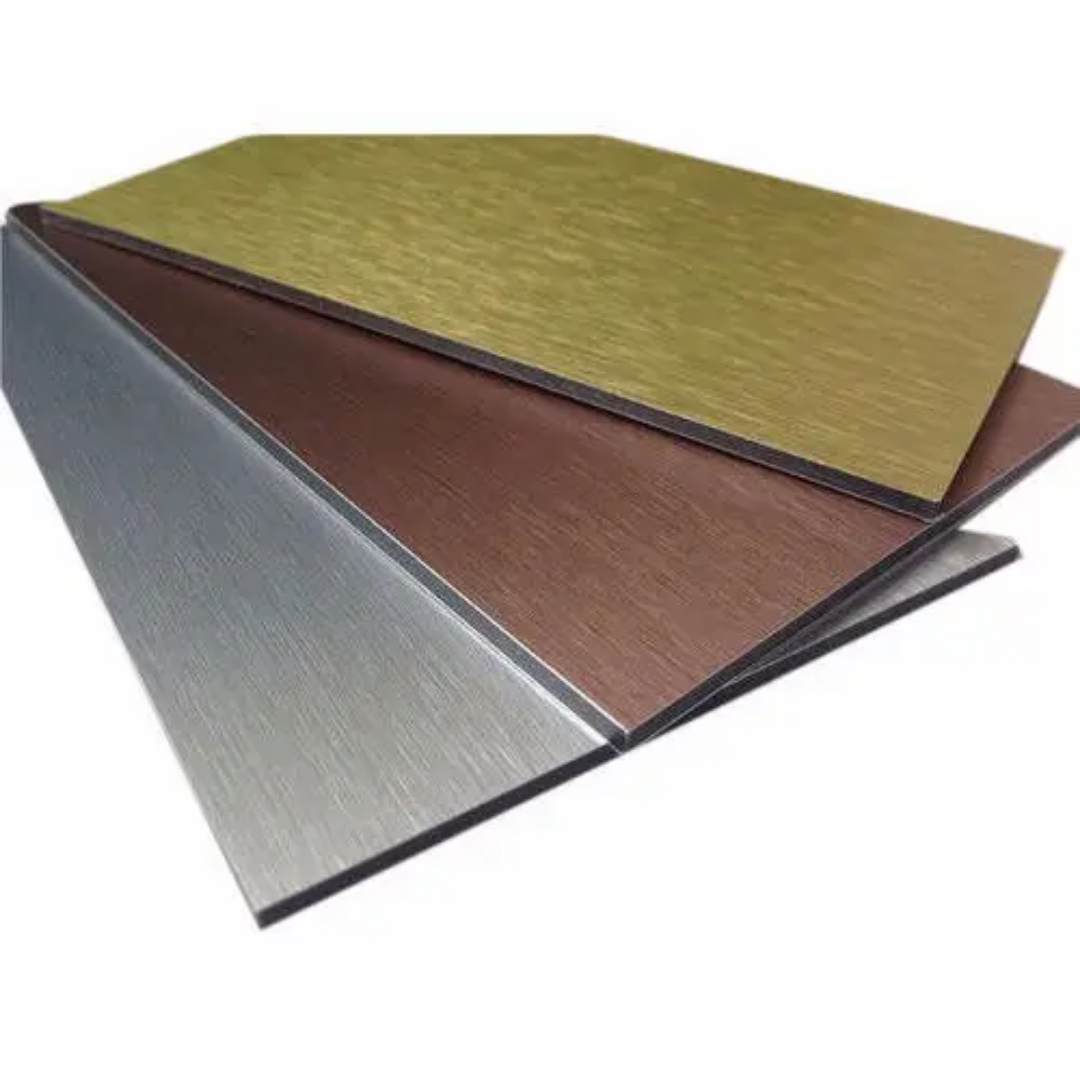
Introduction: Redefining the Material's Potential
Aluminum Composite Material (ACM), widely recognized for its role in sleek building facades and signage, is often pigeonholed as a purely functional cladding product. However, its core properties—lightweight rigidity, superior formability, and extensive finish versatility—make it a compelling choice for innovative architectural applications far beyond the exterior wall. This article explores five unexpected uses of ACP that challenge conventional material selection, demonstrating its potential to shape space, experience, and detail in contemporary design.
1. Sculptural Interior Feature Walls and Ceilings
Moving ACP from the exterior to the interior liberates it from stringent weatherproofing requirements, allowing designers to focus purely on form and aesthetics.
Application: Creating dramatic, free-form interior sculptures, flowing ceiling clouds, or articulated wall panels that define space without bearing load.
Why ACP Excels: Its ability to be easily cold-formed into complex, single-curvature, and compound curves using simple tools allows for the creation of organic shapes that would be prohibitively expensive in stone or solid metal. Lightweight panels simplify the supporting structure overhead.
Design Impact: Enables the creation of immersive, branded environments in lobbies, retail spaces, and high-end hospitality. Back-lighting integrated into the framework can transform ACP into a luminous element.
Professional Specification Tip: For interior curves, specify a softer polyethylene (PE) core. Use a matte or satin finish to minimize glare and enhance the tactile, sculptural quality.
2. Dynamic Acoustic Baffles and Sound-Diffusing Elements
Beyond visual noise, ACP can be engineered to mitigate actual acoustic noise, contributing to occupant comfort and space functionality.
Application: Fabricating hanging acoustic baffles, sound-diffusing wall panels, or perforated ceiling systems in auditoriums, open-plan offices, restaurants, and educational facilities.
Why ACP Excels: When CNC-perforated with precise patterns, the panel becomes acoustically transparent. When paired with a sound-absorbing backing (mineral wool, fabric), it creates an effective functional aesthetic solution. The material's rigidity ensures panels remain flat and perform predictably.
Design Impact: Combines acoustic performance with bold visual design. Custom perforation patterns can align with brand logos or thematic motifs, turning a functional necessity into a key design feature.
Professional Specification Tip: Collaborate with an acoustic engineer to determine optimal perforation percentage (open area) and backing material. Specify pre-fabricated modules for easier installation and quality control.
3. High-Performance, Hygienic Laboratory and Healthcare Furnishings
In environments demanding durability, cleanability, and chemical resistance, ACP offers a robust alternative to traditional materials.
Application: Fabricating modular laboratory casework, cleanroom wall and ceiling systems, nurse stations, and headwall cladding in hospitals and clinics.
Why ACP Excels: Panels with a non-porous, high-pressure laminate (HPL) or PVDF-coated surface are exceptionally easy to clean and disinfect, resisting stains, chemicals, and abrasion. The seamless, monolithic appearance minimizes dirt-catching joints.
Design Impact: Promotes hygienic environments while offering a modern, non-institutional aesthetic. Color-coded panels can aid in wayfinding or zone differentiation within complex medical or lab facilities.
Professional Specification Tip: Specify coved, radiused corners fabricated from a single bent panel to eliminate seams. Ensure all edges are fully sealed. Fire-rated mineral cores are often required for healthcare applications.
4. Lightweight, Durable Exhibition and Modular Display Systems
The temporary and evolving nature of exhibition design calls for materials that are both adaptable and resilient—a perfect niche for ACP.
Application: Constructing reusable trade show booths, museum exhibition backdrops, modular retail displays, and temporary event pavilions.
Why ACP Excels: Its lightweight nature reduces shipping costs and makes on-site assembly faster and safer. Panels can be designed to interconnect with hidden mechanical fixings, creating sleek, standalone structures. Digital printing allows for full-color graphics directly on the panel surface.
Design Impact: Enables rapid deployment and reconfiguration of high-impact visual environments. Supports a circular design model where systems are repurposed for multiple events.
Professional Specification Tip: Design with a kit-of-parts philosophy. Use standard panel sizes to minimize waste. Incorporate aluminum extrusion framing systems designed for dry-assembly without specialized tools.
5. Precision-Formed Architectural Furniture and Built-Ins
At a smaller scale, ACP's characteristics translate elegantly into fixed and semi-fixed interior elements.
Application: Crafting reception desks, concierge pods, retail counters, library carrels, and integrated bench seating.
Why ACP Excels: It can be folded into precise, sharp-edged three-dimensional forms that are rigid and stable. The material offers the visual weight and premium feel of solid material at a fraction of the cost and weight, with virtually unlimited color and finish options.
Design Impact: Creates seamless continuity between the architecture and its furnishings, reinforcing a cohesive design language. Allows for bold, geometric statements that become focal points.
Professional Specification Tip: For furniture edges, specify a folded "hem" or insert a solid aluminum edge trim for durability and a finished look. Reinforce internal corners with structural adhesives and aluminum angle for longevity.
Conclusion: ACP as a Multi-Disciplinary Design Tool
The journey of ACP from a utilitarian cladding material to a versatile interior design medium is a testament to its inherent engineering virtues. By recognizing its potential for sculptural form, acoustic performance, hygienic surfaces, modular assembly, and precision furniture, architects and designers can unlock new avenues for innovation. These five applications demonstrate that ACP is not merely a skin for a building but a highly adaptive design tool capable of solving complex spatial, functional, and aesthetic challenges across the entire built environment. Specifying ACP for these unexpected roles requires close collaboration with experienced fabricators but yields unique, high-impact results that push the boundaries of material convention.






