Welcome to Vbond
Bulk Buyers Beware: 3 Hidden Flaws Cheap ACP Suppliers Hide (Bubbles, Cracks, Core Gaps)
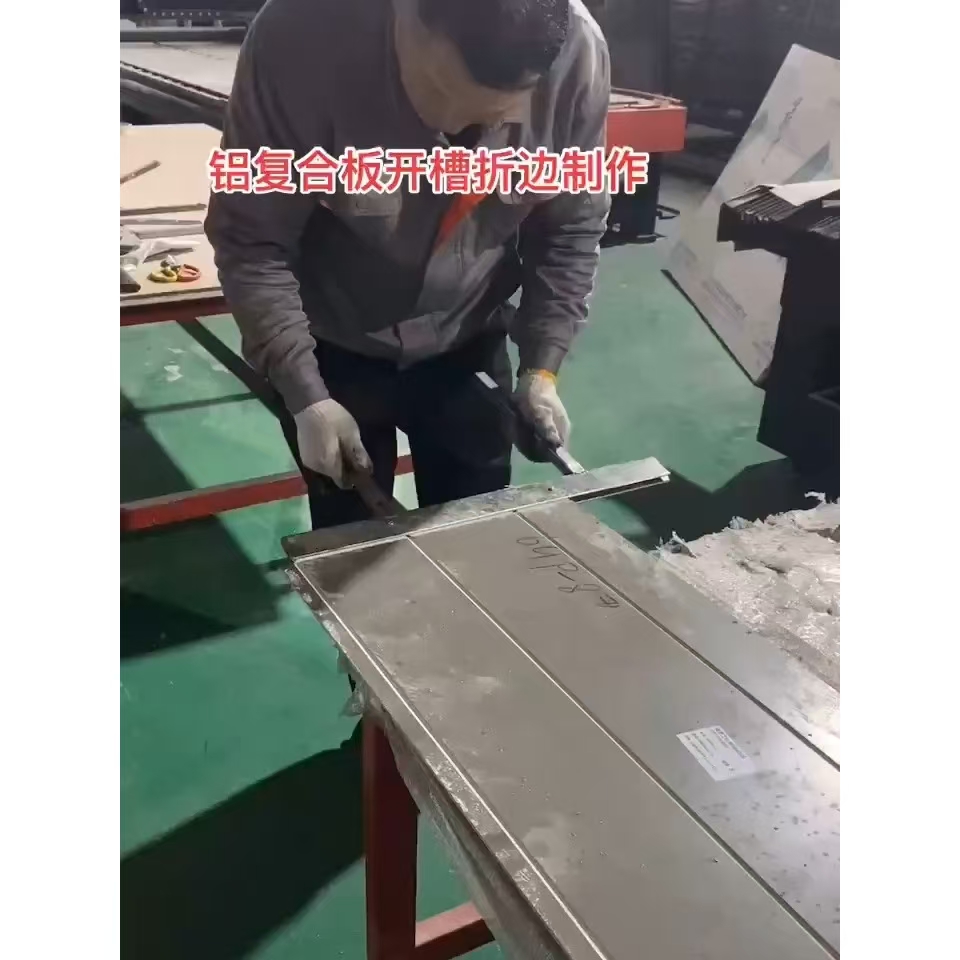
You have negotiated a great price on a full container of aluminum composite panels. The sample looked perfect. The supplier promised "premium quality." The shipment arrives, and the panels look fine at first glance.
Then you install them. Or worse—your customer installs them.
Within weeks, the complaints begin. Small bubbles appear on the surface. Cracks form along the bends. The edges show visible gaps between the aluminum skin and the core.
You call the supplier. They blame shipping. They blame handling. They blame your installation. They offer a small credit—but only if you buy another container.
Sound familiar?
Cheap ACP suppliers have become experts at hiding defects. The flaws are there. They are just invisible to the untrained eye. This article exposes the three most common hidden flaws in budget aluminum composite panels and gives you a practical inspection protocol to catch them before you pay.
The Economics of Cheap ACP: Why Flaws Are Inevitable
Before examining specific defects, understand the economics driving them.
Price Level | Typical Manufacturing Cost | Hidden Flaw Probability |
Premium (AAMA 2605 certified) | $18–24 per sqm | <2% |
Standard (AAMA 2603 compliant) | $12–16 per sqm | 5–8% |
Economy (no certification) | $7–10 per sqm | 15–25% |
"Too good to be true." | $5–7 per sqm | >40% |
When a supplier offers a price 40% below the market average, they are not running a more efficient factory. They are cutting corners on raw materials, quality control, or both.
The three hidden flaws below are the most common results of those shortcuts.
Hidden Flaw #1: Surface Bubbles (Blisters)
What They Look Like
Small, raised imperfections on the aluminum skin. They may be visible only under raking light (low-angle light). In some cases, they are completely invisible upon delivery but appear after 3–6 months of outdoor exposure.
What Causes Them
Root Cause | How Cheap Suppliers Cut Corners |
Contaminated aluminum coil | Skipping the pre-treatment wash step |
Inadequate adhesive | Using general-purpose glue instead of high-temp laminating adhesive |
Insufficient curing | Reducing oven temperature or line speed to save energy costs |
Trapped moisture | Laminating in high-humidity conditions without dehumidification |
How Cheap Suppliers Hide Them
- Ship panels stacked tightly (pressure compresses bubbles flat temporarily)
- Apply thicker protective film (pressure masks surface irregularities)
- Inspect under direct overhead light only (bubbles require raking light to see)
- Claim "normal cosmetic variation" when questioned
How to Detect Before Buying
The 5-Minute Water Boil Test (Field Method):
1. Cut a 100mm x 100mm sample from a random panel
2. Boil water in a pot
3. Submerge the sample for 5 minutes
4. Remove and inspect immediately under raking light
What You Will See:
Result | Interpretation |
No change | Good lamination quality |
Small blisters (<2mm) | Marginal quality; proceed with caution |
Large blisters (>2mm) | Reject the shipment |
Skin peeling or core softening | Reject immediately |
Why It Works: Heat and moisture accelerate debonding. A panel that blisters in 5 minutes of boiling will certainly blister in 6 months of outdoor exposure.
Hidden Flaw #2: Bend Cracks (Stress Whitening)
What They Look Like
White or silver lines along the outside radius of a bent panel. In severe cases, visible cracks through the aluminum skin. The panel may look fine immediately after bending, but develop cracks days or weeks later.
What Causes Them
Root Cause | How Cheap Suppliers Cut Corners |
Hard aluminum alloy (H18 instead of H14) | Buying lower-grade coil to save $200–300 per ton |
Thin aluminum skin (0.15mm instead of 0.21mm) | Reducing skin thickness to save material cost |
Brittle core material | Using recycled polyethylene or over-filled FR compound |
Poor skin-to-core adhesion | Inadequate adhesive or curing |
How Cheap Suppliers Hide Them
- Provide samples made from premium coil (different from bulk shipment)
- Test bend on a large radius (20x thickness instead of 5x)
- Ship panels in cold weather (cracks may not appear until after installation)
- Blame "installer error" when customers complain
How to Detect Before Buying
The 180° Zero-Radius Fold Test:
1. Cut a strip 50mm wide x 200mm long from a sample panel
2. Fold it flat against itself (0T bend—no radius)
3. Unfold and inspect the bend line
What You Will See:
Result | Interpretation |
No white line, no crack | Excellent bendability (H14 or equivalent) |
Faint white line (visible only up close) | Acceptable for standard bends |
Prominent white line (visible from 1 meter) | Marginal; reject for tight bends |
Visible crack through the skin | Reject immediately |
The V-Bend Test (More Realistic):
1. Use a press brake with a V-die opening 8–10x panel thickness
2. Bend to 90°
3. Inspect the outside radius
Acceptable Result: No white line visible from 1 meter under normal lighting.
Unacceptable Result: Any white line, crack, or skin separation.
Hidden Flaw #3: Core Gaps (Edge Delamination)
What They Look Like
Visible gaps or voids between the aluminum skin and the core material are visible at the cut edge. In advanced cases, the skin can be peeled back by hand. The panel may delaminate progressively from the edge inward.
What Causes Them
Root Cause | How Cheap Suppliers Cut Corners |
Uneven adhesive application | Using worn or mis-calibrated glue rollers |
Low adhesive coverage | Reducing adhesive volume to save cost |
Poor coil flatness | Using a reject coil from other industries |
Inadequate laminating pressure | Reducing nip roller pressure to save energy |
How Cheap Suppliers Hide Them
- Trim edges cleanly (gaps are less visible on freshly cut edges)
- Ship panels with edge tape or protective wrapping (hides the cut edge)
- Claim "normal for economy grade" when questioned
- Blame "cutting technique" for any visible gaps
How to Detect Before Buying
The Edge Inspection Protocol:
1. Cut a 50mm strip from a full panel (or inspect an existing cut edge)
2. Use a 10x magnifying glass or jeweler's loupe
3. Examine the interface between the aluminum skin and the core
What You Will See:
Observation | Interpretation |
Uniform adhesive line, no gaps | Good lamination |
Occasional small voids (<0.5mm) | Acceptable for economy grade |
Multiple voids or continuous gaps | Reject |
Skin can be peeled by hand | Reject immediately |
The Peeling Test (Destructive but Definitive):
1. Cut a 25mm strip from the panel edge
2. Clamp the aluminum skin in vise grips
3. Attempt to peel the skin away from the core
What You Will Feel:
Result | Interpretation |
Skin tears before separating | Excellent bond |
Skin peels with moderate resistance | Marginal bond |
Skin peels easily with little resistance | Poor bond—reject | |
Skin separates without resistance | No bond—reject immediately |
The Bulk Buyer's Receiving Inspection Protocol
Implement this 30-minute inspection protocol for every container shipment.
Step 1: Documentation Review (5 minutes)
- Mill certificate showing aluminum alloy and temper (must be H14, not H18)
- Core material specification (virgin LDPE or certified FR)
- Production date (should be within 6 months)
- AAMA or other certification (if claimed)
Step 2: Visual Inspection (10 minutes)
- Inspect 10% of panels (minimum 10 panels)
- Use raking light (low-angle light) to check for bubbles
- Inspect all cut edges for gaps or voids
- Photograph any defects with a scale reference
Step 3: Destructive Testing (15 minutes)
- Select 3 random panels from different pallets
- Perform the 5-minute water boil test on one sample
- Perform the 180° fold test on a second sample
- Perform the edge peeling test on a third sample
Step 4: Pass/Fail Decision
Test Result | Action |
All tests pass | Accept shipment |
One test marginal | Test 3 additional samples; accept if all pass |
Any test fails | Reject shipment; invoke contract clause |
Contract Language to Protect Your Purchase
Include these clauses in every purchase order:
"Supplier warrants that all aluminum composite panels shall be manufactured using 3003 H14 or 3105 H14 aluminum alloy temper. Panels shall pass a 5-minute water-boil test (ASTM D3359 method) without surface blistering. Panels shall pass a 180° zero-radius fold test with no cracking or stress whitening. Cut edges shall show no visible gaps between skin and core. Any panel failing these criteria shall be replaced at the supplier's sole cost, including all freight and handling."
Real-World Case Study: The 40% Price That Cost 200%
The Buyer: A signage wholesaler sourcing 10 containers per year.
The Deal: A new supplier offered 40% below the buyer's current price. The sample passed basic inspection
The Shipment: 2 containers arrived. Visual inspection showed no obvious defects.
The Installation: The wholesaler distributed panels to 15 signage shops.
The Failures: Within 4 months, 30% of the panels showed bubbles. 15% cracked during bending. 20% showed edge delamination.
The Cost:
Cost Category | Amount |
Replacement panels | $24,000 |
Freight for returns and replacements | $9,000 |
Customer credits and refunds | $18,000 |
Lost future business (estimated) | $45,000 |
Total cost | $96,000 |
The Original "Savings": $12,000 (40% below market price).
The Net Result: A loss of $84,000 on a "bargain" purchase.
Conclusion: Cheap ACP Is the Most Expensive ACP
The three hidden flaws—bubbles, cracks, and core gaps—are not random defects. They are predictable outcomes of manufacturing shortcuts. Cheap suppliers know these flaws exist. They rely on bulk buyers not knowing how to find them.
You have the power to change that dynamic. A 30-minute receiving inspection protocol. Three simple tests. Clear contract language. These tools shift the risk from you back to the supplier.
Test every shipment. Reject defective material. And remember: the lowest price is rarely the lowest total cost.