Welcome to Vbond
Cold Bending vs. Heat Bending for Aluminum Panels: Which One Prevents Micro-Cracks on Fold Lines?
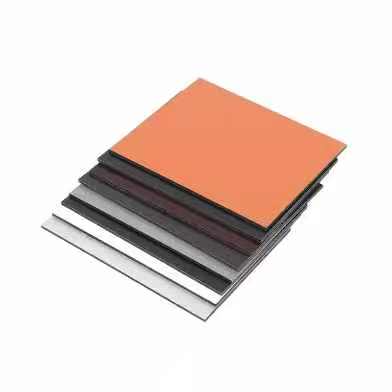
Cold Bending vs. Heat Bending for Aluminum Panels: Which One Prevents Micro-Cracks on Fold Lines?
When fabricating aluminum composite panels (ACPs) for architectural facades, achieving a clean, crack-free fold line is the ultimate measure of quality. Nothing undermines a premium facade faster than micro-cracks—tiny fissures along the bend that invite corrosion, compromise weather resistance, and ultimately lead to panel failure.
For procurement professionals and fabrication managers, the choice between cold bending and heat bending is not merely a production preference. It is a quality decision with direct implications for material longevity, warranty coverage, and building safety.
This guide compares cold bending and heat bending techniques for aluminum panels, analyzes their respective risks for micro-crack formation, and provides clear recommendations for when to use each method.
1. Understanding Micro-Cracks: The Hidden Threat
Micro-cracks are tiny yet potent flaws that can lead to severe structural weaknesses if not addressed promptly. These microscopic fissures typically form along the outer radius of a bend, where the aluminum skin is stretched beyond its ductile limit.
Why micro-cracks matter:
- They compromise the panel's weather resistance
- They create entry points for moisture, leading to core delamination
- They propagate under cyclic loading (wind, thermal expansion)
- They void manufacturer warranties
In aluminum bending, micro-cracks often arise during cold forming processes due to excessive strain or inadequate processing techniques. The Aluminum Association has noted that nearly 30% of defects originating from bending operations are related to micro-crack formation.
2. Cold Bending: Speed and Economy with Hidden Risks
How Cold Bending Works
Cold bending involves shaping aluminum panels at ambient temperature using press brakes, roll formers, or folding machines. For ACPs, cold bending typically requires V-grooving—routing a channel from the back side, leaving only a thin layer of aluminum and core material to form the hinge.
When Cold Bending Is Acceptable
Application | Suitability |
Gentle curves (large bend radius) | Excellent |
Panels with proper V-grooving (0.2–0.3mm remaining) | Good |
Interior applications with minimal thermal cycling | Acceptable |
Aluminum alloys 3003 or 5005 series | Best performance |
Thin aluminum skins (0.21mm) | High risk—avoid |
When Cold Bending Causes Micro-Cracks
Cold bending introduces micro-cracks when:
1. The bend radius is too tight: Sharp bends induce stress concentrations that lead to crack formation. In automotive frame components, tight radii have been documented as a primary cause of bending cracks.
2. Grooving depth is incorrect: Over-grooving cuts through the aluminum skin; under-grooving leaves too much material, causing excessive stress.
3. The aluminum alloy is too hard: 6061 and 7075 alloys are more susceptible to cracking during cold bending than 3003 or 5005 series.
4. The aluminum skin is too thin: Skins below 0.30mm lack the ductility to stretch without cracking.
Risk assessment: Cold bending carries a moderate-to-high risk of micro-crack formation for tight radius bends (less than 3× panel thickness) or when using harder aluminum alloys. For architectural ACPs with proper V-grooving (0.2–0.3mm remaining core), cold bending can be successful—but only with rigorous process control.
3. Heat Bending: Thermal Stress Relief for Critical Applications
How Heat Bending Works
Heat-bending involves pre-warming the aluminum panel before forming. The heat reduces the material's yield strength and increases its ductility, allowing it to stretch further without cracking. For ACPs, heat is typically applied to the bend line using heat guns, infrared heaters, or heated press brake tooling.
When Heat Bending Is Required
Application | Suitability |
Tight radius bends (<3× panel thickness) | Highly recommended |
Hard aluminum alloys (6061, 7075) | Essential |
Thick aluminum skins (>0.5mm) | Recommended |
High-visibility architectural finishes | Preferred |
Cold climates or cold panels | Recommended |
How Heat Prevents Micro-Cracks
Heat-bending prevents micro-cracks through two mechanisms:
1. Increased ductility: Warm aluminum stretches further before reaching its plastic limit. The material becomes more forgiving, distributing stress evenly across the bend zone.
2. Reduced residual stress: Heat allows the material to "relax" during bending, minimizing the internal stresses that lead to spring-back and micro-crack propagation.
3. Lower force requirement: Because the material is softer, less force is needed to achieve the bend. Lower force means less concentrated stress on the bend line.
The Heat Bending Protocol for ACP
Parameter | Recommendation |
Target temperature | 150–200°C (300–400°F) for aluminum skins |
Heating method | Heat gun, infrared heater, or heated tooling |
Heating zone | Confined to bend line; avoid heating the entire panel |
Core consideration | Do not exceed PE core temperature limits (approx 120°C) |
Cooling | Allow to cool naturally; do not quench |
Critical note for ACP: The polyethylene core has lower heat tolerance than the aluminum skins. Excessive heat can melt the core, causing delamination. Heat-bending is best suited for solid aluminum panels or ACPs with mineral-filled (A2) cores that tolerate higher temperatures.
4. Cold Bending vs. Heat Bending: Head-to-Head Comparison
Factor | Cold Bending | Heat Bending |
Micro-crack risk | Moderate to high (depends on alloy and radius) | Low |
Equipment cost | Low (standard press brake) | Moderate (heating tools required) |
Production speed | Fast | Slower (heating time required) |
Energy cost | None | Moderate |
Skill requirement | Moderate | Higher (temperature control critical) |
Alloy flexibility | Limited to formable alloys (3003, 5005) | Works with most alloys |
Minimum bend radius | 3–5× panel thickness | 1–2× panel thickness |
Core compatibility (ACP) | Safe for PE, FR, A2 | Risk for PE; safe for A2 |
Best application | Large radius, formable alloys, interior | Tight radius, hard alloys, exterior finishes |
5. Preventing Micro-Cracks: Best Practices Regardless of Method
Whether you choose cold or heat bending, these practices reduce micro-crack risk:
1. Optimize Grooving Depth (For ACP)
For ACP panels, grooving is essential before bending. The critical specification is leaving 0.2–0.3 mm of aluminum skin intact. Over-grooving cuts through the skin, creating a weak point that will crack. Under-grooving leaves too much material, causing excessive stress.
2. Select the Right Alloy
Different aluminum alloys exhibit varying levels of crack resistance. Selecting the right alloy for specific applications significantly impacts micro-crack formation rates.
Alloy | Formability | Micro-Crack Risk | Best Use |
3003 | Excellent | Low | General fabrication, bending |
3003 | Excellent | Low | Architectural, anodizing |
6061 | Good (annealed) | Moderate (T6: high) | Structural requires heat bending |
7075 | Poor | High | Not recommended for bending |
6061 aluminum, known for its excellent weldability, produces fewer micro-cracks in welding compared to 7075 aluminum, which, while strong, is more susceptible to cracking.
3. Respect Minimum Bend Radii
Sharp bends induce stress concentrations that lead to crack formation. For cold bending, the minimum bend radius should be 3–5 times the panel thickness. For heat bending, this can be reduced to 1–2 times the thickness.
4. Control Processing Parameters
Processing temperature and cooling intensity directly affect crack formation. For heat bending, ensure uniform temperature distribution across the bend zone. For cold bending, maintain consistent feed rates and avoid sudden stops that create stress concentrations.
5. Use Sharp, Appropriate Tooling
Dull or incorrect router bits damage the core and aluminum layers. Use V-groove cutters specific to ACP and maintain consistent routing speed.
6. Support Panels During Bending
Panels must be properly supported during bending. Poor handling leads to micro-cracks, surface dents, and invisible structural weakness that appear months later as visible damage.
6. Inspection: Detecting Micro-Cracks Before They Propagate
Even with optimal technique, micro-cracks can occur. Early detection prevents field failures.
Visual Inspection Techniques
| Method | What to Look For |
| Bright light (raking light) | Hairline lines along the bend radius |
| Magnification (10x–20x loupe) | Tiny fissures not visible to the naked eye |
| Dye penetrant test | Cracks absorb dye, revealing location |
Dye Penetrant Testing Protocol
1. Clean the bend area thoroughly
2. Apply penetrant dye and allow dwell time (10–15 minutes)
3. Remove excess dye
4. Apply the developer
5. Cracks appear as colored lines against a white background
When to Reject
- Any visible crack under magnification → reject
- Dye penetrant reveals cracks longer than 1mm → reject
- Cracks present on more than 5% of panels in batch → reject entire batch
7. Decision Matrix: Which Method for Your Project?
Project Requirement | Recommended Method | Rationale |
Large radius bends (>5× thickness), 3003 alloy | Cold bending | Sufficient ductility; heat adds cost without benefit |
Tight radius bends (<3× thickness), any alloy | Heat bending | Cold bending will cause micro-cracks |
High-visibility exterior finish (e.g., mirror, metallic) | Heat bending | Lower crack risk; flawless appearance required |
PE-core ACP with tight radius | Cold bending with precise grooving | Heat risks core melting; rely on the grooving technique |
A2 mineral-core ACP, any radius | Either (heat preferred for tight radius) | Mineral core tolerates heat; heat reduces crack risk |
Hard alloy (6061-T6, 7075) | Heat bending (mandatory) | Cold bending will crack these alloys |
High-volume production, standard profiles | Cold bending | Faster, lower cost, acceptable for non-critical applications |
Prototype or custom shape | Heat bending | Flexibility to adjust without tooling changes |
8. Conclusion
The choice between cold bending and heat bending for aluminum panels depends on your specific application requirements, alloy selection, and quality standards.
Cold bending is faster, cheaper, and suitable for:
- Formable alloys (3003, 5005 series)
- Large radius bends (>3–5× panel thickness)
- ACP panels with precise V-grooving (0.2–0.3mm remaining core)
- Interior applications where minor surface imperfections are acceptable
Heat-bending is preferred for:
- Tight radius bends (<3× panel thickness)
- Hard alloys (6061, 7075)
- High-visibility exterior finishes requiring flawless appearance
- Mineral-core A2 panels that tolerate elevated temperatures
For ACP specifically, the most critical factor is not temperature—it is grooving depth. Leave 0.2–0.3mm of aluminum skin intact, use sharp V-groove tooling, and support panels properly during bending. When these fundamentals are correct, cold bending is safe for most applications. When they are not, no amount of heat will prevent micro-cracks.
The bottom line: Heat bending reduces micro-crack risk but adds cost and complexity. For critical architectural facades, tight radius bends, or hard alloys, heat bending is worth the investment. For standard applications with proper grooving and formable alloys, cold bending delivers acceptable results.






