Welcome to Vbond
Color Fade & Chalking on ACP: The Hidden PE-vs-PVDF Maintenance Cost
Introduction: The Real Cost of ACP Starts After Installation
When buyers compare Aluminum Composite Panels (ACP), they often focus on the initial price per square meter. A lower price can look attractive, especially for large facade projects. But the purchase price tells only part of the story.
Color fading and surface chalking can increase maintenance costs over time. These problems affect the building's appearance and may lead to extra cleaning, repainting, panel replacement, or even facade renovation. The coating system plays a major role in how well an ACP surface performs outdoors.
This is where the difference between PE and PVDF coatings matters. A standard PE-coated panel may work well for many indoor and short-term applications. However, a PVDF Alucobond panel offers better protection against long-term outdoor exposure when the coating system meets the right quality standards.
For professional buyers, the key question is not simply which panel costs less today. It is which panel delivers better value over the building's service life.
1. What Causes Color Fade and Chalking on ACP?
ACP uses two aluminum sheets bonded to a core material. The outer aluminum surface usually has a protective coating that provides color, gloss, and weather resistance.
Over time, sunlight, heat, moisture, air pollution, and temperature changes affect this coating. The speed of surface aging depends on the coating type, paint quality, coating thickness, production process, and local climate.
1.1 Color Fading: Why Does the Original Color Change?
Color fading happens when sunlight and environmental exposure break down the coating's color pigments and resin.
UV radiation is one of the main causes. It can damage the chemical structure of the coating and reduce its ability to hold its original color.
You may notice these changes:
· Bright colors become dull.
· Dark colors lose their original depth.
· Glossy surfaces become less shiny.
· Different facade sections show uneven color.
· Replacement panels may look different from the original installation.
Color fading is not only an appearance issue. It can also affect the perceived quality of a commercial building, hotel, office tower, or retail project.
1.2 Chalking: What Is the White Powder on ACP?
Chalking is another common sign of coating aging. It occurs when the coating binder breaks down and releases fine particles at the surface.
When you rub an aged panel with a clean cloth, you may see a white or colored powder on the fabric. This is a common sign of chalking.
Chalking can cause several problems:
· The surface looks dusty or faded.
· The original gloss level decreases.
· The facade becomes harder to keep clean.
· The coating loses part of its protective performance.
· Maintenance teams may need to inspect and clean the surface more often.
Chalking and fading often occur together, but they are not the same problem. A panel can lose gloss before serious chalking appears.
2. PE vs. PVDF Coating: What Is the Real Difference?
PE and PVDF are two common coating systems used on aluminum composite panels. Their main difference lies in their resin chemistry and outdoor weather resistance.
2.1 PE Coating: A Practical Choice for Cost-Sensitive Projects
PE stands for polyester. PE coatings offer good color options, smooth finishes, and a relatively low initial cost.
They are commonly used for:
· Interior wall decoration
· Indoor ceilings
· Retail displays
· Temporary structures
· Short-term outdoor applications, depending on the product specification
However, standard PE coatings generally provide lower UV resistance than quality PVDF systems. Long exposure to strong sunlight can cause faster color changes, gloss loss, and chalking.
For this reason, buyers should carefully evaluate PE-coated ACP before specifying it for a long-term exterior facade.
2.2 PVDF Coating: Designed for Long-Term Outdoor Performance
PVDF stands for polyvinylidene fluoride. It is a fluoropolymer-based coating system known for its strong weather resistance.
A quality PVDF coating protects the aluminum surface against UV radiation, moisture, heat, and many common environmental conditions.
A professional-grade PVDF Alucobond panel is often selected for:
· Commercial building facades
· Office towers
· Airports and transportation buildings
· Hotels and shopping centers
· Public buildings
· Large exterior renovation projects
PVDF coatings can retain color and gloss longer than standard PE coatings under comparable exposure conditions. They also offer better resistance to chalking and surface degradation.
However, not every PVDF panel has the same quality. Resin content, paint formulation, coating thickness, aluminum pretreatment, and manufacturing control all affect the final result.
2.3 PE vs. PVDF: A Side-by-Side Comparison
Comparison Item | PE Coating | PVDF Coating |
Initial purchase cost | Usually lower | Usually higher |
UV resistance | Moderate | High |
Color retention | Lower for long-term outdoor use | Better |
Gloss retention | More likely to decline outdoors | Better |
Chalking resistance | Lower | Higher |
Weather resistance | Suitable for selected applications | Designed for demanding exterior exposure |
Cleaning frequency | Depends on exposure and surface condition | Often easier to maintain over time |
Typical application | Interior and selected outdoor uses | Exterior facades and long-term projects |
Long-term maintenance | May require more attention | Usually lower under comparable conditions |
Important: These are general performance trends, not guaranteed results for every product. Actual performance depends on coating formulation, film thickness, exposure conditions, and product certification.
3. The Hidden Maintenance Costs of PE-Coated ACP
Many buyers compare PE and PVDF panels using only the quotation price. This approach can lead to higher project costs later.
The real cost includes more than the material itself. It also includes cleaning, inspection, access equipment, labor, repairs, replacement panels, and possible business disruption.
3.1 More Frequent Cleaning and Surface Inspection
As a coating ages, dirt and environmental deposits may become more visible. A faded or chalked facade can also create the impression that the building is poorly maintained.
Maintenance teams may need to clean the facade more often to maintain an acceptable appearance. For tall buildings, cleaning requires trained workers, lifting equipment, safety systems, and access arrangements.
These costs can exceed the original price difference between PE and PVDF panels.
3.2 Repainting Is Not Always a Simple Solution
Some buyers assume that they can repaint faded ACP surfaces when needed. However, repainting an installed aluminum composite facade is not always practical.
The project team must consider:
· Surface preparation
· Existing coating condition
· Paint compatibility
· Color matching
· Access equipment
· Labor costs
· Site protection and safety
In some cases, repainting may cost more than expected. The new coating may also look different from the original finish.
3.3 Panel Replacement Can Increase Project Costs
Severe fading, surface damage, or coating failure may require panel replacement.
Replacement work can involve removing surrounding components, checking the support system, ordering matching materials, and reinstalling the panels.
Color matching creates another challenge. A new panel may not match the weathered panels next to it, even when the manufacturer uses the same color code.
This is especially important for large commercial facades, where uneven colors can become highly visible.
4. PE vs. PVDF: A Long-Term Cost Example
Let's compare two hypothetical ACP projects with the same facade area.
The figures below are illustrative, not market quotations. They show how maintenance expenses can change the total ownership cost.
Project assumptions:
· Facade area: 5,000 m²
· Building service period: 20 years
· PE coating: Lower initial material price
· PVDF coating: Higher initial material price
· Currency: US dollars
Cost Item | PE ACP | PVDF ACP |
Initial panel price per m² | $25 | $30 |
Total initial material cost | $125000 | $150000 |
Illustrative maintenance and repair allowance over 20 years | $45000 | $15000 |
Total material and maintenance cost | $170000 | $165000 |
4.1 How to Calculate the Life Cycle Cost of ACP
Professional buyers can use a simple formula to compare different coating systems:
Life Cycle Cost = Initial Material Cost + Installation Cost + Cleaning Cost + Repair Cost + Replacement Cost
For a more accurate financial comparison, buyers should also consider the time value of money and calculate the present value of future maintenance expenses.
The main purpose is to compare the complete cost of owning and maintaining the facade, not just the supplier's unit price.
5. Why PVDF Performs Better in Different Outdoor Environments
Not every building faces the same weather conditions. A suitable ACP coating should match the project's location and exposure level.
5.1 High UV Exposure Areas
Buildings in regions with strong sunlight face greater risks of color fading and coating degradation.
A quality PVDF coating offers better UV resistance than standard PE coatings. This makes it a suitable option for exterior facades in hot and sunny climates.
5.2 Coastal and High-Humidity Areas
Coastal buildings face salt, moisture, and airborne contaminants. These conditions can affect the coating and the aluminum substrate.
PVDF provides strong weather resistance, but the entire panel system still needs proper corrosion protection. Buyers should check the aluminum pretreatment, coating specification, edge details, and installation design.
5.3 Industrial and Urban Areas
Industrial emissions, dust, and air pollution can leave deposits on facade surfaces. These deposits may increase cleaning needs and affect the building's appearance.
A durable PVDF coating can support easier long-term facade maintenance. However, regular cleaning remains necessary, especially in heavily polluted locations.
5.4 Areas with Large Temperature Changes
Exterior panels expand and contract as temperatures change. The coating and panel construction must handle these environmental conditions.
Buyers should check the manufacturer's technical data and confirm that the complete ACP system suits the local climate.
6. How to Choose a Reliable PVDF Alucobond Panel
A product labeled "PVDF" does not automatically guarantee long-term performance. Professional buyers should review the actual technical specification before placing an order.
Here are six important points to check.
6.1 Check the PVDF Resin Content
Ask the manufacturer for the coating system details and the PVDF resin content.
Many traditional architectural PVDF coating systems specify around 70% PVDF resin in the binder. However, the exact formulation and test requirements depend on the coating supplier and project specification.
Do not rely on the word "PVDF" alone. Request technical documents that identify the coating system.
6.2 Confirm the Coating Thickness
Coating thickness affects surface protection and product compliance.
Ask the supplier to state the primer and topcoat thickness separately, along with the total dry film thickness.
Do not compare coating thickness figures unless both suppliers use the same measurement method and specification.
6.3 Review Color Retention Test Results
Color retention should be supported by suitable weathering test data.
Common testing methods include:
· ASTM G154: Accelerated UV exposure using fluorescent UV lamps
· ASTM G155: Exposure using xenon arc light
· ASTM D2244: Calculation of color differences
· ASTM D4214: Evaluation of chalking on exterior paint films
These tests provide useful performance information. However, accelerated laboratory testing does not directly equal a fixed number of outdoor service years.
Ask for the test method, exposure duration, test conditions, and actual results.
6.4 Check Gloss Retention
Color is not the only factor that affects facade appearance. Gloss changes can also make a building look uneven.
A reliable supplier should provide gloss measurement data before and after weathering tests when the project requires it.
6.5 Inspect the Aluminum and Core Specifications
The coating is only one part of an ACP product.
Buyers should also check:
· Aluminum skin thickness
· Aluminum alloy and temper
· Core material type
· Total panel thickness
· Bonding strength
· Flatness and dimensional tolerance
· Fire performance requirements
The correct specification depends on the building design, local codes, and project requirements.
6.6 Ask for Samples and Production Records
Request physical samples before approving a large order. Check the color, gloss, surface quality, protective film, and panel flatness.
For large projects, ask for production records and inspection reports. A reliable manufacturer should be able to explain its quality control process from raw material inspection to final panel testing.
7. Common Buying Mistakes That Increase ACP Maintenance Costs
Even experienced buyers can overlook important details when comparing supplier quotations.
Mistake 1: Choosing by unit price alone.
A cheaper panel may have a shorter coating service life. Compare the initial price with expected cleaning, repair, and replacement costs.
Mistake 2: Assuming all PVDF coatings are equal.
Different coating formulations and production controls can produce different results. Ask for technical evidence instead of relying on product descriptions.
Mistake 3: Ignoring the local climate.
A product suitable for an indoor wall may not meet the needs of an exposed exterior facade. Match the coating system to UV exposure, moisture, pollution, and temperature changes.
Mistake 4: Skipping sample approval.
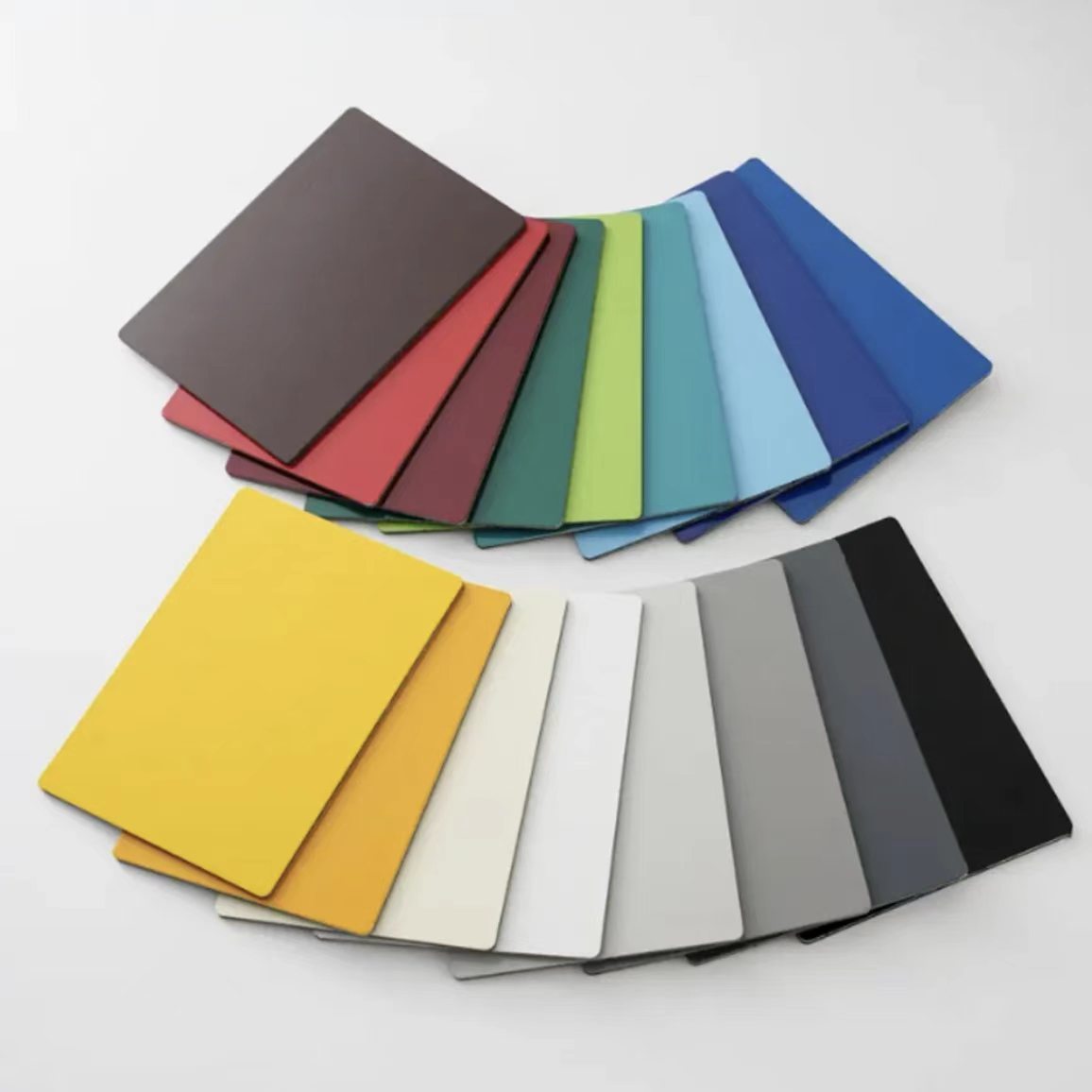
Color charts and digital images cannot fully show the actual surface finish. Approve a physical sample before mass production.
Mistake 5: Ignoring installation quality.
Poor joint design, incorrect fasteners, damaged edges, and unsuitable cleaning chemicals can shorten the service life of an ACP system. Good materials still need correct installation and maintenance.
8. Recommended Maintenance Practices for PVDF-Coated ACP
A PVDF coating reduces the risk of early surface degradation, but it does not eliminate the need for maintenance.
A simple maintenance plan can protect the facade and extend its useful appearance.
Maintenance Task | Recommended Action |
Routine inspection | Check for visible damage, loose panels, and sealant problems |
Surface cleaning | Use water and a mild, compatible cleaning solution |
Cleaning tools | Use soft cloths or non-abrasive equipment |
Chemical selection | Test cleaning products on a small area first |
After severe weather | Inspect exposed areas for physical damage |
Documentation | Keep cleaning records and inspection reports |
Avoid strong acids, harsh alkalis, abrasive pads, and unapproved solvents. These products may damage the coating or change the surface gloss.
Always follow the panel manufacturer's cleaning instructions. The right cleaning method helps preserve the coating and reduces unnecessary maintenance costs.
9. Is a PVDF Alucobond Panel Worth the Higher Initial Price?
For projects that require long-term exterior performance, a PVDF Alucobond panel can be a cost-effective investment.
Its higher purchase price may be offset by better color retention, improved chalking resistance, and fewer coating-related repairs over time.
However, PVDF is not automatically the best choice for every application.
For indoor decoration, temporary structures, and projects with limited service periods, PE-coated ACP may offer better value. For commercial facades, public buildings, and long-term exterior applications, PVDF deserves serious consideration.
The best decision depends on the building's service life, local climate, appearance requirements, maintenance budget, and technical specifications.
10. Conclusion: Buy for Long-Term Performance, Not Just the Lowest Price
Color fading and chalking can create hidden costs that buyers often overlook during the quotation stage.
PE-coated ACP offers a lower initial cost and works well in many interior applications. However, standard PE coatings generally provide less outdoor weather resistance than quality PVDF systems.
A properly specified PVDF Alucobond panel offers better protection against UV exposure, color change, gloss loss, and chalking. For demanding exterior projects, this performance can reduce long-term maintenance pressure and improve the overall value of the facade.
Before making a purchasing decision, compare coating specifications, test reports, aluminum thickness, core materials, warranty terms, and total life cycle cost.