Welcome to Vbond
Custom vs. Standard: Navigating ACP Finishes for Budget and Brand Impact
Introduction: A Strategic Design and Financial Crossroads
The selection of a finish for Aluminum Composite Panels (ACP) is one of the most consequential decisions in a building's design and procurement process. It sits directly at the intersection of creative ambition, brand identity, and financial reality. On one hand, the vast world of standard finishes offers proven performance and cost predictability. On the other hand, custom finishes promise a unique, brand-defining aesthetic. Navigating this choice is not a simple matter of preference, but a strategic exercise in value engineering that requires architects, brand managers, and developers to answer a fundamental question: Where does our project derive its ultimate value—from distinctiveness or efficiency? This guide provides a professional framework for making that critical determination.
Chapter 1: The Power of the Standard Finish
Standard finishes are the workhorses of the ACP industry, representing pre-engineered, mass-produced, and readily available options. Their value proposition is built on foundational efficiency and reliability.
Key Attributes & Advantages:
Predictable Cost & Timeline: Standard colors and textures (e.g., standard RAL colors, common metallics like Brushed Aluminum or Champagne) are manufactured in large batches. This results in the lowest possible unit cost, minimal lead times (often from stock or rapid production), and fixed pricing that is resilient to project scope changes.
Proven Performance: These finishes, typically high-quality PVDF (Kynar 500/Hylar 5000) coatings, have decades of field performance data. Architects can specify them with absolute confidence in their color retention, chalk resistance, and overall durability for 20-30 years, backed by robust manufacturer warranties.
Supply Chain Resilience: Sourcing standard panels is straightforward. Multiple suppliers and distributors carry equivalent products, creating a competitive, redundant supply chain that mitigates risk and ensures availability even during market fluctuations.
Professional Application: Standard finishes are the default choice for projects where the architecture itself—its form, proportion, and detail—is the primary statement. They provide a clean, sophisticated backdrop that doesn't compete with the building's design.
The Strategic Use Case:
Standard finishes are ideal for large-scale commercial developments, multi-unit residential towers, cost-conscious institutional projects, and repeatable retail rollouts where budget control, speed, and uniform quality across multiple locations are paramount.
Chapter 2: The Allure and Imperative of the Custom Finish
Custom finishes are the tool for creating a singular architectural identity. They transform ACP from a generic material into a bespoke design medium.
Key Attributes & Advantages:
Brand Precision and Exclusivity: The primary driver is exact color matching to a corporate Pantone or brand color. This creates a powerful, proprietary visual identity for corporate headquarters, flagship retail, or brand-centric hospitality projects. A custom color becomes a trademarked asset of the building.
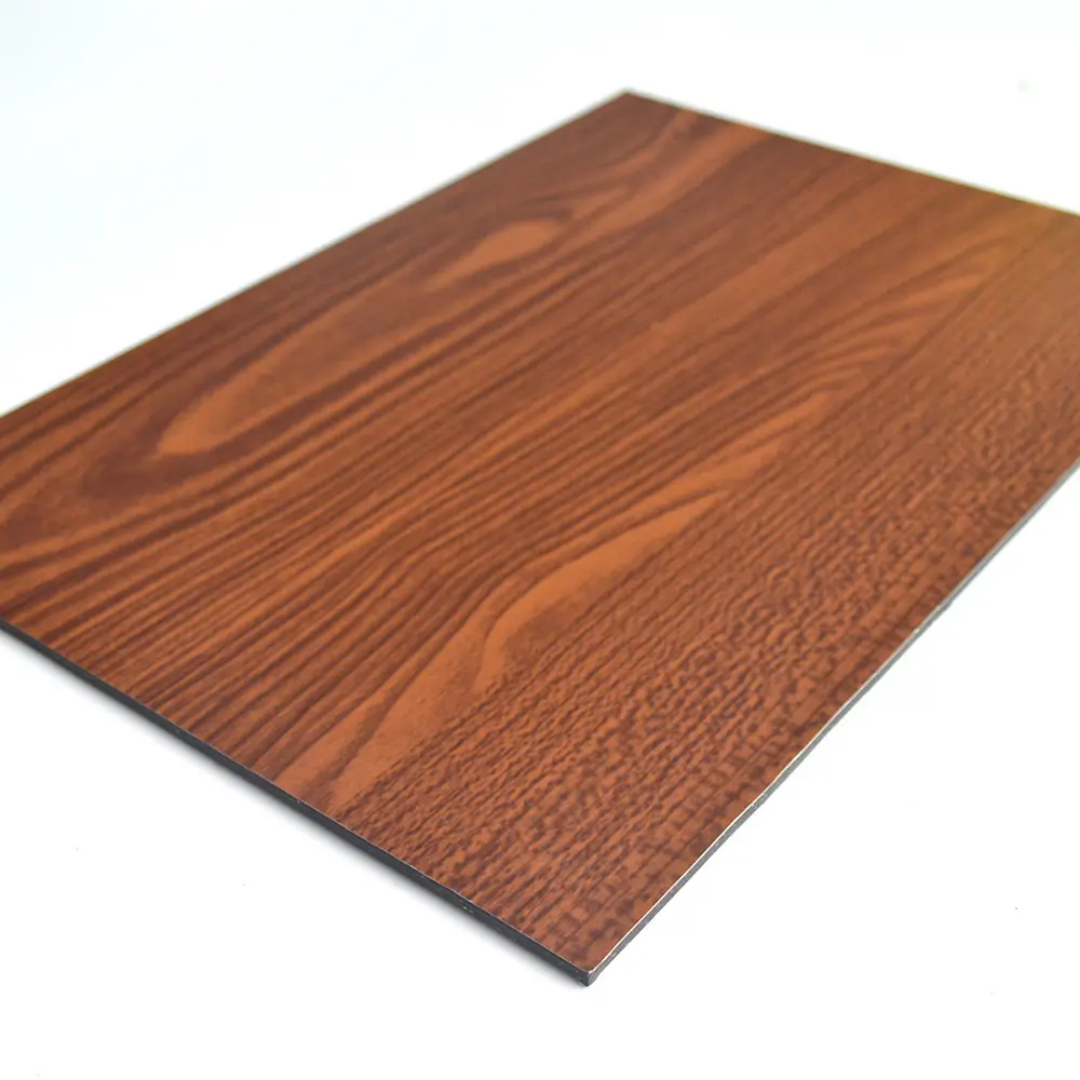
Unlimited Aesthetic Innovation: Customization extends beyond color to include unique metallic effects, proprietary textures, directional brush patterns, and full-scale digital printing. This allows for the creation of facades that mimic other materials (copper patina, weathered steel, intricate stone) or feature large-format graphics and murals.
Contextual Responsiveness: A custom finish can be engineered to respond to specific environmental conditions, such as ultra-high SRI (Solar Reflectance Index) "cool colors" for heat mitigation, or to complement a unique historical or natural setting in a way a standard palette cannot.
The Cost and Complexity Realities:
Customization introduces variables that must be actively managed:
Premiums and Minimums: Expect a significant cost premium (often 30-100%+) over standard panels. Manufacturers also impose minimum order quantities (MOQs), which can be substantial, making small projects or phased work challenging.
Extended Lead Times: From color development and approval of physical samples to scheduling a dedicated production run, lead times can extend by 8-16 weeks or more compared to standard products.
Irreversible Decisions and Matching Risk: Once produced, the color is fixed. Future additions or repairs carry the risk of batch-to-batch color variance, requiring careful planning and potentially ordering spare panels upfront.
The Strategic Use Case:
Custom finishes are justified for landmark corporate HQs, iconic cultural buildings, luxury developments, and high-profile retail flagships where the architectural statement or brand expression is a primary project driver and a core component of its commercial value.
Chapter 3: The Professional Navigation Framework
The decision should be guided by a structured analysis, not intuition.
1. Conduct a Brand/Value Audit:
Question: Is a unique, ownable color/materiality a non-negotiable part of the project's success and ROI?
Tool: Use mood boards with standard vs. custom options. Quantify the potential brand lift or premium sales price associated with a distinctive facade.
2. Perform a Total Cost Analysis:
* Go beyond panel cost. Model the total installed cost, including:
* Panel premium.
* Impact of MOQs (potential waste).
* Cost of extended project timeline/ financing.
* Cost of ordering and storing spare panels for repairs.
3. Implement a Hybrid or "Enhanced Standard" Strategy:
Accent Strategy: Use a custom color for a signature element (entrance canopy, logo band) against a field of standard panels.
Finish Manipulation: Use standard panels but install them in unique patterns, orientations, or with custom perforations to create a distinctive look without a custom coating.
Digital Printing on Standard Substrate: Apply custom graphics to a standard-colored ACP sheet, blending cost-control with high-impact visuals.
4. Master the Sampling and Approval Protocol:
For custom work, insist on a three-stage sampling process: (1) Lab dip/small chip, (2) Large production-run sample panel (critical), (3) Approval of the first panels off the production line. View final samples under both natural and artificial light.
Conclusion: Aligning Finish with Foundational Purpose
The choice between custom and standard ACP finishes is a definitive act of project prioritization. There is no universally "correct" answer, only the strategically appropriate one.
Choose Standard when the project's value is driven by programmatic efficiency, scalability, and budget discipline. The finish serves the architecture reliably and elegantly.
Choose Custom when the project's value is driven by symbolic identity, market differentiation, and experiential impact. The finish is a central component of the architecture and the brand.
By moving the conversation from an aesthetic preference to a value-engineering analysis, professionals can specify ACP finishes with confidence, ensuring that every dollar spent on the building's skin delivers maximum impact against the project's core objectives. In the end, a successful facade is not the one that is merely custom or standard, but the one that is perfectly aligned with the building's purpose.






