Welcome to Vbond
Die-Cutting vs. Routing for ACP: Which Cutting Method Minimizes Edge Delamination Risk?
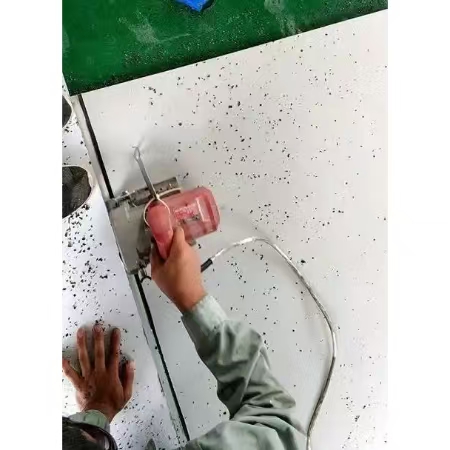
Aluminum Composite Panels (ACP) are the backbone of modern architectural cladding, signage, and interior design. But there is one hidden flaw that can turn a premium facade into a warranty nightmare: edge delamination.
When the thin aluminum skins separate from the polyethylene or fire-resistant core at the cut edge, moisture creeps in, the panel swells, and the entire sheet becomes unsalvageable. For bulk purchasers and project specifiers, the choice of cutting method is not merely a production detail—it is a quality control decision.
So, which method protects your investment: die-cutting or routing? Let us examine the mechanics, the risks, and the cost implications.
Understanding Edge Delamination in ACP
Delamination occurs when the bond between the aluminum skin and the core is fractured. This typically happens due to:
- Excessive heat that melts the core adhesive.
- Dull tooling that pulls rather than shears the material.
- Vibration that creates micro-cracks along the cut line.
Once delamination begins at the edge, it propagates inward like a zipper. Within months, the panel shows bubbling, wrinkling, or complete separation.
Die-Cutting: The Stamped Edge
Die-cutting uses a custom-made steel rule die pressed into the ACP with hydraulic force. Think of it as a giant cookie cutter for metal composites.
How It Works:
A sharp steel blade is arranged in the desired shape. The panel is placed on a cutting pad, and the die is pressed through the top skin, core, and bottom skin in one clean stroke.
Edge Quality:
- Clean shear cut with minimal heat generation.
- Fibers of the core are severed cleanly rather than melted.
- Both skins are cut simultaneously, maintaining alignment.
Delamination Risk: **Low to Minimal
Because the cut is instantaneous and cold, there is no time for heat to degrade the adhesive. The compression from the die also temporarily squeezes the layers together, leaving a crisp, bonded edge.
Limitations for Purchasers:
- Each unique shape requires a dedicated die ($300–$1,500 tooling cost).
- Not economical for small batch sizes (under 500 pieces).
- Limited to shapes that do not have intricate internal cutouts.
Routing: The CNC-Machined Edge
Routing uses a high-speed rotating carbide bit (typically 1/8" to 1/4" diameter) guided by a CNC machine. The bit traces the desired contour, milling through the panel layer by layer.
How It Works:
The router spins at 16,000–24,000 RPM. It plunges through the top skin, traverses through the core, and exits through the bottom skin. Often, the bit makes two or three passes to reduce tool load.
Edge Quality:
- Machined finish with visible tool marks.
- Heat generation melts the polyethylene core, creating a "smear" of plastic on the cut edge.
- Potential for burrs on the bottom aluminum skin.
Delamination Risk: Moderate to High
The primary culprit is heat. Melted core material re-solidifies as a thin film between the skins. This film acts as a wedge, preventing the skins from seating flush. Additionally, if the router bit is even slightly dull, it will tug rather than cut, peeling the skin away from the core.
Advantages for Purchasers:
- No tooling cost (ideal for prototypes or batches under 100 pieces).
- Handles complex curves, internal cutouts, and variable depths.
- Quick digital turnaround from CAD file to finished part.
Side-by-Side Comparison Table
Factor | Die-Cutting | CNC Routing |
Delamination Risk | Low (clean cold shear) | Moderate–High (heat + vibration) |
Edge Appearance | Smooth, factory-like | Machined, may need sanding |
Tooling Cost | High (per shape) | Zero (digital) |
Per-Piece Cost (high volume) | Very low ($0.50–$2.00) | High ($5–$15) |
Per-Piece Cost (low volume) | Impractical | Low ($3–$8) |
Maximum Thickness | Up to 6mm | Up to 12mm |
Minimum Cut Radius | Sharp corners possible | ~2mm (bit diameter) |
Secondary Finishing | None required | Often needed (edge sealing) |
The Procurement Professional’s Decision Matrix
Experienced buyers do not ask "which method is better?" They ask "which method is better for *this specific order*?"
Choose Die-Cutting When:
- Your order quantity exceeds 500 identical pieces.
- The panel will be exposed to humidity, salt spray, or outdoor weather (edge integrity is critical).
- You require zero visible delamination for high-end architectural work.
- The shapes are simple (rectangles, circles, basic polygons).
Choose Routing When:
- Your batch size is under 100 pieces (prototypes, custom signage, one-off displays).
- The design includes sharp interior corners or intricate lettering.
- You need a quick turnaround without waiting for die fabrication (3–7 days).
- You are willing to edge-seal the cut edges with a secondary operation (painting or capping).
Can You Reduce Delamination When Routing?
If routing is your only option, demand these three specifications from your fabricator:
1. New carbide bits are replaced every 200 linear feet of cutting.
2. Single-pass climb cutting (not conventional milling) to reduce lifting force.
3. Compressed air cooling directed at the cut line to prevent core melting.
Even with these measures, a routed edge will never match the bond integrity of a die-cut edge.
Conclusion: Protect Your Panel Investment
For procurement managers sourcing ACP for exterior facades, marine environments, or warranty-backed installations, die-cutting is the clear winner for minimizing edge delamination risk. The upfront tooling cost is quickly recovered through zero rejects and longer panel life.
Save routing for prototyping, low-volume custom work, or interior applications where minor edge imperfections are acceptable. But if your reputation depends on every panel edge staying bonded for 10+ years, invest in the die.