Welcome to Vbond
Distributor's Guide: Simulate Field Folding for ACP Sampling in Your Warehouse
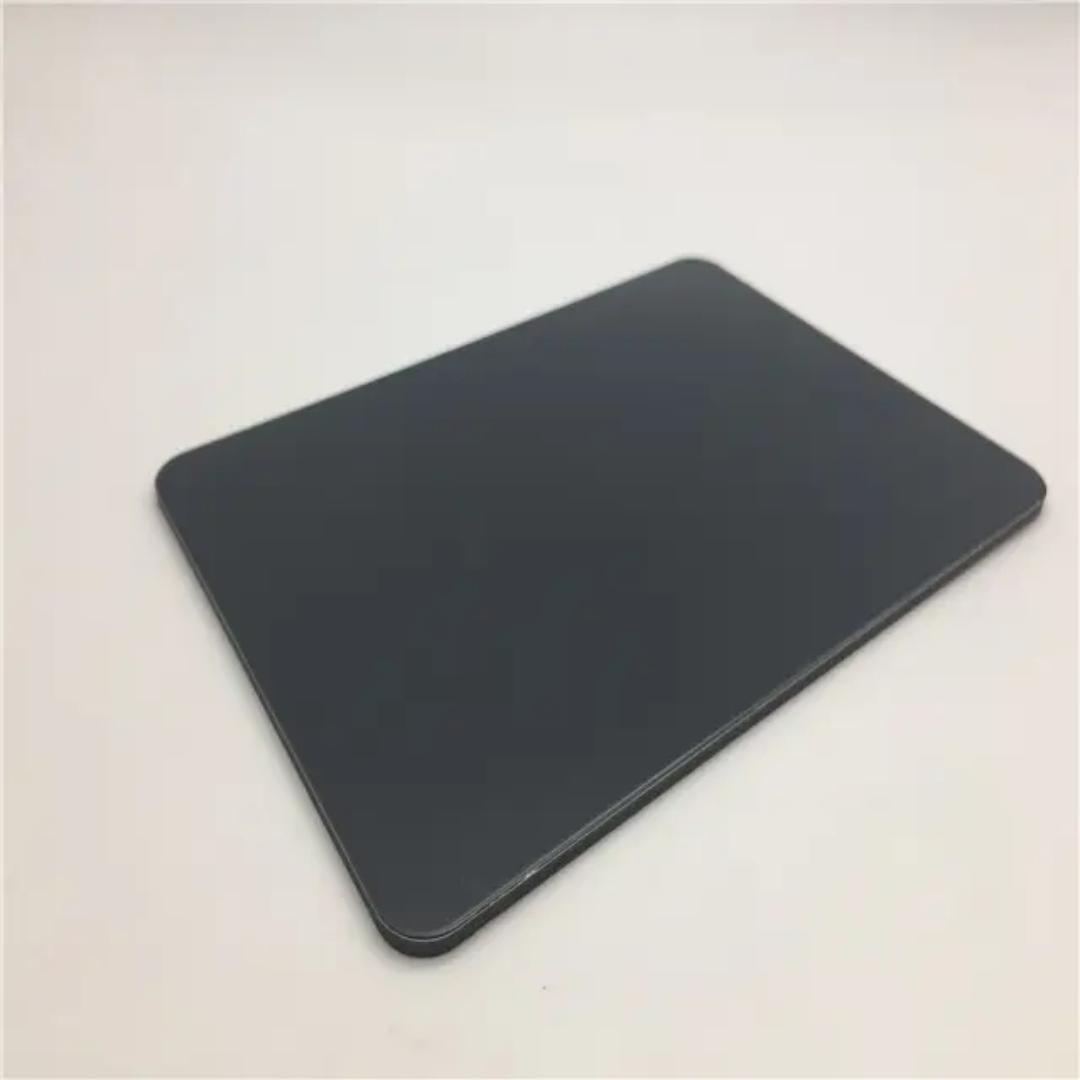
For distributors, few scenarios are more costly than delivering a truckload of aluminum composite panels to a jobsite only to have the installation team reject them. The corners crack during folding. The coating blisters at the bend line. The panels are unusable. The general contractor demands replacement. Your reputation suffers.
The best defense is not a stronger warranty. It is a pre-installation sampling protocol—a rigorous, repeatable test conducted in your warehouse before the panels ever leave your control.
This guide provides a step-by-step methodology for sampling ACP and simulating field folding conditions to verify bond integrity, groove depth compatibility, and crack resistance. By testing first, you eliminate unpleasant surprises later.
1. Why Sampling Matters: The Cost of Untested Panels
Untested ACP panels may look identical to certified products on the surface. Same colors. Same finishes. Same thickness printed on specification sheets. But behavior under stress tells a different story.
Fabricators often notice the difference only while routing or folding. Panels that pass quality tests bend smoothly without surface cracking. Untested panels may show edge fractures, inconsistent folding behavior, or core brittleness.
The consequences of skipping sampling are well-documented. Industry data indicates that 72% of composite panel quality issues originate from interface bonding failures. When the bond between the aluminum skin and core is inadequate, panels delaminate during fabrication or under thermal stress.
The sampling principle: Test one panel from every batch before releasing the entire shipment.
2. Understanding the "Rout-and-Return" Method
Before sampling, distributors must understand the fabrication technique their customers will use. The industry standard for creating folded corners in ACP is the rout-and-return method.
Aluminum composite panels are specifically designed to be routed on the back skin to allow accurate folding. A V-shaped groove is cut into the reverse side of the panel, removing the back aluminum skin and most of the core material. The remaining front aluminum skin acts as a "living hinge" when the panel is folded.
The critical variable: Groove depth determines success or failure. If the groove is too shallow, the panel resists bending and cracks. If the groove is too deep, the front aluminum skin is scored, creating a weak point that fails under load.
Official fabrication guidelines specify that the V-groove must be cut to a consistent depth, leaving the outer aluminum skin intact, typically with approximately 1/64 inch (0.4mm) of core material remaining to prevent "spring back" and ensure a clean 90° fold.
3. Sampling Protocol: Simulating Field Folding in Your Warehouse
3.1 Sample Selection
Quantity: Extract 2–3 panels from each production batch (minimum 2 panels per 3000m² of product).
Location: Select panels from different positions within the batch—top, middle, and bottom of the pallet—to account for any stacking-related stress or coating variation.
Documentation: Record batch numbers, panel thickness, aluminum skin temper (H14 or H16), and coating type (PVDF or polyester) before testing.
3.2 Grooving the Sample
Tool Requirements: Use a sharp V-grooving bit with a 90°–105° angle, specifically rated for ACP. Dull or incorrect bits create micro-damage that leads to premature cracking.
Depth Calculation:
The fundamental formula for grooving depth is:
Grooving Depth (D) ≈ Sheet Thickness (T) × 60%–70%
Residual Thickness (R) = T − D
Recommended R ≥ 0.3–0.5 mm for decorative/light load applications
For a standard 4mm ACP panel, this translates to D = 2.4–2.8 mm, leaving R = 1.2–1.6 mm.
Critical note: For curtain wall applications where appearance and flatness are critical, the recommended residual thickness is 0.9–1.2 mm. The aluminum‘s natural ductility allows deeper grooves, but the residual must not be too thin to avoid cracking during transport, installation, or composite layer delamination.
Grooving Setup:
- Use a stable work surface with the panel fully supported
- Set the router or grooving machine to the calculated depth
- Make a single pass along the fold line—do not recut
- The groove should expose the core material but not cut through the front aluminum skin
Verification: After grooving, inspect the groove bottom under bright light. If you see shiny aluminum, the groove is too deep—reject the panel.
3.3 Folding the Sample
Equipment: A press brake is ideal, but a manual folding jig or clamped straight edge is acceptable for sampling purposes.
Technique:
- Position the groove line precisely under the bending edge
- Apply steady, even pressure—do not bend repeatedly
- Fold to 90° in a single motion
- Listen for cracking or popping sounds during the fold
What to listen for: A clean fold is silent or produces only a soft rustle. A distinct "pop" or series of cracks indicates that the residual thickness is too thick or the bond is failing. Research confirms that acoustic emissions during folding correlate with delamination and micro-crack formation.
3.4 Inspection of the Folded Sample
After folding, inspect the bend line using four criteria:
Inspection Point | Pass Condition | Fail Condition |
Visual (naked eye) | Smooth, continuous aluminum surface | Visible cracks, white stress marks, or crazing |
Visual (magnification) | No hairline fractures under 5-10x loupe | Micro-cracks visible under magnification |
Tactile | Smooth to the touch | Rough, raised, or sharp edge at the bend line |
Coating integrity | No flaking, peeling, or blistering | Coating separation at the bend |
If the sample passes all four inspection points, the batch is suitable for field folding.
4. Advanced Sampling: Destructive Bond Testing
For high-value projects or when sampling raises concerns, conduct a destructive peel test to verify bond strength.
Procedure:
1. Cut a 25mm-wide strip from the folded sample
2. Clamp the aluminum skin in a vise or with locking pliers
3. Pull the skin away from the core at a steady rate
4. Observe the failure pattern
Interpretation:
Peel Appearance | Bond Quality | Action |
Uniform adhesive residue on aluminum | Good (cohesive failure) | Accept batch |
Bare aluminum with no residue | Poor (adhesive failure) | Reject batch |
Core material adhered to the aluminum | Acceptable (core cohesion) | Accept with documentation |
Irregular, patchy residue | Inconsistent bonding | Test additional panels |
Industry standards specify that acceptable peel strength for exterior-grade ACP requires the bond to withstand significant force before separation.
5. Common Sampling Errors and How to Avoid Them
Error | Consequence | Prevention |
Testing only one panel per batch | Misses batch-to-batch variation | Sample minimum 2 panels per 3000m² |
Using dull grooving bits | Creates micro-cracks that propagate during folding | Replace bits regularly; test on scrap first |
Grooving without depth verification | Inconsistent residual thickness leads to unpredictable folding | Measure residual thickness with calipers before production |
Folding too quickly | Dynamic stress causes cracking that static testing misses | Apply steady, controlled pressure |
Inspecting only the exterior surface | Internal delamination may be invisible from the front | Inspect both the bend line and the reverse side |
6. Documentation for Procurement Records
For each sampling session, maintain a test record that includes:
Field | Entry |
Date | Date of test |
Batch ID | From the manufacturer's label |
Panel thickness | Measured in mm |
Grooving depth | Calculated and actual |
Residual thickness | Measured at three points along the groove |
Fold angle | Target 90° |
Visual inspection result | Pass/Fail and description |
Peel test result (if conducted) | Pass/Fail and failure pattern |
Tester name | Responsible person |
These records serve as evidence of due diligence in the event of a future warranty dispute.
7. When to Reject a Batch
Reject the entire batch if any sample exhibits:
- Visible cracking at the bend line (any length)
- White stress marks extending more than 1mm from the bend
- Coating flaking or blistering at the fold
- Peel test showing bare aluminum with no adhesive residue
- Groove bottom showing cut-through to aluminum (indicates over-grooving)
Threshold: If more than 10% of sampled panels fail, reject the entire batch.
8. Conclusion
Sampling aluminum composite panels before release is not an optional quality step—it is a risk management necessity. By simulating field folding conditions in your warehouse, you identify bonding deficiencies, groove depth incompatibilities, and cracking vulnerabilities before panels reach the jobsite.
The protocol is simple: groove a sample at 60-70% of panel thickness, fold to 90°, inspect for cracks, and verify bond integrity. The investment is minimal. The cost of a rejected shipment—in freight, delay penalties, and reputational damage—is not.
Test before you ship. Your customers will thank you.