Welcome to Vbond
Fire-Resistant ACP Sheets: Safety Standards and Best Practices
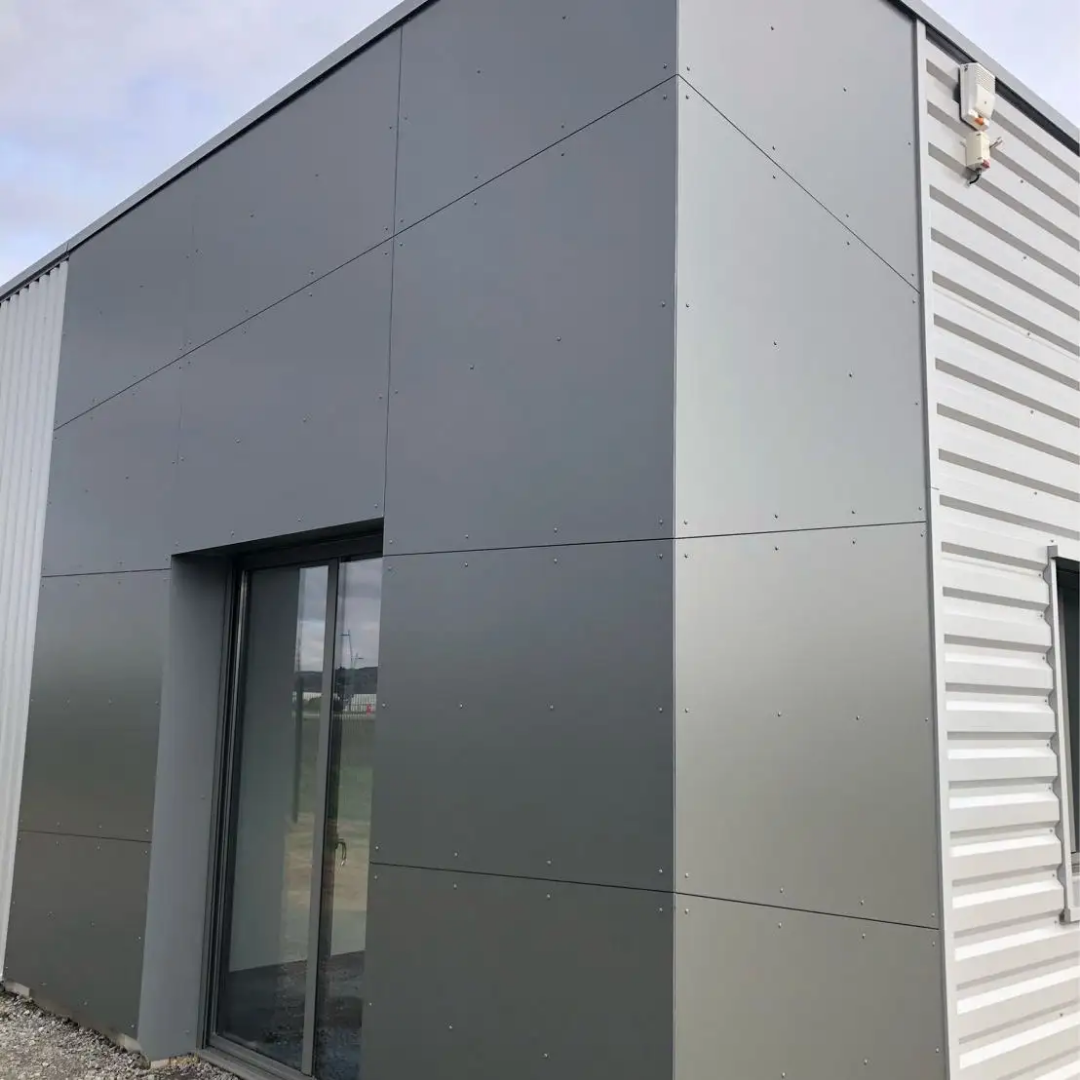
In modern architecture, Aluminum Composite Panels (ACPs) are prized for their versatility, aesthetics, and durability. However, their fire performance has become a critical concern globally, especially following high-profile facade fire incidents. This makes understanding and specifying **fire-resistant ACP sheets** not just a choice, but a paramount safety obligation. This article delves into the essential safety standards, core technologies, and best practices for ensuring your building envelope meets the highest **fire safety and compliance** benchmarks.
Understanding Fire-Resistant ACP Core Technology
Not all ACPs are created equal. The key difference lies in the core material sandwiched between the two aluminum skins.
Standard Polyethylene (PE) Core: Highly combustible and a significant fire risk. Unsuitable for most commercial or high-rise applications.
Fire-Resistant Mineral-Filled Core: The industry standard for safety. These cores are typically filled with non-combustible minerals (like calcium silicate or magnesium hydroxide), which act as fire retardants. When exposed to heat, they endothermic reaction, absorbing energy and releasing moisture vapor to inhibit flame spread and smoke.
‘A2’ Limited Combustibility Core: The gold standard. These panels use a core comprised predominantly (often 90%+) of mineral materials, achieving the highest possible reaction-to-fire classification in many systems. They offer superior fire performance and safety.
Global Fire Safety Standards and Classifications
Navigating international standards is crucial for compliance. Key systems include:
1. European Reaction-to-Fire Classification (EN 13501-1):
A2-s1, d0: The top tier for ACPs. Signifies limited combustibility, very little smoke production (s1), and no flaming droplets/particles (d0). Often required for high-rise and sensitive buildings.
B-s1, d0: Very good fire-resistant properties, with limited contribution to fire. Suitable for many medium-rise applications.
US Standards (NFPA 285): This is a critical fire test method for evaluating the exterior wall assembly's ability to resist flame spread across its surface and between floors. Fire-resistant ACP cladding systems must pass this full-scale test for use in Type I-IV construction over a certain height.
3. Other Key Standards: BS 8414 (UK large-scale test), AS 5113 (Australia), and GB 8624 (China) are other vital regional standards. Always specify panels tested and certified for the fire safety regulations in your project's jurisdiction.
Best Practices for Specification and Installation
Adhering to best practices ensures the designed fire performance is achieved in reality.
Specify Performance, Not Just Product: Require third-party certified test reports for the specific ACP brand and thickness, not just a generic classification. Look for certifications from bodies like IFC Certification or UL.
Demand System Warranty: Ensure the ACP supplier provides a complete approved cladding system—including panels, brackets, and insulation—that has been tested together as an assembly. Mixing and matching components voids certifications.
Prioritize Professional Installation: Competent installer training is non-negotiable. Improper installation (e.g., incorrect sealing, missing fire barriers) can create pathways for flames and smoke, compromising the entire system.
Implement Robust Fire Stopping: Use non-combustible fire barriers at compartment floors and spandrels as per local building codes to prevent vertical fire spread in the cavity.
Maintain Comprehensive Documentation: Keep all fire safety certificates, test reports, installation manuals, and as-built drawings for future reference and facility management.
The Critical Role of Building Codes and Facade Consultants
Local building codes are the legal framework. Engage a specialist facade consultant or fire safety engineer early in the design process. They can navigate complex code requirements, perform risk assessments, and help select the appropriate fire-rated building materials for your project's height, occupancy, and proximity to boundaries.
Conclusion: Safety as the Foundation
Selecting fire-resistant aluminum composite panels is a fundamental decision in responsible building design. By understanding the core technology, insisting on verifiable compliance with rigorous international fire standards, and mandating certified installation, architects, specifiers, and builders can significantly enhance building occupant safety and asset protection. In the realm of facade design, true innovation must always be built upon an uncompromising foundation of fire performance and compliance.






