Welcome to Vbond
Fire-Resistant Aluminum Composite Panels: Standards and Safety Grades Explained
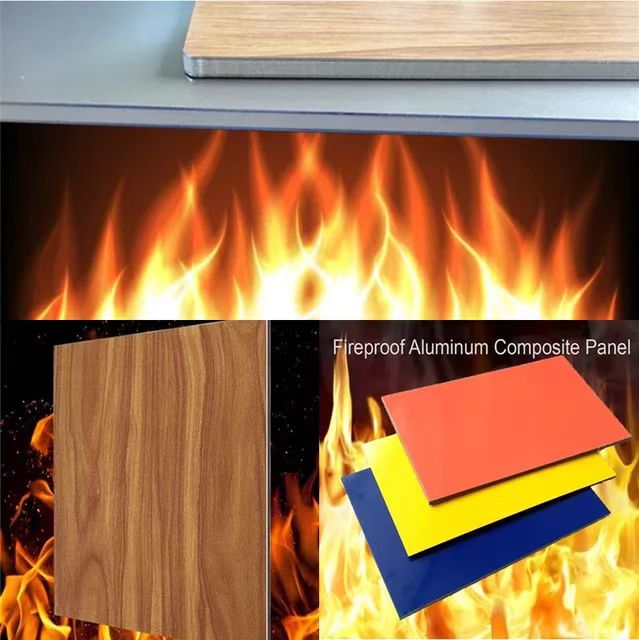
Aluminum Composite Panels (ACPs) have become a staple in modern architecture, prized for their lightweight properties, design flexibility, and cost-effectiveness. However, their fire performance has been a critical focus for regulators, architects, and builders worldwide following high-profile facade fire incidents. This article provides a professional breakdown of the fire-resistant ACP standards, testing methodologies, and safety grades essential for specifying safe and compliant building envelopes.
1. The Core Issue: Combustibility
The fire performance of an ACP is primarily determined by its core material sandwiched between two aluminum skins. Traditional ACPs used polyethylene (PE) cores, which are highly combustible. Modern fire-resistant variants use:
Fire-Retardant (FR) Mineral-Filled Cores: Polyethylene blended with mineral fillers (like magnesium hydroxide) to reduce flammability.
Non-Combustible Cores: The highest standard uses a core of mineral wool or inert mineral compounds. These cores do not contribute to fire spread and offer superior insulation.
2. Global Fire Test Standards and Classification Systems
Different regions employ specific standardized tests to classify building materials. Key systems include:
European Union (EU) - EN 13501-1
This is a leading global standard. Materials are classified based on their reaction to fire.
A1 & A2: Non-combustible to very limited combustibility. Mineral core ACPs typically achieve A2-s1, d0 —the highest possible grade for a composite panel.
A2: Limited contribution to fire.
s1: Low smoke production.
d0: No flaming droplets/particles.
B to F: Combustible grades. FR-core ACPs often achieve B-s1, d0, a significant improvement over standard PE cores (typically Class E or F).
United States - ASTM E84 / NFPA 285
ASTM E84 (Steiner Tunnel Test): Measures Flame Spread Index (FSI) and Smoke Developed Index (SDI).
Class A (FSI 0-25, SDI 0-450): Best performance. Required for many high-rise applications.
Class B (FSI 26-75) & Class C (FSI 76-225): Lower grades.
NFPA 285: A critical large-scale wall assembly test for multi-story buildings. It evaluates the vertical and lateral spread of flame within a facade system. An ACP product that passes lab tests (such as ASTM E84) must also be part of an NFPA 285-compliant assembly to be used on many US projects.
United Kingdom - BS 8414 & BR 135
Following the Grenfell Tower tragedy, the UK implemented stricter regulations.
BS 8414: A large-scale test simulating a fire breaking out of a window and attacking the facade.
BR 135: The assessment criteria for BS 8414. Compliance is mandatory for buildings that are 18 meters or higher in height. Only systems (cladding, insulation, fixings) that pass can be used.
Other Key Regions:
Germany: Stringent requirements based on DIN 4102-1 and the national Bauordnungen (building codes).
Middle East (UAE, etc.): Often references both EN and ASTM standards, with local civil defense approvals.
Australia & New Zealand: Governed by AS/NZS 1530.3 and the National Construction Code (NCC), with a focus on non-combustible materials for high-rises.
3. Interpreting the Safety Grades: A Practical Guide for Specifiers
Core Type | Typical Classification (EN 13501-1) | Key Characteristics | Suitable Applications |
Polyethylene (PE) | E or F | Combustible, high heat release. | Low-rise, non-critical areas where code permits. Not for occupied high-rises. |
Fire-Retardant (FR) Mineral-Filled | B-s1, d0 | Reduced flammability, self-extinguishing. | Mid-rise buildings, interior applications, signage. Check local height restrictions. | |
Non-Combustible (Mineral) | A2-s1, d0 | Does not contribute to fire spread. Very low smoke and heat. | Unlimited height applications. High-rise facades, tunnels, critical infrastructure, and areas of strict egress. |
4. Beyond the Panel: The Importance of System Compliance
Fire safety depends on the entire cladding system, not just the panel.
Installation & Substrate: The backing wall (e.g., insulation type) and the cavity design are critical. Combustible insulation behind any ACP creates a severe risk.
Fixings and Joints: Poor installation can create gaps for fire spread. Systems must be installed as per the manufacturer's tested and certified details.
Certification: Always request third-party certification from bodies like UL, IFI, or ETA, proving the specific panel model and assembly have passed the required large-scale tests.
5. Best Practices for Architects and Builders
1. "Non-Combustible" by Default: For any building over 18 meters (approx. 4-6 stories), specify A2-s1, d0 mineral core ACPs as the baseline.
2. Demand Full System Certification: Require evidence of compliance for the exact panel, insulation, and fixing system proposed, tested to the relevant large-scale standard (NFPA 285, BS 8414, etc.).
3. Understand Local Codes: Regulations are constantly evolving. Engage with a fire engineer or consultant to navigate jurisdictional requirements.
4. Prioritize Reputable Suppliers: Source materials from manufacturers who provide transparent, comprehensive test data and technical support.
Conclusion
Specifying fire-resistant Aluminum Composite Panels is a fundamental responsibility in modern construction. Moving beyond basic "FR" labels to a deep understanding of core materials, classification codes (especially A2 vs. B), and full-system testing is non-negotiable. By adhering to the highest applicable standards—prioritizing non-combustible, mineral-core ACPs for high-risk applications—the industry can leverage the aesthetic and practical benefits of ACPs while ensuring the utmost safety for building occupants and first responders.






