Welcome to Vbond
Folding Cracking 101 in Aluminum Composite Panels: Is It Bad Material or Wrong Grooving Technique?
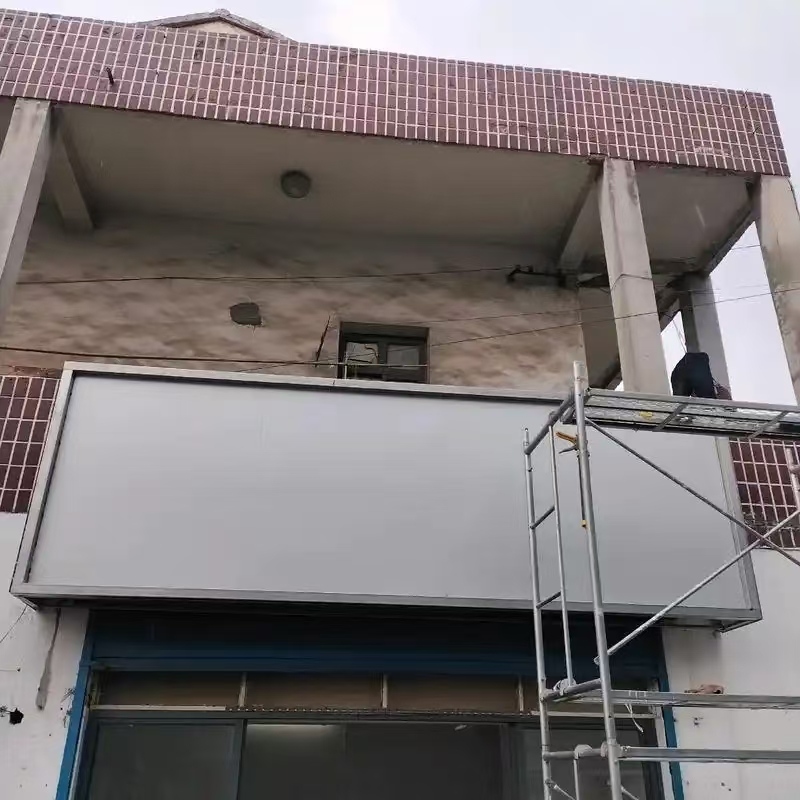
You specified a premium aluminum composite panel. It passed the factory quality checks. It arrived on site with pristine protective film. But the moment your fabrication team folds the edges for a cassette or corner, the aluminum skin cracks. The result is a rejected panel, a delayed installation schedule, and a pointed finger at the material supplier.
Stop right there.
Before you blame the aluminum coil quality or scrap an entire batch of ACPs, you need to understand the real root cause. In the vast majority of cases, folding cracks are not a material defect—they are a fabrication error.
When an ACP cracks during folding, the culprit is almost always one of three things: improper V-groove depth, wrong cutter head selection, or ignoring the aluminum’s grain direction. This guide will teach you how to diagnose the real cause and, more importantly, how to prevent it from happening again.
1. How ACP Folding Actually Works
Unlike solid sheet metal, an aluminum composite panel cannot be bent cold without preparation. The composite structure—two thin aluminum skins bonded to a polyethylene or mineral-filled core—requires a technique called rout-and-return or V-grooving.
The process is straightforward:
1. A V-shaped groove is routed into the reverse side of the panel
2. The groove stops just before reaching the outer aluminum skin
3. A thin layer of core material (typically 0.2–0.5mm) remains at the base
4. The panel is folded along this groove line, with the untouched outer skin acting as a hinge
When this technique is executed correctly, the result is a clean, precise 90° fold with no stress marks, no cracking, and no delamination.
When it is executed poorly, you get cracking.
2. The Three Root Causes of Folding Cracks
Based on industry fabrication standards and technical literature, folding cracks fall into three distinct categories. Each has a specific cause and a specific fix.
Root Cause 1: Incorrect Groove Depth (The #1 Culprit)
This is the most common cause of folding cracks. The principle is simple: too deep, and you cut the aluminum; too shallow, and you stress the fold.
Groove Depth Condition | Result |
Too deep (cut through outer skin) | The aluminum skin is severed. When folded, the metal has no structural continuity and cracks immediately at the cut point. |
Too shallow (too much core left) | The remaining core material is too thick. The panel resists folding, creating excessive stress on the aluminum skin. The skin cracks under the tension. |
Correct depth (0.2–0.5mm core remaining) | The panel folds cleanly. The thin core layer provides enough flexibility while the aluminum skin remains intact. |
The industry standard: For standard 4mm ACPs, the groove should leave approximately 0.2–0.3mm of core material at the base. This ensures the panel has sufficient toughness to prevent edge cracking while still folding cleanly.
Procurement Action: Require your fabricator to demonstrate their groove depth calibration process. CNC machines should hold depth tolerance within ±0.15mm.
Root Cause 2: Wrong Cutter Head Selection (U-Type vs. V-Type)
Not all grooving bits are created equal. The choice between a U-type cutter head and a V-type cutter head directly affects the risk of cracking.
Cutter Type | Characteristics | Risk |
U-type (rounded tip) | Less likely to scratch the aluminum skin; produces a softer corner | The fold angle is not perfectly straight |
V-type (sharp tip) | Produces a very straight, sharp corner angle | High risk of scratching the aluminum skin and causing it to crack during folding |
Industry best practice: For 4mm aluminum composite panels, the 6# cutter head is generally the optimal choice. The cutter head should be sharp. Dull bits create jagged grooves that concentrate stress at the fold line.
Procurement Action: Verify which cutter head your fabricator uses. For critical architectural applications where visual perfection is required, V-type bits are preferred, but they must be paired with precise depth control to avoid skin damage.
Root Cause #3: Aluminum Grain Direction and Material Quality
Even with perfect grooving, the aluminum skin itself can be the source of cracking. Aluminum has a grain direction from the rolling process. When you fold parallel to the grain direction, the metal is more likely to crack.
Fold Orientation Relative to Grain | Risk |
Perpendicular (across the grain) | Low risk. The aluminum stretches evenly across the grain lines. |
Parallel (with the grain) | High risk. The fold follows the grain boundaries, concentrating stress and increasing crack probability. |
Additionally, the hardness of the aluminum matters. 1-series, 3-series, and 5-series alloys (commercially pure and general-purpose alloys) are formable and fold well. 6-series and 7-series alloys (structural grades) are harder and more prone to cracking unless annealed to an O-temper state.
Procurement Action: Specify the alloy series in your purchase order. For panels requiring extensive folding, request 3003 or 5005 series aluminum skins. Avoid 6061 or 7075 for high-stress fold applications.
3. The "Bad Material" Myth: What Quality Issues Actually Look Like
Yes, material defects do exist. But they are far rarer than fabrication errors. Here is how to distinguish a genuine material issue from a growing issue:
Symptom | Likely Cause |
Crack is exactly along the fold line, consistent across multiple panels | Grooving error (depth or cutter head) |
Crack is jagged, random, and occurs at different locations on different panels | Potential material defect (inclusions, poor bond) |
Crack appears immediately upon folding | Groove depth too shallow** or **cutter head issue |
Crack appears days after installation (stress corrosion cracking) | Material issue (poor alloy choice) or environmental exposure |
If a single panel cracks, it could be material. If multiple panels from the same batch crack the same way, the problem is almost certainly fabrication process control.
4. The Prevention Protocol: A Procurement Checklist
Before your next ACP order goes into fabrication, enforce these standards:
Grooving Machine Specifications
- Grooving depth tolerance ≤ ±0.15mm
- CNC-controlled or precision mechanical depth stop (not operator-dependent)
- Sharp carbide-tipped V-groove bits; replace on a scheduled interval, not when they fail
Depth Control Verification
- Remaining core thickness target: 0.2–0.5mm
- Perform test folds on scrap before each production run
- Document depth settings and test results
Cutter Head Selection
- For 4mm ACPs: 6 cutter head or equivalent
- For visible exterior folds: V-type for straight corners with precise depth control
- For high-volume production: CNC routing for repeatable accuracy
Aluminum Skin Specification
- Specify 3003 or 5005 series aluminum alloy
- Confirm skin thickness: minimum 0.21mm for 3mm panels; minimum 0.30mm for 4mm panels
- Request mill certificate confirming alloy and temper
Operator Training
- Fabricators must understand the difference between U-type and V-type cutters
- Operators must know how to calibrate groove depth
- Quality control must inspect every groove before folding
5. The 90° Fold Test: How to Verify Before Production
Before you commit to a full production run, conduct this simple test:
1. Groove a test panel using the production settings
2. Measure the remaining core thickness with a depth gauge (target: 0.2–0.3mm)
3. Fold the panel 90° using a press brake or folding jig
4. Inspect the fold line under bright light. Look for:
- Hairline cracks (groove too deep or cutter head issue)
- White stress marks (groove too shallow)
- Perfectly smooth aluminum surface (correct depth)
If the test panel passes, document the settings. Use the same settings for the entire production run.
Conclusion
Folding cracks on aluminum composite panels are rarely a material defect. The evidence points to fabrication error: incorrect V-groove depth, wrong cutter head selection, or failure to account for aluminum grain direction.
For procurement professionals, the implication is clear. Do not accept "bad material" as an excuse from your fabricator. Demand process documentation. Require test folds before production. Verify groove depth specifications. And specify the correct aluminum alloy for the application.
When you enforce these standards, folding cracks become a rare exception rather than a costly routine.






