Welcome to Vbond
From Aircraft to Architecture: The Surprising Military Origins of ACP
Introduction: A Material Born of Aerospace Ambition
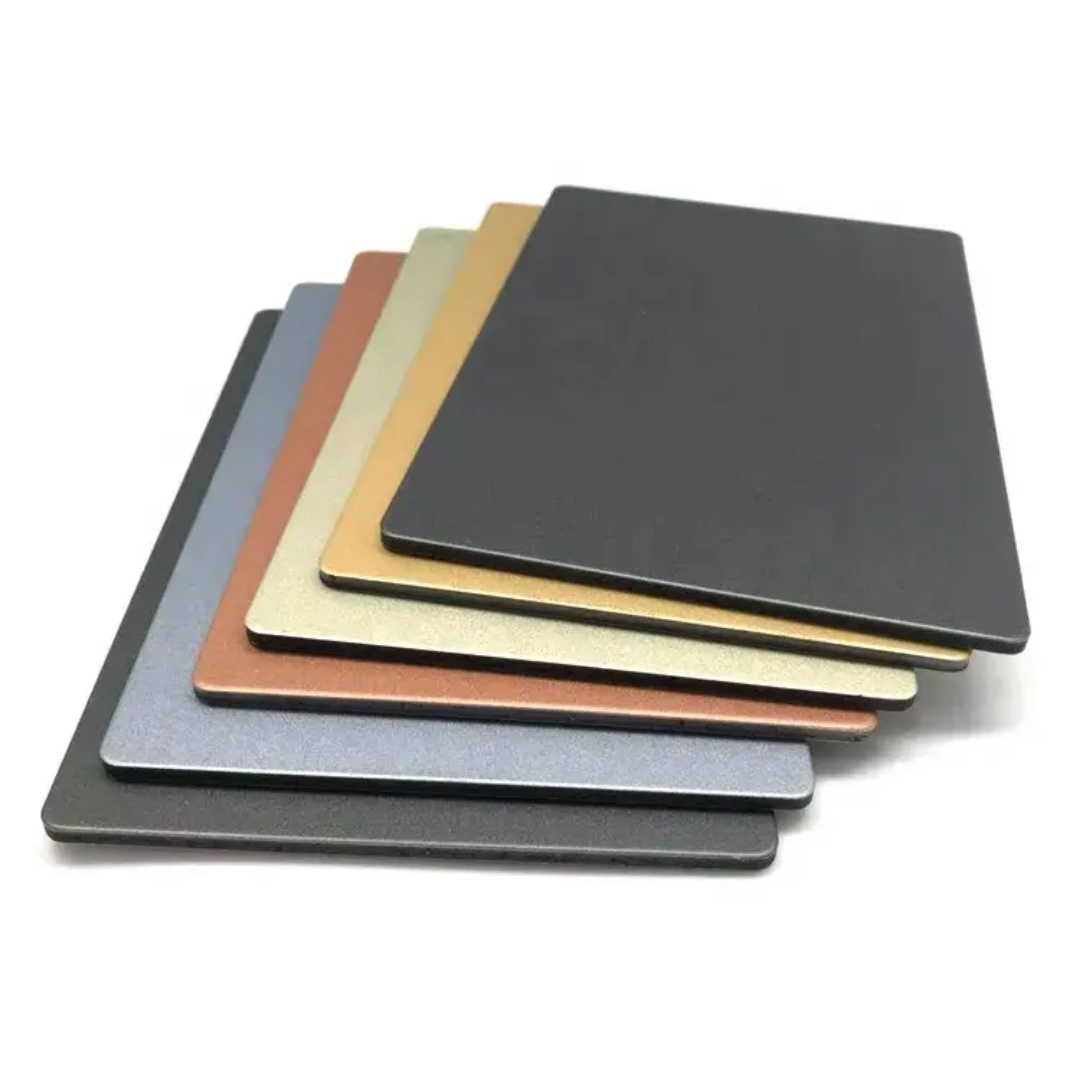
When we gaze up at a gleaming modern skyscraper clad in sleek aluminium composite panels, we rarely associate it with fighter jets or spacecraft. Yet the story of Aluminium Composite Panels (ACP) is deeply rooted in military and aerospace innovation. The same imperative that drove aircraft designers to seek lighter, stronger materials in the mid-20th century ultimately gave birth to a product that would transform city skylines worldwide.
This is the untold origin story of how a material developed for aviation found its true calling in architecture—and why those military DNA markers still matter when specifying ACP today.
The Genesis: German Engineering Meets Aerospace Ambition
The year was 1964. At the height of the Cold War, materials scientists across the industrialized world were racing to develop new composites that could outperform traditional metals. In Germany, Dr. Dieter Altenpohl and his colleague Franz Luckey at Alusuisse (now part of 3A Composites) began experimenting with a novel concept: bonding thin aluminium skins to a lightweight core material.
Their objective was quintessentially aerospace: create a material with the surface properties of aluminium—durability, weatherability, aesthetic finish—but at a fraction of the weight. This was precisely the challenge facing aircraft designers, who understood that every kilogram saved translated directly to increased payload, range, or fuel efficiency.
By 1968, the first mature aluminium composite panel was trial-produced, and in 1969, it entered mass production at the Singen plant in Germany under the name ALUCOBOND. The timing was no coincidence. The late 1960s represented a golden age of aviation innovation, with the Boeing 747 preparing for launch and supersonic transport on the horizon. The materials science feeding these aerospace programs inevitably spilled over into adjacent industries.
The Military Connection: Lightweighting as Strategic Imperative
While the civilian applications were obvious, the underlying technology carried distinct military significance. The quest for lightweight, high-strength structural materials was—and remains—a core priority for defense contractors worldwide.
The strategic importance of such materials is illustrated by contemporary research efforts. In China, for example, the development of carbon fiber-aluminum hybrid laminates is explicitly framed as critical technology for "aircraft structures and advanced transportation," with applications in military platforms like the B777 and A380. These "super hybrid laminates" combine the fatigue resistance of aluminum with the specific strength of composites—exactly the properties that made early ACP attractive.
Similarly, research institutions continue to develop aluminum-based composites for extreme environments. One notable example is the development of aluminum matrix composites for deep space applications, with materials used in the Chang'e-6 lunar sample return mission. While these represent advanced iterations far beyond commercial building products, they trace their lineage to the same materials science principles that enabled the first ACP panels.
The Taiwanese National Chung-Shan Institute of Science and Technology has also pursued lightweight multilayer composite structures for aviation applications, specifically developing composite panels for air cargo containers and pallets that successfully achieved civil aviation certification. These efforts demonstrate the continuous crossover between defense research and commercial material applications.
The Core Innovation: Why Sandwich Structures Matter
The genius of the original ACP design lies in its sandwich structure—a concept borrowed directly from aerospace engineering. By bonding two thin, high-strength aluminum skins to a low-density polyethylene or mineral core, the resulting panel achieves remarkable stiffness-to-weight ratios.
This principle, known in engineering terms as the "I-beam effect," allows the panels to resist bending loads far more efficiently than solid aluminum of equivalent weight. In aerospace terms, this meant potential weight savings in non-structural components. In architectural terms, it meant panels that could span significant distances between support frames without buckling—a property that would prove revolutionary for building facades.
The aerospace connection runs deeper than mere geometry. The adhesives and bonding technologies developed for aircraft structures—where failure is simply not an option—were adapted and refined for the production of architectural panels. The peel strength values that specifiers scrutinize today (often measured by ASTM D903) trace directly to quality standards first established for bonded aircraft components.
From Airframes to Building Facades: The Accidental Architectural Revolution
The transition from aerospace material to architectural product was not immediate. The first major architectural application of ALUCOBOND came in 1970, just one year after mass production began, at the C&A store in Leverkusen, Germany. This project demonstrated that the material's benefits—lightweight, flatness, formability, and durability—were as valuable on building exteriors as they were on aircraft.
Architects quickly recognized what the material's military-industrial heritage offered: a product engineered to aerospace tolerances, with predictable performance characteristics and exceptional longevity. The same properties that made it suitable for stressed aircraft skins—fatigue resistance, corrosion protection, and dimensional stability—made it ideal for building facades exposed to decades of weathering.
By 1982, the lineage took a significant turn with the introduction of ALUCOBOND PLUS, the world's first fire-retardant aluminium composite material. This development addressed a critical safety concern in high-rise construction, further distancing the product from its purely industrial origins while building upon the same technical foundation.
The Global Expansion: Military Specifications Meet Commercial Scale
Throughout the 1980s and 1990s, ACP manufacturing expanded globally, with production facilities opening in the United States (1990), China (1997), and India (2007). Each new facility carried forward the precision manufacturing standards inherited from the material's aerospace origins.
The military connection remained relevant in specification requirements. Projects requiring enhanced fire performance turned to panels with mineral-filled cores, the direct descendants of fire-resistant composites developed for naval and aviation applications. When the Indian market embraced ACP in the mid-1990s, it was this legacy of German engineering excellence—born of aerospace ambition—that gave the material its cachet and credibility.
The Scientific Foundation: What Military Origins Mean for Modern Specifiers
Understanding this history is more than academic trivia. The military-industrial origins of ACP established certain performance expectations that continue to inform specifications today:
Precision Manufacturing Standards
The aerospace industry demands tolerances measured in thousandths of an inch. Commercial ACP manufacturing, while scaled for volume production, inherits this commitment to consistency. Panel flatness, coating uniformity, and bond integrity all trace to quality systems originally developed for critical applications.
Material Traceability
Military specifications require complete documentation of material origins and properties. Reputable ACP manufacturers maintain this discipline, providing technical data sheets that disclose core composition, alloy grades, and test results—allowing specifiers to verify performance claims.
Redundancy and Safety Factors
Aerospace design philosophy incorporates substantial safety margins. This thinking permeates ACP engineering, from the peel strength requirements that prevent delamination to the fire performance ratings that protect building occupants.
Accelerated Testing Methodologies
The aerospace industry pioneered techniques for predicting long-term material performance through accelerated aging tests. The QUV weathering data and thermal cycling results found in ACP specifications derive directly from these military-industrial testing protocols.
The Modern Synthesis: Aerospace Technology in Contemporary Architecture
Today's premium ACP products represent the continuing evolution of this aerospace heritage. Advanced coatings like PVDF (70% KYNAR 500®), originally developed for extreme environmental resistance, protect building facades for decades. FEVE resin systems offer color-shifting "chameleon" effects while maintaining the weatherability demanded by aerospace applications.
The latest innovations include non-combustible A2 cores that meet the strictest international building codes, along with specialized acoustic and fire-resistant variants for demanding applications. Each advancement builds upon the foundation laid by those German engineers in the 1960s who saw the potential in bonding aluminum to something lighter.
Conclusion: A Legacy of Innovation
The journey from aircraft design studies to global architectural standards is a testament to the power of materials science. What began as a solution to an aerospace problem—how to achieve aluminum's surface properties at lower weight—evolved into a product that would reshape the built environment.
For architects and specifiers, recognizing this heritage provides confidence. Behind every ACP panel on a modern building stands decades of engineering refinement, tested in the most demanding applications and scaled for the most ambitious architectural visions. The next time you specify ACP for a high-rise facade, remember: you're specifying a material with DNA tracing back to the golden age of aviation, when engineers first dared to bond aluminum to something new.
The material that helped build aircraft now builds our cities—a legacy worthy of its surprising military origins.






