Welcome to Vbond
Global Aluminum Composite Panels Market To Be Driven By Expansion Of Building Construction Industry
Executive Summary: A Market Synergized with Global Construction
The global aluminum composite panels (ACPs) market is on a definitive growth trajectory, fundamentally propelled by the parallel and robust expansion of the worldwide building and construction industry. Valued at approximately $38.4 billion in 2026, the market is projected to reach $71.05 billion by 2035, advancing at a steady Compound Annual Growth Rate (CAGR) of 7%. This growth is not coincidental but a direct response to the escalating demand for versatile, durable, and cost-effective building envelope solutions in new urban landscapes. As skylines rise and architectural ambitions expand, ACPs have emerged as a material of choice, bridging aesthetic vision with practical performance in modern construction.
Market Drivers: The Construction Industry as the Primary Catalyst
1. Global Urbanization and Infrastructure Megatrends
The unprecedented migration to urban centers is the most powerful macro-driver. With nearly 70% of the global population expected to live in cities by 2050**, the demand for residential, commercial, and institutional buildings is insatiable. This urbanization wave fuels massive investments in:
- High-rise Commercial and Residential Towers: Where ACPs are preferred for lightweight cladding and facades.
- Public Infrastructure: Airports, transportation hubs, and hospitals that require durable, low-maintenance exteriors.
-Smart City Developments: Modern urban projects that prioritize energy-efficient and visually cohesive building materials.
2. Material Advantages Aligning with Modern Construction Demands
The intrinsic properties of ACPs provide specific solutions to contemporary construction challenges, making them indispensable:
- Lightweight and Structural Efficiency: The composite sandwich structure offers superior rigidity and flatness while significantly reducing the dead load on building frames. This allows for more flexible architectural designs and can lower foundation and structural costs.
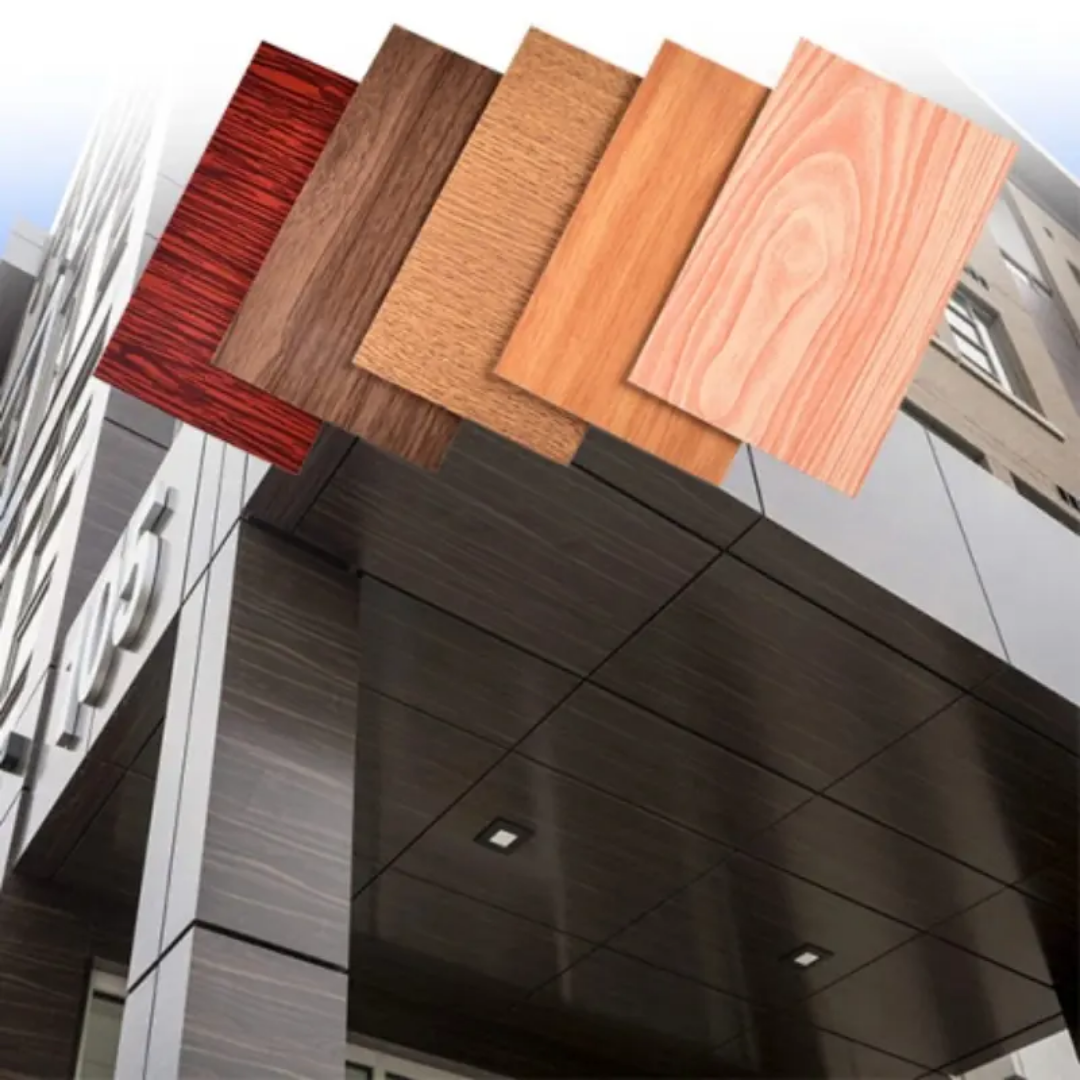
- Aesthetic Versatility and Branding: Available in an unlimited spectrum of colors, metallic finishes, and digital prints (including wood, stone, and custom graphics), ACPs enable brand expression and architectural distinction. The digital printing on ACPs segment is the fastest-growing application, with a CAGR exceeding 7%, driven by advertising and distinctive building designs.
- Durability and Lifecycle Economy: High-performance coatings, particularly PVDF (Polyvinylidene Fluoride), provide exceptional resistance to UV fading, corrosion, and pollution. With warranties extending 20-30 years, ACPs offer long-term value with minimal maintenance, a critical factor for building owners and operators.
3. The Imperative of Fire Safety and Stringent Regulations
Post-Grenfell, global building codes have undergone a seismic shift, placing fire safety at the forefront of material specification. This has critically shaped the ACP market:
- Shift from Combustible to Non-Combustible Cores: Demand is rapidly migrating from standard polyethylene (PE) cores to Fire-Retardant (FR) and A2 mineral cores (non-combustible). This transition is mandated for medium- and high-rise buildings in most regions.
- A Quality Upgrade Driving Value Growth: While non-fire-rated panels currently hold over 57.5% market share due to cost sensitivity in some segments, the regulatory push is creating a higher-value market focused on safety-compliant, premium products.
Market Segmentation and High-Growth Avenues
By Core Type: The Safety Segmentation
- Polyethylene (PE) Core: Traditional, cost-effective. Use is now largely restricted to low-rise, interior, or signage applications under strict code compliance.
- Fire-Retardant (FR) Core: Mineral-filled core offering improved fire performance. A key growth segment for mid-rise buildings.
- A2 Non-Combustible Mineral Core: The premium, high-growth segment driven by stringent regulations for high-rises and sensitive buildings. Expected to gain the most market share over the forecast period.
By Application: Construction is King
- Building & Construction Facades: The dominant application, accounting for the majority of demand. This includes curtain walls, rainscreen systems, and column covers.
- Interior Decoration: Growing use in airports, malls, and corporate interiors for feature walls and ceilings.
- Signage and Advertising: A stable and evolving segment, increasingly leveraging digital printing technology for large-format, durable advertisements.
By Region: Asia-Pacific Leads, North America Grows Fastest
- Asia-Pacific (APAC): The largest market (38.15% share), driven by massive urban development in China, India, and Southeast Asia. A major manufacturing and consumption hub.
- North America: Projected to be the fastest-growing region (2026-2035), fueled by infrastructure revitalization, commercial construction, and strict adoption of fire-safe ACPs.
- Europe: A mature, regulation-driven market focused on sustainability and high-safety standards (A2 cores).
- Rest of World (MEA, Latin America): Emerging markets with high growth potential from new urban projects.
Competitive Landscape: Innovation and Consolidation
The market is competitive with a mix of large-scale manufacturers and specialized players. Key strategies include:
- Product Innovation: Leading companies are investing in R&D for advanced fire-safe cores, self-cleaning nano-coatings, and environmentally sustainable products with high recycled content.
- Strategic Expansion: Capacity expansion for mineral core panels and strategic mergers & acquisitions (e.g., Kingspan's acquisition of TENCO) to broaden geographic and product reach.
- Compliance Leadership: Western players like Arconic and 3A Composites compete on premium, code-compliant systems, while Asian manufacturers lead on scale and cost-efficiency.
Challenges and Restraints
- Volatility of Raw Material Prices: Fluctuations in aluminum and polymer prices directly impact manufacturing costs and margins.
- Competition from Alternative Materials: Fiber cement boards, high-pressure laminates (HPL), and engineered wood compete in certain cladding segments, particularly on price.
- Complex Regulatory Environment: Navigating differing and evolving national fire safety codes requires continuous adaptation and certification investments.
Future Outlook and Strategic Conclusions
The synergy between the ACP market and the construction industry will intensify, guided by several key trends:
1. Regulation as a Market Shaper: The global harmonization towards stricter fire safety will permanently elevate the market share of A2 and FR core panels, defining the future of the industry.
2. Sustainability as a Core Criterion: Demand will grow for ACPs with verified Environmental Product Declarations (EPDs), high recycled aluminum content, and end-of-life recyclability to meet green building standards (LEED, BREEAM).
3. Technological Integration: The convergence of ACPs with building-integrated photovoltaics (BIPV) and smart building sensors will open new, high-value application frontiers.
Conclusion:
The expansion of the global building and construction industry is not merely a driver but the foundational bedrock of the aluminum composite panels market. As the industry prioritizes safety, sustainability, speed of construction, and aesthetic expression, ACPs—especially in their advanced, engineered forms—are uniquely positioned to deliver. For stakeholders, the forecast period presents a landscape of opportunity defined by innovation, regulatory alignment, and the enduring global need to build smarter, safer, and more striking urban environments.






