Welcome to Vbond
Honeycomb Corrosion in ACP: How Moisture Ingress Destroys Aluminum Panels from the Inside Out
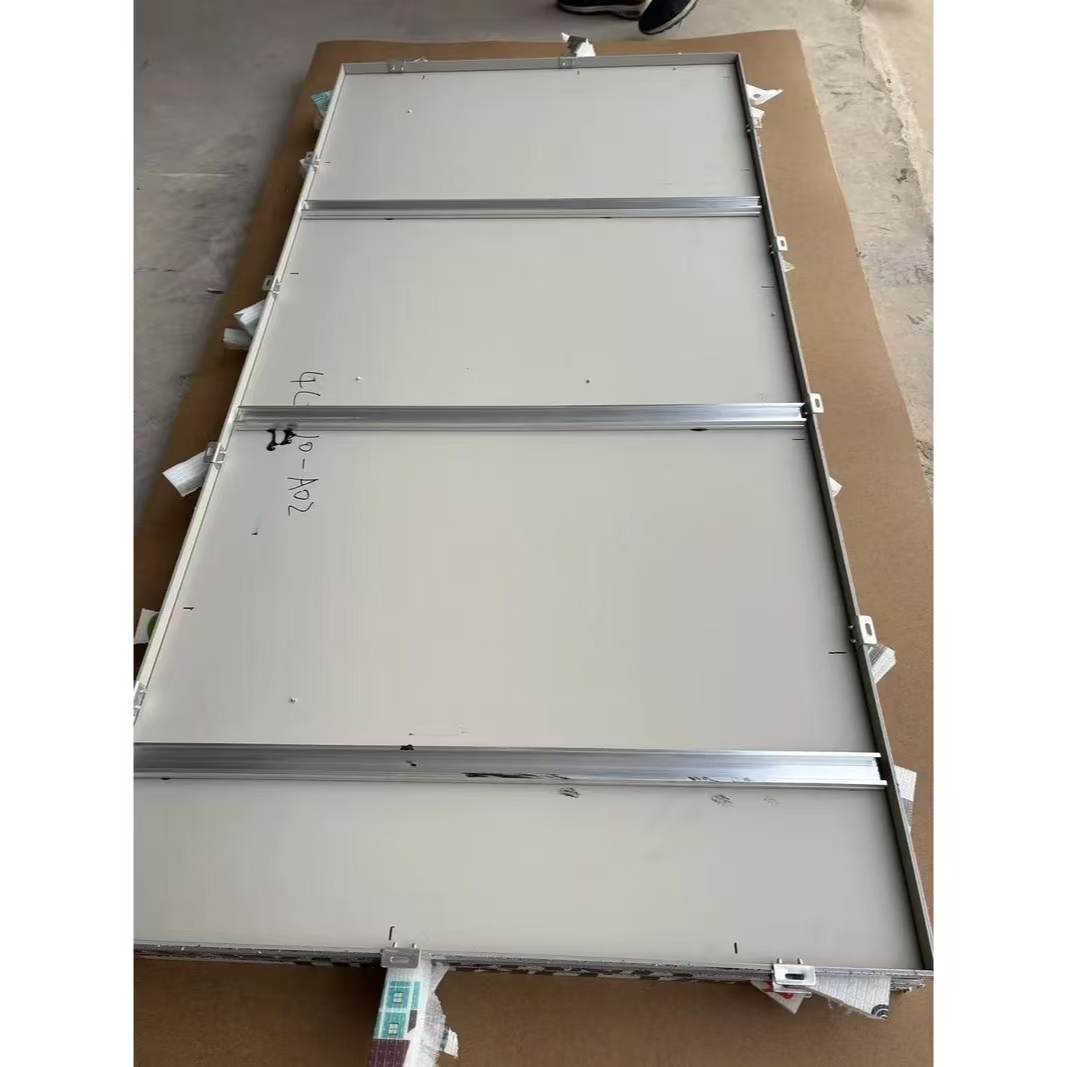
You walk past a building completed just a few years ago. The once-pristine aluminum facade now shows white, powdery stains at the edges. In some areas, the surface has started to bulge. The contractor is gone. The warranty is void. And the building owner is left with a six-figure recladding bill.
This is honeycomb corrosion—and it is the single most destructive failure mode for aluminum composite panels. Unlike surface scratches or fading, which are cosmetic, honeycomb corrosion attacks the panel from the inside out. By the time you see visible signs, the structural integrity of your facade has already been compromised.
The culprit is rarely the aluminum itself. The culprit is moisture ingress: water finding its way into the panel core, getting trapped, and triggering a chemical chain reaction that turns solid aluminum into crumbling powder.
This guide explains how moisture destroys ACPs from within, how to identify the early warning signs, and how to specify panels and systems that resist corrosion for decades.
1. The Anatomy of an ACP: Why the Core Is the Vulnerable Point
To understand honeycomb corrosion, you must first understand how an aluminum composite panel is constructed. A standard ACP consists of three layers:
- Two outer aluminum skins (typically 0.21mm to 0.50mm thick) coated with PVDF or polyester finish
- A core material (polyethylene, fire-retardant, or mineral-filled) bonded between the skins
This sandwich structure gives ACP its lightweight rigidity. But it also creates a vulnerability: the bond line between the skin and the core.
In a properly manufactured panel, the adhesive bond is continuous and impermeable. But when water finds its way to the bond line—through unsealed edges, failed sealant joints, or damaged protective film—the destruction begins.
Water does not damage the aluminum skin directly. Aluminum forms a natural oxide layer that resists corrosion. The problem is that trapped water creates an environment where galvanic corrosion can occur, particularly at the interface between the aluminum skin and the core or between dissimilar metals in the substructure.
2. The Mechanism of Destruction: How Moisture Eats Aluminum from Within
The Entry Point: Unsealed Edges and Failed Joints
Water typically enters ACP panels through three pathways:
Entry Point | Cause | Consequence |
Unsealed cut edges | On-site cutting exposes raw core; no edge sealant applied | Water wicks directly into the core via capillary action |
Failed sealant joints | Acetoxy-cure silicones crack under UV; poor adhesion | Water penetrates behind the panel and accumulates at the bottom edges |
Damaged protective film | Film tears during handling; not removed before installation | Trapped moisture between the film and the panel causes blistering |
Once inside, the water migrates. In honeycomb core panels specifically, water can travel from cell to cell around the edges of the core, spreading corrosion across the entire panel.
The Chemical Reaction: Galvanic and Crevice Corrosion
Aluminum honeycomb core panel construction is highly susceptible to corrosion caused by atmospheric moisture. When water is trapped between the outer skin layers and the honeycomb-shaped core, it creates an electrolyte. Over time, the water seepage corrodes the honeycomb-shaped core, making the structure unsound.
The process follows a predictable sequence:
1. Moisture ingress: Water penetrates through an unsealed edge or failed joint
2. Trapped environment: The panel has no drainage or ventilation, so water accumulates
3. Electrolyte formation: Dissolved salts and minerals in the water create a conductive solution
4. Galvanic reaction: Dissimilar metals (or even different areas of the same aluminum) create a voltage differential
5. Corrosion propagation: Aluminum ions migrate, leaving behind weakened, porous material
In advanced cases, the corrosion creates **white, powdery aluminum oxide** (often called "white rust") that expands and forces the aluminum skins apart, creating visible bulges.
The Freeze-Thaw Accelerant
In cold climates, trapped water freezes and expands. The expansion cycles crack the adhesive bond line further, allowing more water to enter. Each freeze-thaw cycle accelerates the destruction. Impact-damaged cores that retain water can propagate damage through freeze-thaw mechanisms, spreading failure far beyond the original entry point.
3. Early Warning Signs: What to Look For
Honeycomb corrosion is often invisible until it is too late. But there are early indicators that procurement professionals and facility managers should recognize:
Warning Sign | What It Means | Urgency |
White, chalky residue at panel edges | Aluminum oxide formation; active corrosion occurring | High |
Tapping produces a dull, hollow sound | Core bond compromised; delamination in progress | Critical |
Visible bulging or swelling | Corrosion products expanding between skins | Critical - Immediate action |
Discoloration around fastener heads | Moisture entry through unsealed screw holes | Medium |
Cracked or shrinking sealant | Failed weather barrier; water likely already inside | High |
The most reliable detection method is the tap test: using a small hammer or screwdriver handle to tap the panel surface at regular intervals. A solid, resonant sound indicates good core integrity. A dull, hollow, or "thudding" sound indicates delamination or core degradation.
4. The Material Solution: Specifying Corrosion-Resistant ACPs
Not all ACPs are equally vulnerable to moisture damage. The core material is the critical variable.
Polyethylene (PE) Core – High Risk
Standard PE-core panels are the most vulnerable to moisture-related failure. While the PE itself does not absorb water, the bond line between the aluminum and the core can degrade in the presence of moisture. Once the bond fails, water can travel freely between the skins.
Fire-Retardant (FR) Core – Moderate Risk
FR cores incorporate mineral additives that improve fire performance but do not significantly enhance moisture resistance. They remain vulnerable to bond-line failure if water infiltrates.
Aluminum Honeycomb Core – Low Risk (If Properly Sealed)
Aluminum honeycomb panels are structurally superior but are highly susceptible to corrosion caused by atmospheric moisture. The thin cell walls (typically 0.0007 to 0.003 inches thick) can corrode rapidly once water enters. Advanced corrosion prevention methods, such as ion beam enhanced deposition, can embed molybdenum ions into the cell walls to form an aluminum-molybdenum alloy impervious to corrosion.
Polypropylene Core – Lowest Risk
Some manufacturers offer ACPs with corrugated polypropylene cores that will not swell, corrode, rot, wick water, or delaminate even under prolonged water exposure. These panels are field-tested through extensive freeze/thaw cycling tests with no significant structural panel failure.
Procurement Recommendation: For high-humidity, coastal, or freeze-thaw climates, specify panels with polypropylene cores or ensure that aluminum honeycomb panels have verified corrosion protection (ion beam deposition or equivalent).
5. The Installation Solution: Preventing Moisture Entry
The most corrosion-resistant panel will fail if installed incorrectly. Water-related failures with ACP systems generally come from incorrect installation, not from the material itself.
Critical Installation Requirements
Requirement | Specification |
Edge sealing | All cut edges must be sealed with neutral-cure silicone before installation |
Ventilated cavity | Minimum 20mm air gap behind panels to allow drying |
Weep holes | 6mm openings at the base of vertical runs to drain trapped water |
Sealant type | Neutral-cure silicone (Dow 795 or equivalent); NO acetoxy-cure |
Backer rod | Closed-cell foam only (open-cell foam absorbs water) |
Substrate preparation | Flat within ±2mm over a 2m span to avoid panel stress |
The "Water Test" Protocol
Before finalizing an installation, conduct this simple verification:
1. Spray water on the facade for 10-15 minutes
2. Inspect the interior for any signs of water penetration
3. Check weep holes for proper drainage
4. Verify sealant integrity after drying
6. The Remediation Reality: When It's Too Late
Once honeycomb corrosion has progressed to visible bulging, the panel cannot be repaired. Replacement is the only option. And replacement is rarely simple:
- Removal risks damaging adjacent panels
- Color matching is nearly impossible for weathered facades
- Substructure may be corroded, requiring additional repairs
- Tenant disruption adds hidden costs
The lesson is clear: prevention is the only cost-effective strategy.
7. Procurement Specifications for Corrosion-Resistant ACP Facades
To ensure your ACP facade resists moisture ingress and honeycomb corrosion, include these specifications in your procurement documents:
Specification | Requirement |
Core material | Polypropylene (preferred) or aluminum honeycomb with verified corrosion protection |
Edge sealing | All cut edges sealed with neutral-cure silicone at the fabrication facility |
Ventilated cavity | Minimum 20mm; weep holes at base |
Sealant | Neutral-cure silicone only (Dow 795 or equivalent) |
Fastener gaskets | EPDM or silicone; no neoprene, no PVC |
Testing documentation | Accelerated aging test results (heat + humidity cycling) |
Warranty | Minimum 10-year coverage for corrosion and delamination |
Conclusion
Honeycomb corrosion in aluminum composite panels is not a mystery. It is a predictable failure mode caused by moisture ingress through unsealed edges, failed joints, or improper installation. Once water enters the panel, it creates a trapped, corrosive environment that destroys the aluminum from the inside out.
For procurement professionals, the message is clear: specify for moisture resistance from the start. Choose panels with polypropylene cores or verified corrosion-protected honeycomb. Require edge sealing at the factory. Mandate ventilated cavities and weep holes. Specify neutral-cure silicone sealants. And verify installation quality before final payment.
Your building's facade is a long-term investment. Do not let a $5 tube of the wrong sealant destroy it.






