Welcome to Vbond
How LEED Certification Impacts Your Choice of Aluminum Composite Panels
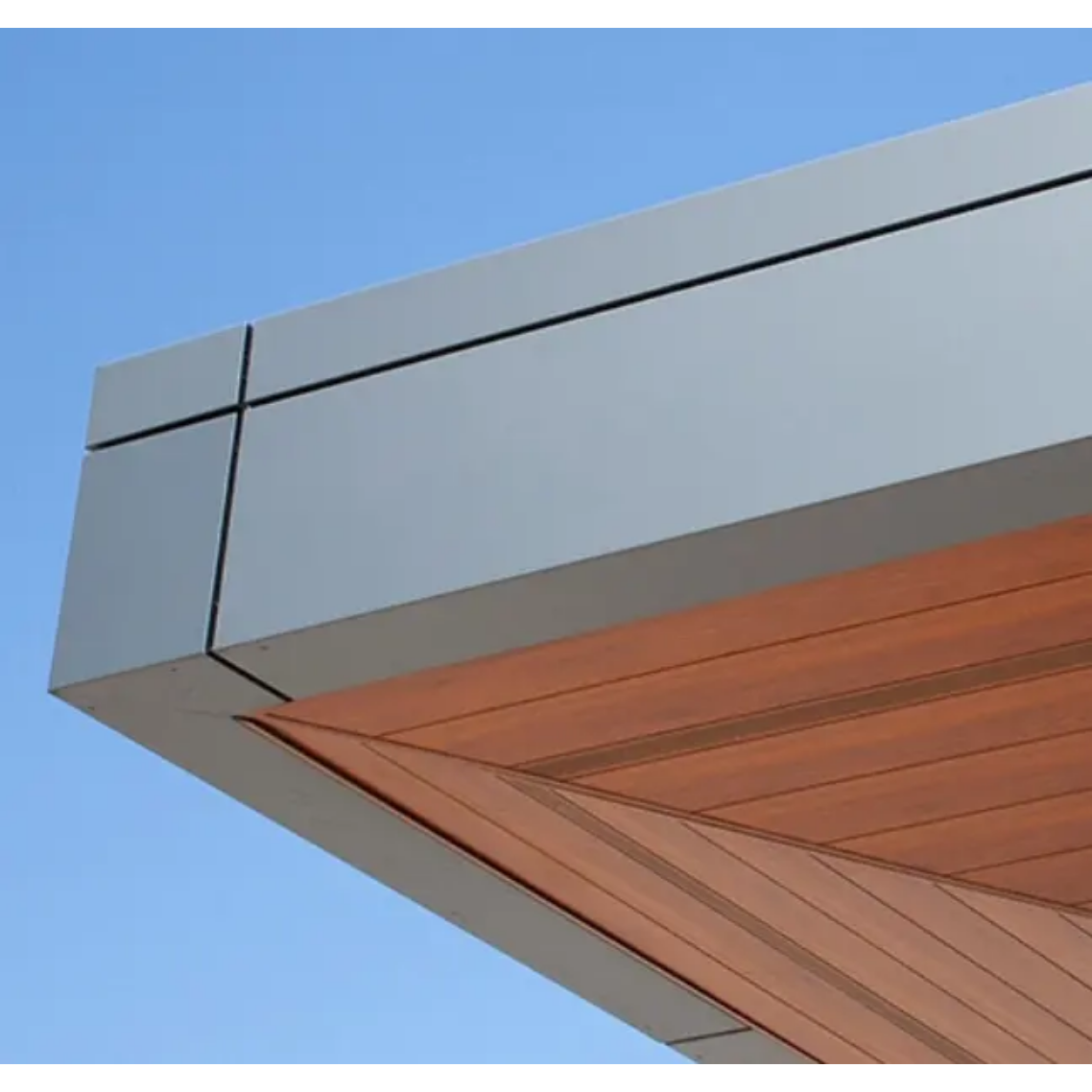
Sustainability is no longer a niche consideration in the construction industry—it has become a core requirement for developers, architects, and procurement professionals. Among the most widely recognized frameworks for green building is LEED (Leadership in Energy and Environmental Design), developed by the U.S. Green Building Council (USGBC).
For projects pursuing LEED certification, every material choice matters—including the seemingly simple selection of aluminum composite panels (ACPs). While these panels are valued for their durability, design flexibility, and cost-effectiveness, not all ACPs contribute equally to sustainability goals. Understanding how LEED credits work and which product attributes align with them can make the difference between achieving certification and falling short.
This guide explains how LEED certification impacts your choice of aluminum composite panels, which product features support green building objectives, and how procurement professionals can select ACPs that satisfy both aesthetic and environmental requirements.
What Is LEED and Why Does It Matter?
LEED is a point-based rating system that evaluates the environmental performance of buildings across several categories, including:
- Materials and Resources (MR)
- Indoor Environmental Quality (EQ)
- Energy and Atmosphere (EA)
- Sustainable Sites (SS)
- Water Efficiency (WE)
- Innovation in Design (ID)
Projects earn points by implementing sustainable strategies, and the total determines certification levels: Certified, Silver, Gold, or Platinum.
For procurement professionals, the Materials and Resources (MR) category is particularly relevant, as it directly addresses the sourcing, composition, and environmental impact of building materials—including aluminum composite panels.
How Aluminum Composite Panels Contribute to LEED Points
Aluminum composite panels can contribute to multiple LEED credit categories when selected with sustainability in mind. Below are the key areas where ACPs impact LEED certification.
1. MR Credit: Building Product Disclosure and Optimization – Sourcing of Raw Materials
This credit rewards projects that use materials with responsibly sourced raw materials. For aluminum composite panels, this includes:
- Recycled Content: Aluminum skins can contain significant percentages of post-consumer and pre-consumer (post-industrial) recycled content. Panels with high recycled aluminum content contribute directly to this credit.
- Certified Sourcing: Some manufacturers offer panels with aluminum certified by the Aluminum Stewardship Initiative (ASI), demonstrating responsible sourcing practices along the supply chain.
What procurement should look for:
- Supplier documentation specifying the percentage of recycled content in the aluminum skins.
- ASI Chain of Custody certification, where available.
- Third-party verification of recycled content claims.
2. MR Credit: Building Product Disclosure and Optimization – Material Ingredients
This credit addresses the chemical composition of building materials, rewarding products that avoid hazardous substances and disclose their ingredients transparently.
Aluminum composite panels consist of two aluminum skins bonded to a core material. The core—whether polyethylene (PE), fire-retardant (FR), or mineral-filled (A2) —varies significantly in chemical composition. For LEED projects:
- Avoid Red List Chemicals: Many green building programs discourage the use of materials containing chemicals on the Living Building Challenge Red List. Certain flame retardants or additives may be problematic.
- Health Product Declarations (HPDs): Manufacturers that provide HPDs disclose the chemical ingredients in their panels, allowing project teams to assess potential health concerns.
What procurement should look for:
- Health Product Declaration (HPD): A standardized document that discloses product ingredients and associated hazards.
- Declare Label: A “Red List Approved” label from the International Living Future Institute indicates that the product meets stringent chemical transparency requirements.
- Documentation confirming the absence of problematic flame retardants or heavy metals.
3. MR Credit: Building Product Disclosure and Optimization – Environmental Product Declarations
This credit rewards projects that use products with Environmental Product Declarations (EPDs). An EPD is a verified document that reports the environmental impact of a product over its lifecycle—from raw material extraction to manufacturing, transportation, and end-of-life disposal.
For aluminum composite panels, an EPD provides transparency on:
- Global warming potential (carbon footprint)
- Energy consumption during manufacturing
- Water usage
- Waste generation
What procurement should look for:
- Industry-Wide EPD: Provides average data for a product category (e.g., “aluminum composite panels”).
- Product-Specific EPD: Provides verified data for a specific manufacturer’s product—more valuable for earning points.
- EPDs that are third-party verified and conform to ISO 14025 and EN 15804 standards.
4. MR Credit: Construction and Demolition Waste Management
LEED projects earn points for diverting construction waste from landfills. Aluminum composite panels can contribute here in two ways:
- Fabrication Waste: Offcuts and scrap from panel fabrication can be recycled if the manufacturer or fabricator has a recycling program in place.
- End-of-Life Recyclability: Aluminum is infinitely recyclable without loss of properties. Panels with pure aluminum skins and mineral cores are easier to recycle than those with mixed or contaminated materials.
What procurement should look for:
- Fabricators with documented scrap recycling programs.
- Panels designed for disassembly (e.g., mechanically attached rather than permanently bonded in ways that complicate recycling).
- Suppliers who provide take-back programs for end-of-life panels.
5. EQ Credit: Low-Emitting Materials
For interior applications of aluminum composite panels, LEED’s Indoor Environmental Quality category addresses low-emitting materials. This credit limits the amount of volatile organic compounds (VOCs) released into the indoor environment.
What procurement should look for:
- Coatings (such as PVDF or polyester) that meet VOC content limits established by standards like SCAQMD Rule 1113 or Green Seal GS-11.
- Panels specified for interior use should be tested for VOC emissions and comply with CDPH Standard Method v1.2 (California Department of Public Health).
Core Selection Factors for LEED-Oriented Procurement
When evaluating aluminum composite panels for a LEED project, procurement professionals should prioritize the following attributes:
LEED Focus Area | Preferred Panel Attribute | Verification Document |
Recycled Content | High post-consumer or pre-consumer recycled aluminum | Manufacturer letter, recycled content calculator |
Responsible Sourcing | ASI-certified aluminum | ASI Chain of Custody certificate |
Chemical Transparency | Disclosure of core and coating ingredients | HPD, Declare Label |
Lifecycle Impact | Verified environmental footprint | Product-Specific EPD |
Low Emissions (Interior) | Low-VOC coatings, compliant emissions testing | CDPH v1.2 test report |
Fire Safety | A2 mineral core, NFPA 285 assembly | Third-party fire test reports |
Balancing Fire Safety with Sustainability
One of the most important considerations for procurement professionals is that fire safety and sustainability are not mutually exclusive. In fact, they often align.
A2 mineral core aluminum composite panels represent the ideal intersection of both priorities:
- Fire Safety: Non-combustible mineral cores achieve the highest fire ratings (A2-s1,d0 under EN 13501-1) and meet the strictest building code requirements.
- Sustainability: Mineral cores often contain no added flame-retardant chemicals that might appear on restricted substance lists. The aluminum skins can incorporate high recycled content, and the panels are fully recyclable at the end of life.
For LEED projects, A2 mineral core panels offer a straightforward path to earning points across multiple categories while simultaneously satisfying fire code requirements—a crucial combination for high-rise and high-occupancy buildings.
What LEED Does Not Require
It is also important to understand what LEED does not mandate. LEED does not:
- Require a specific fire rating (local building codes govern this).
- Mandate a particular core type (though material ingredients and EPD considerations will favor certain options).
- Automatically disqualify polyethylene core panels—but such panels may struggle to contribute to MR credits due to limited recycled content and chemical transparency challenges.
Practical Steps for Procurement Professionals
To effectively select aluminum composite panels for LEED-certified projects, follow this process:
1. Review the LEED Scorecard Early: Understand which credits the project team is targeting. This determines whether MR credits (sourcing, EPDs, HPDs) or EQ credits (low-emitting materials) are priorities.
2. Request Documentation at the Quote Stage: Do not wait until after purchase. Ask suppliers for:
- Product-Specific EPD
- HPD or Declare Label
- Recycled content documentation
- ASI certification (if applicable)
- VOC emissions test reports (for interior applications)
3. Verify Third-Party Certification: LEED credits typically require documentation from accredited third parties. Self-declared claims without verification may not be accepted by the USGBC during the certification review.
4. Coordinate with the Project Team: Share material documentation with the architect, sustainability consultant, and general contractor early to ensure alignment with credit requirements.
Conclusion
LEED certification places a spotlight on material selection, rewarding products that demonstrate environmental transparency, responsible sourcing, and reduced lifecycle impacts. For procurement professionals, this means that choosing aluminum composite panels involves more than evaluating cost, color, and fire rating—it requires a deeper assessment of the product’s environmental profile.
By selecting panels with high recycled content, verified EPDs, chemical transparency (HPDs), and low-VOC coatings, buyers can contribute directly to LEED points while supporting the project’s overall sustainability goals. When combined with A2 mineral core technology, these panels also deliver the fire safety performance required for high-rise and high-occupancy buildings—creating a solution that satisfies both green building objectives and regulatory demands.
In an era where environmental responsibility is increasingly tied to market competitiveness, the ability to source sustainable aluminum composite panels is not just a technical skill—it is a strategic advantage.