Welcome to Vbond
How the Global Construction Slowdown Affects Aluminum Composite Panel Demand
For procurement professionals in the building materials industry, few headlines have been as persistent—or as concerning—as the global construction slowdown. As rising interest rates, persistent inflation, and shifting government policies weigh on building activity worldwide, one question dominates boardroom conversations: What does this mean for demand for aluminum composite panels (ACPs)?
The answer is more nuanced than a simple “demand is down.” While the global construction industry is indeed facing a contraction in 2025, ACP demand is being shaped by a complex interplay of regional resilience, regulatory drivers, sustainability mandates, and structural shifts in building practices. Understanding these dynamics is essential for procurement professionals seeking to navigate the market, optimize sourcing strategies, and anticipate price and supply trends over the next 24 to 36 months.
This article provides a comprehensive analysis of how the global construction slowdown is affecting aluminum composite panel demand, disaggregating the data by region, application, and regulatory pressure.
1. The Macro Picture: Construction Activity Contracts in 2025
Global construction activity is forecast to fall 4.5% over 2025 to US$9.3tn, before growing 3.8% in 2026 to US$9.6tn (all values in constant 2023 prices). The contraction is concentrated in residential and non-residential building segments, where high interest rates and economic uncertainty have curbed investment. Residential building activity is forecast to fall 6.7% over 2025 to US$3.6tn, with the ongoing Chinese real estate downturn weighing heavily on the sector.
However, the decline is not uniform. Oxford Economics data shows that North America led the downturn in 2025, with activity expected to decline 2.2%, followed by North-East Asia (down 1.0%) and Latin America (down 0.2%). In contrast, South Asia, South-East Asia, and the Middle East and North Africa each delivered growth of more than 5% in 2025.
From a procurement perspective, this regional divergence is critical. While advanced economies are projected to stagnate with zero growth in 2025, emerging markets still posted positive, albeit slower, growth. Understanding where ACP demand is holding up—and where it is weakening—is the first step in strategic sourcing.
2. The ACP Market Paradox: Growth Despite Construction Headwinds
Despite the broader construction contraction, the global aluminum composite panels market is still growing. The market was valued at US$6.87 billion in 2025 and is projected to reach US$7.39 billion in 2026, representing a compound annual growth rate (CAGR) of 7.6%. Looking further ahead, the market is expected to reach US$10.02 billion by 2030 at a CAGR of 7.9%.
How can the ACP market grow while construction activity contracts? The answer lies in structural demand drivers that are decoupling ACP demand from headline construction output.
First, regulatory-driven retrofitting. Following high-profile fire incidents involving combustible cladding, authorities worldwide have implemented more rigorous testing standards for building materials, particularly for high-rise structures. This has created a significant compliance-driven replacement cycle. As noted in industry analysis, "the industry faces intense scrutiny and stricter fire safety regulations globally," forcing building owners to replace non-compliant cladding—often with A2-rated mineral-core ACPs—regardless of new construction levels.
Second, infrastructure as a stabilizer. While residential and non-residential building have declined, civil engineering activity is forecast to grow 0.1% in 2025 and 6.5% in 2026. The EU’s Recovery and Resilience Facility, Canada’s renewable energy programs, and Australian infrastructure initiatives are supporting activity. India and Saudi Arabia were among the strongest infrastructure performers in 2025, expected to grow by 8.1% and 4.0%, respectively. ACPs are widely used in transportation infrastructure, signage, and public buildings—applications that benefit directly from infrastructure spending.
Third, renovation and retrofit cycles. In more developed markets, the retrofitting and renovation cycle is driving ACP adoption independently of new construction. In the MERCOSUR region, "the market's trajectory to 2035 will be fundamentally determined by the pace of infrastructure development, commercial real estate investment, and the adoption of ACPs in renovation and retrofit projects across key economies".
3. Regional Breakdown: Where Demand Is Holding—and Where It Isn't
For procurement professionals, regional granularity is essential. The following analysis provides a region-by-region breakdown of ACP demand dynamics.
North America: Construction Slowdown, but Retrofitting Gains
North America is forecast to have recorded negative construction output in 2025, declining 2.2%. US construction spending is estimated to have fallen by 0.4% in 2025, with multifamily construction down 11% and single-family output declining 3.1%. Yet, ACP demand in the region is being buoyed by two factors: the rising trend of renovation, green buildings, and demand for energy-efficient cladding solutions. The building and construction segment dominates the ACP market with over 63% share in 2025.
Europe: Defense Spending and Retrofitting Provide Support
Europe's construction market contracted, with residential output falling an estimated 3.0% in Germany, 2.6% in Sweden, and 1.3% in France. However, upgrades in Europe's defense spending and the EU's Recovery and Resilience Facility have provided some offset. The Europe aluminum composite panel market was valued at US$1.9 billion in 2024 and is projected to grow to US$3.05 billion by 2033.
Asia-Pacific: A Tale of Two Stories
China remains the dominant force, and its real estate downturn continues to weigh heavily on residential construction. However, China is approaching the bottom of the real estate downturn, and a rebound is anticipated. Outside of China, the Asia-Pacific region enters 2026 with strong growth fundamentals supported by macroeconomic stability and public and private investment. Investment in renewable energy, transport, and digital infrastructure—including data centres and semiconductors—is underpinning activity.
Middle East and Africa: The Bright Spot
The Middle East and North Africa region continues to experience a construction boom. The Middle East and Africa aluminium composite panels market is anticipated to grow at more than 7.72% CAGR from 2025 to 2030. Large-scale projects, including Saudi Arabia's NEOM, major infrastructure projects in the UAE, and ambitious building initiatives in Egypt, continue to drive demand for ACPs.
4. Counter-Cyclical Drivers: Why ACP Demand Is Resilient
Procurement professionals need to understand that ACP demand is not a simple derivative of construction GDP. Several factors are decoupling ACP consumption from headline construction activity.
Driver 1: Stricter Fire Safety Regulations
Following high-profile incidents involving combustible cladding, regulators worldwide have tightened building codes. The cladding systems market is witnessing robust growth fueled by material innovations, a surge in demand for energy-efficient solutions, and stricter safety standards. Heightened fire safety concerns are propelling the demand for advanced cladding systems, especially in retrofitting high-rise residential buildings. The 2024 renovation of the Grenfell Tower in the UK highlights the critical need for fire-resistant cladding.
This regulatory pressure is structural and irreversible. Buildings with combustible cladding must be remediated—regardless of new construction levels. This creates a baseline demand for A2-rated mineral-core ACPs that persists even through construction downturns.
Driver 2: Sustainability and Green Building Mandates
The global focus on energy-efficient building envelopes is accelerating ACP adoption. Stringent building energy codes and a growing emphasis on sustainable construction are driving demand for panels that enhance thermal performance. ACPs align well with green building certifications such as LEED and BREEAM.
The Middle East region, for example, has seen countries introduce or update building codes and fire safety standards that directly impact ACP manufacturing and installation. The UAE has introduced strict regulations for fire safety in high-rise buildings, requiring ACPs to meet specific fire resistance standards.
Driver 3: Renovation and Retrofit Cycles
As building stock ages, the renovation market becomes an increasingly important source of demand. The market benefits from the retrofitting and renovation cycle in more developed parts of Asia. In North America, renovation, green buildings, and demand for energy-efficient cladding solutions are driving growth.
For procurement professionals, this means that even as new construction slows, the installed base of buildings requiring upgraded facades, improved energy performance, and fire-safety retrofits continues to generate demand.
Driver 4: Lightweight and Prefabricated Construction
The increasing preference for lightweight and easy-to-install panels is a major trend. The expansion of prefabricated construction methods is also driving growth. As contractors seek to reduce on-site labor costs and accelerate project timelines, the inherent advantages of ACPs—lightweight, prefinished, and easy to fabricate—become more compelling.
5. Challenges in the ACP Market: What Procurement Should Watch
Despite resilient demand drivers, the ACP market faces significant headwinds that procurement professionals must monitor.
Fluctuating Raw Material Costs
Aluminum prices remain volatile, and fluctuating raw material costs are a persistent challenge for the market. Tariffs and trade policies continue to affect input costs, and this volatility can impact ACP pricing unpredictably.
Overcapacity and Price Pressure
The market has seen significant capacity expansion, particularly in China. In an environment of moderating construction growth, this overcapacity could lead to price pressure and margin compression—potentially benefiting buyers in the near term but raising concerns about long-term supply quality.
Supply Chain Disruptions
Heading into 2026, the global construction market remains fragmented as stakeholders adjust to a new trade environment shaped by tight financing conditions and increasingly protectionist US policies. Beyond the direct impact of higher cross-border trade costs, 2025 produced knock-on effects across the construction value chain as suppliers reconfigured supply routes to avoid levies, contributing to persistently high material prices.
Procurement professionals should factor in extended lead times and potential price volatility when planning ACP purchases.
6. Segment-Level Insights: Where to Focus Procurement
Not all ACP segments are affected equally by the construction slowdown. Procurement professionals should prioritize segments with stronger demand fundamentals:
Fire-Resistant A2 and B1 Panels
Stringent fire safety regulations in buildings are a key driver of growth. Rising demand for fire-resistant and safety-compliant ACPs is a major trend. The Class A2 Fireproof Aluminum Composite Panel market was valued at US$1.62 billion in 2025 and is projected to grow to US$1.74 billion in 2026, with a CAGR of 6.74%. For high-rise buildings, generally A2 fire requirements must be met, while commercial buildings, schools, and hospitals should use Grade B1 or higher.
PVDF-Coated Panels
The PVDF-coated type segment is expected to maintain a dominant market share due to its superior durability and color retention. PVDF coatings are highly resistant to UV radiation and weathering, making them ideal for harsh environments.
Decorative and Custom-Finish Panels
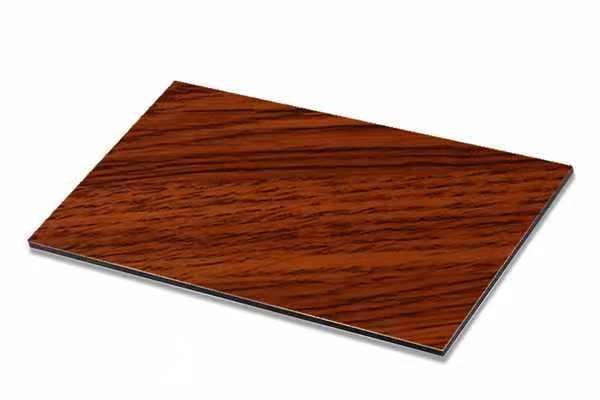
Expansion of decorative and custom-finish ACP applications is a major growth trend. Rising demand for aesthetic building exteriors is driving adoption.
Recycled and Eco-Friendly Panels
Increasing focus on sustainable and recyclable materials is driving growth. The growing demand for green building materials is driving the adoption of recycled core ACPs, particularly in regions with strong environmental regulations.
7. Procurement Strategies for 2026–2027
Given the complex landscape—moderating construction growth offset by structural demand drivers—procurement professionals should adopt the following strategies:
1. Diversify sourcing geographically. With regional divergences in construction activity, relying on a single source or region increases risk. Consider suppliers in growth markets such as the Middle East and Southeast Asia, alongside traditional sources.
2. Prioritize fire-rated ACPs. As regulations tighten, demand for A2 and B1 panels will remain resilient even if overall construction slows. Lock in supply agreements for fire-rated products early.
3. Build a buffer stock. Supply chain disruptions and tariff uncertainty mean lead times may be unpredictable. Maintaining a strategic inventory of standard sizes and colors can mitigate risk.
4. Negotiate long-term contracts with price adjustment mechanisms. Raw material volatility makes fixed-price contracts risky for both buyers and suppliers. Consider contracts with indexed pricing tied to aluminum market benchmarks.
5. Monitor infrastructure spending. Civil engineering is outperforming residential and commercial building. Target ACP applications aligned with infrastructure projects—transportation signage, public building cladding, and industrial facilities.
6. Assess supplier capacity. Overcapacity may lead to price pressure, but also to quality compromise. Vet suppliers thoroughly on quality control, fire rating certifications, and financial stability.
8. The Outlook for 2026 and Beyond
Looking ahead, the outlook is cautiously optimistic. Oxford Economics forecasts construction activity will rebound 3.8% in 2026 to US$9.6tn. China and the US are expected to regain momentum, with China approaching the bottom of the real estate downturn.
For the ACP market, the longer-term fundamentals remain strong. The market is expected to grow to US$10.02 billion in 2030 at a CAGR of 7.9%. Major trends in the forecast period include rising demand for fire-resistant and safety-compliant ACPs, growing use of ACPs in modern architectural facades, and expansion of decorative and custom-finish applications.
From a procurement perspective, the next 18 to 24 months will be defined by navigating the tension between moderating construction activity and resilient regulatory and sustainability-driven demand. Buyers who understand these dynamics, prioritize fire-rated and sustainable products, and build diversified, resilient supply chains will be best positioned to secure quality ACPs at competitive prices through the cycle.
9. Conclusion
The global construction slowdown is real, with activity forecast to contract in 2025 before rebounding in 2026. However, for aluminum composite panels, the headline numbers tell only part of the story. Structural demand drivers—stricter fire safety regulations, green building mandates, renovation cycles, and infrastructure spending—are decoupling ACP consumption from headline construction output.
Procurement professionals who understand this nuance can navigate the market effectively. While residential and non-residential buildings may be soft, the ACP market continues to grow at a CAGR of 7.6%. The key is to focus on resilient segments: fire-rated A2 and B1 panels, PVDF-coated products, and sustainable recycled-core panels. Diversify sourcing, monitor regional divergences, and build strategic inventory to mitigate supply chain risks.
The construction industry may be slowing, but the market for safer, greener, and more durable building materials has never been stronger. Aluminum composite panels, with their unique combination of lightweight performance, design versatility, and regulatory compliance, remain a material of choice for the buildings of tomorrow—even as the buildings of today face a temporary slowdown.