Welcome to Vbond
How to Choose the Right Alucobond Thickness for Sharp 90° Bends
How to Choose the Right Alucobond Thickness for Sharp 90° Bends
You are specifying Alucobond for a project. The design calls for crisp, clean 90-degree corners. You know the panels need to fold. But which thickness do you choose?
3mm? 4mm? 6mm?
The answer affects more than just cost. It determines whether your panels fold cleanly or crack. It affects fabrication time, shipping costs, and long-term performance.
This guide helps you make the right choice. You will learn how thickness impacts bendability. You will understand the trade-offs between thinner and thicker panels. And you will know exactly what to specify for your project.
How Thickness Affects Bending
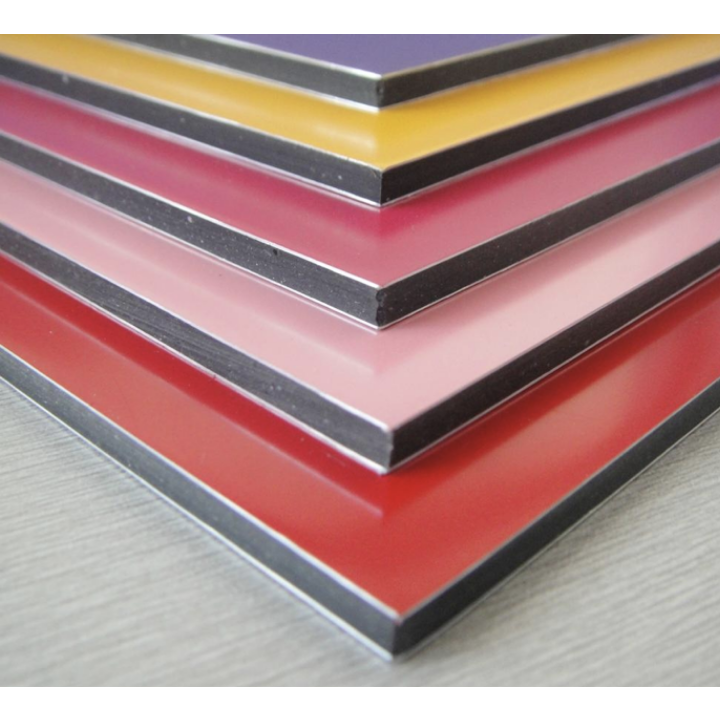
Alucobond is a sandwich panel. Two 0.5mm aluminum skins bond to a core. The total thickness ranges from 3mm to 6mm. The aluminum skins stay the same thickness. Only the core changes.
When you bend a panel, the outer skin stretches. The inner skin compresses. Thicker panels have more material to stretch. That means a larger bend radius is required.
Bend the panel too tightly, and the outer skin exceeds its elastic limit. It cracks.
The rule is simple: thicker panels need larger bend radii.
The Three Standard Thicknesses
3mm Panels
3mm panels are the thinnest standard option. They bend easiest. They require the smallest bend radius.
The minimum bend radius for a 3mm panel is approximately 60mm. Some sources specify r = 10 × t, which gives 30mm. But the safer industry standard for routed V-groove bending is 60mm.
3mm panels weigh about 4.5 kg/m². They are lighter and cheaper to ship. They work well for interior applications, signage, and smaller facade elements.
But 3mm panels offer less rigidity. They deflect more under wind load. They are not ideal for large exterior facades in high-wind zones.
4mm Panels
4mm is the industry standard for exterior facades. It offers the best balance of strength, weight, and bendability.
The minimum bend radius for a 4mm panel is approximately 60mm to 80mm. Some sources specify 80mm. The exact number depends on the core material and routing depth.
4mm panels weigh about 5.5 to 7.6 kg/m². They provide excellent flatness and rigidity. They handle wind loads well. They are the most common choice for building facades.
6mm Panels
6mm panels offer the highest rigidity. They resist deflection better than any other standard thickness.
But 6mm panels are harder to bend. They require larger bend radii. The minimum bend radius for a 6mm panel without routing is 15 times the thickness — that is 90mm. With routing, the radius still needs to be larger than for 4mm.
6mm panels weigh about 7.3 kg/m². They cost more to produce, transport, and fabricate. And here is the catch: 6mm panels do not offer significantly better flatness than 4mm.
For most architectural projects, 6mm is overkill.
Thickness Comparison Table
Parameter
3mm
4mm
6mm
Total thickness
3mm
4mm
6mm
Aluminum skin thickness
0.5mm
0.5mm
0.5mm
Minimum bend radius (routed)
≥60mm
≥60–80mm
≥90mm+
Weight
~4.5 kg/m²
~5.5–7.6 kg/m²
~7.3 kg/m²
Rigidity
Low
Medium
High
Bendability
Easiest
Good
Hardest
Best application
Interiors, signage
Exterior facades
Heavy-duty, high-wind
Cost
Lowest
Moderate
Highest
Caption: Comparison of 3mm, 4mm, and 6mm Alucobond panels for 90° bending applications. Source: Industry specifications and manufacturer data.
Alt text: Comparison table showing thickness, minimum bend radius, weight, rigidity, bendability, best application, and cost for 3mm, 4mm, and 6mm Alucobond panels.
Why 4mm Is the Sweet Spot
4mm panels dominate the architectural market for good reason.
They bend cleanly with a 60mm to 80mm radius. They provide enough rigidity for most facade applications. They are lighter than 6mm panels, saving shipping and handling costs. They fabricate faster because they bend easier.
Most importantly, 4mm panels deliver excellent flatness. Studies show 6mm panels do not offer a flatter surface than 4mm. You pay more for 6mm. You get marginal stiffness improvement. You get no flatness improvement.
For 90° bends on exterior facades, 4mm is the proven choice.
When to Choose 3mm
3mm panels make sense for specific applications.
Interior wall cladding does not face wind loads. 3mm works fine. Signage and display panels benefit from lighter weight. 3mm is easier to handle and install. Complex geometries with many tight bends favor 3mm because it bends more easily.
But 3mm panels deflect more under pressure. Do not use them for large exterior facades in high-wind zones. They will bow and ripple over time.
When to Choose 6mm
6mm panels are for specialized applications.
High-wind coastal buildings may require the extra rigidity. Large-span panels with minimal framing benefit from 6mm. Heavy-duty industrial applications may justify the cost.
But ask yourself: do you really need 6mm? The stiffness advantage over 4mm is marginal. The cost increase is significant. And the fabrication challenges are real.
Only choose 6mm when wind load calculations demand it.
The V-Groove Factor
For sharp 90° bends, fabricators use V-grooving. They route a V-shaped groove into the back of the panel. This removes the rear skin and most of the core. Only a thin layer remains.
The remaining core thickness must be controlled precisely. For a 4mm panel, leave 0.3mm to 0.5mm of core material. Go below 0.3mm, and the front skin cracks. Go above 0.5mm, and the bend becomes stiff.
Thicker panels require more precise routing. The groove must be deeper to remove more core material. But the residual thickness rule stays the same: 0.3mm minimum.
What to Ask Your Aluminum Composite Panel Supplier
When you work with an aluminum composite panel supplier, ask these questions:
1. What thickness do you recommend for this project? A knowledgeable manufacturer of aluminum composite panels will consider wind load, span, and fabrication requirements.
2. What is your minimum bend radius for each thickness? The answer should match industry standards: 60mm for 3mm, 60–80mm for 4mm, and larger for 6mm.
3. Do you provide pre-grooved panels? An OEM manufacturer ACM panels can deliver panels already grooved to specification, eliminating on-site calibration errors.
4. What is your fabrication capability? A distributor of Alucobond panels should know their fabricator's capabilities for each thickness.
5. What is your lead time for each thickness? Thicker panels may take longer to source.
Choose an authorized dealer Alucobond that understands these details. Work with a wholesale supplier of ACM panels who can provide factory direct aluminum composite panels with consistent quality. Look for wholesale price aluminum composite panels from suppliers who back their low prices with technical expertise.
For most exterior facade projects with sharp 90° bends, choose 4mm.
It bends cleanly with a 60mm to 80mm radius. It provides excellent flatness and rigidity. It costs less than 6mm. It fabricates faster. It is the industry standard for good reason.
Choose 3mm for interiors, signage, and lightweight applications. Choose 6mm only when wind loads or span requirements demand it.
The right thickness prevents cracking. It reduces fabrication time. It saves money. And it ensures your panels perform for decades.
Specify wisely.