Welcome to Vbond
How to Identify a Reliable Aluminum Composite Panel Manufacturer in a Global Market

The global Aluminum Composite Panel (ACP) market is experiencing robust growth, with its market size projected to reach $16.36 billion by 2034, driven by urbanization and innovative architectural designs. However, for architects, contractors, and procurement specialists, the abundance of suppliers—particularly from major manufacturing hubs in China—presents a challenge: distinguishing world-class manufacturers from intermediaries.
Sourcing ACPs internationally requires navigating complex variables, including material composition, fire safety certifications, and supply chain reliability. This guide provides a professional framework to evaluate potential partners, ensuring your investment delivers safety, aesthetics, and long-term performance.
1. Distinguish True Manufacturers from Intermediaries
The first step in identifying a reliable partner is to understand the supply chain—many entities in the global market operate as trading companies rather than producers. A reliable Aluminum Composite Panel manufacturer typically operates with vertically integrated facilities.
- In-house Production Control: Look for manufacturers that control the entire process—from coil coating and core extrusion to continuous lamination. This end-to-end control ensures consistent peel strength and flatness tolerance, reducing the risk of delamination.
- Manufacturing Clusters: While China dominates production (with hubs in Shanghai, Shandong, and Guangdong), geography is less important than capability. Leading facilities often exceed 5,000 m² and use fully automated systems, such as twin-screw extruders, to minimize human error.
- Production Scale: Reliable suppliers typically have monthly outputs exceeding 300,000 square meters, enabling them to handle large-scale commercial orders without compromising delivery schedules.
2. Verify Certifications and Global Compliance Standards
In a globalized market, certifications are the universal language of quality and safety. A baseline requirement is ISO 9001 certification for quality management systems. However, depending on your project's location, specific regional fire safety standards are non-negotiable:
Standard | Region | Key Requirement for ACP |
EN 13501-1 | Europe | Class A2-s1, d0 (non-combustible, limited smoke, no droplets) |
ASTM E84 / NFPA 285 | USA | Flame spread and fire propagation tests |
GB 8624 | China | Classification of building materials for fire performance |
- Material Traceability: Reputable suppliers provide full traceability from coil lot numbers to finished batches. They should readily provide lab results for peel strength (target >7 N/mm or 70 N/mm, depending on the standard) and QUV accelerated weathering tests (often exceeding 1,000 hours).
3. Assess Technical Competence and Material Specifications
A reliable manufacturer acts as a solution provider, not just a supplier. Your projects may demand specific performance metrics or aesthetics. Scrutinize their technical depth:
- Alloy Quality: Ensure the use of durable alloys like AA3003-H16, 3005-H26, or AA5005, which offer superior corrosion resistance and structural stability.
- Coating Durability: For exteriors, PVDF (Polyvinylidene Fluoride) coatings (like those from Hoescht Trilux or AkzoNobel) are essential. They offer superior UV resistance and color retention for over 15 years, compared to standard polyester. Confirm the resin manufacturer's standards, not just the supplier's claim.
- Customization Depth: Can the manufacturer handle CNC profiling, curved forming, or specific brushed metal finishes? This capability indicates higher engineering support for complex facades.
4. Evaluate Operational Reliability Through Metrics
Beyond the product, the health of your supply chain depends on operational discipline. Use these key performance indicators (KPIs) to gauge reliability:
- On-Time Delivery Rate: Aim for partners with a rate of 96% or higher. Construction delays can lead to significant site management costs.
- Response Time: In a global market with time zone differences, communication is key. Suppliers responding within 2-4 hours indicate strong customer service infrastructure and operational agility.
- Reorder Rate: A reorder rate above 18% suggests consistent client satisfaction and product quality, serving as a stronger signal than any brochure promise.
5. Conduct Rigorous Due Diligence: Audits and Samples
In the digital age, you can perform extensive due diligence remotely. Never rely solely on a polished website.
- Virtual Audits: Request a live video tour of the factory floor. Focus on the lamination presses, coating ovens, and QC stations. Ask to see machine calibration records and employee training logs.
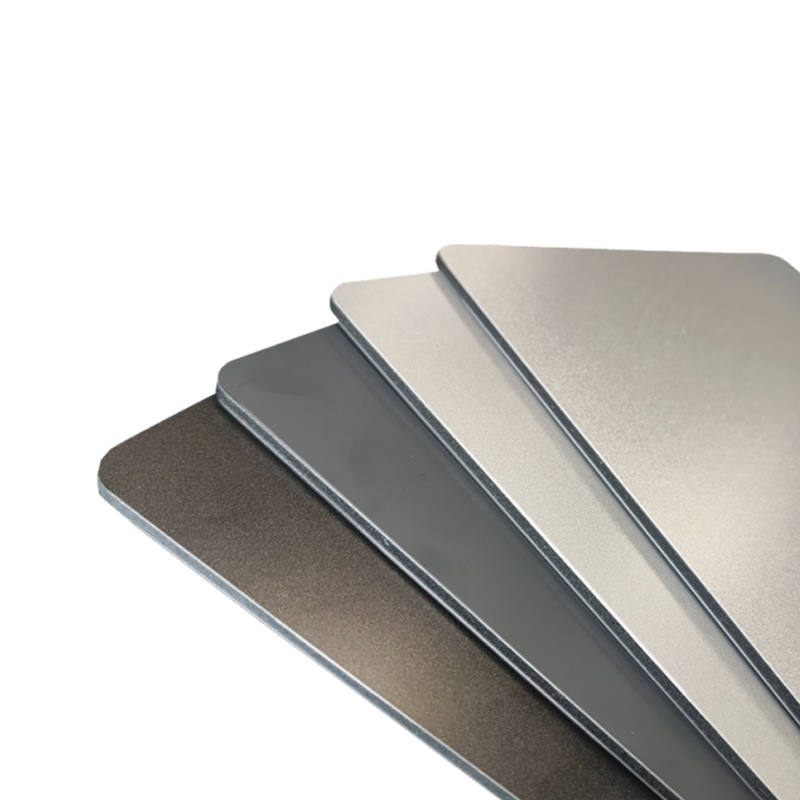
- Sample Validation: Always order samples (typically 300x500mm). Test them for:
- Color Accuracy: Delta E (ΔE) should be ≤1.5.
- Surface Hardness: Check for scratch resistance.
- Edge Sealing: Inspect for uniformity to prevent water ingress.
- Staged Payments: Mitigate financial risk by using structured payments via secure trade platforms (e.g., 30% deposit, 40% on production completion, 30% before shipment).
6. Understand the Global Competitive Landscape
Familiarize yourself with the market structure to benchmark your potential partners. The market includes tier-one global giants with extensive R&D, and tier-two/three regional manufacturers offering competitive pricing.
- Global Leaders: Names like Arconic, 3A Composites (ALUCOBOND® brand), and Mitsubishi Chemical (Alpolic) dominate with advanced product portfolios and global supply chains.
- Regional Specialists: Many companies based in China (e.g., Jyi Shyang, Vbond) and India (e.g., Viva, Alstone) offer specialized products and are often more flexible with customization and pricing for regional markets. These suppliers are increasingly obtaining international certifications, such as ISI or EN standards, to compete globally.
Conclusion: Building a Partnership for the Future
Identifying a reliable Aluminum Composite Panel manufacturer in the global market requires moving beyond price comparison. By focusing on vertical integration, stringent certifications, technical specifications, and operational metrics, you can forge partnerships that ensure your building envelopes are safe, beautiful, and durable. As the market evolves with trends such as smart panels and solar-integrated facades, a reliable partner will be your greatest asset for navigating future innovations.