Welcome to Vbond
How to Plan a Phased Delivery Schedule for Large Aluminum Composite Panel Orders
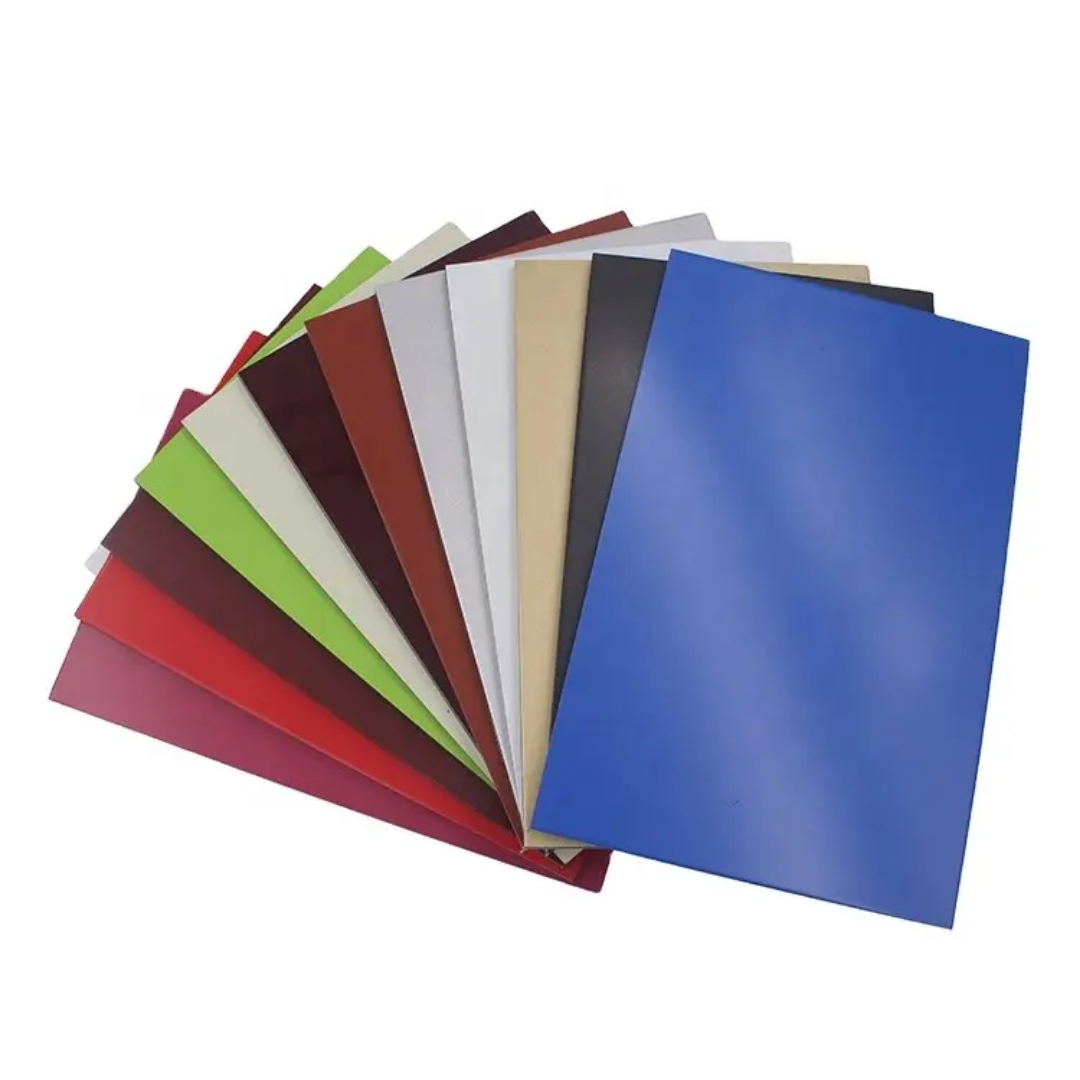
For procurement professionals managing large-scale construction projects, the challenge is rarely sourcing aluminum composite panels (ACPs)—it is getting them to the jobsite at the right time, in the right quantity, without disrupting cash flow, consuming valuable storage space, or stalling installation crews. A single delivery of 20,000 square meters of ACPs may seem efficient on paper, but on-site, it creates logistical chaos: crowded laydown areas, material exposed to weather, inventory management burdens, and the risk of damage during extended storage.
The solution is a phased delivery schedule—a carefully orchestrated plan that aligns material flow with installation sequencing, storage capacity, and project milestones. When executed properly, phased delivery reduces working capital requirements, minimizes on-site damage, improves cash flow, and ensures that the right panels arrive exactly when the installation crew is ready for them.
This article provides a comprehensive framework for planning phased delivery schedules for large ACP orders, from initial quantity planning to coordination with suppliers and logistics partners.
1. Why Phased Delivery Matters for Large ACP Orders
The Risks of Single Shipment Delivery
Risk | Consequence |
Storage constraints | Panels occupy valuable laydown space; may require off-site storage at additional cost |
Weather exposure | Extended on-site storage increases risk of moisture damage, UV degradation, or wind damage |
Inventory management | Tracking thousands of panels across a jobsite invites miscounts and misplaced materials |
Damage accumulation | Panels moved multiple times during storage increase scratch and dent risk |
Cash flow impact | Full payment due at shipment; working capital tied up months before installation |
Theft and vandalism | Larger material stockpiles attract theft; replacement panels may not match original batch |
The Benefits of Phased Delivery
- Just-in-time alignment: Panels arrive as installation crews are ready, eliminating double-handling
- Reduced storage footprint: Smaller, frequent deliveries fit within jobsite laydown limits
- Improved cash flow: Payment milestones align with delivery phases, spreading financial outlay
- Lower damage rates: Panels move directly from truck to installation, minimizing handling
- Better quality control: Issues identified early in a phase can be corrected before later phases ship
- Flexibility: Design changes or field adjustments can be accommodated between phases
2. The Foundation: Understanding Installation Sequencing
Before planning deliveries, you must understand how the facade will be installed. Installation typically follows one of several sequences:
A. Vertical Progression (Floor-by-Floor)
Panels are installed from the bottom floor upward, completing each level before moving to the next.
Phase | Quantity | Timing |
Floors 1–3 | 2,500 m² | Month 1 |
Floors 4–6 | 2,500 m² | Month 2 |
Floors 7–9 | 2,500 m² | Month 3 |
Floors 10–12 | 2,500 m² | Month 4 |
Ideal for: High-rise residential, office towers with consistent facade design per floor
B. Horizontal Progression (Elevation-by-Elevation)
Panels are installed on one building elevation at a time (north facade, then east, etc.).
Phase | Quantity | Timing |
North elevation | 3,000 m² | Month 1–2 |
East elevation | 2,500 m² | Month 2–3 |
South elevation | 3,000 m² | Month 3–4 |
West elevation | 2,500 m² | Month 4–5 |
Ideal for: Buildings with distinct facade treatments per elevation, phased building occupancy
C. Zone-Based Installation
Large buildings are divided into zones, each installed independently. This is common for campus-style developments or buildings with multiple wings.
Phase | Quantity | Timing |
Zone A (Lobby + Wings 1–2) | 4,000 m² | Month 1–2 |
Zone B (Wings 3–4) | 3,500 m² | Month 2–3 |
Zone C (Wings 5–6) | 3,500 m² | Month 3–4 |
Zone D (Connectors + Punch list) | 2,000 m² | Month 4–5 |
Ideal for: Hospitals, schools, mixed-use developments with phased occupancy
D. Custom Color or Accent Sequencing
If the facade includes accent colors, specialty finishes, or custom printed panels, these may be installed in a specific sequence (e.g., accent bands installed after main field panels).
3. Step-by-Step Framework for Phased Delivery Planning
Step 1: Quantify Total Material Requirements
Begin with a complete bill of materials (BOM) that breaks down the total ACP requirement by:
- Panel size: Standard vs. custom dimensions
- Color/finish: Field color, accent color, custom match
- Fire rating: A2, B1, or B2
- Location: By floor, elevation, zone, or installation sequence
Example: A 20-story office tower requires 12,000 m² total ACPs:
- 10,000 m² silver metallic (field color)
- 1,500 m² charcoal gray (accent bands)
- 500 m² custom-branded entrance panels
Step 2: Map Installation Schedule
Work with the general contractor and facade installer to develop a detailed installation timeline:
Time Period | Floors/Zones | Field Color Quantity | Accent Quantity | Custom Quantity |
Weeks 1–4 | Floors 1–3 | 1,500 m² | 200 m² | — |
Weeks 5–8 | Floors 4–6 | 1,500 m² | 200 m² | — |
Weeks 9–12 | Floors 7–10 | 2,000 m² | 300 m² | — |
Weeks 13–16 | Floors 11–14 | 2,000 m² | 300 m² | — |
Weeks 17–20 | Floors 15–18 | 2,000 m² | 300 m² | — |
Weeks 21–24 | Floors 19–20 + Entrance | 1,000 m² | 1,000 m² | 500 m² |
Step 3: Determine Phase Quantities
Group the installation schedule into logical delivery phases. Consider:
- Storage capacity: How many panels can the jobsite accommodate at once?
- Installation rate: How many square meters can the crew install per week?
- Lead time: Manufacturing + ocean freight + inland transport + customs clearance
- Buffer: Include 5–10% spare panels in the final phase for damage replacement
Typical phase sizing: 2–4 weeks of installation volume per delivery
Step 4: Align with Supplier Production Capacity
Not all suppliers can accommodate phased deliveries from a single production run. Confirm:
- Single-batch production: Can the supplier produce the entire quantity in one batch but release in phases?
- Batch consistency: If multiple production runs are required, how will color consistency be maintained?
- Lead time per phase: What is the production lead time for each phase after the previous release?
- Minimum release quantity: Does the supplier have minimum quantity requirements per shipment?
Step 5: Develop Delivery Schedule
Create a phased delivery schedule that aligns production, shipping, and on-site installation:
Phase | Panels | Color | Production Start | Shipping | Arrival | Installation Start |
1 | 1,700 m² | Field + Accent | Week 1 | Week 4 | Week 7 | Week 8 |
2 | 1,700 m² | Field + Accent | Week 5 | Week 8 | Week 11 | Week 12 |
3 | 2,300 m² | Field + Accent | Week 9 | Week 12 | Week 15 | Week 16 |
4 | 2,300 m² | Field + Accent | Week 13 | Week 16 | Week 19 | Week 20 |
5 | 2,300 m² | Field + Accent | Week 17 | Week 20 | Week 23 | Week 24 |
6 | 1,700 m² | ield + Accent + Custom | Week 21 | Week 24 | Week 27 | Week 28 |
Step 6: Define Shipping and Logistics
For international shipments, consider:
- Container consolidation: Phased deliveries may require LCL (less-than-container) shipments or multiple FCL (full-container) releases
- Freight cost optimization: Consolidate phases into full containers where possible to reduce per-unit freight cost
- Incoterms: Specify FOB or CIF with clear responsibility for each phase
- Forwarder coordination: Ensure freight forwarder can handle multiple releases without confusion
Step 7: Build in Contingency
Phased delivery schedules must accommodate unforeseen delays:
Contingency | Buffer |
Production delays | 1–2 weeks between phases |
Shipping delays | 1–2 weeks between arrival and installation |
Installation delays | Spare panels in final phase; ability to reschedule later phases |
Damage replacement | 5–10% spare panels in final phase or separate replacement batch |
4. Coordination with Suppliers
Phased delivery requires clear communication and contractual clarity with the ACP manufacturer. Key elements to specify in purchase orders:
A. Single-Batch Production
Specify that all phases must come from the same production batch to ensure color consistency. The manufacturer should:
- Produce the full quantity in one continuous run
- Hold finished panels in warehouse for phased release
- Provide batch test reports confirming consistency
B. Release Authorization
Define how phases are released:
- Scheduled releases: Fixed dates based on project schedule
- Conditional releases: Released upon written authorization from buyer
- Hold/release: Supplier produces but holds pending buyer instruction
C. Payment Terms
Align payment milestones with production and delivery phases:
Milestone | Payment |
Deposit (upon order) | 30% |
Phase 1 production complete | 10% |
Phase 1 shipment | 10% |
Phase 2 production complete | 10% |
Phase 2 shipment | 10% |
Final phase shipment | 10% |
Balance after installation | 10% |
D. Documentation per Phase
Each delivery should include:
- Packing list specific to the phase
- Batch test reports for the phase (if separate production runs)
- Loading diagram showing panel orientation
- Customs documentation (commercial invoice, bill of lading, packing list)
5. On-Site Logistics and Storage
Even with phased delivery, on-site storage must be planned:
Storage Requirements
Factor | Requirement |
Location | Level, dry, well-ventilated area; away from construction activity |
Protection | Covered storage or tarping to protect from rain and UV |
Access | Clear path for forklifts and trucks; no overhead obstructions |
Security | Fenced area with controlled access; lighting for after-hours security |
Pallet stacking | No stacking beyond manufacturer limits (typically 1–2 pallets high) |
Receiving Process
For each delivery:
- Inspection: Verify quantity against packing list; inspect for visible damage before signing bill of lading
- Documentation: File packing list, test reports, and delivery receipt for each phase
- Inventory tracking: Maintain running inventory by panel type, color, and location
- Damage reporting: Document any damage with photos; file claims immediately
6. Risk Management
Color Consistency Across Phases
The greatest risk with phased delivery is color variation between phases. Mitigation strategies:
- Single-batch production: All panels from same coating batch; no variation between phases
- Spectrophotometric measurement: Require ΔE < 1.0 between phases
- Hold samples: Retain reference panels from Phase 1 for comparison against later phases
- Mock-up approval: Install full-scale mock-up from Phase 1; use as reference for subsequent phases
Supplier Reliability
Vet suppliers on their ability to manage phased deliveries:
- Production capacity: Can they produce full quantity and hold inventory?
- Warehouse space: Do they have secure storage for finished goods?
- Experience: Have they managed phased deliveries for similar-scale projects?
- References: Contact past clients who used phased delivery
Logistics Disruptions
Phased schedules increase exposure to logistics volatility:
- Diversify routes: If one port is congested, use alternatives
- Buffer inventory: Maintain 2–4 weeks of installation inventory on-site to absorb delays
- Expedited options: Identify air freight options for critical shortage panels
7. Sample Phased Delivery Schedule Template
Project: 20-Story Office Tower
Total ACP:12,000 m² (Field: Silver Metallic; Accent: Charcoal Gray; Custom: Branded Entrance Panels)
Phase | Delivery Date | Field Color (m²) | Accent (m²) | Custom (m²) | | Total (m²) | Containers | Installation Date |
1 | Jan 15 | 1,400 | 200 | — | 1,600 | 1 x 40ft | Jan 25 |
2 | Feb 5 | 1,400 | 200 | — | 1,600 | 1 x 40ft | Feb 15 |
3 | Feb 25 | 1,900 | 300 | — | 2,200 | 2 x 20ft | Mar 5 |
4 | Mar 15 | 1,900 | 300 | — | 2,200 | 2 x 20ft | Mar 25 |
5 | Apr 5 | 1,900 | 300 | — | 2,200 | 2 x 20ft | Apr 15 |
6 | Apr 25 | 900 | 200 | 500 | 1,600 | 1 x 40ft | May 5 |
Total | — | 9,400 | 1,500 | 500 | 500 | 8 containers | — |
Note: 600 m² spare panels (5%) to be ordered separately and held in warehouse for replacements.*
8. Conclusion
Phased delivery for large aluminum composite panel orders is not merely a logistical convenience—it is a strategic tool that aligns material flow with construction reality. By breaking large orders into manageable phases, procurement professionals can:
- Reduce on-site storage requirements and material handling
- Improve cash flow by aligning payments with project progress
- Minimize damage and theft risks
- Maintain color consistency through single-batch production
- Build flexibility to accommodate schedule changes
Successful phased delivery requires close coordination with the ACP manufacturer, freight forwarder, general contractor, and installation subcontractor. It demands detailed planning upfront, clear contractual specifications, and proactive communication throughout the project lifecycle.
When executed correctly, phased delivery transforms a potential logistical headache into a competitive advantage—ensuring that the right panels arrive at the right time, in the right condition, ready to realize the architectural vision without delay.