Welcome to Vbond
How to Verify if an Aluminum Composite Panel is Made with Virgin Aluminum
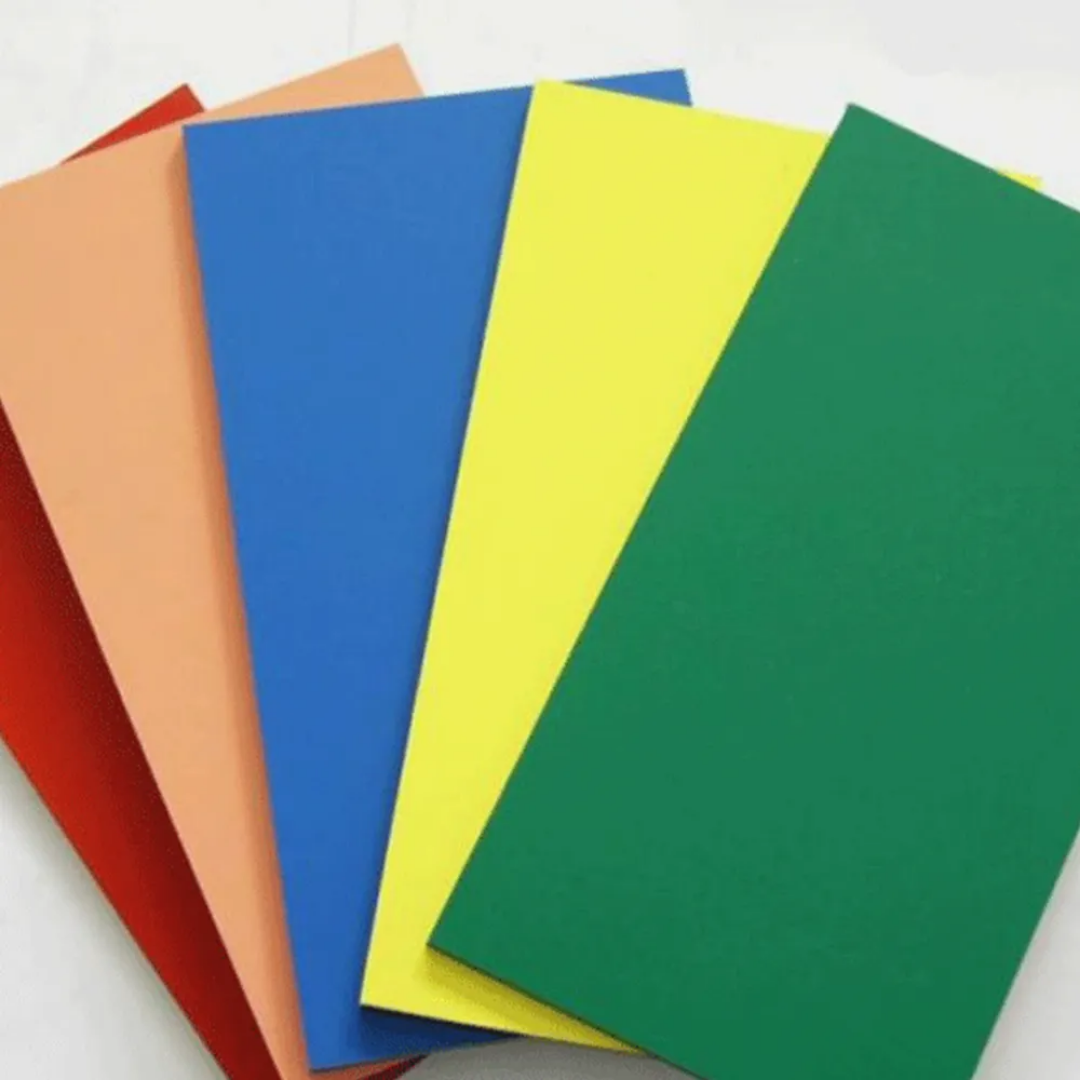
For professional buyers in the architectural cladding industry, the specification "aluminum composite panel" is deceptively simple. Beneath the surface coating and the polyethylene or fire-retardant core lies a material that fundamentally determines the panel's structural integrity, formability, and long-term durability: the aluminum skin.
One of the most critical—yet often overlooked—quality differentiators is whether the aluminum used is virgin aluminum or recycled aluminum. While recycled aluminum has its place in non-structural applications, virgin aluminum remains the gold standard for high-performance architectural facades. But how can a buyer verify what they are actually purchasing?
This guide provides a technical yet practical framework for verifying the origin and quality of aluminum used in ACPs, ensuring that the panels you specify meet the performance standards required for demanding architectural applications.
Why Virgin Aluminum Matters in ACPs
Aluminum composite panels consist of two thin aluminum sheets bonded to a core material. These aluminum skins, typically 0.3mm to 0.5mm thick, are subjected to significant mechanical stresses during manufacturing, fabrication, and installation.
Virgin aluminum—primary aluminum produced directly from bauxite ore—offers distinct advantages over recycled aluminum:
Property | Virgin Aluminum | Recycled Aluminum |
Alloy Consistency | Precisely controlled 3000 or 5000 series alloys with guaranteed mechanical properties. | Variable composition depending on scrap source; impurities common. |
Formability | Excellent ductility; passes tight T‑bend tests (0T to 1T) without cracking. | Reduced ductility; higher risk of micro-cracking during bending. |
Surface Quality | Smooth, uniform surface ideal for high-gloss and metallic coatings. | Potential for inclusions, pitting, or inconsistent texture. |
Flatness | Maintains dimensional stability; minimal oil-canning after fabrication. | Residual stresses can cause warping or waviness post-fabrication. |
Corrosion Resistance | Consistent oxide layer formation; superior long-term durability. | Impurities can create galvanic corrosion sites. |
Batch Consistency | Highly consistent from coil to coil. | Greater variability between batches due to scrap composition. |
Understanding Aluminum Alloys: 3000 Series vs. 5000 Series
Before verifying virgin aluminum, it is essential to understand the alloy families used in quality ACPs.
- 3000 Series (Manganese Alloy): The most common choice for ACP skins. It offers excellent formability, good corrosion resistance, and is typically used for standard architectural panels.
- 5000 Series (Magnesium Alloy): A premium option offering higher strength, superior corrosion resistance (especially in marine environments), and enhanced weldability. This series is preferred for high-wind-load applications and coastal projects.
Reputable manufacturers using virgin aluminum will specify the exact alloy series (e.g., AA3003, AA5005) in their technical documentation. Recycled-content panels often cannot guarantee a specific alloy composition.
Verification Method #1: Demand Mill Certificates (Material Test Reports)
The most reliable verification method is documentation. A Mill Certificate (also called a Material Test Report or MTR) is a quality assurance document issued by the aluminum coil supplier to the panel manufacturer.
What to look for on a Mill Certificate:
- Alloy Designation: Clear identification of the alloy series (e.g., AA3003 H14 or AA5005 H24).
- Chemical Composition: Detailed breakdown of element percentages. Virgin aluminum will show tight tolerances with controlled levels of silicon, iron, copper, manganese, magnesium, and zinc.
- Mechanical Properties: Tensile strength, yield strength, and elongation percentages. These should meet ASTM B209 or EN 485 standards.
- Heat Treatment Code: The temper designation (e.g., H14, H24) indicates the mechanical treatment applied to achieve specific properties.
- Traceability: Batch numbers that link the certificate to specific coils used in your panel production.
Red Flag: A supplier who cannot provide mill certificates or offers only generic "aluminum" specifications without alloy details is likely using recycled or unspecified material.
Verification Method #2: Conduct On-Site or Third-Party Testing
For critical projects, documentation alone may not suffice. Physical testing provides empirical verification.
Spectrochemical Analysis
Using a handheld Optical Emission Spectrometer (OES) or X-Ray Fluorescence (XRF) analyzer, a qualified technician can identify the elemental composition of the aluminum skin on-site. This test reveals:
- Whether the material matches the claimed alloy series.
- The presence of trace elements (copper, zinc, lead) that indicate recycled content.
- Consistency across multiple panels from different batches.
Mechanical Testing
- T‑Bend Test: Virgin aluminum (especially 3003 or 5005 series) typically passes a 0T or 1T bend without visible cracking. Recycled aluminum often cracks at 2T or 3T due to reduced ductility.
- Tensile Testing: A laboratory tensile test confirms yield strength and elongation values match the claimed alloy standard.
Verification Method #3: Visual and Surface Inspection
Experienced fabricators and installers can often identify suspect aluminum through careful observation.
- Surface Uniformity: Virgin aluminum coils produce panels with consistent surface texture. Recycled aluminum may exhibit subtle streaking, pitting, or inclusions visible under raking light.
- Edge Quality: When cutting or routing panels, virgin aluminum produces clean, burr-free edges. Recycled aluminum with impurities may show rough edges or inconsistent cutting behavior.
- Forming Behavior: During fabrication, virgin aluminum bends smoothly with uniform springback. Recycled aluminum may exhibit uneven bending, micro-cracking along bend lines, or unpredictable springback.
Verification Method #4: Supplier Audits and Source Transparency
Professional buyers should treat aluminum sourcing as a supply chain transparency issue. When vetting suppliers, ask:
1. Who is the upstream aluminum supplier? Reputable panel manufacturers work with certified aluminum mills (e.g., Alcoa, Novelis, Constellium, or regional equivalents) with established reputations.
2. Is the aluminum certified to international standards? Look for compliance with ASTM B209 (USA), EN 485 (Europe), or GB/T 3880 (China) depending on region.
3. What is the percentage of post-consumer recycled content? Some manufacturers offer "green" panels with certified recycled content. This is acceptable when transparently disclosed and when performance testing confirms suitability. The risk arises when recycled content is undisclosed.
4. Can we conduct a factory audit? A visit to the panel manufacturer's facility allows inspection of incoming coil storage, which often reveals coil tags from the original aluminum mill.
The Procurement Risk Matrix
Risk Level | Material Reality | Verification Status |
Low Risk | Documented virgin aluminum (3000 or 5000 series) with full mill certificates and third-party testing. | Preferred for high-rise, coastal, and premium projects. |
Medium Risk | Supplier claims virgin aluminum but provides only generic specifications; no mill certificates available. | Acceptable only for interior or short-term applications with reduced liability. |
High Risk | Undisclosed recycled content; no alloy specification; visible quality inconsistencies. | Reject for any exterior or structural application. |
Conclusion
For professional buyers, verifying that an aluminum composite panel is made with virgin aluminum is not about material preference—it is about risk management. Virgin aluminum, particularly in certified 3003 or 5005 series alloys, delivers the consistent mechanical properties, formability, and corrosion resistance required for long-lasting architectural facades.
The verification process is straightforward: demand mill certificates with full alloy and chemical composition details, conduct independent testing when warranted, inspect surface and forming quality, and audit supplier transparency. By applying these verification methods, buyers protect their projects from the hidden costs of inferior materials—costs that often emerge years after installation, long after the initial savings have been forgotten.