Welcome to Vbond
How UV Exposure Affects Different Colors of Aluminum Composite Panels
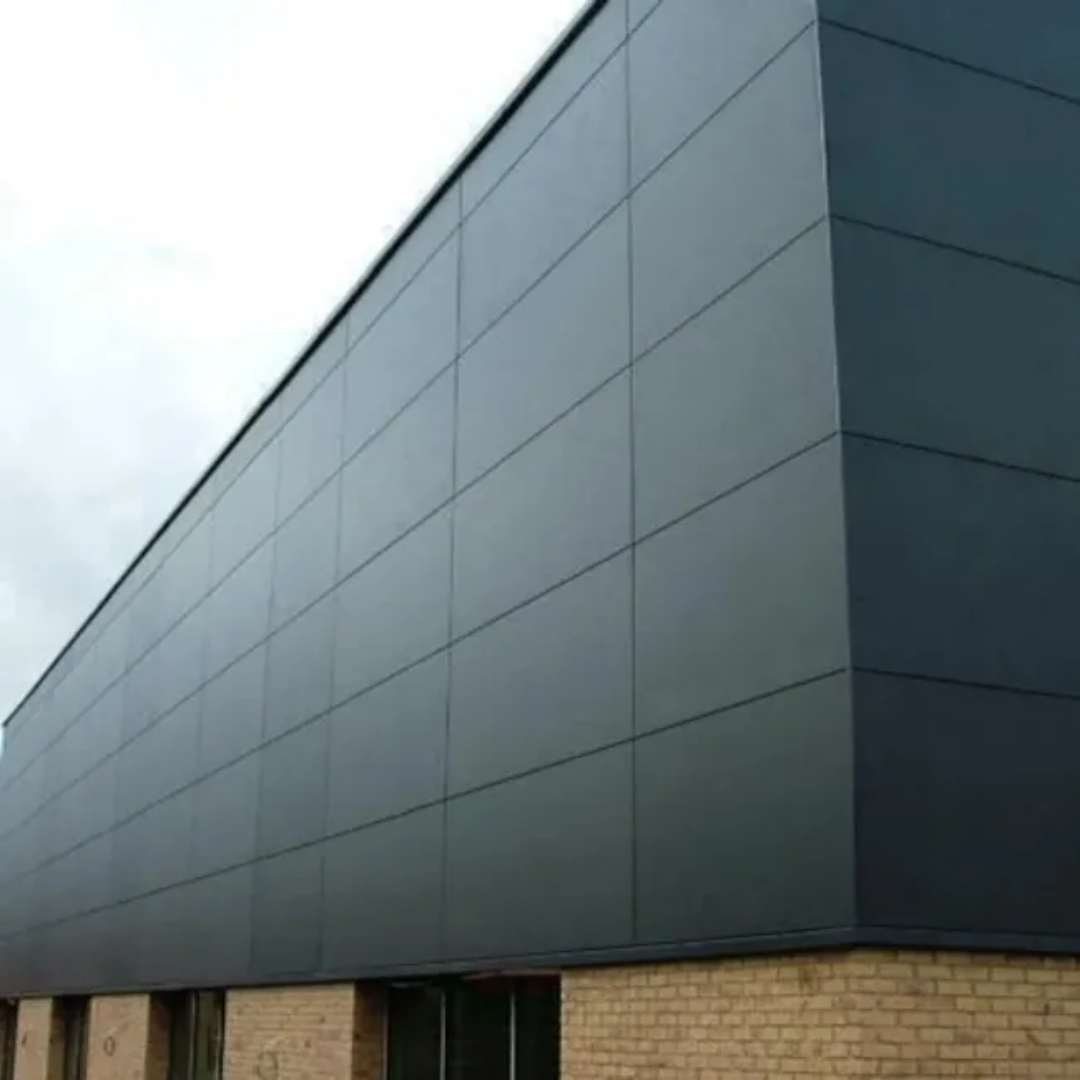
The sun is both a blessing and a threat to building facades. While natural light brings architecture to life, ultraviolet (UV) radiation silently degrades materials over time. For aluminum composite panels (ACPs), UV exposure is the primary driver of visible aging—manifesting as fading, chalking, and color shifting. However, not all colors are created equal. Some resist UV attack for decades, while others show noticeable change within just a few years.
For procurement professionals and specifiers, understanding how UV exposure interacts with different ACP colors is essential to selecting the right product for the right environment. This article explains the science of UV degradation, compares color performance, and provides actionable guidance for specifying ACPs that maintain their appearance over the long term.
The Science of UV Degradation in ACP Coatings
Aluminum composite panels themselves are UV-stable. The aluminum skins and mineral or polyethylene cores do not degrade significantly from sunlight. The vulnerability lies in the coating system—the thin layer of paint or resin that provides color and protection.
Most exterior ACPs use either PVDF (polyvinylidene fluoride) or polyester coatings. UV radiation breaks down the chemical bonds in the coating’s resin and pigments, leading to three distinct failure modes:
- Fading: Loss of color intensity. The coating becomes lighter or less saturated.
- Chalking: The resin degrades, releasing loose pigment particles on the surface that appear as a white, powdery residue.
- Color Shift: The balance between pigments changes, causing the color to drift toward a different hue (e.g., a red panel turning pink or orange).
The rate and severity of these failures depend on three variables: the coating chemistry, the pigment type, and the color itself.
Coating Chemistry: PVDF vs. Polyester
Before comparing colors, it is critical to understand the protective role of the coating system.
Coating Type | UV Resistance | Typical Lifespan (Color Retention) | Cost |
PVDF (70% Kynar® or equivalent) | Excellent | 20–30 years | Premium |
Polyester (Standard) | Moderate | 5–10 years | Standard |
Polyester (Enhanced) | Good | 10–15 years | Mid-range |
For exterior facades in sunny climates, PVDF coatings are the industry standard. They contain fluoropolymers that resist UV breakdown far better than polyesters. When specifying ACPs for any project where long-term color retention matters, PVDF should be mandatory. Polyester may be acceptable for interior applications, low-rise buildings in mild climates, or short-term installations.
How Different Colors Perform Under UV Exposure
1. White and Light Colors
White is the most common color for building facades for good reason. Titanium dioxide (TiO₂), the primary white pigment, is highly UV-stable and actually helps protect the resin by absorbing and scattering UV radiation.
Performance: Excellent. White panels show minimal fading or chalking for decades when using PVDF coatings. The main failure mode is chalking from resin degradation, but modern PVDF formulations resist this effectively.
Recommendation: White is a safe, low-maintenance choice for any climate.
2. Black and Dark Colors
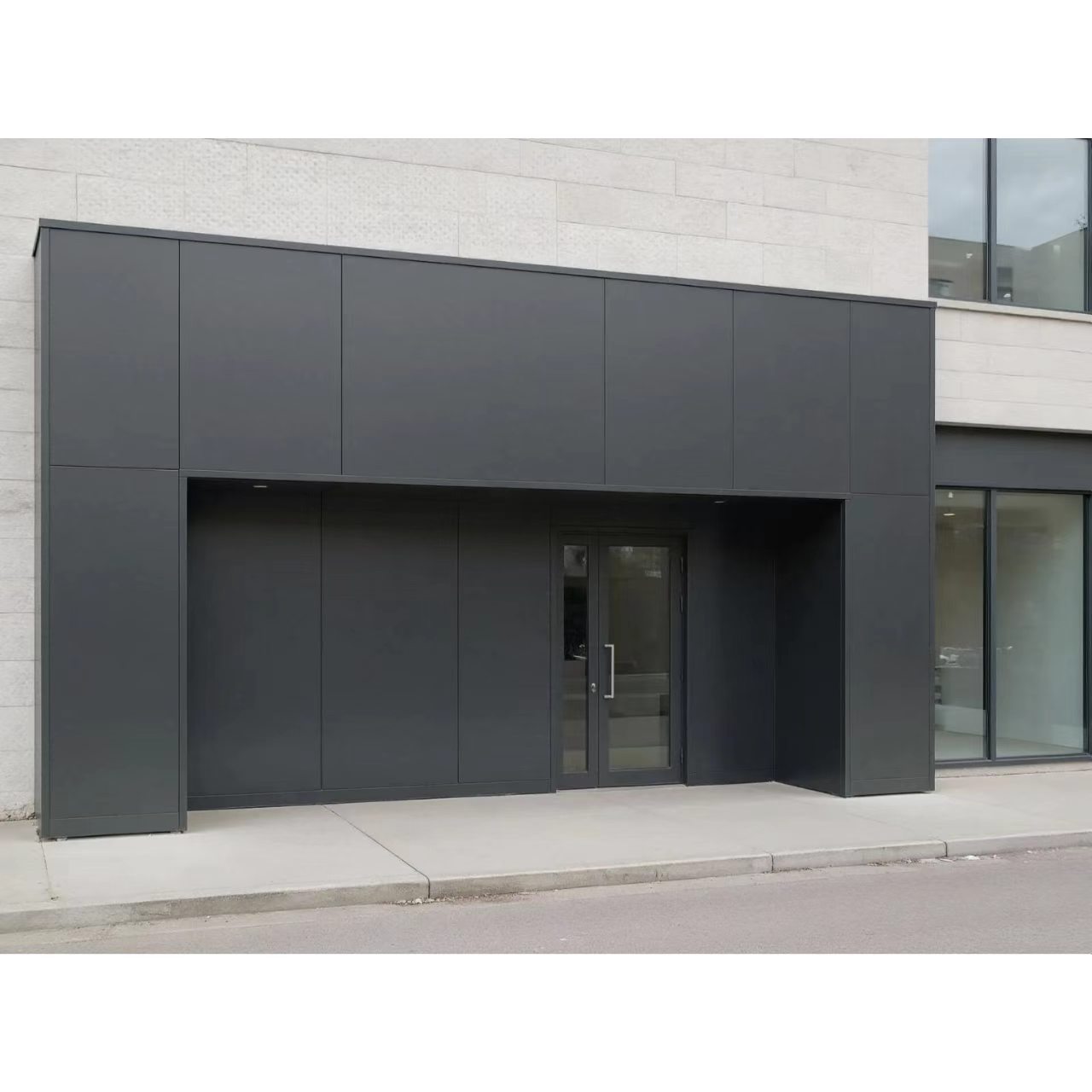
Black and dark colors (dark grays, dark blues, dark greens, dark reds) present a paradox. The pigments themselves—typically carbon black or iron oxide—are extremely UV-stable. Carbon black is one of the most lightfast pigments available. However, dark colors absorb more solar radiation, leading to higher surface temperatures. This heat accelerates resin degradation, which can cause chalking and gloss loss.
Performance: Good to excellent for pigment stability, but heat-related resin degradation can occur. Dark PVDF panels may develop a slight whitish haze (chalking) after many years, though the color itself remains accurate.
Recommendation: Specify PVDF with UV-absorber additives. Dark colors are suitable for most climates but may show chalking sooner in very high UV / high-heat regions (e.g., desert environments).
3. Earth Tones (Browns, Beiges, Olive Greens, Terracottas)
These colors rely on inorganic pigments—iron oxides, chromium oxides, and mixed metal oxides. Inorganic pigments are naturally UV-stable because they are derived from minerals. They do not fade, shift, or break down under sunlight.
Performance: Excellent. Earth tones are among the most UV-resistant colors available. A well-formulated PVDF coating with inorganic pigments will maintain its appearance for the life of the building.
Recommendation: Ideal for long-life projects where color stability is critical. No special precautions needed.
4. Bright Reds, Oranges, and Yellows
This is the danger zone. Bright reds, oranges, and yellows often require organic pigments (e.g., quinacridone, perylene, azo pigments). Organic pigments produce vibrant, saturated colors that inorganic pigments cannot achieve. However, they are susceptible to UV degradation. Red pigments are particularly vulnerable, often fading or shifting toward pink or orange over time.
Performance: Poor to moderate, depending on pigment quality. Even high-end PVDF coatings with organic pigments will show measurable fading within 5–10 years in sunny climates. Lower-quality polyester coatings may fade within 1–3 years.
Recommendation: Avoid bright reds, oranges, and yellows for high-exposure facades unless absolutely necessary for brand identity. If used, specify premium PVDF with the highest-grade organic pigments, accept that fading will occur, and consider planning for periodic recoating or panel replacement.
5. Bright Blues and Greens
Like reds and yellows, vibrant blues and greens often rely on organic pigments (phthalocyanine blues and greens are exceptions—they are relatively stable). Phthalocyanine pigments offer good UV stability, but some bright shades still fade.
Performance: Moderate to good. Phthalocyanine-based blues and greens perform better than reds but still may show some fading over 10–15 years. Very bright, neon-like shades are less stable.
Recommendation: Acceptable for many projects. Request accelerated weathering data for the specific shade. For critical applications, consider shifting to a slightly muted tone that can be achieved with inorganic pigments.
6. Metallic and Effect Colors
Metallic finishes contain aluminum flakes or mica particles that reflect light. The base color may come from either inorganic or organic pigments, but the metallic flakes themselves are UV-stable. The primary risk is resin degradation leading to loss of gloss and a dulling of the metallic effect. Additionally, UV exposure can cause the clear topcoat to yellow slightly, affecting the perceived color.
Performance: Moderate. Metallic finishes are more sensitive to UV than solid colors because the reflective nature magnifies any resin degradation. The metallic sparkle may diminish over time even if the base color remains stable.
Recommendation: Specify high-durability PVDF with UV-absorbing clear coat. Accept that some loss of metallic luster is inevitable over 15+ years.
Geographic and Climatic Factors
UV exposure is not uniform across the globe. The following factors accelerate degradation:
- High solar radiation: Deserts, tropical regions, high altitudes (e.g., Denver, Mexico City)
- High temperatures: Accelerates chemical reactions in resin degradation
- High humidity: Can exacerbate chalking and coating breakdown
A color that performs well in Seattle may fail prematurely in Phoenix or Dubai. When specifying ACPs for high-UV regions, always:
- Choose PVDF over polyester
- Prefer inorganic pigments (earth tones, whites, blacks)
- Request accelerated weathering data specific to the color
Testing and Standards: What to Look For
Reputable manufacturers provide accelerated weathering test reports that simulate years of UV exposure in a laboratory setting. The key metric is ΔE (Delta E) —the total color difference between an exposed sample and an unexposed control.
ΔE Value | Visual Interpretation |
< 1.0 | Not perceptible |
1.0 – 2.0 | Slight change, visible only under controlled lighting |
2.0 – 3.0 | Noticeable fading |
> 3.0 | Clearly visible color change |
Industry standards for architectural coatings (ASTM D2244, ISO 16474) typically consider ΔE < 2.0 after 10 years of equivalent exposure as acceptable for premium products.
What to request from suppliers:
- Accelerated weathering test results (e.g., QUV or Xenon Arc) per ASTM G154 or ISO 16474
- Total exposure hours and corresponding ΔE values
- Gloss retention data (percentage of original gloss retained)
Procurement Recommendations by Color Category
Color Category | UV Stability | Recommended Coating | Expected Fading (10 years, high-UV climate) |
White / Light | Excellent | PVDF or high-quality polyester | ΔE < 1.0 |
Black / Dark | Good | PVDF (with UV absorbers) | ΔE < 1.5 (may chalk) |
Earth Tones | Excellent | PVDF or high-quality polyester | ΔE < 1.0 |
Bright Red/Orange/Yellow | Poor | Premium PVDF only; accept fading | ΔE 2.0 – 4.0 |
Bright Blue/Green | Moderate | PVDF | ΔE 1.5 – 2.5 |
Metallic | Moderate | PVDF with clear coat | ΔE 1.5 – 2.5 (gloss loss) |
Warranty Implications
Most ACP warranties include specific provisions for color fading. Read carefully:
- Full warranty coverage for color change typically applies only if ΔE exceeds a defined threshold (often 2–3) within a set period (e.g., 10 years).
- Excluded colors: Some warranties explicitly exclude bright reds, oranges, and yellows from full fading coverage due to their known UV sensitivity.
- Proration: After the full coverage period, fading claims may be prorated.
For brand-critical colors, negotiate warranty terms that align with your expectations. Consider requiring the manufacturer to provide a written statement of expected ΔE performance for the specific color and project location.
Conclusion
UV exposure is an unavoidable reality for exterior aluminum composite panels. However, its effects can be predicted, managed, and mitigated through informed material selection.
The most UV-resistant colors are whites, earth tones, and blacks—all achievable with stable inorganic pigments or carbon black. The most vulnerable are bright reds, oranges, and yellows that require organic pigments. Bright blues and greens fall in the middle, while metallic finishes offer moderate stability with some gloss loss.
For procurement professionals, the key takeaways are clear:
- Specify PVDF coatings for any exterior project where long-term appearance matters.
- Choose inorganic pigment colors (earth tones, whites, grays) for maximum fade resistance.
- If brand identity demands bright organic colors, accept that fading will occur, plan for maintenance, and verify warranty coverage.
- Always request accelerated weathering test data with ΔE values for the exact color and coating system.
- Consider the geographic UV index of the project site—higher UV requires more robust specifications.
By matching color selection to UV exposure realities, you ensure that your building’s facade will continue to represent your brand with integrity for decades to come.