Welcome to Vbond
Inconsistent Coating Color: A Common Aluminum Composite Panel Buyer Complaint
Inconsistent Coating Color: A Common Aluminum Composite Panel Buyer Complaint
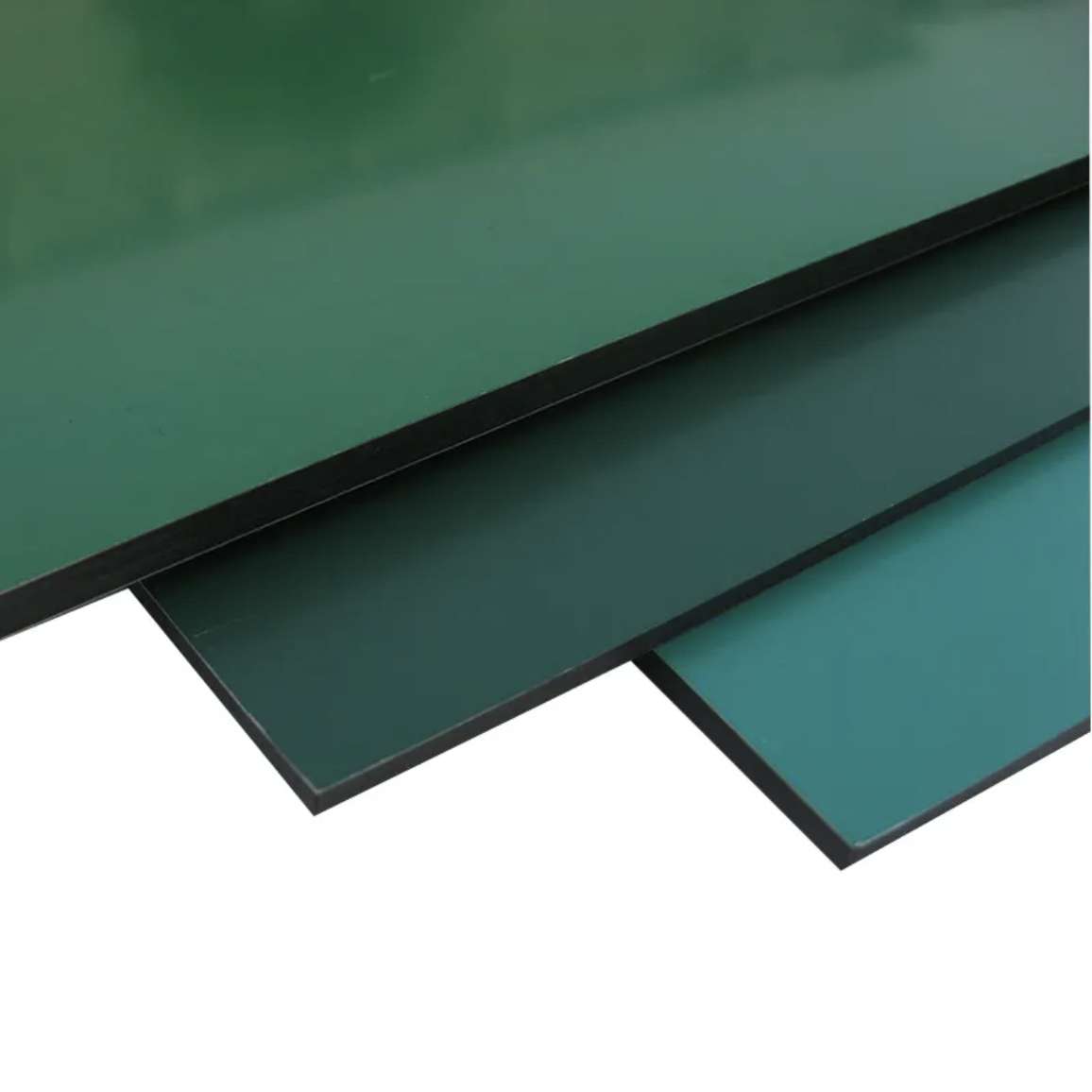
You approved the sample. The color was perfect. The architect signed off. Then the full shipment arrived—and the panels do not match. Some are lighter. Some are darker. Some have a different undertone entirely. When installed side by side, the facade looks patchy, unprofessional, and unacceptable.
Inconsistent coating color is one of the most common complaints among aluminum composite panel buyers. It is also one of the most expensive to fix, because color mismatches are often not discovered until panels are already installed—or worse, after the building is completed.
This guide explains why coating color inconsistency happens, how to measure and quantify color differences, what industry standards apply, and how procurement professionals can ensure that the panels they receive match the approved sample—and each other.
The True Cost of Color Inconsistency
Color inconsistency is not just a cosmetic issue. It has real financial and professional consequences:
Consequence | Typical Impact |
Project rejection | The architect or building owner refuses to accept the facade. |
Delayed completion | Panels must be sorted, replaced, or repainted, extending project timelines by weeks or months. |
Rework costs | Removal, replacement, and reinstallation can cost 3–5 times the original panel price. |
Reputational damage | A patchy facade reflects poorly on the contractor, procurement professional, and supplier. |
Legal disputes | Color-mismatch claims often end in arbitration or litigation. |
The hidden cost: Even if color variation is within a theoretical tolerance, if the human eye can see the difference, the facade will be rejected. Perception matters more than numbers.
What Causes Coating Color Inconsistency?
Color inconsistency in aluminum composite panels can originate at multiple points in the manufacturing and supply chain.
1. Coating Batch Variation
PVDF and polyester coatings are manufactured in batches. Each batch is formulated to match a target color standard, but batch-to-batch variation is inevitable due to:
- Pigment batch variation: Even high-quality pigments vary slightly between production runs.
- Resin variation: Changes in resin viscosity or reactivity affect final color.
- Mixing and dispersion: Inconsistent mixing leads to uneven pigment distribution.
Result: The sample was coated using Batch A. Your production order runs using Batch E. Even if both batches are within the supplier's internal tolerances, the visible difference between Batch A and Batch E may be unacceptable.
2. Substrate Variation
The aluminum coil substrate affects how the coating appears. Variations include:
- Surface roughness: Smoother surfaces reflect more light, appearing glossier and slightly different in color.
- Alloy composition: Different aluminum alloys (e.g., AA5005 vs. AA3105) have different surface chemistries that affect coating appearance.
- Pretreatment residue: Inconsistent conversion coating or primer application changes the base color beneath the topcoat.
Result: Two panels coated with the same paint from the same batch may still look different if the aluminum substrate varies.
3. Coating Application Inconsistency
Even with identical paint and substrate, application variables affect final color:
Variable | Effect on Color |
Coating thickness | Thicker coatings appear darker and deeper; thinner coatings appear lighter. |
Curing temperature | Over-curing can cause yellowing or color shift; under-curing leaves the color unstable. |
Line speed | Faster line speed reduces dwell time, affecting curing and final color. |
Spray gun settings (if spray-coated) | Air pressure, fluid flow, and gun distance affect droplet size and coverage. |
Result: Panels from the beginning of a production run may differ from panels at the end if application parameters drift.
4. Poor Batch Mixing During Shipment
Even when all panels are within tolerance, the way they are packed and shipped can create visible issues.
Problem: The supplier packs panels from Batch A in one set of bundles and panels from Batch B in another set. The installer uses all of Bundle 1 (Batch A) on one elevation and all of Bundle 2 (Batch B) on another elevation. The two elevations look different.
Solution: The supplier should **mix batches** during packing so that panels from different batches are distributed evenly across the shipment, preventing large blocks of mismatched color.
5. Metamerism
Metamerism is a phenomenon where two colors match under one light source (e.g., sunlight) but differ under another (e.g., fluorescent or LED light).
Why it matters for ACPs: A panel may perfectly match the sample under the factory's lighting but appear mismatched on site under different lighting conditions.
How to prevent: Specify that color matching must be verified under multiple light sources, including daylight (D65), fluorescent (CWF or TL84), and incandescent (A).
How to Measure Color Inconsistency: The ΔE Value
Subjective visual assessment ("looks different") is important, but procurement professionals need objective, measurable tolerances.
The industry standard for measuring color difference is ΔE (Delta E), using the CIELAB color space (Lab). In this system:
- L measures lightness (0 = black, 100 = white)
- a measures red-green (positive = red, negative = green)
- b measures yellow-blue (positive = yellow, negative = blue)
ΔE is the mathematical distance between two colors in this three-dimensional space. A smaller ΔE means a smaller visible difference.
ΔE Value | Visible Difference | Acceptability for ACP Facades |
0–0.5 | Not visible to the human eye | Excellent – ideal for high-end projects |
0.5–1.0 | Visible only under controlled conditions (light booth) | Good – acceptable for most projects |
1.0–2.0 | Slightly visible to trained observers | Marginal – may be rejected by architects |
2.0–3.0 | Clearly visible to most observers | Poor – likely to be rejected |
>3.0 | Obvious color difference | Unacceptable – reject shipment |
Industry benchmarks:
- AAMA 2605 (premium PVDF coatings): ΔE ≤ 1.5
- AAMA 2604 (standard PVDF coatings): ΔE ≤ 2.0
- AAMA 2603 (polyester coatings): ΔE ≤ 3.0
For most architectural aluminum composite panel projects, a ΔE of ≤1.5 is recommended. For critical applications (high-end retail, corporate headquarters, luxury residential), specify ΔE ≤1.0.
How to Inspect for Color Inconsistency
1. Visual Inspection Under Standardized Lighting
Tool: Light booth with multiple light sources (D65 daylight, fluorescent, incandescent)
Procedure:
- Place the approved sample next to production panels.
- View at a 45° angle (standard viewing geometry).
- Inspect under each light source.
- Repeat with panels from different bundles placed next to each other.
Red flags:
- Any visible difference under D65 daylight (the primary assessment condition).
- Significant color shift between light sources (indicates metamerism).
2. Spectrophotometer Measurement
Tool: Spectrophotometer (calibrated)
Procedure:
- Measure Lab values of the approved sample (reference).
- Measure production panels (at least 10 panels per batch, 3–5 readings per panel).
- Calculate ΔE between production panels and the reference sample.
- Also calculate ΔE between different production panels (batch-to-batch variation).
Acceptance criteria:
- ΔE between any production panel and the approved sample ≤ 1.5
- ΔE between any two production panels in the same shipment ≤ 1.0
3. Gloss Measurement
Color perception is affected by gloss. Two panels with identical colors but different gloss levels will look mismatched.
Tool: Gloss meter (60° geometry)
Procedure:
- Measure gloss of approved sample.
- Measure gloss of production panels.
Acceptable tolerance: ±5 gloss units (e.g., 30 ±5 when specified gloss is 30)
Industry Standards for Color Consistency
Procurement professionals should reference these standards when specifying color requirements:
Standard | Scope | Key Color Tolerance |
AAMA 2605 | High-performance PVDF coatings (exterior) | ΔE ≤ 1.5; gloss ±5 units |
AAMA 2604 | Standard PVDF coatings | ΔE ≤ 2.0; gloss ±5 units |
AAMA 2603 | Polyester coatings | ΔE ≤ 3.0; gloss ±5 units |
ASTM D2244 | Method for calculating color difference (ΔE) | N/A – calculation method |
ASTM D1729 | Visual evaluation of color differences | N/A – visual assessment standard |
ISO 11664-4 | CIELAB color space (Lab) | N/A – measurement standard |
For procurement: Always specify the AAMA standard (e.g., "Coating shall meet AAMA 2605 with ΔE ≤ 1.5 from approved sample").
How Procurement Professionals Can Prevent Color Inconsistency
Stage 1: Pre-Order Specification
- Require ΔE tolerance in your purchase order: "Color difference between production panels and approved sample shall not exceed ΔE 1.5 (CIELAB)."
- Specify AAMA standard (2605, 2604, or 2603) based on project requirements.
- Require gloss tolerance: ±5 gloss units at 60°.
- Request metamerism test: Color shall match under D65, fluorescent, and incandescent light.
- Require batch mixing: Supplier must mix multiple coating batches evenly across the shipment.
Stage 2: Sample Approval
- Retain a sealed reference sample with date, batch number, and Lab measurements.
- Measure and record the sample's ΔE and gloss values.
- Require that production panels match the retained sample, not a digital file or printed chip.
Stage 3: Pre-Production Validation
- Request a pre-production sample from the actual coating batch to be used for your order.
- Measure ΔE against the retained sample.
- Do not approve production until ΔE meets the specification.
Stage 4: Pre-Shipment Inspection
Engage a third-party inspector to:
- Randomly select panels from across the production run.
- Measure Lab values (spectrophotometer) and calculate ΔE against the retained sample.
- Measure gloss at 60°.
- Reject any batch where ΔE exceeds tolerance or gloss exceeds ±5 units.
- Verify that panels from different batches are mixed in the packing, not segregated.
Stage 5: Incoming Inspection
Upon delivery, before installation:
- Randomly select panels from multiple bundles.
- Compare visually to the retained sample under standardized lighting.
- Perform a spectrophotometer measurement if any visual difference is suspected.
- Do not install panels that fail visual or ΔE inspection
What to Do When Color Inconsistency Is Discovered
If panels have been delivered and a color mismatch is detected:
1. Stop installation immediately. Do not install suspect panels.
2. Document thoroughly. Photograph the mismatched panels next to the retained sample under consistent lighting. Include a color reference card in photos.
3. Measure objectively. Use a spectrophotometer to generate Lab and ΔE data.
4. Isolate the affected panels. Determine whether the issue is batch-specific (some bundles) or shipment-wide.
5. Notify the supplier in writing. Provide test data and photographs. Reference your purchase order specifications.
6. Demand a remedy. Options include:
- Replacement panels color-matched to your retained sample (at supplier's expense)
- Sorting and repacking if only certain bundles are affected
- Full rejection and refund if the entire shipment is unacceptable
7. Preserve the retained sample. Do not return it to the supplier until the dispute is resolved.
Red Flags That Indicate High Color Inconsistency Risk
Be cautious if a supplier:
- Cannot provide spectrophotometer data for color matching.
- Does not reference AAMA standards in its specifications.
- Refuses to provide a pre-production sample from the actual batch.
- Cannot commit to a ΔE tolerance in writing.
- Uses visual inspection only (no instrumentation).
- Will not retain a sealed reference sample for your order.
- Has no process for mixing batches during packing.
Conclusion
Inconsistent coating color is one of the most common—and most preventable—complaints in aluminum composite panel procurement. It is not an inevitable manufacturing reality. It is the result of poor batch control, inadequate measurement, and a lack of contractual specifications.
For procurement professionals, the solution is clear: specify ΔE tolerances, reference AAMA standards, require spectrophotometer measurement, and build verification steps into every stage of the procurement process.
The cost of preventing color inconsistency is minimal compared to the cost of rejecting, removing, and replacing a mismatched facade. By making color consistency a non-negotiable requirement, you ensure that the panels you purchase will deliver the uniform, professional appearance that architects and building owners demand.