Welcome to Vbond
Interactive Facades: The Potential of ACP in Responsive Building Skins
Introduction: The Evolution from Static Cladding to Intelligent Interface
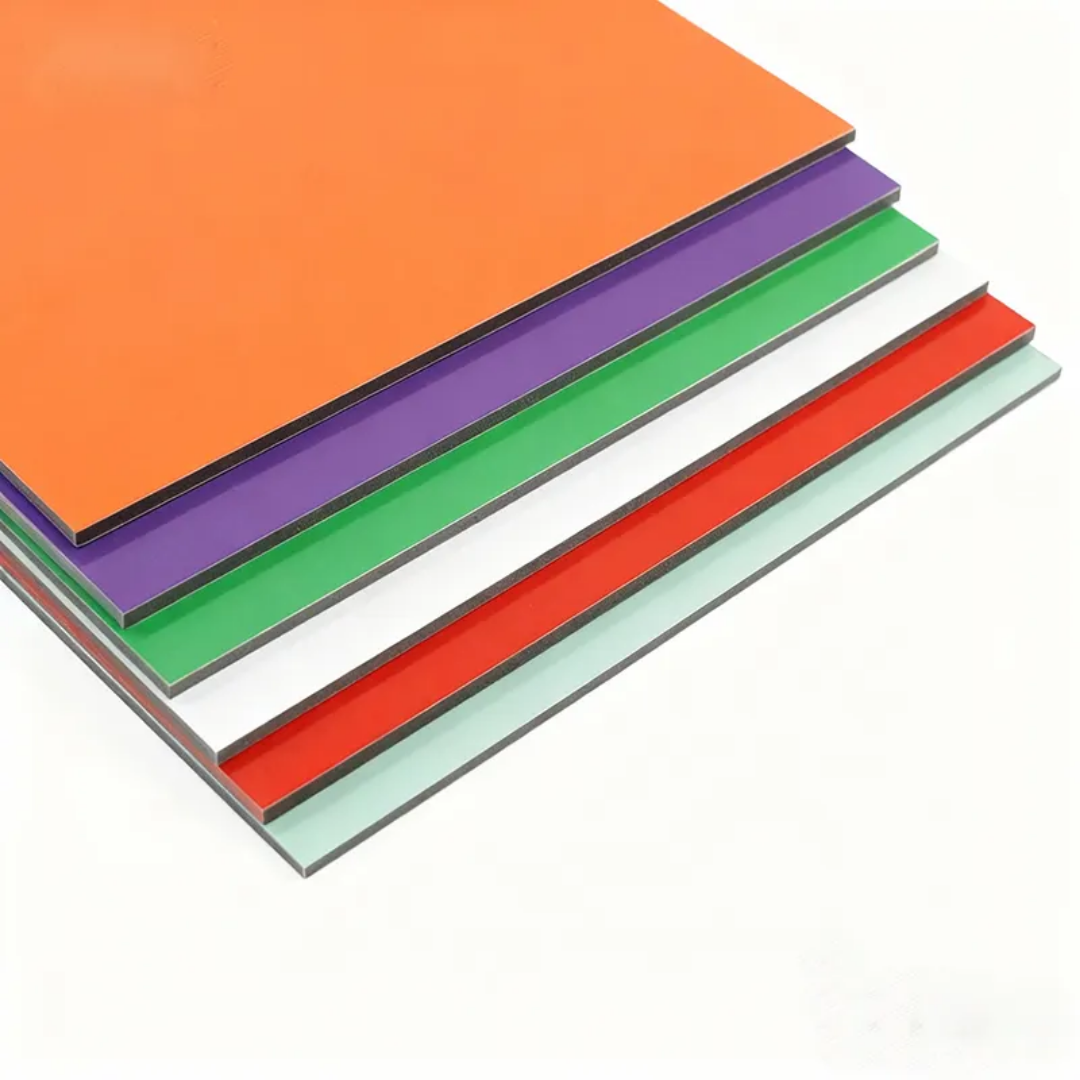
Modern architecture is witnessing a paradigm shift from inert building envelopes to bioclimatic responsive systems. The facade is no longer merely a protective barrier but has evolved into a dynamic environmental mediator that actively responds to climatic conditions, occupant needs, and urban contexts. Within this transformative landscape, Aluminum Composite Panels (ACP) have emerged as a uniquely capable substrate, offering engineers and architects a versatile platform for implementing sophisticated interactive facade technologies.
1. Technical Foundation: Why ACP is Optimized for Responsive Systems
1.1 Structural and Physical Properties
- Weight-to-Stiffness Ratio: With a typical density of 3.7-5.3 kg/m², ACP provides exceptional stiffness while minimizing inertial loads on kinetic actuation systems. This enables larger panel movements (up to 500mm x 3000mm) with reduced actuator power requirements.
- Thermal Stability: The aluminum-polyethylene-aluminum sandwich construction exhibits a low coefficient of thermal expansion (22-24 × 10⁻⁶/K), ensuring dimensional stability across operating temperatures (-50°C to +80°C) critical for precision mechanical systems.
- Surface Engineering: Advanced PVDF and Nano-coatings maintain consistent surface energy (contact angle >90°) for self-cleaning properties, essential for maintaining optical sensor accuracy in autonomous facade systems.
1.2 Manufacturing Precision for System Integration
- Tolerance Control**: CNC fabrication achieves ±0.3mm dimensional accuracy, allowing direct integration with **linear guide systems and rotary actuators.
- Modular Design: Prefabricated cassettes (standard sizes: 1500mm x 4000mm) can incorporate embedded channels for power and data transmission, creating plug-and-play smart facade units.
- Composite Flexibility: The polyethylene core allows strategic material removal for weight optimization zones, balancing structural requirements with kinetic performance.
2. Implementations: Technical Specifications and Performance Data
2.1 Kinetic Solar Adaptive Systems
Application: Rotating ACP louvers for solar gain management
- System Configuration: 6mm ACP panels with integrated tubular stepper motors (24V DC, 2.5Nm torque)
- Control Parameters: Response time <45 seconds, rotation range 0-170°, precision ±1.5°
- Performance Data: Reduces cooling loads by 23-38% in mid-latitude climates, with ROI achieved in 4.7 years
- Case Reference: Munich RE Headquarters features 1,850 ACP adaptive louvers covering 8,400m², reducing annual energy consumption by 1,200 MWh
2.2 Dynamic Ventilation Facades
Application: Pressure-activated ACP ventilation panels
- Mechanism Design: Shape-memory alloy actuators integrated within panel joints, responding to temperature differentials
- Activation Threshold: Opens at ΔP >15Pa, achieving 4-8 ACH (air changes per hour)
- Material Innovation: Perforated ACP patterns (18-35% open area) optimized using computational fluid dynamics** simulations
2.3 Responsive Media Facades
Application: ACP-based programmable display surfaces
- Technology Integration: Micro-LED arrays (2.5mm pitch) mounted on 3mm ACP substrates with integrated heat dissipation channels
- Power Efficiency: 18W/m² consumption, 85% reduced versus conventional display systems
- Architectural Example: The Galleria Seoul utilizes 9,200 ACP media panels creating a 360° interactive facade with 12K resolution
3. Integration with Building Intelligence Systems
3.1 Sensor Network Integration
- Embedded Sensing: ACP panels with fiber Bragg grating sensors for real-time strain and temperature monitoring
- Environmental Detection: Integrated multispectral sensors measuring solar radiation (300-2500nm), particulate matter (PM1-PM10), and UV index
- Data Architecture: Each facade module functions as an IoT node with CAN bus or Power over Ethernet connectivity
3.2 Control System Architecture
Primary Control Layer: Building Management System (BMS)
↓
Facade Control Unit: PLC-based with Modbus TCP/IP protocol
↓
Local Actuator Network: Daisy-chained modules with fail-safe mechanisms
↓
Feedback Loop: LIDAR position verification + energy production monitoring
3.3 Adaptive Algorithms
- Machine Learning Implementation: Predictive control using reinforcement learning algorithms trained on 5-year weather patterns
- Occupancy Integration: Syncing with Bluetooth Low Energy indoor tracking for personalized environmental zones
- Grid Responsiveness: Dynamic transparency adjustment during peak demand periods, achieving 15-22% demand reduction
4. Performance Metrics and Sustainability Impact
4.1 Quantitative Performance Analysis
Parameter | Static ACP Facade | Responsive ACP System | Improvement |
Energy Use Intensity | 185 kWh/m²/yr | 127 kWh/m²/yr | 31.4% reduction |
Daylight Autonomy | 45% | 68% | +23 percentage points |
Peak Cooling Load | | 48 W/m² | 31 W/m² | 35.4% reduction |
Maintenance Frequency | 5-year cycle | 8-year cycle | 60% extension |
4.2 Lifecycle Assessment
- Embodied Carbon: 42 kg CO₂/m² (including integrated electronics), offset in 6.3 years through operational savings
- Recyclability: 95% material recovery rate through panel disassembly processes
- Durability: 40-year service life with 10-year actuator warranty
5. Implementation Challenges and Technical Solutions
5.1 Technical Hurdles
- Condensation Management: Dual-seal gasket systems with moisture vapor transmission rates <0.5 g/m²/day
- Electromagnetic Interference: Aluminum layers provide inherent Faraday cage protection for sensitive electronics
- Thermal Bridging: Polyamide thermal break technology achieving Ψ-values of 0.08 W/mK
5.2 Cost Analysis
- Initial Investment: €420-680/m² versus €180-250/m² for standard ACP installations
- Operational Savings: €32-45/m² annually in energy costs
- Lifecycle Cost: 22% lower over 30 years despite a higher initial investment
6. Future Directions: Next-Generation Development
6.1 Material Innovations
- Phase-Change Integration: Microencapsulated paraffin waxes (melting point 23-26°C) within ACP cores for passive thermal buffering
- Photovoltaic ACP: Thin-film CIGS cells (14.2% efficiency) laminated as finished surfaces
- Self-Healing Coatings: Microcapsule-based systems repairing scratches up to 50μm depth
6.2 Digital Integration Advances
- Digital Twin Synchronization: Real-time facade performance mirrored in BIM-environment digital twins
- Blockchain Verification: Automated recording of energy production and carbon savings for ESG reporting compliance
- AI-Optimized Patterns: Generative design algorithms creating panel perforation patterns maximizing daylight while minimizing glare
Conclusion: ACP as the Enabling Platform for Architectural Intelligence
The transition to responsive building envelopes represents one of the most significant advances in sustainable architecture. Aluminum Composite Panels, through their unique combination of precision manufacturability, system integration capability, and long-term durability, provide the essential physical platform for this evolution. Current implementations already demonstrate measurable performance enhancements in energy efficiency, occupant comfort, and architectural expression. As material science and digital technologies converge, ACP-based interactive facades will increasingly function as building-scale environmental computers, actively participating in urban energy grids and creating architecture that doesn't merely exist in its environment—but intelligently responds to it.
Technical Specifications Available: Download detailed BIM objects, performance data sheets, and integration protocols for ACP responsive systems.






