Welcome to Vbond
Modern Architectural Trends with Aluminum Composite Panels in 2026
Introduction
As we move through 2026, the architectural landscape continues to evolve, driven by sustainability, digital innovation, and a renewed focus on resilience. Among the materials shaping this evolution, Aluminum Composite Panels (ACPs) stand out for their versatility, durability, and aesthetic potential. This article explores the latest trends in modern architecture utilizing ACPs, highlighting how this material is meeting the demands of contemporary design and construction.
1. Sustainable and Circular Design
Sustainability remains a core focus in 2026, with architects prioritizing materials that support circular economies. Modern ACPs are now frequently produced with high recycled aluminum content (often exceeding 70%) and eco-friendly polyethylene cores. The latest trend involves fully recyclable ACP systems, where panels are designed for easy disassembly and reuse at the end of a building’s life cycle. Furthermore, photocatalytic ACP coatings are gaining popularity—these panels actively break down air pollutants, contributing to cleaner urban environments.
2. Dynamic and Adaptive Facades
Static building exteriors are giving way to dynamic, responsive systems. ACPs are integral to kinetic facade designs, where panels are mechanized to adjust to sunlight, temperature, and occupancy, optimizing energy efficiency. In 2026, we see a rise in integrated photovoltaic ACPs, where thin, flexible solar cells are embedded within panels, turning entire building skins into renewable energy generators without compromising on sleek aesthetics.
3. Hyper-Realistic and Textured Finishes
Advancements in digital printing and coating technologies have unlocked new aesthetic dimensions. Digital printing on ACPs now allows for ultra-high-resolution graphics, intricate patterns, and even realistic reproductions of natural materials like wood, stone, or weaving. The trend extends to 3D-textured ACPs, where embossing and profiling create tactile, shadow-play effects on facades, adding depth and character to minimalist designs.
4. Smart and Connected Building Skins
The Internet of Things (IoT) has reached building envelopes. Smart ACP systems now incorporate embedded sensors that monitor structural health, insulation performance, and environmental conditions. These panels can relay real-time data to building management systems, enabling predictive maintenance and enhanced climate control. This trend aligns with the growing demand for intelligent, data-driven buildings that prioritize occupant comfort and operational efficiency.
5. Lightweight and Prefabricated Construction
Speed and efficiency in construction continue to be paramount. ACPs are ideal for modular and prefabricated construction methods dominant in 2026. Their lightweight nature reduces structural load, allowing for faster assembly and lower transportation emissions. New clip-on and cassette ACP systems facilitate rapid installation and future modifications, supporting the flexible, adaptable building concepts required for modern urban infill and redevelopment projects.
6. Bold Color and Form Freedom
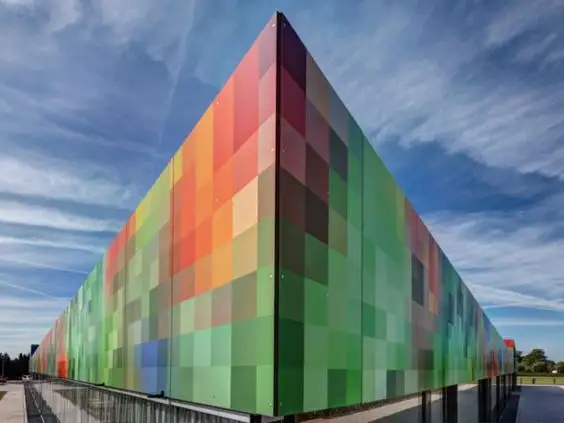
Architectural expression in 2026 embraces boldness. ACPs are available in an expanded spectrum of saturated colors, metallic lusters, and chameleonic finishes that change hue with viewing angle. This material freedom empowers architects to create complex curved geometries and dramatic volumetric compositions. ACPs’ malleability is being pushed further with cold-forming techniques, allowing for seamless, flowing organic shapes previously difficult to achieve.
7. Enhanced Fire Safety and Resilience
In response to stricter global building codes and a focus on safety, next-generation fire-retardant (FR) ACPs have become the standard. Modern cores utilize mineral-filled, non-combustible materials that meet the highest fire safety classifications (like A2-s1,d0). Additionally, impact-resistant ACP variants are trending for regions prone to extreme weather, offering enhanced durability against hail, wind-borne debris, and corrosion.
Conclusion
In 2026, Aluminum Composite Panels are far more than just a cladding material. They are a dynamic, multi-functional component at the heart of modern architectural innovation. By integrating sustainability, smart technology, and unprecedented design flexibility, ACPs are helping architects create buildings that are not only visually striking but also performative, responsive, and resilient. As these trends continue to develop, ACPs will undoubtedly remain a key material in defining the skylines and streetscapes of the future.






